








Delhi: The wait for a makeover of Delhi’s 400-year-old walled city of Shahjahanabad, built by Mughal emperor Shah Jahan, has stretched so long that even the office of the implementing agency has grown weary. Revitalising Old Delhi is the oldest political promise of the city and its most persistent failure. It is also the story of a bureaucracy that just can’t catch up with the political imagination of Delhi.
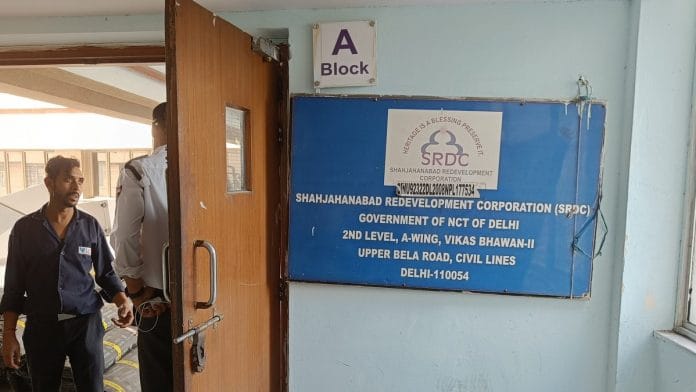
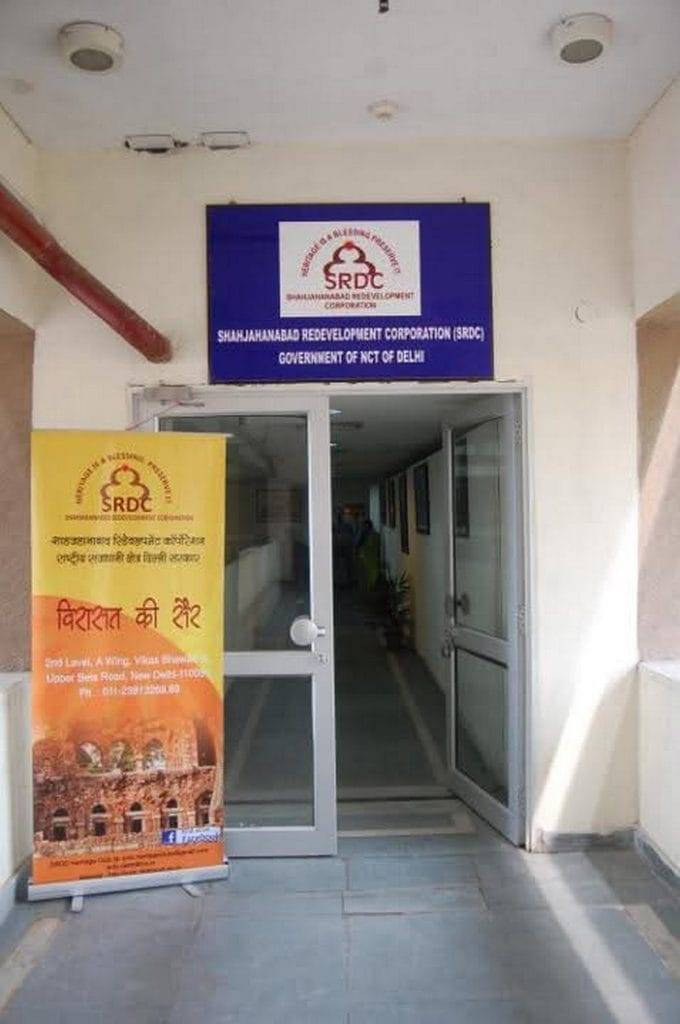
Tucked inside Vikas Bhawan in Civil Lines, the office of the Shahjahanabad Redevelopment Corporation (SRDC) exposes the story — one that doesn’t need files or reports to be scrutinised. At the entrance, a fading blue board hangs loosely, with a slightly fresher pasted message: Heritage is a blessing, preserve it. It accompanies rows of empty chairs and closed cabins. Senior officials are rarely present because most hold additional charges elsewhere. On the walls, framed photographs of Old Delhi serve as a reminder of what the corporation was meant to protect.
“The objectives set for SRDC are crucial for Shahjahanabad’s development, but the harsh truth is the development never really took off,” said a senior SRDC official. “Since its inception, the corporation has struggled with staff shortages, a lack of heritage experts, and, most importantly, limited powers.”
Created in 2008 under the late former chief minister Sheila Dikshit, the SRDC was designed as a special purpose vehicle (SPV) to restore and reimagine Delhi’s historic heart. With the CM as chairperson, it was mandated to act as the conductor for various agencies—from the PWD and MCD to the Tourism Department— to transform a congested, crumbling area into a world-class heritage destination.
A lot of time has been wasted already. Now the government needs to give power to one authority for all developments, just like NDMC has
-Praveen Khandelwal, Chandni Chowk MP
Every few years, a new government arrives with fresh promises. From Dikshit to Arvind Kejriwal and current Delhi Chief Minister Rekha Gupta, Shahjahanabad has been promised grand makeovers like those seen in European old cities. There has been no lack of imagination: pedestrian-only zones, dedicated bicycle lanes, uniform facades, underground wiring and the return of trams. But the challenge is so daunting that the project has failed under the weight of its own vision.
Retired and serving officials of the corporation say that the problem was never just about plans, but ownership. The SRDC never quite found its footing or real authority. Officials came and went, relegating the role to a secondary priority while juggling positions in other departments. They were rarely able to give a project of this scale the singular focus it demanded. For instance, IAS officer Ravi Dhawan, SRDC managing director since 2023, has his hands full also as member (administration) of the Delhi Jal Board and a director in the Ministry of Power.
“Over time, the SRDC became less of an institution and more of an idea—caught in a web of overlapping jurisdictions and diffused accountability,” said Praveen Khandelwal, MP from Chandni Chowk, who has called for an overhaul of the body since 2024. “It drifted like an orphaned body no one fully claimed.”
Now, the Rekha Gupta-led BJP government has proposed a reset: a new name, which is yet to be decided, and an administrative overhaul to turn the SRDC into an NDMC-like body with real teeth.
“Shahjahanabad was not merely a locality but a symbol of Delhi’s rich historical and cultural identity,” Gupta said in February, when she took charge as the chairperson of SRDC.
Also Read: When did the Aryans enter the subcontinent? Lucknow’s Birbal Sahni Institute is tracing DNA
Lofty visions and vanishing acts
Ideas are cheap, execution is everything. And ideas have flown thick and fast at the corporation. At the SRDC meetings, proposals and plans have been announced, but rarely executed on the ground.
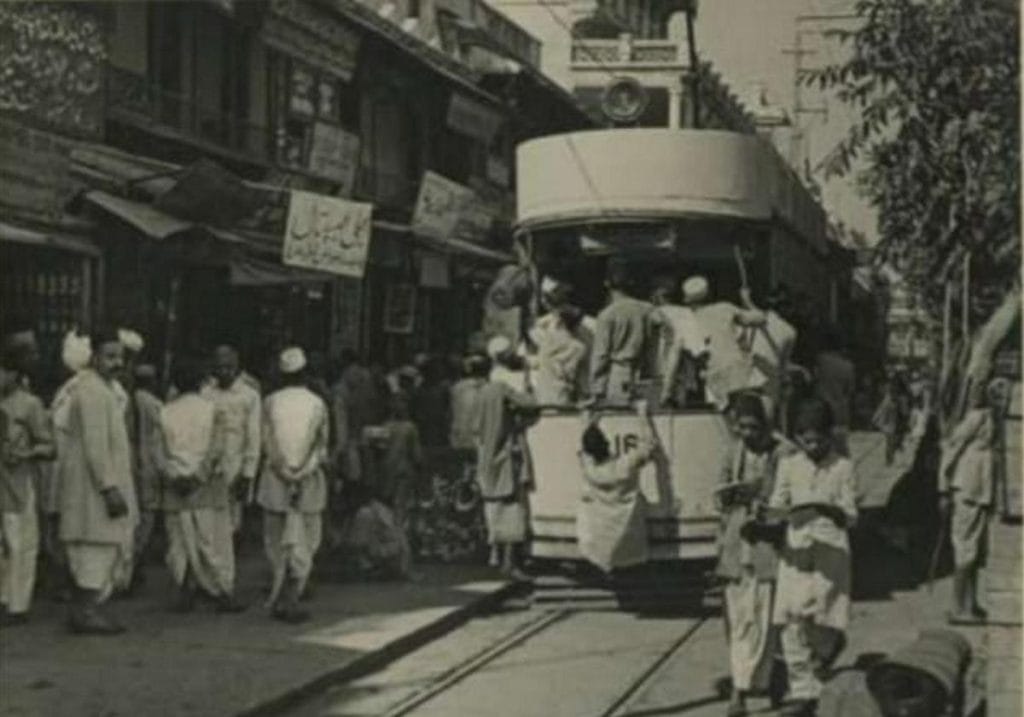
One of the most ambitious was the return of the old city’s electric tram service, which had been retired in 1963.
In 2014, then LG Najeeb Jung gave approval to a proposal to revive trams as part of the Chandni Chowk redevelopment plan. With the PWD as the implementing agency and the Delhi Metro Rail Corporation (DMRC) providing the technical muscle, the outlook was initially bright. In April 2015, the DMRC produced a 247-page report calling the project “essentially a social necessity” and a “technically viable” way to decongest the area.
“Since many traffic management strategy to decongest the crowded Chandni Chowk area have failed, the idea for non polluting, cost effective mode of transport has been felt in the present scenario,” read the report, which estimated that the project would cost Rs 782 crore. “Trams coming back to Chandni Chowk,” announced headlines at the time.
But the high cost and logistical nightmare of laying tracks and overhead wires stalled the project right from the get-go. New iterations were proposed, including a trackless version that was turned down by the SRDC board in 2019.
“The area is very congested and it’s very difficult to run the tram and also the safety is the biggest challenge in mind,” said an official, who was part of the SRDC board meeting that time. Still, the dream lives on; as recently as last June, Chandni Chowk traders wrote to PWD Minister Parvesh Verma, calling for the tram project to be resurrected.
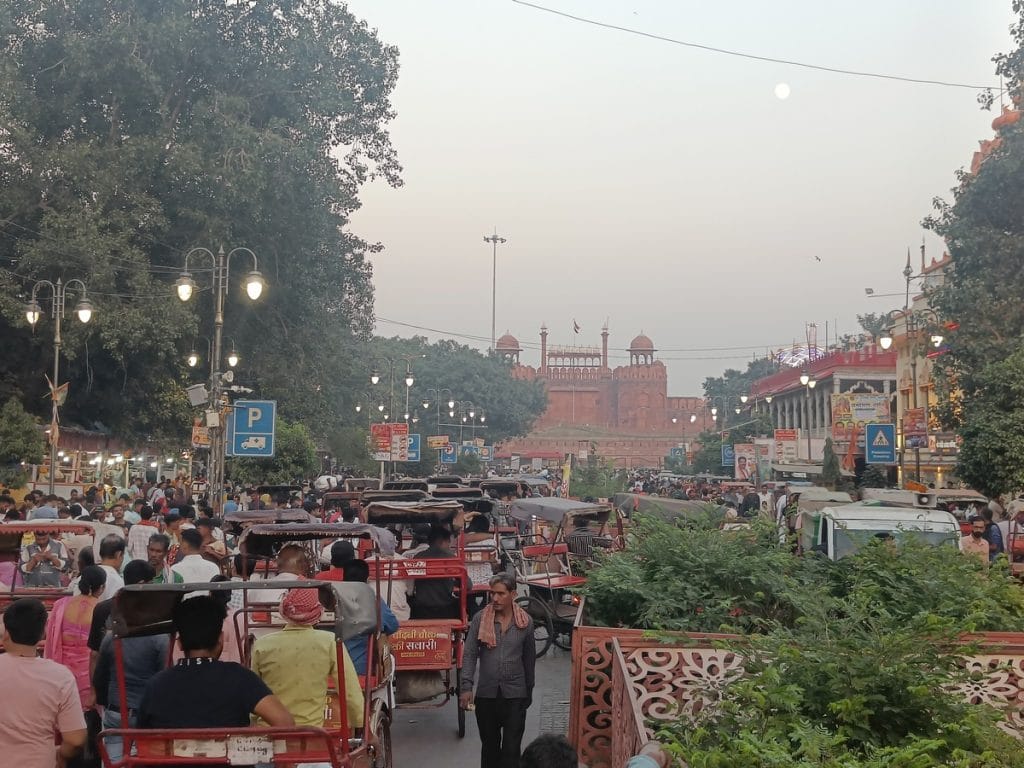
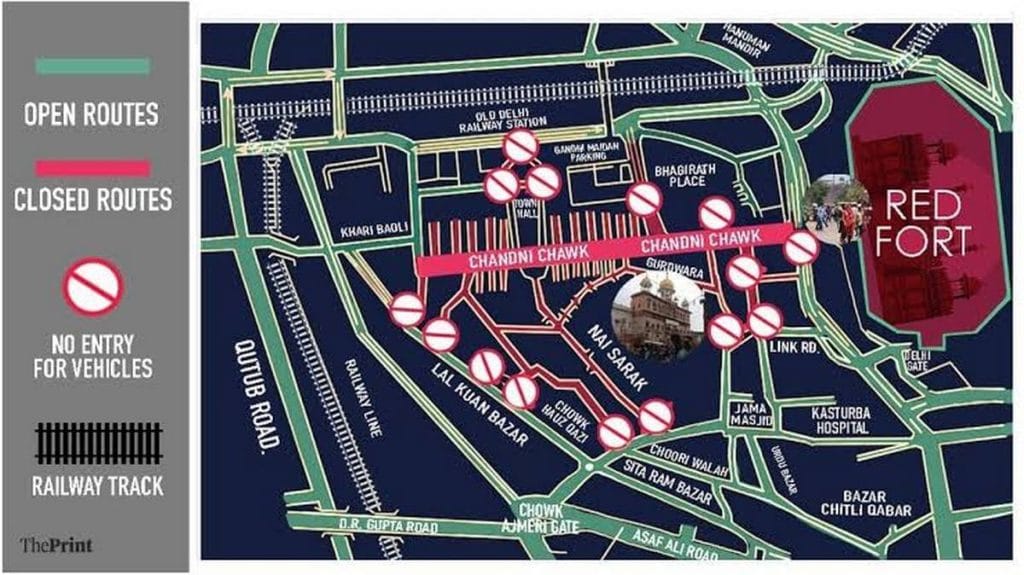
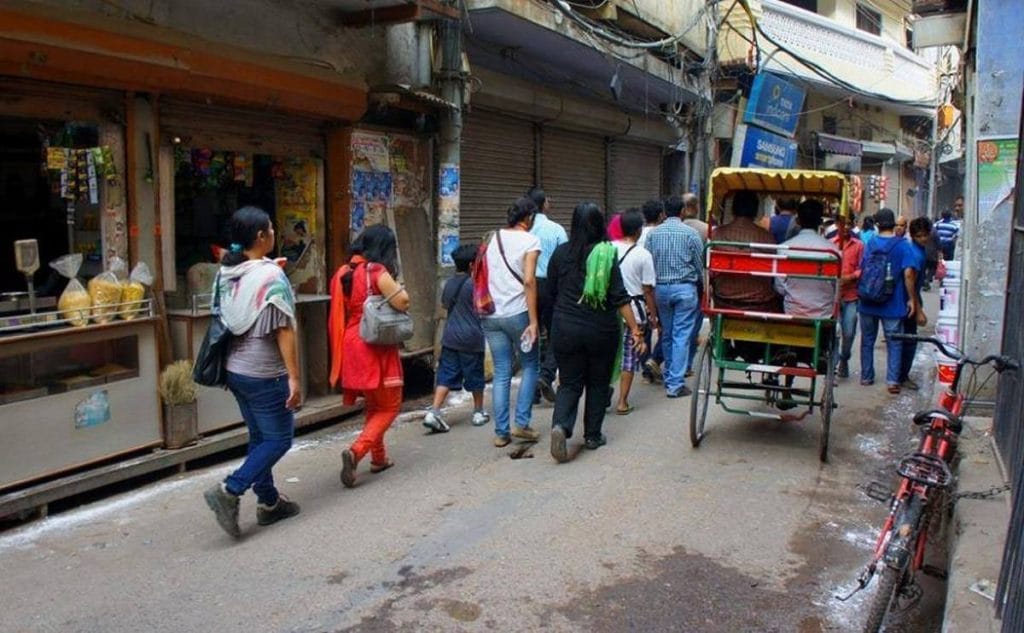
While the city waits for trams that may never come, the existing traffic management is in disrepair. The SRDC’s plan to make the stretch from Red Fort to Fatehpuri Masjid a ‘Non-Motorised Vehicle Zone’ exists mostly on paper. Between 9 am and 9 pm, motor vehicles are banned, but enforcement is so weak that violations are the norm.
SRDC doesn’t have a comprehensive vision for the area and that’s why they failed after so many years of its inception. The heritage is not helping the lives of citizens of Old Delhi. Nothing will change in the city through only superficial beautification
-Swapna Liddle, historian
In 2024, the Delhi Home Department added 75 home guard volunteers to the area after LG VK Saxena visited the stretch and found the traffic management not up to the mark. However, the extra boots on the ground had little effect.
In a letter dated 16 January 2025, SRDC managing director Ravi Dhawan pulled up the Delhi Traffic Police for systemic failures in the Chandni Chowk regulated zone.
“It is noted that even deployment of the home guards has failed to restrict access of motorised vehicles in the regulated zone since the boom barriers are either left open or are remaining unattended by the home guards,” it read.
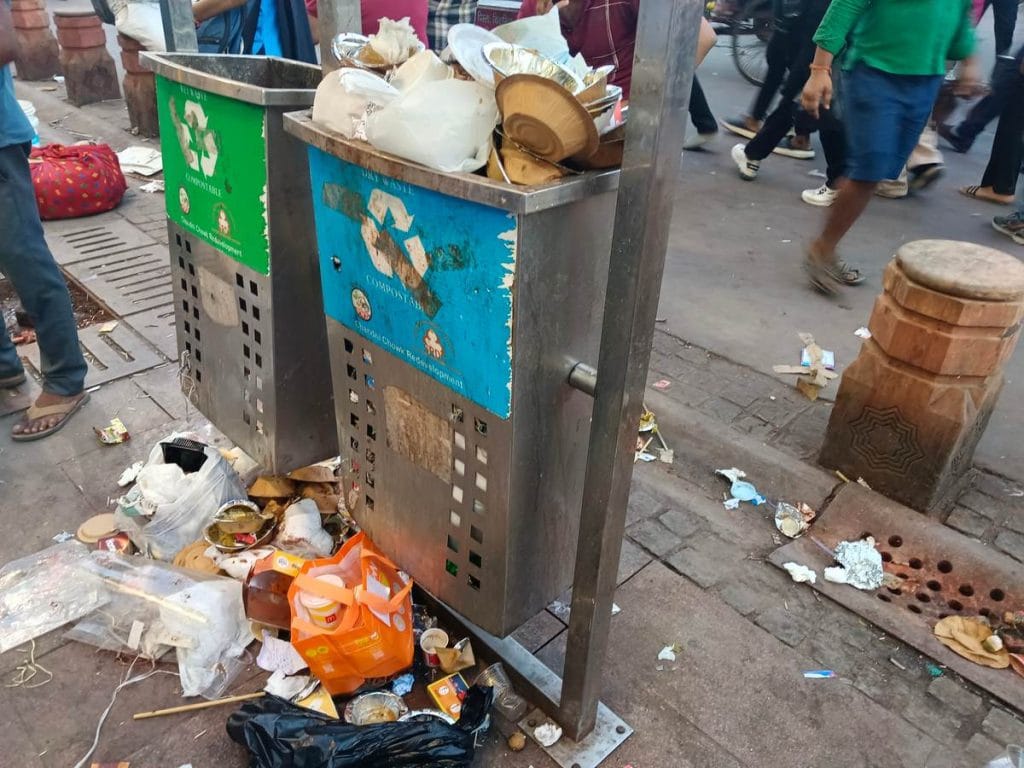
Five years after its high-profile revamp, the redevelopment area has regressed into a familiar mess. Pedestrian walkways are once again crowded with street vendors and overflowing dustbins, with people still dodging e-rickshaws and motorbikes.
An agency in limbo
The SRDC’s other big-ticket project was the revamp of the 300-year-old Jama Masjid.
This enterprise was first set in motion under the Sheila Dikshit government in 2004, years before the corporation even existed. It began with a PIL on the monument’s degradation, leading the Delhi High Court to order a total redevelopment of the 23-acre precinct. In 2009, the Jama Masjid master plan was formally approved by the Delhi Urban Art Commission (DUAC). Then came another period of stasis — in 2014, a new case was filed in the Delhi High Court regarding the “urgent” need for upgradation work.
It took until 2019 for the SRDC board to expedite the execution of the redevelopment. The project included revitalising Meena Bazaar, upgrading infrastructure and creating a tourist-friendly public space covering an area of around 12.7 hectares around the Jama Masjid and about 3 kilometres of peripheral streets. The cost was estimated at Rs 168 crore.
In 2023, the SRDC approved the appointment of a new consultant architect to prepare a plan that avoided the drawbacks faced during the Chandni Chowk project. The actual appointment is yet to happen and the project remains in limbo.
Last November, at a meeting chaired by CM Gupta, it was deemed that the SRDC had been largely ‘inactive’ for the past three years. The agency’s officials blame a lack of authority and funds.
Operating out of a section of the second floor of Vikas Bhawan in Civil Lines, the body’s sanctioned strength is 33 posts, from chairperson to heritage consultant, supplemented by contractual staff. It functions as a non-profit company dependent on grants from the Delhi government. The SRDC official quoted earlier said a substantial portion of this budget is swallowed by salaries and employee benefits.
Another senior SRDC official cited the difficulty of coordinating across multiple agencies.
“Every time we have to request departments for even the basic works,” the official said, adding that delays often come from these agencies.
Last year, when the SRDC wrote to the Delhi Traffic Police to resolve the congestion in the redevelopment area, the request stalled because the corporation has no enforcement power of its own. For the Chandni Chowk tramway system, the SRDC was at the mercy of the PWD and DMRC for technical assistance. It’s much the same story with the Jama Masjid redevelopment project, where the PWD is the implementing agency, but the Delhi Jal Board and MCD are also in the mix.
“Multiple ownerships from private players to government agencies are not being regulated or navigated by SRDC successfully. The corporation has to define its aim clearly first,” said Swapna Liddle, historian and author of Chandni Chowk- The Mughal City of Old Delhi.
They have to address the problems that the city is struggling with, from encroachments and overhead wires to motorised traffic. A bureaucratic solution will not help preserve the original character of the city
Sohail Hashmi, heritage expert
The SRDC’s lack of momentum in the walled city hasn’t stopped it from venturing to the other end of Delhi. One of its ambitious projects was the revival of the 12th-century Qutub ki Baoli at Mehrauli, which didn’t take off either.
The SRDC official website is a graveyard of these grand ideas. The ‘news and updates’ section on the home page says “no content available”, and there has been no update to the image gallery since 2022. While the ‘ongoing projects’ tab lists several initiatives, it offers no information on their current status. The ‘SRDC success stories’ tab has just one entry from over 15 years ago: 5th Meri Dilli Utsav 2010.
Their Facebook page has not been updated since 2015. The 149 posts are a time capsule of sorts. The last one is a newspaper article with the headline “Delhi govt gives green signal to run trams in Walled City”. One comment asked about timelines but there was no reply. Another post from 2014 announced that the “private sector may be allowed to turn Old Delhi havelis into heritage hotels”, and that the corporation saw “great potential” in this. This hasn’t come to pass either. Several other posts announce heritage walks, with little or no engagement from the 742 followers of the page.
“SRDC doesn’t have a comprehensive vision for the area, and that’s why they failed after so many years of its inception. The heritage is not helping the lives of citizens of Old Delhi. Nothing will change in the city through only superficial beautification,” said Liddle.
Decades of stagnation
The only visible transformation in Old Delhi today that residents cheer is the grand multi-storey Omaxe mall on Chandni Chowk, which has nothing to do with the SRDC. A PPP project with the MCD, it’s one of the city’s most celebrated social media influencer hotspots.
But heritage experts and historians argue that the government’s efforts to spruce up Old Delhi have been both narrow and destructive.
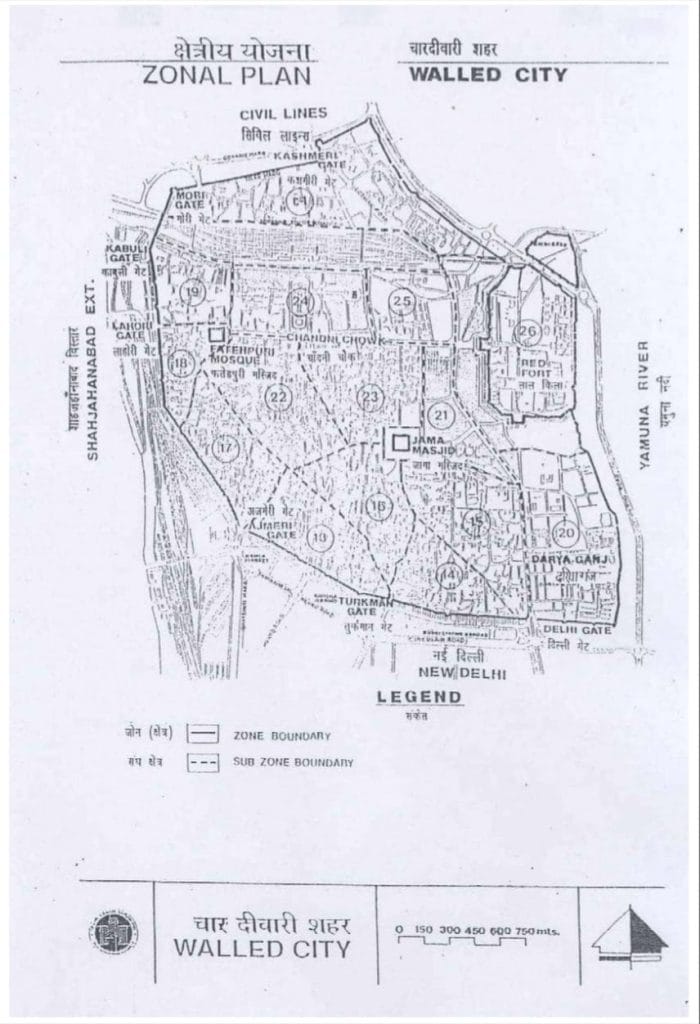
“The problem is the government confines Old Delhi only to the Chandni Chowk area. Shahjahanabad is much bigger than that,” said heritage expert Sohail Hashmi. He noted that the historic city is a vast sprawl bounded by Kashmiri Gate to the North, Delhi Gate to the South, Ring Road to the East, and Ajmeri Gate to the West.
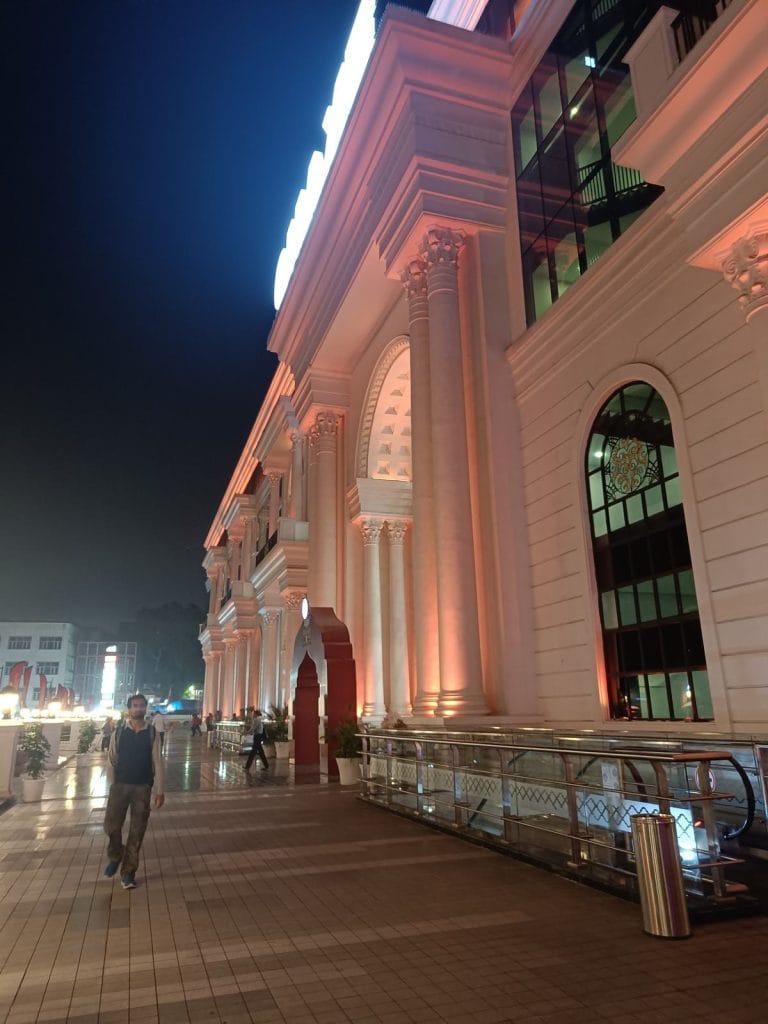
Hashmi dismissed recent facelifts in the area — from the mall to the concrete pots in the Chandni Chowk redevelopment zone — as a disconnect from the city’s heritage, which also ignores deeper issues.
“They have to address the problems that the city is struggling with, from encroachments and overhead wires to motorised traffic,” he said. “A bureaucratic solution will not help preserve the original character of the city.”
The government must enlist heritage experts who have already worked on Shahjahanabad, Hashmi added, pointing to the successful transformation of the old cities of Morocco and Uzbekistan.
The scale of stagnation in the Shahjahanabad rejuvenation plan was laid bare in a 2016 CAG report. Nearly a decade after its birth, the SRDC was still in its “infancy” despite an expenditure of Rs 4.36 crore since its inception, the report said. It also suffered a staff shortage of up to 60 per cent, with nine important posts, including Advisor (Heritage) and Advisor (Planning & Coordination), being vacant since their creation and no experts being hired.
“Though SRDC was incorporated in 2008, it has not prepared till date any plan for implementing its envisioned mandate of redeveloping Shahjahanabad. It failed to conceptualise and plan even a single project,” the report concluded.
The report was submitted during the Arvind Kejriwal administration and taken up in a Cabinet meeting, the SRDC official said, after which the Chandni Chowk redevelopment project was expedited.
New governments, new SRDC revivals
The SRDC was the Delhi government’s second attempt to revive the walled city after a 2004 plan failed to launch.
“The intent for the development of Delhi by the political leadership under Sheila ji was good. She wanted to make Delhi a modern city and protecting heritage was at its core,” said Congress leader Pawan Khera, who served as the political secretary to Sheila Dikshit.
It was a slow start. For its first two years, the corporation was sidelined by the 2010 Commonwealth Games. After the Games, some movement began, largely in the form of heritage walks, photo exhibitions, and seminars.
“In the initial years, the idea was to sensitise people. Through walks and discussions, we wanted Delhi to rediscover its heritage,” recounted a former managing director of SRDC.
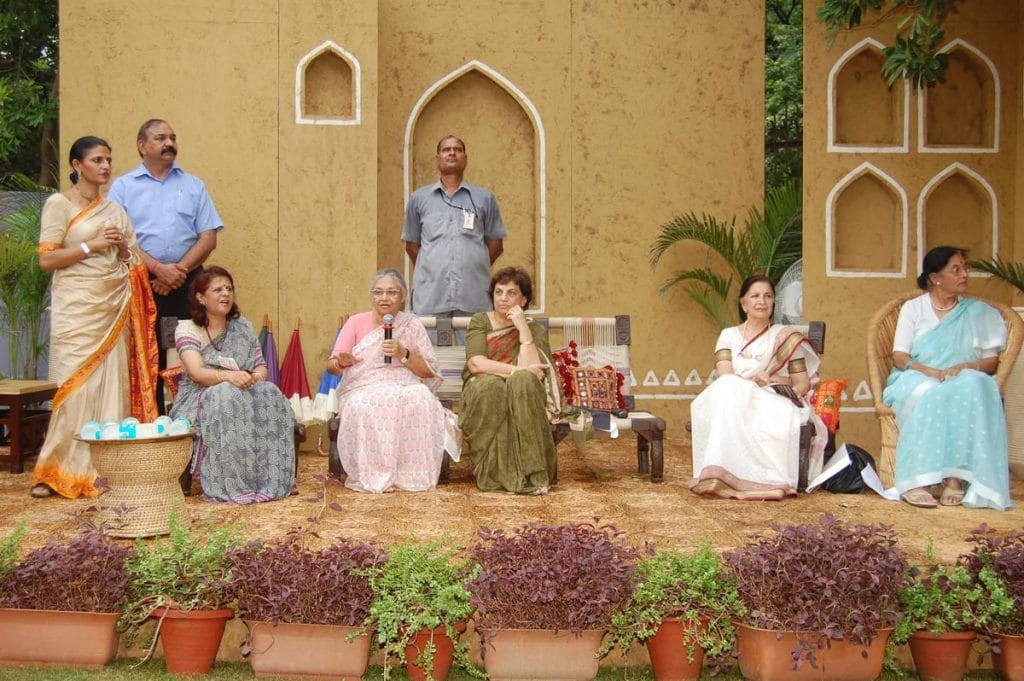
Historian and cultural strategist Navina Jafa, who joined the corporation in 2010 to curate walks, spoke of an early flush of enthusiasm.
“Sheila ji had a clear vision. There was freedom to work, and people cared,” she said. However, it only went so far. Jafa submitted three proposals for compiling histories of the Khari Baoli spice market, the medicinal traditions of the Old City, and the stories of Shahjahanabad’s tawaifs. All are still pending with the SRDC.
There were moments of encouragement. Jafa recalled how PK Tripathi, former chairman of SRDC and also the chief secretary of Delhi, pushed the team forward with ideas for the Chandni Chowk revamp in 2011. But such phases were short-lived.
“SRDC has seen many leaderships since its inception. Not all of them were equally sensitive to heritage and culture,” she added.
By 2012-13, concern had reached the top. Just before the Delhi Assembly elections, Sheila Dikshit herself took charge of SRDC as chairperson. She wasn’t pleased with what she saw, including the fact that the body had returned 50 monuments to the Archaeological Survey of India after failing to maintain them.
In the initial years, the idea was to sensitise people. Through walks and discussions, we wanted Delhi to rediscover its heritage
-A former SRDC managing director
Two years later, the Aam Aadmi Party delivered a similar verdict. After forming the government in 2015, AAP “revived” the SRDC—a move mirrored by the BJP today. Then Deputy CM Manish Sisodia vowed that party officials would visit Shahjahanabad “day and night” to understand the area’s issues.
“Shahjahanabad Redevelopment Corporation has not moved a step ahead in the last eight years. A lot of money was spent, but its use is not visible,” said Alka Lamba, then AAP MLA for Chandni Chowk, who was appointed as a director on the SRDC board that same year.
Her proposed fix also had echoes of what is being said today about boosting the SRDC’s authority — “We are planning to impart more power to SRDC by making it a dedicated corporation for walled city. This will work exactly the way NDMC and cantonment board work.”
Islands in a sea of dilapidation
The rhetoric of “reviving” Old Delhi is a political perennial, blooming in manifestos and public meetings for decades. Almost every MP and MLA from the area arrives with the same promise to bring new glory to the 17th-century capital.
This ambition reached Union government levels in the late 1990s through Vijay Goel, a three‑time MP from Chandni Chowk and Minister of State in the Atal Bihari Vajpayee cabinet. In 2001, he organised a two-day festival called Chaudhvin Ka Chand, during which hundreds of houses, shops, and buildings of cultural importance were renovated and illuminated. He also used Rs 75 lakh from his MPLAD funds to set up a museum dedicated to the walled city’s history inside a haveli at Lahori Gate.
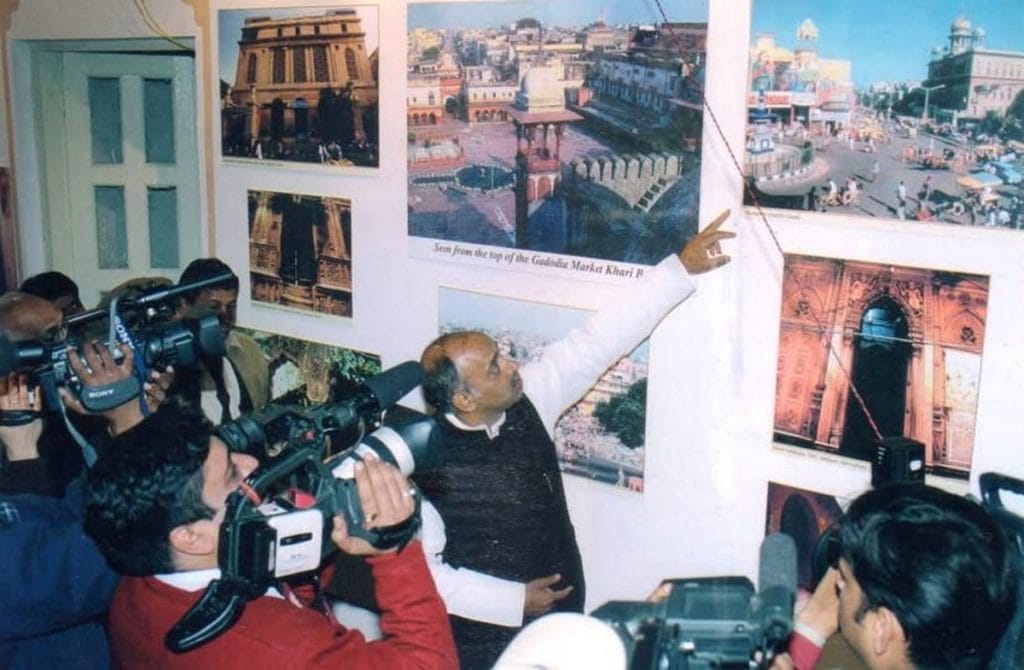
Well over two decades ago, Goel called for setting up a “Walled City Development Board”. It was a passion project that continued even when he was no longer MP.
Goel’s landmark project, the restoration of the 19th-century Dharampura Haveli, was a private undertaking. It underwent a six-year restoration into a boutique hotel, completed in 2016. UNESCO later recognised it with a Cultural Heritage Conservation award, citing it as an inspiration for restoring other sites.
Prior to this, the most prominent restoration was Ghalib ki Haveli in Ballimaran. The Delhi government restored it into a memorial museum in 2000, rescuing it from use as a coal depot and commercial space, with another touch-up during the G20 drive in 2023.
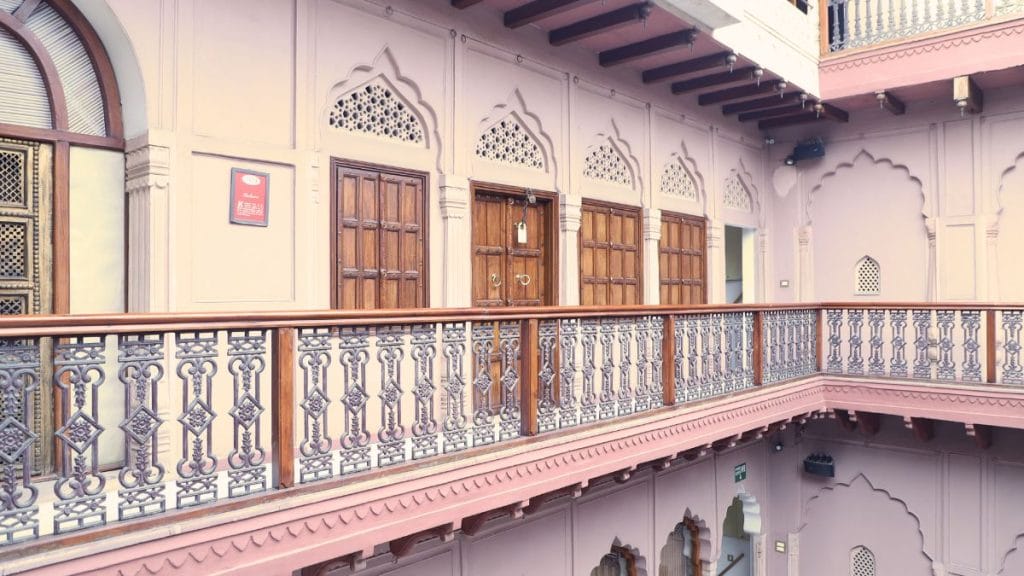
Yet, renovated havelis—public or private—are islands in a sea of dilapidation. On March 11, Goel, who still advocates for his former constituency, posted on Facebook about the need to save the Old City.
“This priceless heritage is suffocating under the weight of congestion and chaos. There is an urgent need to declare Old Delhi a heritage zone and establish a dedicated authority so that the glory of Shahjahanabad can finally be restored,” the post said.
Short-lived success
It wasn’t until 2018 that the Chandni Chowk redevelopment project gained fresh momentum under the Arvind Kejriwal government. The late architect Pradeep Sachdeva was tasked with reimagining the 1.3 km stretch from Red Fort to Fatehpuri Masjid. The plan included a non-motorised zone with red sandstone bollards, widened pavements, and underground cables.
When the revamped stretch was finally inaugurated in 2021, it was presented as a turning point in transforming the entire area into a major tourist hub.
Kejriwal called the results “extremely beautiful” and declared Chandni Chowk the city’s most important tourist destination, but cracks appeared quickly. Street vendors encroached on the walking paths, sandstone panels started crumbling, and the new traffic rules were flouted rampantly. BJP leaders soon accused the AAP government of irregularities and corruption in executing the project.
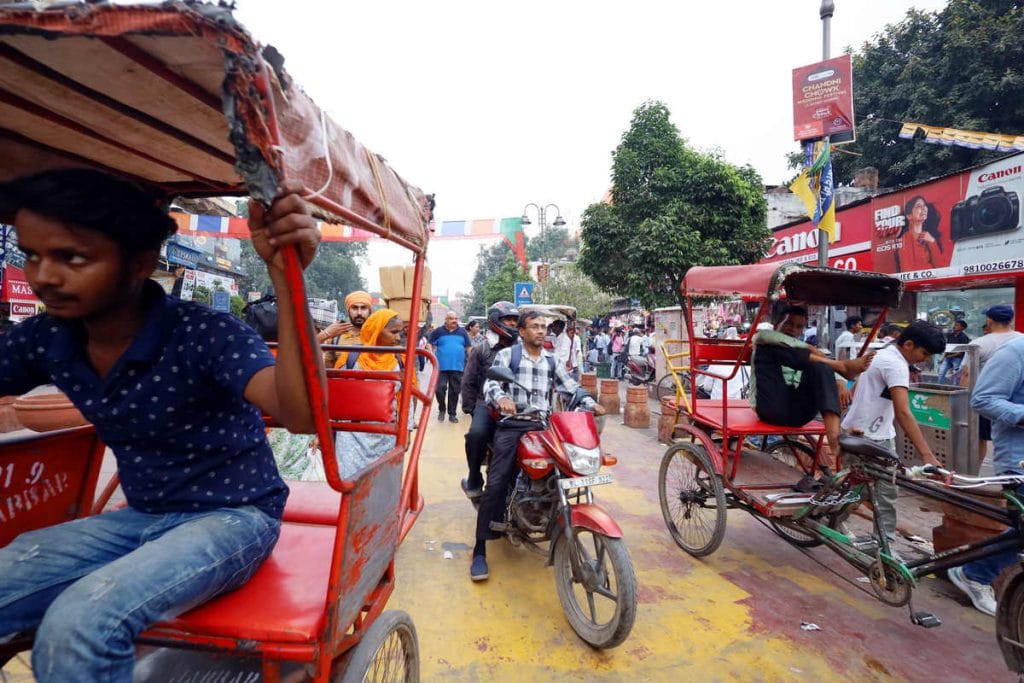
Months after the BJP won the Delhi elections, an inter‑departmental inquiry report prepared by the PWD alleged that the Chandni Chowk project’s cost had more than doubled from the approved Rs 65.6 crore to Rs 145.72 crore. The August 2025 report claimed that Rs 70 crore was spent on “extra items and deviations” beyond the original sanctioned scope.
Soon thereafter, Delhi BJP spokesperson Praveen Shankar Kapoor called for the dissolution of the SRDC, alleging that it was run in an arbitrary manner by officers on ‘deputation’.
“These officers have always viewed Chandni Chowk only as a Mughal-era city, never understanding or appreciating its commercial identity. Ignoring reality, these officers have repeatedly proposed plans to develop Chandni Chowk as merely a tourist centre, often persuading Chief Ministers to approve impractical schemes,” said Kapoor, who is also the general secretary of Chandni Chowk Nagrik Manch.
AAP responded that the allegations were mere political vendetta.
“It was BJP’s LG who was appointing officers to various positions. Opening enquiries into old cases only shows their incompetence,” said an AAP statement.
For the SRDC, meanwhile, things are coming full circle now.
Also Read: A Delhi couple keeps climbing Ghazipur landfill to feed 400 dogs. Chicken, rice & dahi
Authority at long last?
Different dispensations have reached similar conclusions about what it would take to convert the SRDC from a paper tiger into a functional agency.
In a 2021 meeting chaired by AAP’s PWD minister Satyendra Jain, the SRDC board approved a proposal to transform the body into the Special Area Local Planning and Development Authority (SALPDA) for the Walled City.
The idea was to draft a legislative bill that would grant it statutory powers like those of the New Delhi Municipal Council (NDMC) —a centrally governed body that manages the Lutyens belt.
In the jurisdictional maze of Delhi, the NDMC possesses the greatest territorial autonomy, managing everything from electricity to sanitation within its borders. Granting the SRDC similar powers would effectively transform it into a standalone, quasi‑municipal authority for Shahjahanabad and end the cycle of MCD and PWD approvals.
While the SALPDA proposal never moved past the drafting stage, it seems to have reappeared in a new avatar.
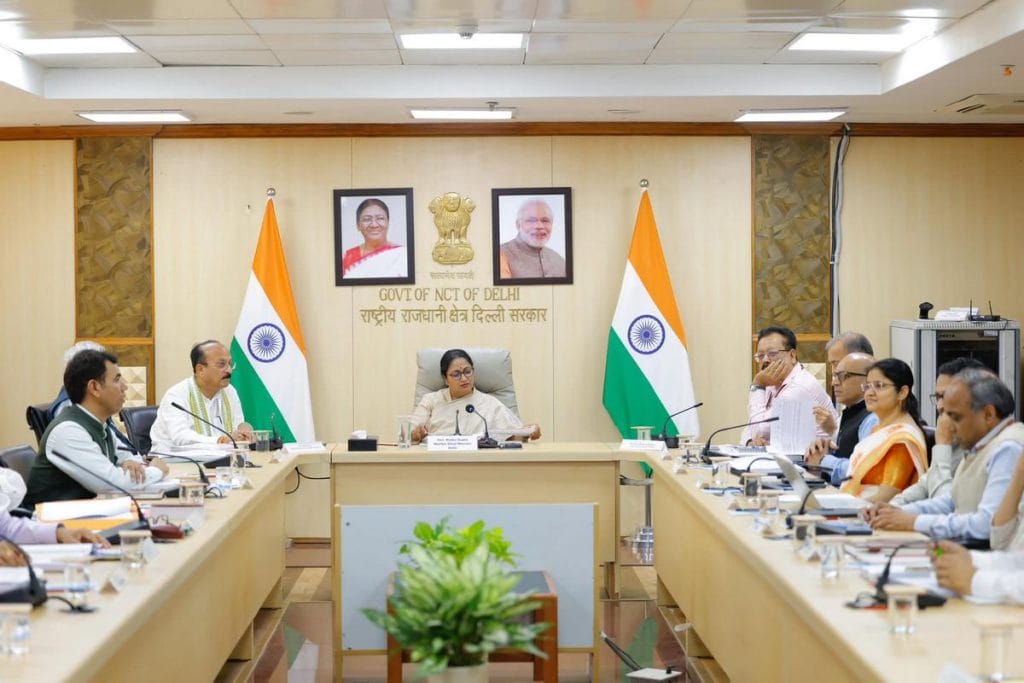
At the 38th board meeting of SRDC on 13 March, Chief Minister Rekha Gupta reviewed the functioning of the body, corruption charges, as well as its future direction. A familiar refrain was heard.
“An NDMC-like body for Shahjahanabad was discussed,” said an official of the urban development department who was present at the meeting.
A statement released by the Chief Minister’s Office quoted her as saying that the time has come for a “comprehensive restructuring and revival of the institution” in order to accelerate the “real redevelopment” of Old Delhi. CM Gupta later posted on X that the changes would allow SRDC to operate with “greater transparency and accountability”.
For proponents of an overhaul such as Chandni Chowk MP Praveen Khandelwal, the signs are encouraging. In September 2024, he had written to the LG, advocating for the SRDC to “be given the responsibility of maintaining Old Delhi”, from development to sanitation to traffic. In a November 2025 meeting of the SRDC, he had suggested renaming it the ‘Indraprastha Redevelopment Corporation’ or the ‘Chandni Chowk Redevelopment Corporation’ to signal a new beginning.
“For the first time, any government is so serious about this corporation,” he told ThePrint. “Rekha ji herself has invested in this, which brings hope for the development of old Delhi. A lot of time has been wasted already. Now the government needs to give power to one authority for all developments, just like NDMC has.”
(Edited by Asavari Singh)