





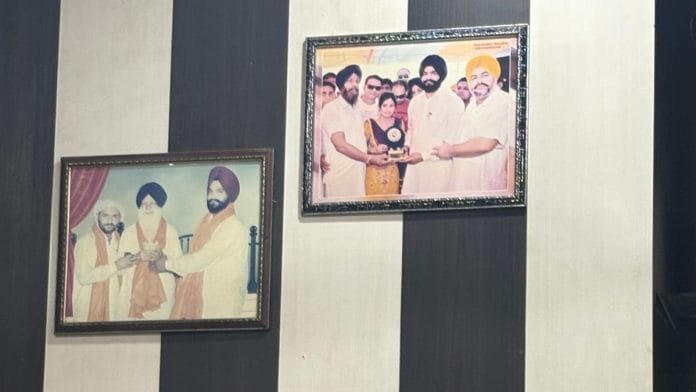



Tarn Taran: The 28-year-old daughter of the recently murdered Valtoha village sarpanch in Punjab’s Tarn Taran sat quietly on a sofa—a cup of chai in her hands, her grieving eyes fixated on the wall ahead. Her father, Jarmal Singh, is everywhere on that wall—smiling in framed photographs with political figures, receiving awards he got during his tenure.
The mansion-like house in the middle of the village where family and relatives live is still mourning what she described as the senseless, ego-driven murder of a beloved sarpanch.
“You feel anger when someone picks a fight. But when someone takes away everything you had—takes away your father—you don’t feel anger. All that remains is helplessness,” she said.
Jarmal was shot dead on 4 January while attending a wedding at an Amritsar resort. Police later linked the killing to the Afridi gang, which operates through local shooters under handlers based abroad.
On 18 February, Harbinder Singh, sarpanch of Thathian Mahantan village was killed at a wedding—the attack later claimed by the Canada-based Lakhbir Landa gang.
Punjab’s notorious gangs, long known for targeting NRIs, Kabaddi players such as Rana Balachauria, and musicians such as Sidhu Moose Wala—whose murder shook the Punjabi entertainment world—now have rural leaders and ordinary residents on their radar. In the past three months, four sarpanches have been killed in the state. The gangsters are on the hunt for newer extortion territories, away from the city businessmen and pop singers into rural Punjab, where a figure such as a sarpanch holds power—and enough money to be extorted. They are looking for smaller, low-profile targets. Punjab sarpanches are now carrying guns and not buying big SUVs for fear of becoming visible targets.
The never-ending cycle of extortion, drugs, and killings has left the people of Punjab constantly on edge. Crime has become part of daily life. Many lock their doors after 8 pm, and those who go out at night move in groups. Those who can afford, carry guns for protection. And at night, residents live in fear of ransom calls from transnational gangsters or their local henchmen.
And ransom paid doesn’t guarantee freedom from extortion. In some cases, the same parties have been harassed more than once.
Not all recent sarpanch killings in Punjab were gang-related. One was personal.
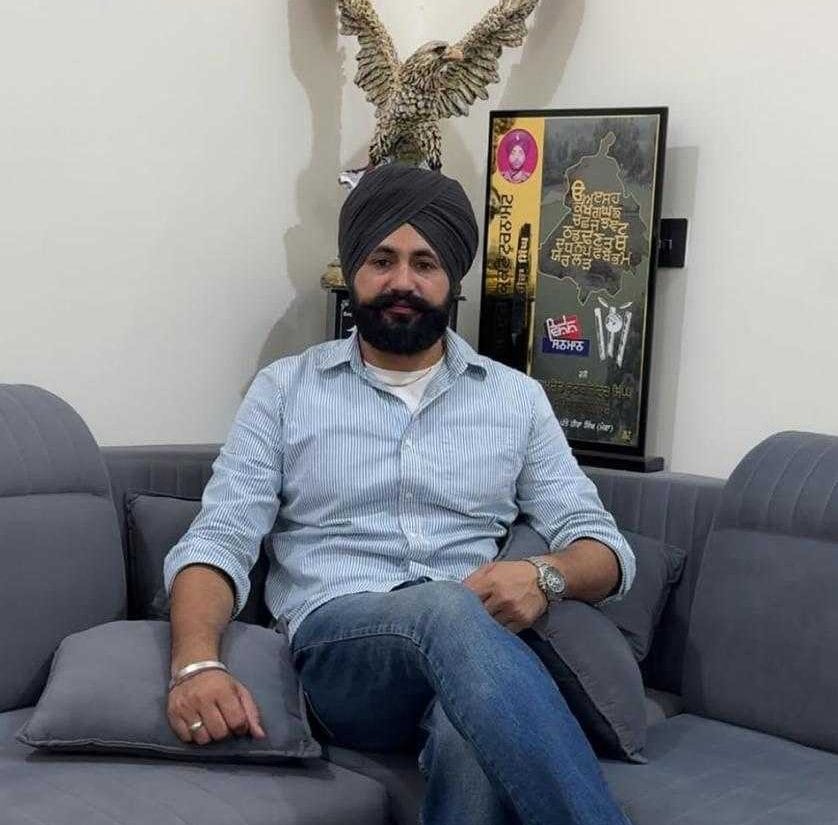
Harwinder Singh Happy, sarpanch of Patto Hira Singh village, was shot dead outside his gym in Bagha Purana on 6 March. The accused alleged that the sarpanch had an affair with his wife and, in a fit of rage, took his life. Police said the husband had been subjected to severe mistreatment, which they claim drove him to commit the act. The sarpanch’s family, however, alleges that he was only trying to help the woman, who had been harassed by her husband.
Around the same time, sarpanch Mahinder Singh of Bootian Dian Chhanna village in Jalandhar was beaten to death by drug peddlers. The killing came amid Punjab’s ongoing anti-drug drive, and Mahinder’s family staged protests demanding that he be declared a martyr, citing his alleged role in speaking out against drug peddlers.
“The targeting of sarpanches appears to be a new trend. The killings seem well-orchestrated and could have political ramifications. Notably, the pattern has intensified after the zila parishad and local samiti elections,” said Jupinderjit Singh, author of the book Gangs of Punjab.
According to Tarn Taran SSP Surendra Lamba, extortion remains the focus behind the killings.
“Anyone who refuses to pay is at risk of being murdered. Some killings are also driven by personal rivalries, often linked to crime, or target those who work against the gangs’ interests. They lure residents with small amounts like Rs 10,000 or Rs 15,000 and make them their associates. The gangs operate in a network—some carry out the crimes, others handle transport, and some manage the finances,” Lamba said.
‘A good sarpanch’
Weddings, with their crowds, blaring music, and chaos, often provide the perfect cover for attackers to slip in unnoticed. But Jarmal Singh, sarpanch of Valtoha village in Tarn Taran, had prepared for the worst. At the wedding at Marigold Palace Resort near Amritsar’s Verka Bypass, he was wearing a bulletproof jacket.
More than 100 guests were in attendance that evening, including Khemkaran MLA Sarvan Singh Dhun, when two men walked up, aimed, and fired. The vest offered no protection. Jarmal was shot in the head.
According to the police, this attack was the fourth attempt on his life. For nearly a year, he had faced repeated extortion threats. The existence of these threats only came into public focus after his death, when Dhun mentioned them in a statement.
People are so scared now. Anyone can come from anywhere and kill someone. Tarn Taran is already infamous for drugs, murders, and unemployment.
An Amarkot resident
Gangster Prabhdeep Singh, alias Prabh Dasuwal, demanded Rs 50 lakh. Jarmal had refused twice.
Jarmal, a thekedar and local contractor, was seen by the gang as nothing more than a source of easy money. “He told them he would rather die than pay,” a villager said.
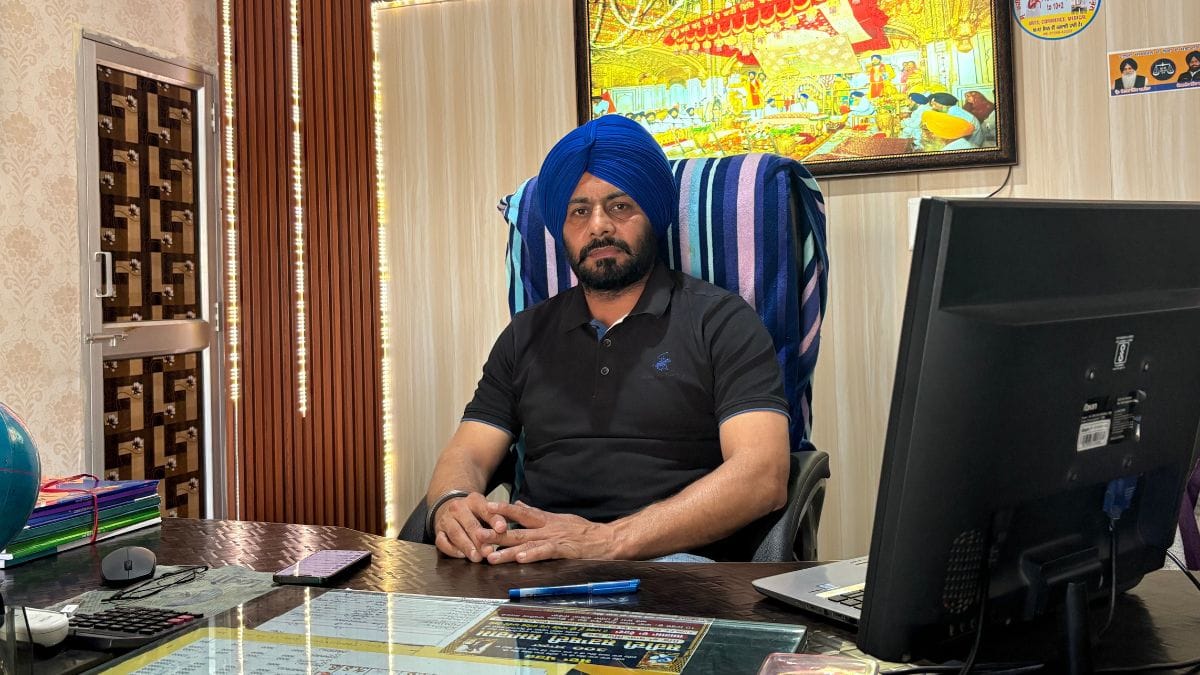
Surjit Singh, who runs Sadar Hari Singh Nalwa Secondary School in Amarkot, said that when he refused twice, Prabhdeep feared others might also refuse. That would hurt his business. So he killed him.
For a long time, some villagers believed the threats were exaggerated, assuming Jarmal spoke of them only to obtain security.
It changed when gunmen opened fire on him last year. One bullet grazed his ear, and his driver was also injured. On another occasion, attackers fired at his house, and Jarmal shot back with his own weapon.
“For a few months, he was given security, but the guard often got drunk at night and neglected his duties, leaving Jarmal Singh with no option but to let him go,” said a sarpanch of a neighbouring village.
After repeated threats, residents said Jarmal considered paying the extortion money—but by then, it was too late. The common knowledge in the village is that the gangster usually calls twice—after that, he sends shooters.
In Valtoha, Singh’s stature went far beyond the formal powers of a village sarpanch. Residents in nearby villages spoke of him as a man whose reach extended well beyond the panchayat office.
From complaints about electricity connections and irrigation to requests for help navigating government offices in Chandigarh, Jarmal had all the solutions for villagers. His political connections only strengthened that position.
And his home reflected that stature. The palatial white bungalow stood out even in a village where large houses are common. Wide balconies, a sweeping lawn, and a large gate that opens into a courtyard where vehicles were parked in rows—two white Fortuners and an Etios. Singh owned between 70 and 80 acres of farmland, villagers claim.
In rural Punjab, where land ownership and political connections often go hand in hand, Singh had both. He was a land-owning patriarch with political influence—exactly the kind of figure gangs now target to extract money.
“He was a very good sarpanch,” said a man in his sixties, seated with a group of men at a motor mechanic shop in Amarkot village. “For poor girls’ weddings, he would even give Rs 6,000 from his own pocket. People valued him enough to elect him three times.”
Yet the conversations about his murder have already faded. And fear has settled in.
“People are so scared now. Anyone can come from anywhere and kill someone. Tarn Taran is already infamous for drugs, murders, and unemployment,” another from the group said.
Within days of the killing, Punjab Police launched multi-state operations, arresting seven accused by 12 January, including two shooters brought from Chhattisgarh and others from Punjab and Rajasthan. Two key aides, Harnoor Singh alias Noor and Sukhraj Singh, were later killed in police encounters during the investigation.
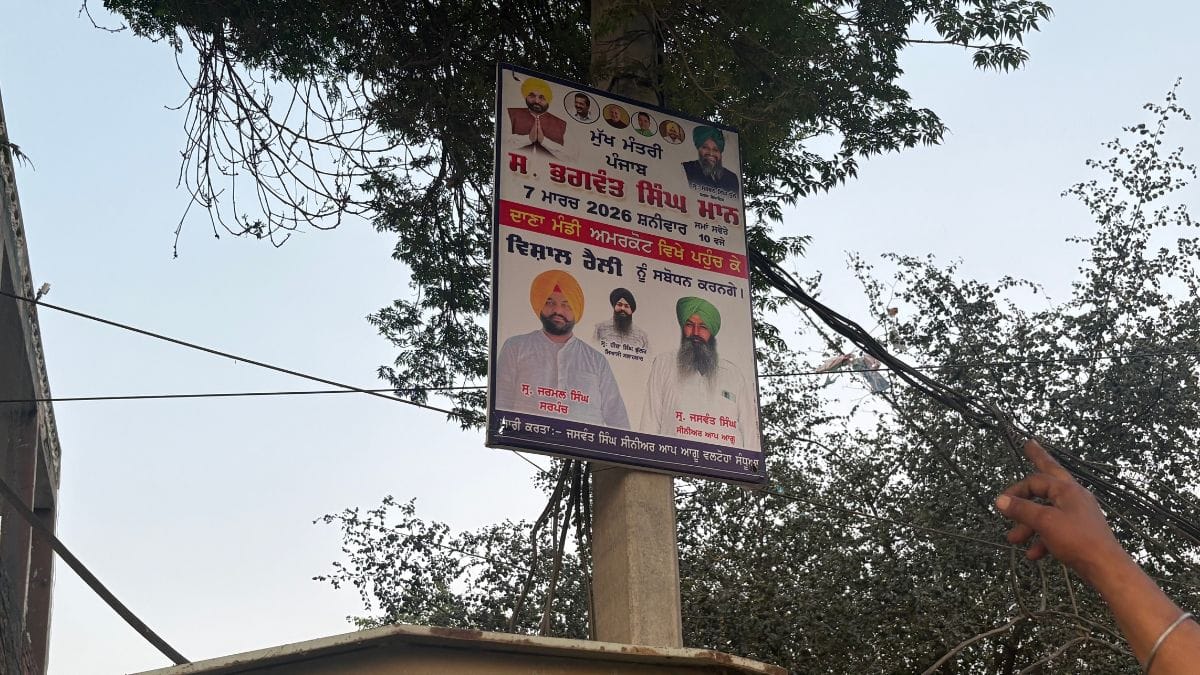
Jarmal was a member of Punjab’s ruling party, the Aam Aadmi Party (AAP). In fact, several of the sarpanches killed in recent months across the state were associated with AAP—a detail that has drawn quiet attention in political circles.
On 5 January, Punjab chief minister Bhagwant Mann directed police to take swift and decisive action following the killing of Jarmal. As per the reports, Mann spoke with DGP Gaurav Yadav and sought a detailed update on the investigation.
But the party leadership has largely remained silent about the deaths of its grassroots workers.
Also read: ‘Krishna played cricket first’— Sanatan Premier League gives the game a Hindu makeover
Murder at a wedding
It was his cousin’s wedding on 18 February at Sidhu Farm House, on the Tarn Taran-Bathinda highway. The celebration had barely paused. Harbinder Singh, 45-year-old Aam Aadmi Party-affiliated sarpanch of Thathian Mahantan village in Tarn Taran district, had just stepped off the stage after dancing with friends. As he sat down on a sofa, three armed men walked into the crowded wedding hall.
One of them blended into the crowd, then suddenly pulled out a gun and fired four shots at close range—in his stomach and head.
Harpreet Singh, the slain sarpanch’s 35-year-old brother, heard the story from guests at the wedding. This is how he pieces together the memory of his brother’s last breaths.
In our village alone, at least 80 to 90 people must have received such calls. Farmers get them. Shopkeepers get them. Anyone with even a little money is targeted.
A sarpanch from a village near Valtoha
Hours after the killing, Canada-based gangster Lakhbir Landa, also known as Harikae, claimed responsibility for the murder. He was also one of the masterminds behind the Rocket-Propelled Grenade (RPG) attack on Tarn Taran’s Sarhali Police Station on 9 December 2022.
“We murdered the sarpanch because he caused harm to our younger brother Noni, in which he was a witness. This was just a trailer… Police are carrying out illegal encounters—either stop them, or the revenge for all our brothers will be taken in a single day,” said Landa in an unverified post that circulated on Instagram and Facebook.
SSP Lamba said the police have arrested 14 people in connection with the murder, including those who sheltered and assisted the shooters.
“Everyone we arrested was paid about Rs 18,000 to take part in the crime, and one of them received Rs 56,000,” he said.
Calling it a hidden employment, he said that most men were drawn by the lure of quick money. Police also recovered one AK-47 rifle and four pistols, including desi katta (illicit handmade pistols), from the accused.
Many of the associates involved in such crimes are local drug smugglers or habitual offenders who are easily recruited by gangs.
For Harpreet, the violence is also about reputation and fear. “They do these things and then take credit because they want to grow bigger and spread fear in Punjab,” he said.
Now, outside the home of the sarpanch in Thathian Mahantan sits a police officer. The large metallic-grey gate opens only occasionally. And when it does, relatives and visitors can be seen inside, seated quietly on plastic chairs in the courtyard.
The family has been struggling to come to terms with the loss of the eldest son of the house.
“People in Punjab have stopped fearing the law now. The situation has gone beyond the government. Law and order is collapsing—there has to be strict action,” Harpreet said, reiterating the sentiment many in the region expressed.
Gangsters often demand money and threaten to kill if it is not paid. But in Harbinder’s case, Harpreet said, there was no warning. “There was no call, no threat, no chance given. They just killed him,” he said, his face betraying the exhaustion of the past.
With folded hands and a wan smile, he walked back inside, closing the gate behind him. “This is all I know. I don’t have the energy to say more.”
Also read: A Delhi couple keeps climbing Ghazipur landfill to feed 400 dogs. Chicken, rice & dahi
Operation Prahar
The Punjab government launched the “Gangsteraan Te Vaar” (War Against Gangsters) campaign in January 2026. As part of it, Operation Prahar was carried out between 19 and 22 January, with nearly 12,000 police personnel raiding more than 2,000 locations across the state.
The operation targeted 60 foreign-based gangsters and deployed nearly 2,000 police teams and around 12,000 personnel across the state to dismantle organised crime networks. According to official data, the operation resulted in 3,126 arrests, out of which 49 were active gangsters and 3,077 were other wanted criminals.
Despite these efforts, gangsterism and drug networks remain a serious concern for residents.
Some locals say the government needs to act more aggressively. “What Yogi Adityanath did in UP with the JCBs—the same urgency is needed here in Punjab,” one resident said.
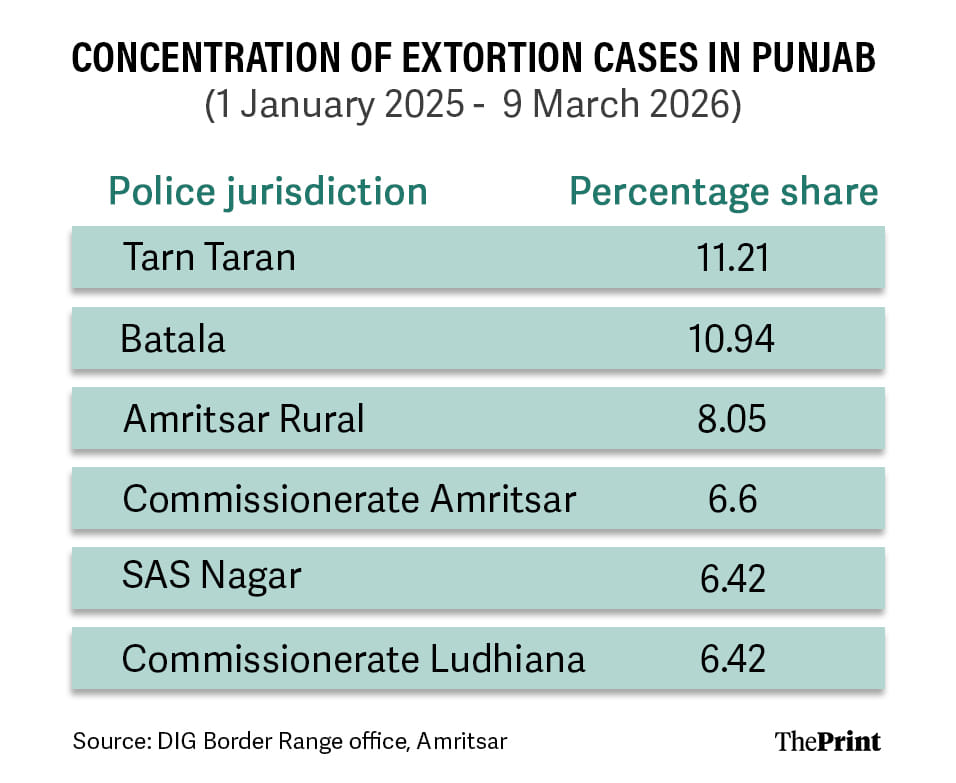
According to data shared by the DIG Border Range office with ThePrint, the highest concentration of extortion cases between 1 January 2025 and 9 March 2026 was recorded in Tarn Taran (11.21 per cent). This was followed by Batala (10.94 per cent), Amritsar Rural (8.05 per cent), Commissionerate Amritsar (6.6 per cent), SAS Nagar (6.42 per cent), and Commissionerate Ludhiana (6.42 per cent).
Experts warn that the scale of the problem goes far beyond isolated incidents.
“Punjab has over 500 gangs and modules, all controlled by 10 ‘mother gangs’. Their leaders are spread across jails, Canada, the US, and even Pakistan,” said Jupinderjit. He added that last year saw a sharp rise in smuggling, with 350 small arms—mostly meant for gangsters—recovered, compared with fewer than 35 the previous year, along with the recovery of the first AK-47 rifles smuggled from Pakistan since Operation Prahar.
To tackle these networks, police have mapped the major gangster groups operating in different regions.
In Tarn Taran, Amritsar Rural, and Batala, police are mainly tracking the Gopi Ghanshampuria, Jaggu Bhagwanpuria, Harry Chatha, and the Rinda-Landa networks. In Amritsar city, the Jaggu Bhagwanpuria, Bambiha, and Rinda-Landa gangs remain under close watch. In SAS Nagar (Mohali), investigators are focusing on modules linked to Rinda and Landa, many of which are coordinated by handlers abroad. Ludhiana, meanwhile, is being monitored for activities connected to the Bambiha and Jaggu Bhagwanpuria gangs and their foreign-based associates.
“Operations against these gangs include raids, arrests, demolition of illegal constructions, freezing of properties, cancellation of arms licences, and dismantling of financial networks,” the DIG Border Range office told ThePrint.
The impact of these efforts, the DIG Border Range office noted, is beginning to show. By February 2026, Punjab recorded a 15.14 per cent decline in extortion cases compared to January.
Also read: Molested by customers, women gig workers say they work in fear
Lying low
Sitting inside a small roadside restaurant, a sarpanch from a village near Valtoha recalled receiving one such call barely 10 days ago. Like many others, he was too scared to speak openly. Most sarpanches, in fact, refused to go on record, wary of drawing the attention of the gangs.
The caller claimed to be from the Prabhdeep Singh gang and demanded Rs 10 lakh.
“I didn’t have that kind of money to give,” he said. “For four days straight, I stayed locked inside my house. I was too scared to even let my family step outside.”
Eventually, he said, he defused the situation through an acquaintance who knew some members of the gang.
“I carry my gun everywhere now. All of us do,” he said, gesturing toward his trouser pocket where he kept a pistol. “You never know when firing might happen.”
The restaurant’s owner nodded in agreement and instinctively patted his own pocket. The two men added that others in their village had received similar calls, some of whom eventually paid the money.
“In our village alone, at least 80 to 90 people must have received such calls,” the sarpanch said. “Farmers get them. Shopkeepers get them. Anyone with even a little money is targeted.”
Now, fear has led them to compromise on even basic aspirations.
The sarpanch said he has long wanted to buy a new car but has avoided doing so, worried that displaying wealth might attract the attention of gangsters again. Others in the village, he said, have delayed starting small businesses for the same reason.
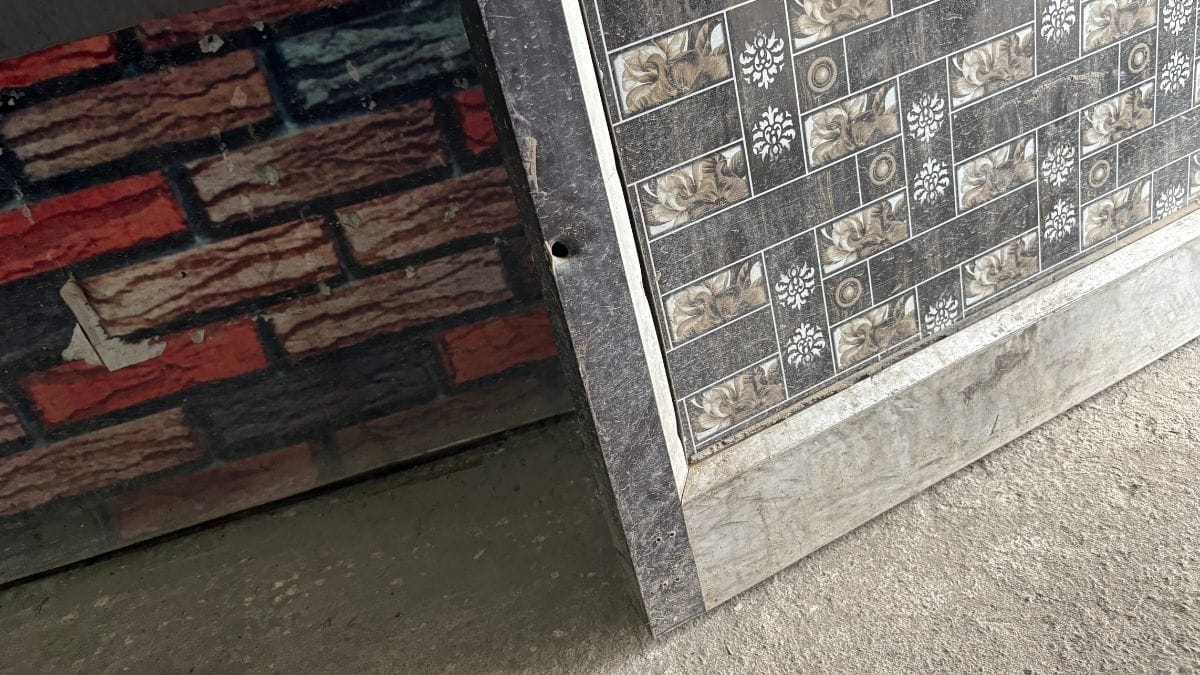
People in the villages speak in hushed tones about the extortion calls they, too, have received, sometimes pointing to bullet scars on their walls—a lesson they can’t afford to forget.
“There’s nothing we can do. If they ask for money, we have to pay—one way or another, even if it means taking loans or scraping together whatever we can. And after paying so much, dealing with the mental toll is even harder,” said one restaurant owner.
Back at the home of Jarmal Singh, the family is still trying to process his death.
One of his sons lives in Canada. Another, just 21 years old, has suddenly found himself managing the household responsibilities.
“My father did everything for us,” Jarmal’s daughter said. “He educated us, worked hard, and even sent us abroad so we could have better lives. We had finally grown up—it was our turn to take care of him.”
She paused, wiped the tears from her face, and placed the empty chai cup on the table.
“But that chance was snatched away from us.”
(Edited by Prasanna Bachchhav)