





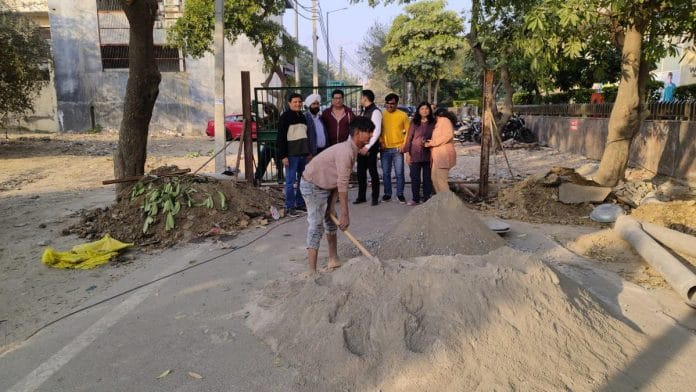



Noida: On 2 November, residents of Noida’s Sector 43 geared up for their first official RWA election. Until then, a self-appointed body had been operating unchallenged since 2013. But the process collapsed before a single vote could be cast. Instead of participating, the old faction staged a protest outside the Registrar’s office, forcing authorities to postpone the polls yet again.
“RWA presidency is another form of power in the society, and some people don’t want to lose that power or allow new leadership to come in,” said 40-year-old Deepak Sharma, part of the group of residents calling vociferously for the election.
RWAs are the first point of contact between residents and civic authorities, but this cog of urban governance keeps failing in Delhi-NCR. Many housing societies across the region go years without elections due to internal disputes, entrenched cabals, lack of urgency from authorities, and, sometimes, a shortage of volunteers. Some turn into mini-fiefdoms.
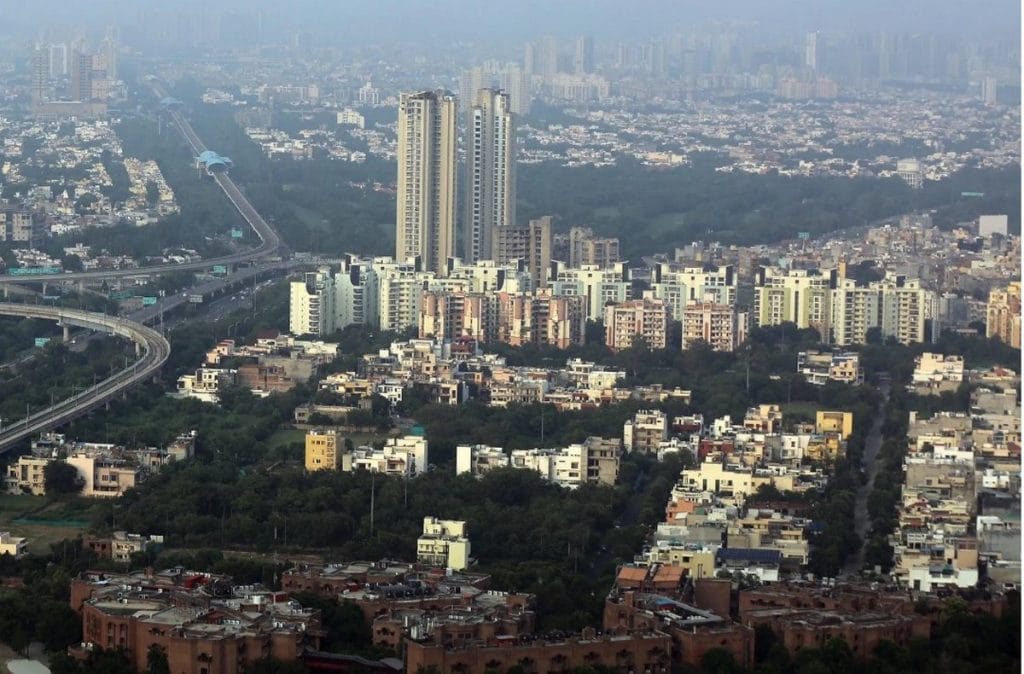
In Noida, the fallout of delayed elections and missing leadership is even worse than in Delhi since it lacks the capital’s multiple civic support systems. Unlike Delhi, which has the Municipal Corporation for sanitation and the PWD for civic maintenance, Noida residents rely almost entirely on a single body—the Noida Authority. This centralisation makes the RWA or AOA (Apartment Owners’ Association) a necessary bridge between citizens and authorities for security and civic issues, from garbage collection to street lighting.
“Our problems and complaints get buried in the Noida Authority’s pile of pending files. They have hundreds of sectors to handle, so unless our own leaders work internally, nothing will be solved,” said Chandni Mathur, a resident of Sector 43, home to properties worth crores, including independent houses, apartment buildings, and developments by Godrej.
Even in societies where elections technically occur, leadership frequently remains confined to a small circle. The same incumbents rotate through the positions of president, vice-president, secretary, and treasurer year after year. Certain legal loopholes allow this. RWAs are voluntary bodies registered under the Societies Registration Act of 1860 and state apartment or cooperative laws, which lay down rules for membership, elections, bylaws, and term durations. But there’s nothing preventing office-holders from simply running for different seats when elections come up every two to three years. In most cases, young and working residents do not actively participate in RWA elections or related matters and so there’s no real challenge either.
It’s not a fight against a group but about what the residents deserve. An elected body has legitimacy. A self-appointed one doesn’t
-Jagdish, resident of Noida Sector 43
But in Sector 43, people were fighting for a change. For years, the society has been caught in a tug-of-war between the five-member self-appointed body and a faction of residents demanding transparent, official elections. The self-appointed committee claims that the society functions smoothly without polls, while other residents disagree, citing unresolved civic issues and security lapses that only an accountable elected body can address effectively.
These residents have repeatedly approached the Noida Authority and the Office of the Deputy Registrar, the bodies responsible for overseeing RWA registrations and elections, but these interventions usually failed because the opposing group refused to participate.
Finally, in April this year, Gautam Buddha Nagar District Magistrate Manish Kumar Verma directed the deputy registrar to identify all defaulting societies where elections have not been held for years and to ensure overdue polls are conducted at the earliest. This effort, too, seemed to be faltering in Sector 43 when the elections were called off on 2 November, but residents kept up pressure until the Registrar’s office stepped in directly and held an election in its presence. With no candidates contesting against him, Deepak Sharma was elected president of the Sector 43 RWA unopposed on 21 November 2025.
“Self-appointed people stop serving us and start serving themselves. The people who work for us should be elected by us,” said Ramesh Shah, a resident of Noida’s Sector 74.
Also Read: Delhi’s single women vs RWAs. Story of the new ‘problem tenants’
The long road to an RWA election
When 60-year-old Chandni Mathur moved to Sector 43 in 2022 with her husband and son, she looked forward to the comfort of owning a home. But she quickly realised it wasn’t as safe as she’d expected. Within days of shifting, she began hearing about multiple thefts in the neighbourhood. There were no guards, surveillance cameras, or structured security system in the sector.
Outraged, Mathur complained to the RWA committee and encouraged other residents to raise their voices as well. The response was largely indifferent.
“The self-appointed committee held power but not responsibility, and that became a roadblock to ensuring the sector’s safety and security,” said Mathur.
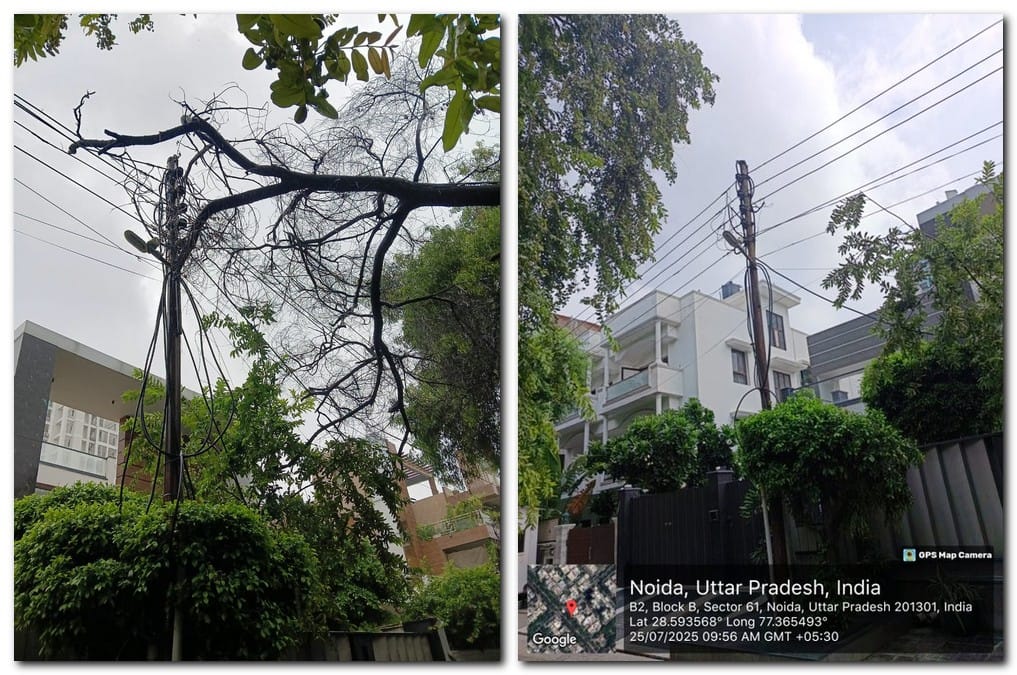
Security was just one layer of the mess. Non-functional streetlights left parks and streets in pitch darkness, there were chronic sewage blockages, and frequent disruptions in water supply that left entire blocks dry for hours. Yet, every time a resident filed a complaint with the RWA, the response was either a polite dismissal—”we will look into this”—or complete silence.
Elections in RWAs and AOAs are internal matters, but when we receive multiple complaints and conflicts, it takes time to look into each case and resolve them
-Vaibhav Kumar, deputy registrar (Firms, Societies & Chits) for Gautam Buddh Nagar
Another resident also questioned how money collected for upkeep was spent.
“The membership money and the money spent on resolving civic issues never matched on paper,” said the resident on condition of anonymity. “This is what happens when people remain in a position for a long time and no one questions them.”
ThePrint spoke to Sumit Chhabra, former treasurer of the previous Sector 43 RWA,
But he refused to comment on the election issue.
The inaction eventually pushed a group of residents to approach the Deputy Registrar’s office in January, demanding the one thing they agreed could fix the rot: an election.
“It’s not a fight against a group but about what the residents deserve,” said Jagdish, a resident of Sector 43. “An elected body has legitimacy. A self-appointed one doesn’t.”
Another battle was getting neighbours to take the polls seriously. RWAs are the first line of escalation for everyday civic work, yet many residents dismiss elections as petty society politics. Officials, too, often treat them as an internal squabble, not an important governance exercise.
Driven and dedicated candidates who are willing to take up issues and advocate for the society are essential, according to Mathur.
“Only through elections can we put the right people in the right positions—people who will work, not just sit in power,” she said.
It took multiple visits to the Registrar’s office, repeated complaints, and nearly eleven months to finally get an election officer appointed.
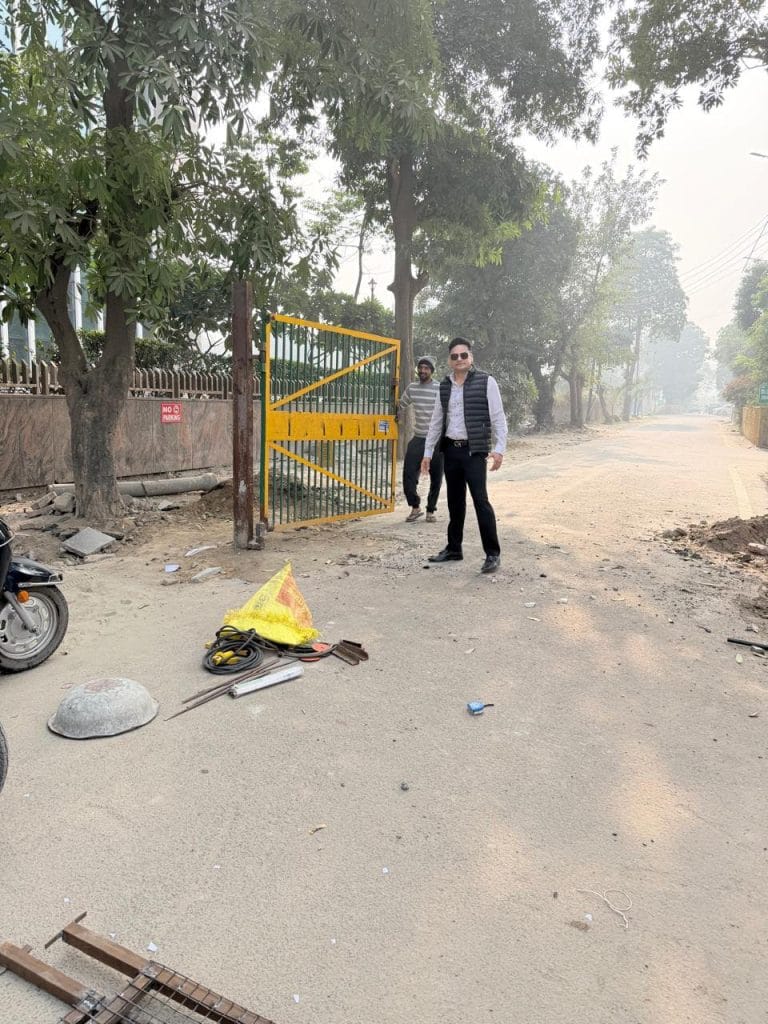
In that period, residents ran in circles. While the paperwork dragged on, daily life in Sector 43 deteriorated. Streetlights stayed broken, sewage blockages spread during the monsoon, garbage collection remained erratic. With no elected body to take charge, residents themselves began approaching the relevant departments and submitting written complaints. Only the streetlights were fixed after a complaint to the Noida Authority office.
Addressing the long timeline, Vaibhav Kumar, deputy registrar (Firms, Societies & Chits) for Gautam Buddh Nagar, said that the administration is often caught in the middle of warring factions.
“Elections in RWAs and AOAs are internal matters, but when we receive multiple complaints and conflicts, it takes time to look into each case and resolve them,” he added.
If some Noida societies are battling internal resistance to RWA elections, others are in a bind because of administrative paralysis.
Noida’s ‘missing elections’
Promod Gupta, the RWA secretary of Noida’s Sector 108, is stuck in a waiting game. The tenure of his committee expired in December last year but the elections still haven’t been conducted. This time, it’s because they cannot pin down an election officer to oversee the exercise.
“The election officer either keeps extending the election date, or the elections don’t happen because of their unavailability,” said Gupta. On social media platforms such as X, complaints abound in a similar vein about delayed elections.
Tomorrow our AOA’s 1‑year tenure ends, yet they’re floating tenders for 2026, and no election update. This is immoral and illegal. We demand cancellation of tenders + clear re‑election schedule. #Noida #AOA @noida_authority @dmgbnagar @ASCAOAPH1 @myogiadityanath @myogioffice https://t.co/xpj298Kiok
— Gaurav Prakash (@gaurravprakash) December 14, 2025
RWA elections are overseen by an election officer appointed by the Registrar’s office, often in coordination with the district administration. In Noida, a pool of around 30 government officials from different departments is empanelled for this role and assigned to societies when elections are due. In some cases, a resident who is not part of the RWA committee is also named as an observer to monitor the process.
The old committee is continuing with its duties. Gupta said residents have not raised complaints about its performance, but they still want the polls conducted in line with RWA rules and guidelines.
“Even if the same president or group gets re-elected, it is important to hold the election so that no one takes their power for granted,” said Amita Gupta, a resident of Sector 108.
People say RWA work is social service and that they don’t get paid for it, but for many, it’s a way to hold power and influence
-Promod Gupta, RWA secretary of Noida Sector 108
Sector 108 is just one name on a long list of Noida societies where elections are overdue. Deputy registrar Kumar said the department has started shortlisting societies and sectors that have not held timely elections or have received complaints from residents. Notices have been sent to those societies, asking for reasons behind the prolonged delays.
“We have shortlisted 50 societies and have conducted elections in 20 of them in the last three months under our supervision,” said Kumar. “Election officers have also been appointed to conduct timely polls in the remaining societies.”
Residents of sectors such as 74, 45, and 105 said delays and the absence of accountable leadership affect daily life. Complaints about water, electricity, streetlights, park maintenance, and security guards often go unresolved.
RWA bye-laws typically specify elections every two years, though some societies have longer terms depending on their registered rules. Under the Uttar Pradesh Apartment Act, 2010, Apartment Owners’ Associations must hold polls every year.
In many such cases, whether it’s Greater Noida, Ghaziabad, or Faridabad, the lack of elections is often linked to the vice-like grip of office-bearers.
“The same people don’t want to leave their positions,” said KK Jain, general secretary of the Federation of Noida RWAs (FORWA).
What’s so desirable about the RWA?
A paradox is at play. While most residents view society management as a thankless chore, those who do nab a seat are unwilling to give up the power it brings.
RWAs in India are essentially “armed with quasi-governmental authority”, as Karanjeet Kaur put it in ThePrint. While MPs and MLAs operate at a macro level, RWAs control the minutiae of daily existence: who is permitted to rent an apartment, who can use the service lift, and what the penalty is for a dog urinating on a shrub. This authority was on display during the Covid-19 pandemic, when RWAs became de facto enforcers of state directives.
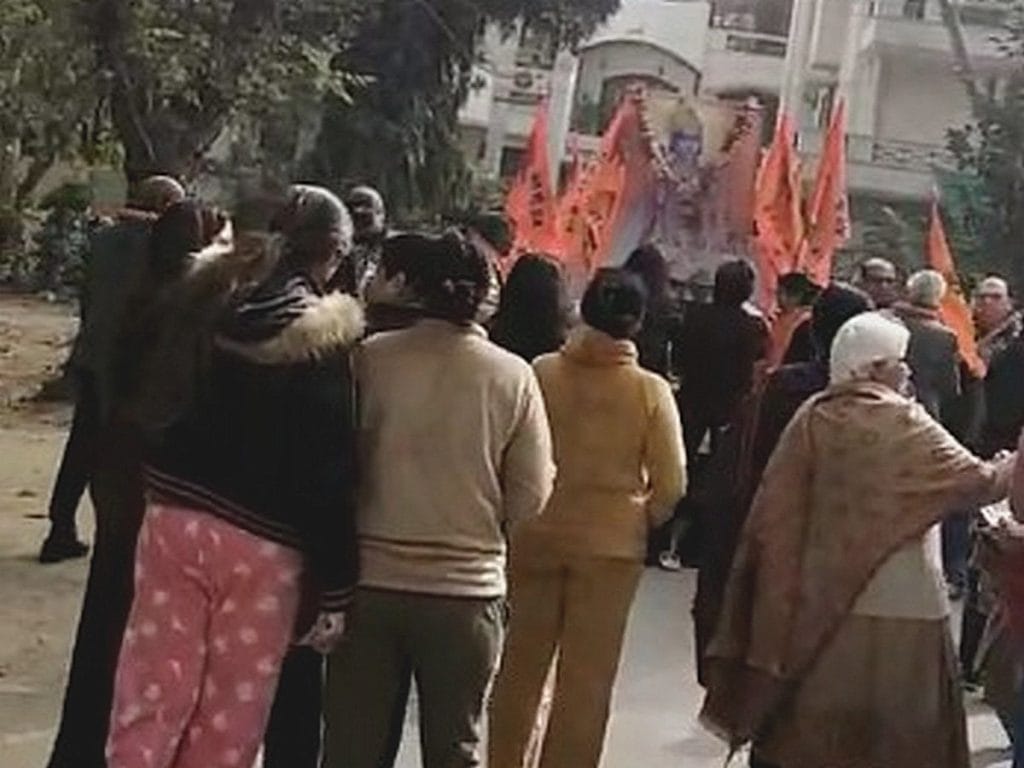
The political class actively courts this influence. Many RWA leaders have evolved into urban middle-class foot soldiers for political parties. During the Ram temple outreach programs last year, for instance, housing societies across Delhi-NCR became key emissaries for VHP and RSS outreach, whether by hosting processions or screening the Pran Pratishtha ceremony. Ahead of the Delhi elections, the BJP’s manifesto panel held meetings with RWA leaders. In Gurugram and Noida, district administrations announced incentives for housing societies that could deliver high voter turnouts during the Lok Sabha polls. In the Haryana assembly elections, a Gurugram RWA even fielded a candidate.
Promod Gupta argued that this political access is a major factor in the reluctance to hold elections. They don’t want to lose the connections they have built with MLAs, which in turn gives them more clout in their societies.
Once an RWA is divided into political parties, it stops serving the community and starts serving other interests
-Rajiv Kakria, activist
“People say RWA work is social service and that they don’t get paid for it, but for many, it’s a way to hold power and influence,” he said.
Beyond social clout, RWAs in large societies also manage corpuses running into crores of rupees—funds collected for maintenance, security, and infrastructure upgrades. With the power to award contracts for housekeeping, security agencies, and repair works, these bodies are not immune to fiscal impropriety, residents say.
“When elections don’t happen, one group controls the funds, tenders, and decisions. Why would they willingly give that up?” added Gupta.
For entrenched committees, a new election represents a threat. It means handing over the books and subjecting past expenses to an audit.
“That accountability is exactly what many don’t want to face,” said a resident of Sector 45.
And loopholes in the system make it fairly easy to avoid it.
Also Read: Delhi elderly have a lift problem. And they are fighting neighbours in RWA groups, courts
The same faces
Neha Puri, 49, returned to her Green Park home one evening after work to find a few RWA members in her living room, pressuring her elderly mother-in-law to pay for some civic work. Puri intervened and refused to pay unless she was told exactly how the money would be spent. She also pointed out that residents’ complaints remained unresolved despite regular maintenance and membership fees.
Her questions, Puri said, quickly turned into a heated argument. The RWA members issued a challenge: if she wanted change, she should run for office herself.
Puri took them up on it and contested the 2023 election. She went door-to-door, campaigning to break the monopoly of the old guard, and asked neighbours to give her a chance.
“Even if elections happen, the same five people keep returning, just rotating positions among themselves,” Puri said. That year, she was elected as the general secretary of the Green Park society, and then as its president in the 2024 election.
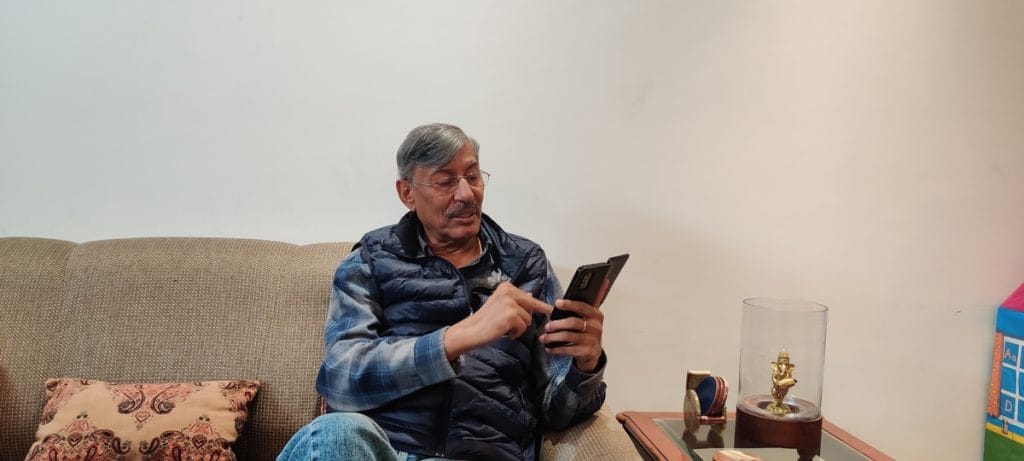
Once the new committee was in charge, Puri said it began allocating membership funds by purpose, maintaining separate accounts, and keeping written records. For civic issues, she said the committee first approaches the concerned department and lodges a complaint; if there are delays, they dip into society funds.
“The committee remains in regular contact with civic bodies such as the MCD and PWD and consistently reaches out to them to resolve issues, rather than ignoring problems for long periods,” she added.
Rajiv Kakria, 61, a convenor of Delhi’s ‘Save Our City’ campaign that sees RWAs working together on common issues, said the “same faces” complaint is extremely common even if elections happen on time due to a lack of transparency.
Kakria said RWAs do not function under a uniform, modern framework. Many operate under the Societies Registration Act, 1860, which leaves accountability to bye-laws, with uneven enforcement. This makes it easier for presidents to resist audits and keep funds and decisions within a closed circle.
Worse still is the erosion of political neutrality, according to Kakria. RWAs were meant to be strictly apolitical bodies, but their co-option by political parties has deepened internal divides and shifted focus away from residents’ welfare.
“When politics enters RWA spaces, transparency leaves,” he said. “Once an RWA is divided into political parties, it stops serving the community and starts serving other interests.”
(Edited by Asavari Singh)