





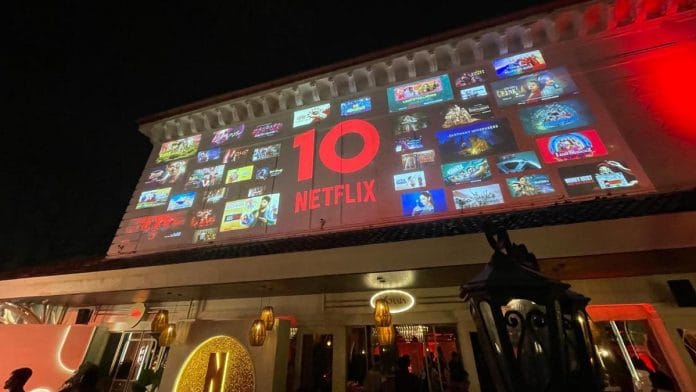



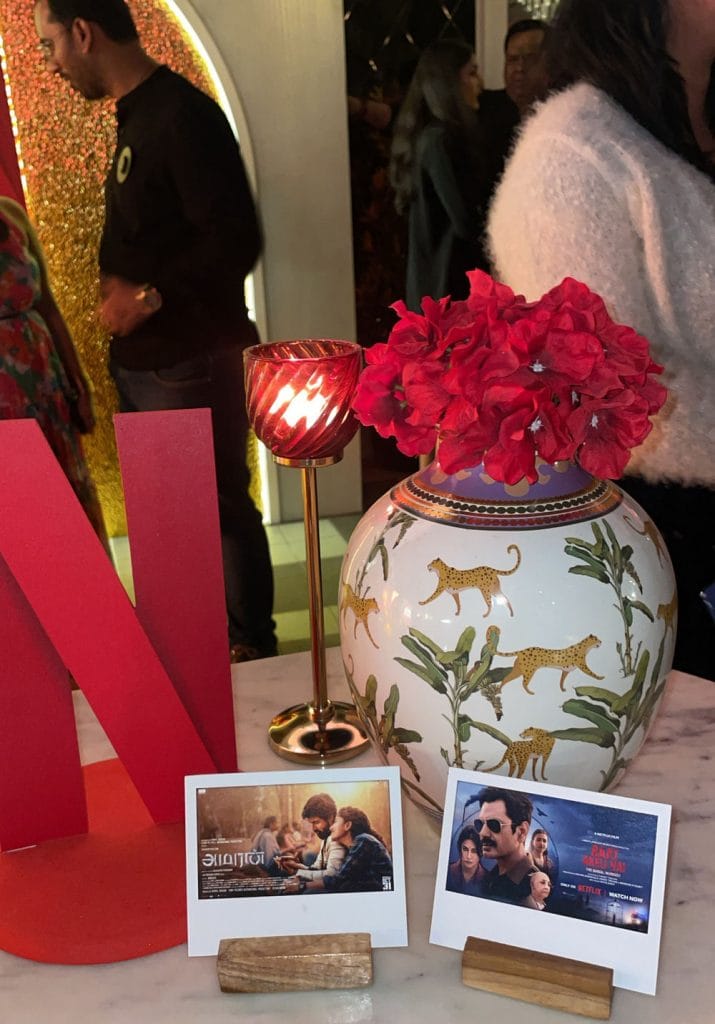
Mumbai: When Netflix turned 10 in India last week, it didn’t try to bedazzle with a Bollywood-style stage show or line-up of celebrities. Instead, it let its catalogue do the talking at the tony South Mumbai restaurant Soraia. Scenes from big hitters such as Sacred Games, Laapataa Ladies, and B**ds of Bollywood* flickered across a towering screen as a band played in the background.
It mirrored how Netflix changed India’s viewing habits—by putting content, not stars, front and centre.
“It has been a phenomenal journey. But picture abhi baaki hai,” said Monika Shergill, vice president of Content at Netflix India at the 9 January event, borrowing the popular SRK dialogue from Om Shanti Om.
Back in 2016, Netflix’s entry into India was quiet and underhyped. OTT was still unfamiliar territory for most Indian viewers, and a subscription came with a premium price tag that, for a middle-class household, could cover a week’s worth of vegetables.
Yet, its growth exploded quickly. Netflix hit 4.2 million subscribers in under two years—a feat that took four years in the US. Its Indian subscriber base is currently estimated to be between 20 and 22 million. In FY25, Netflix India’s net profit grew 63 per cent from the previous year to Rs 85 crore, and revenue from operations increased 32 per cent to Rs 3,769 crore.
As a first mover, Netflix loosened the grip of appointment television and introduced Indians to the joys of binge-watching. It also changed what India watched with its buffet of English shows such as Bridgerton, Korean dramas, and gritty Indian crime series.
Despite stiff competition from Amazon Prime, Jio Hotstar, and Sony LIV, it’s managed to hold its own, aided by progressive reductions in subscription rates, from a peak of around Rs 800 monthly to Rs 649 to now even a Rs 149 mobile plan. But it’s still seen as a ‘premium’ service with aspirational international value.
“Netflix is like an iPhone, while other platforms are like Android,” said scriptwriter Nidhi Sethia, who worked on the Netflix release Chamkila.
For a writer or director, having a Netflix project today is like working with YRF or Dharma
-Nidhi Sethia, scriptwriter
At the same time, the platform shook up the big-star chokehold on entertainment. It elevated supporting actors and also opened up new niches for ‘intimacy coordinators’ and dubbing directors.
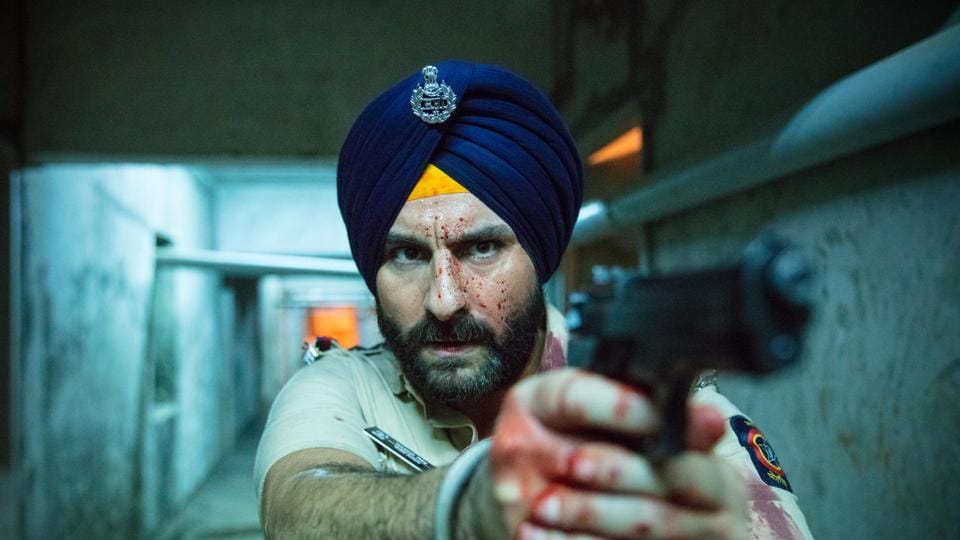
“Netflix’s biggest contribution was they provided work opportunities to a whole section of actors who didn’t get good work in TV and films,” said Pawan Singh, who played Lohani in the Emmy-nominated Sacred Games. Released in 2018, the show was Netflix India’s first breakout series and reset the template for Indian long-form content.
Singh, however, added that the platform has relied a little too heavily on familiar tropes in recent years.
“There is too much of sex and bloodbaths. We can do without that also. More stories like Kathal and 12th Fail will help Netflix reach a wider audience and penetrate into Tier 2 and Tier 3 cities,” he said.
Also Read: Bollywood casting directors want ‘real’, relatable talent, not stars. OTT is changing it
‘Age of stars is over’
In the age of nepo babies and bloated blockbusters, OTT became the space where talent got a more democratic shot. Netflix got there first.
“Bollywood was always very restricted. Actors had to look a certain way to make it big. But Netflix being the pioneer of OTT trusted the talent which didn’t get opportunities elsewhere. it opened avenues for all kinds of actors,” said actor Asif Ali Beg, who was part of the 2023 crime drama Trial By Fire.
Even established performers who never quite broke into Bollywood’s A-list found their moment on streaming, from Vijay Varma in Imtiaz Ali’s She (2020) to Radhika Apte in Sacred Games. Smaller roles got traction too. Pawan Singh, who played Lohani in Sacred Games, recalled being recognised at grocery stores.
“It brought everyone, from a leading star to a supporting actor, on the same level. Even a good cameo got more attention in a Netflix film as compared to a cameo in a film,” he said.
Suddenly, being “drop dead gorgeous” or dancing on hills was no longer a prerequisite, Beg said. Over the years, OTT platforms across the board gave a fresh lease of life to the careers of even veterans like Jaideep Ahlawat (Paatal Lok) and Barun Sobti (Kohrra).
“It ended the age of big stars and gave actors a fair opportunity to showcase their talent,” added Beg.
The 61-year-old, who has worked with Netflix both as an actor and as a dubbing director on projects such as Rana Naidu, seasons 1 and 2, credits this to the fact that new types of stories are being told.
It brought everyone, from a leading star to a supporting actor, on the same level. Even a good cameo got more attention in a Netflix film as compared to a cameo in a film
-Asif Ali Beg, actor
“Such stories would have never seen light of the day in theatres,” he said.
For scriptwriter Nidhi Sethia, Imtiaz Ali’s Amar Singh Chamkila could only be made because Netflix is relatively open to creative freedom.
“Even though they were not able to fully see what he (Imtiaz) was trying to do, they trusted his gut and that takes a lot of courage,” the 40-year-old said. “For example, they were sceptical about the use of Punjabi language with respect to how will a larger audience understand, but in the end they let the creators take the lead.”
After Chamkila, Sethia has worked with Netflix on two more projects — one in edit and another still being written.
“Netflix came to India as a huge blessing for everyone associated with the film business. It gave an opportunity to new writers, new directors, and new creators,” she added.

Storytelling DNA
A smorgasbord of content and a smooth user experience have given Netflix an edge not just with viewers, but with filmmakers as well.
For entertainment writer Puja Talwar, where Netflix truly outpaces its competitors is in design.
“They have one of the best thumbnail designs which no one has managed to outdo. It was and still is the best. The way the algorithm predicts what you want to watch is also exceptional. Even their media screener system is extremely easy to use,” Talwar said.
The difference is in the DNA, according to Sethia, who pointed out that while Amazon Prime grew out of a logistics giant, Netflix has always been entertainment first.
“For a writer or director, having a Netflix project today is like working with YRF or Dharma,” Sethia said.
Netflix’s watershed moment in India came in 2019, when Delhi Crime won the International Emmy for Best Drama Series. The global recognition prompted the platform to scale up its Indian productions.
As an audience member, I want more relatable narratives, sports stories, stories about India and the army, and untold regional tales. And, we can say this out loud because Netflix takes feedback
-Pawan Singh, actor
In 2020, when OTT viewing peaked, Netflix rolled out a diverse slate including Lust Stories, Bulbbul, Gunjan Saxena, Little Things, and Masaba Masaba. A year later, Kota Factory emerged as a breakout success, turning Jeetendra Kumar into a household name and becoming one of Netflix India’s most successful franchises.
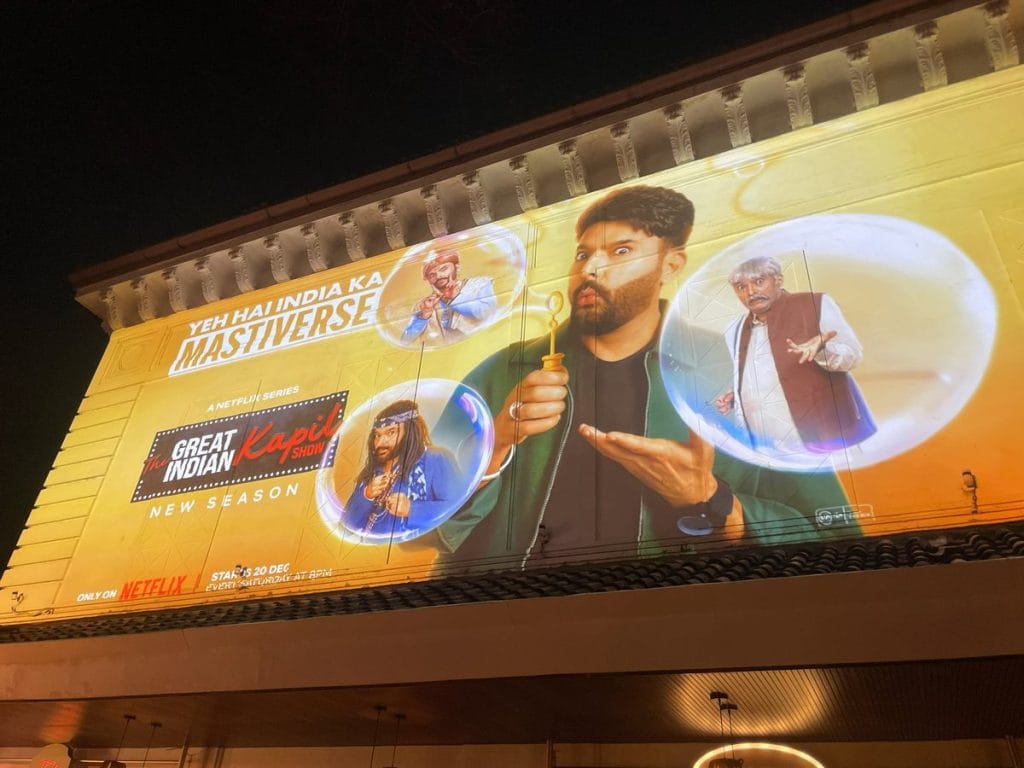
Beyond films and series, Netflix also took Indian comedy to the world. Kapil Sharma’s specials streamed across 192 countries. Vir Das delivered a stand-up that was both hilarious and provocative. More recently, Aryan Khan made a bold entry with the satirical The Ba**ds of Bollywood*.
Regional cinema, however, has long been Netflix’s Achilles’ heel, although from 2021 it has made a more deliberate push into regional storytelling, investing in Tamil, Telugu, Malayalam, and Punjabi content. In Tamil, it backed films such as Jagame Thandhiram. Telugu audiences saw titles including RRR, whose post-theatrical streaming amplified its global reach, and Mishan Impossible. Malayalam cinema found wider visibility with Minnal Murali and Freedom Fight, an anthology rooted in social realities.
“As an audience member, I want more relatable narratives, sports stories, stories about India and the army, and untold regional tales,” Singh said. “And, we can say this out loud because Netflix takes feedback.”
Remaking intimacy
Up until a few years ago, few in the Indian entertainment industry had even heard of ‘intimacy coordinators’. Today, the role has become standard on many OTT sets. It is, largely, a Netflix import.
With the MeToo movement, conversations around performer safety, consent, and comfort began to gain momentum and the trend started in 2018. Netflix took an early lead by introducing intimacy coordinators with Sex Education in early 2019. Within a year, it was standard practice to have one on set. A little later down the line, this role came to India too, where sexual and intimate scenes were uncharted territory for both filmmakers and audiences.
Neha Vyas is one of the pioneers in India. The 32-year-old, who’d earlier co-produced a short film called Bodies of Desire, recalls how Netflix was the first OTT platform to hire an IC for its 2023 crime drama thriller Class.
“By having a mandate, what Netflix did was that directors who were probably not sure about intimacy professionals started hiring them. And they started recognizing the value,” said Vyas, whose first Netflix project was Kohrra. She later worked on Akka and Super Suku, and also appeared in a cameo as a sex therapist in Ek Chatur Naar.

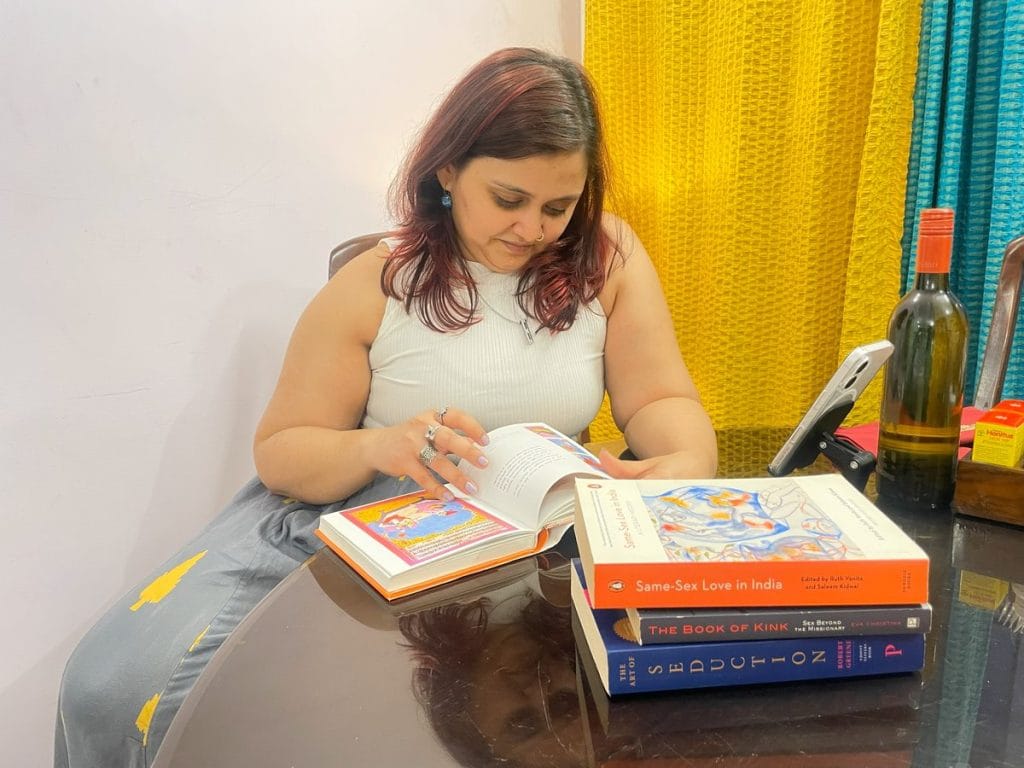
Vyas said India’s first intimacy coordinator was Aastha Khanna, whose training was supported by Netflix. Khanna works with actors and directors to choreograph intimate scenes, design modesty garments, set boundaries, and ensure performer comfort. She has also worked as an assistant director on several feature films, including the National Award-winning Andhadhun.
No other OTT platform, Vyas added, had invested in building the role in this way.
With most training programmes still based in the West and demand rising in India, Vyas is now preparing to launch Asia’s first intimacy training school. According to her, Western training doesn’t cover all the nuances of the Indian or Asian context.
“You can’t actually take what they teach you in the West and apply it as is. It’s great for foundational understanding of the work but it doesn’t work as is,” she said.
The key difference, Vyas said, is that in the West storytelling tends to be more individual-driven, while in India it is shaped by societal perception. As a result, scenes that might play easily in Western productions often need a different approach on Indian sets, where concerns about privacy, modesty, and public scrutiny loom large.
Also Read: How big stars and bloated blockbusters are bleeding Bollywood dry
Women behind the scenes
At Netflix, women are not just changing how intimacy is portrayed, they are also running the boardroom. There are three women, backbone of the OTT platform, who are helming content operations in the country: Monika Shergill, vice president of content; Tanya Bami, series head; and Ruchikaa Kapoor Sheikh, director of original films.
Shergill’s role has been central to crafting Netflix India’s local strategy. Since taking charge in 2019, she has overseen a dramatic expansion in original programming and local storytelling, helping grow user engagement by around 30 per cent and revenue by 24 per cent within a year in 2022. India today is among Netflix’s fastest-growing markets globally. The slate under her spans critically acclaimed series and films such as Heeramandi, IC 814: The Kandahar Hijack, and Kota Factory. International prestige has also come via the Oscar-winning documentary The Elephant Whisperers and the International Emmy-winning Vir Das: Landing.
Supporting this trajectory are Bami and Kapoor, both of whom play pivotal roles in shaping the creative vision and commissioning strategy of Netflix India’s slate. Together, they have backed series and films that have resonated strongly with audiences. In 2024, Indian titles found a place on Netflix’s non-English global top charts every single week, from the thriller CTRL to the genre-bending Phir Aayee Hasseen Dillruba.
But as Netflix enters its 10th year in India, bigger changes loom on the horizon. The company, founded in the US as a DVD-by-mail rental service, is now preparing for an ambitious bid for Warner Bros Discovery.
Co-founder Reed Hastings has long spoken about his ambition to build “the next HBO” without the limitations of cable television. If the proposed $72-billion deal goes through, HBO would officially become part of Netflix’s expanding portfolio.
In India, the acquisition may not have an immediate impact, as English-language content appeals to only about 10 per cent of the market, and HBO content is currently available on JioHotstar.
But Talwar said, with WBD content on its slate, Netflix will become a “global giant of the entertainment industry.”
“It will make Netflix a force to contend with because of the massive content libraries, from timeless classics like Casablanca and Citizen Kane to modern favourites like Harry Potter and Friends, that will come under one umbrella,” she added.
When it comes to India, a lot is expected to change in Netflix’s upcoming slate, set to be unveiled on February 2. Vyas, who has a couple of projects in the pipeline with the platform, gave a few hints.
“They are leaning into some interesting romantic stories. The last three or four projects that I’ve worked on with Netflix, which are yet to release, are very different from your usual violence,” she said.
Netflix will also change the gaze of its storytelling, she added—it’s going to be more female-driven.
“If you look at Sacred Games, it’s just a male gaze story. There is an absence of female gaze in the world because everywhere you see women, they are a product of a men’s ideas. Netflix is set to change it now,” she said.
(Edited by Asavari Singh)