








Churachandpur: After two years, Lhingnei Haokip finally heard her daughter, the Kuki-zo gang rape survivor, utter the words that she thought she never would. “Mother, I am not ashamed of myself anymore. I am not the one who is guilty,” the 20-year-old had told Lhingnei, clutching her hand as a glucose drip ran into her veins. It was 11 January. Before Lhingnei could fully absorb those words, her daughter was gone.
“My daughter’s body never recovered from the assault in 2023,” Lhingnei said. “Nor did her mind.” The violence that tore through Manipur that year not only burnt homes or displaced people, it also left gravest wounds on the psyche of the state’s girls and women.
A video of two Kuki-Zo women, aged 21 and 42, being paraded naked by a mob shook the country. From Prime Minister Narendra Modi to then Chief Justice of India DY Chandrachud, everyone expressed outrage.
Lhingnei’s daughter, who had been reluctant and feeling ashamed since her assault, was so enraged after watching the video that she finally decided to file a police complaint.
Her family left Imphal and moved from one relief camp to another, from Kangpokpi to Churachandpur, before renting a room at a relative’s home. Her health worsened. Nights were harder than days. Psychiatrists were consulted. She turned to the Bible. But nothing helped.
In the end, what remained were her last words. At home, her grandmother, Neikhoneng, breaks into sudden bouts of sobbing. Sometimes, she clutches the bedsheet; other times, she digs her nails into the wall in a fit of rage.
Her death has brought back the memories of the horrific sexual assault women endured for months since violence broke out in May 2023 and re-traumatised a community still living in tinned camps, afraid to return to their homes.
After her death, Neikhoneng’s raging speech in her language went viral within the community. “This was not her age to die but to live. She didn’t die a natural death. She was killed,” she told ThePrint.
A week after her death, Kuki-Zo organisations have stepped forward, demanding justice. She was one of three survivors of sexual assault. With her passing away, the other two have found themselves pulled back into memories of their struggle to survive.
“Her death has reminded us of what our Kuki-Zo community went through during the ethnic violence. It has unsettled us. We are surprised that despite the case being investigated by the CBI, no arrests have been made,” said Rebecca Haokip, spokesperson of the Kuki-Zo Women’s Organisation for Human Rights (KWOHR).
Also Read: A dangerous love in Manipur. ‘Arrest the Kuki woman’ is the new protest slogan
The aftermath
It was a white Bolero in which the woman, then 18, was abducted. For two years, the vehicle continued to haunt her. Every time a white Bolero passed by, her body would stiffen, and her breath would turn shallow, her mother recalled.
“She would scream and pull at her hair in a fit of rage,” Lhingnei said.
After they fled Imphal, the family moved into a relief camp in Kangpokpi before settling in Churachandpur. Her daughter’s screams pierced the thin purdahs that had been strung up to carve small enclosures out of a vast hall. She refused to step outside, fearing the other occupants were watching her, whispering about her. Questions about the incident followed the family each time they stepped out.
“It had become unbearable,” Lhingnei recalled. So they moved again, this time to a relative’s house, which was offered to them until she recovered. Anonymity became their best friend.
“We wanted some privacy,” Lhingnei said. “Every time I asked her to step out with me, she would say, ‘Mumma, I feel everyone is looking at me, talking about the incident.’”
The family was not well-off. They did not own a house in Imphal. Instead, they were caretakers of a bungalow belonging to a Meitei family. After they were displaced, they lost their job and used their savings to pay for their daughter’s treatment.
Initially, she was admitted to Kangpokpi Civil Hospital, but after her condition deteriorated, she was moved to a hospital in Kohima, Nagaland, and then to AIIMS in Guwahati. It was there that she underwent vaginal surgery, her mother said.
Over time, her body healed, blue bruises turned yellow, but her health worsened. She would wake up screaming in the middle of the night and have panic attacks in the day.
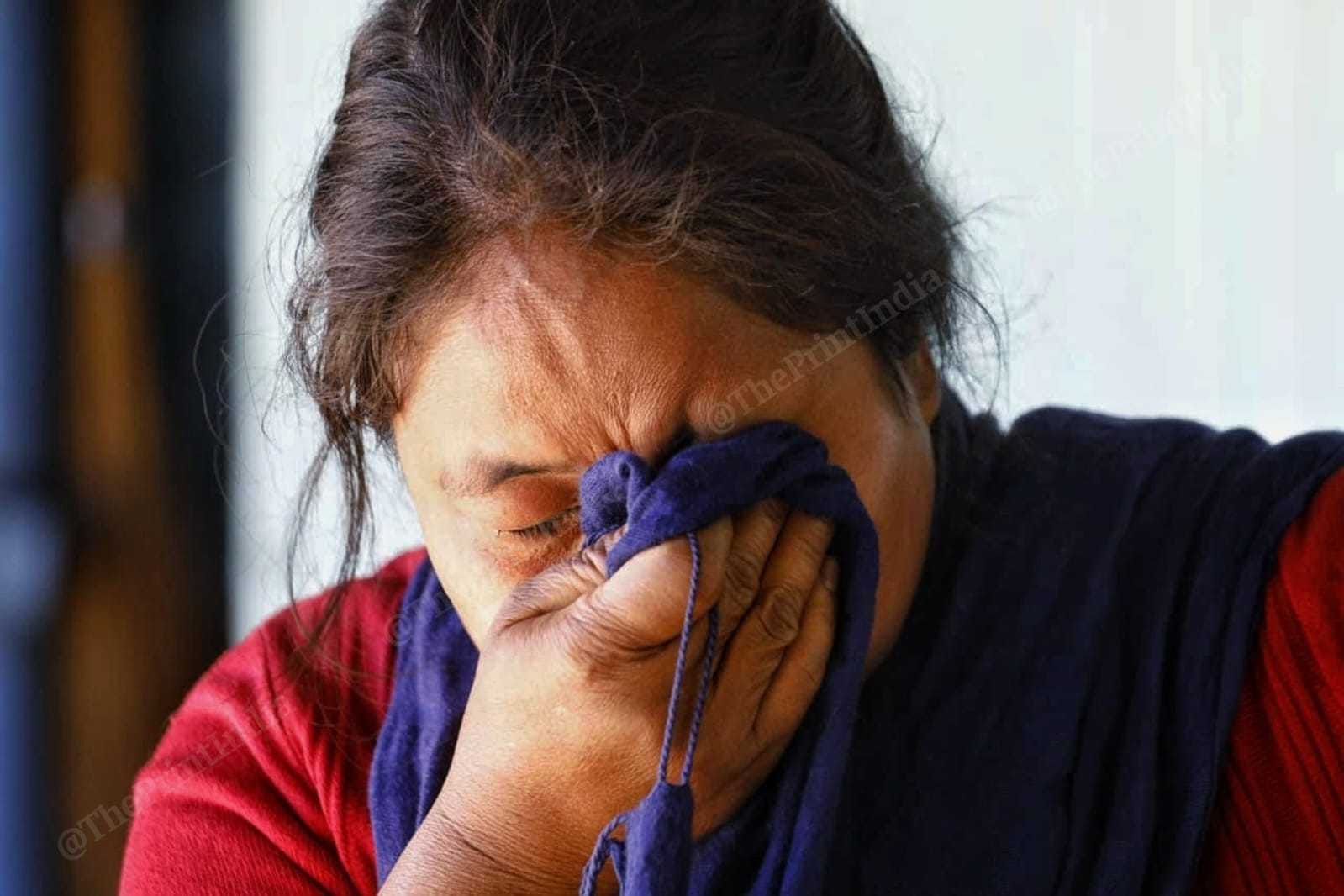
“‘Mumma, I can’t breathe. I am scared. They will hurt me. I don’t want to live,’” Lhingnei recalled her daughter’s words as tears slid down her cheek.
Lhingnei would hold her by the shoulders, rub her chest, back and feet to calm her down, she started reading verses from the Bible till her daughter fell asleep.
Then began the weekly visits by the local pastor, who would come to pray for her. But even that did not help.
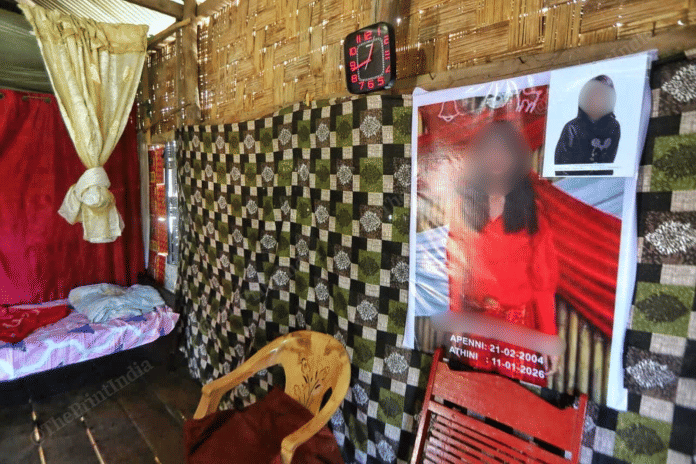
The Bible still rests on her bedside table, and her bed remains just as it was. A picture hangs on the wall — she is wearing a red dress, her make-up done the way she always liked it, below it reads: 2004–2026.
But now, no one sleeps there.
Also Read: Kuki-Zo woman is now paying the price for loving a Meitei—shunned, hospitalised, unable to talk
A broken matriarch
For years after the horrific gangrape, the shards of her life lay strewn all around. She could never really glue them back again.
She loved dressing up — wearing long gowns, frocks and ballet flats. She kept her hair straight, with semi-long fringes, and never skipped her make-up. She wanted to open a salon someday. In her room, a grilled window overlooked hills and trees laden with oranges.
But she never sat there after her return from the camp. She loathed the outside world.
“The only thing that once gave her joy was her make-up. After the incident, even that meant nothing to her,” said Lhingnei.
Her grandmother Neikhoneng would hum prayers throughout the day and enter the room intermittently to bless her.
The matriarchal traditions of the Kukis meant that children inherit their mothers’ and grandmothers’ surnames; it was the same for Neikhoneng. To her, her granddaughter was everything.
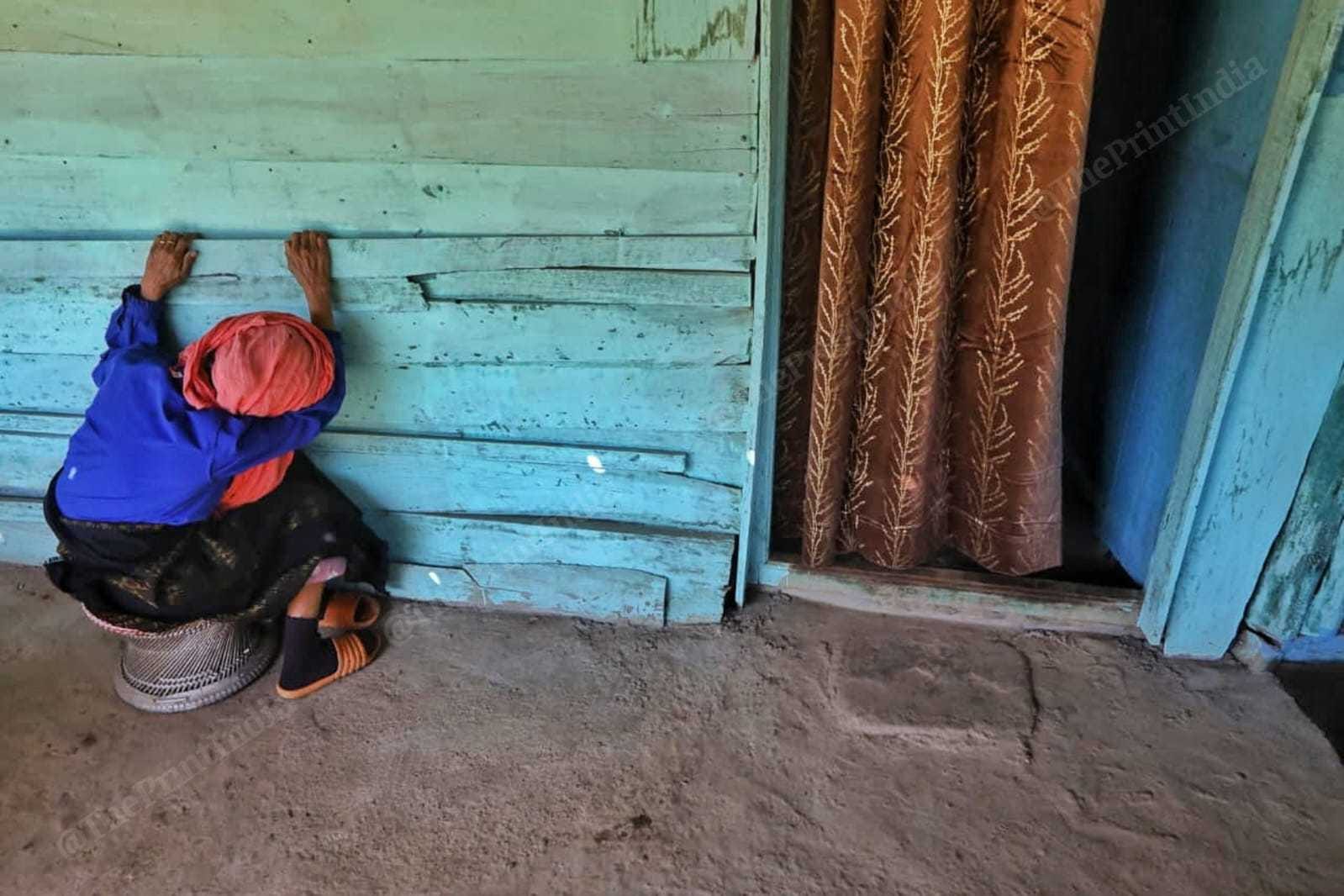
“The girl had her grandmother’s title, and that’s why her granny can’t stop crying because she couldn’t protect her,” said another resident living in the neighbourhood, referring to the matriarchal tradition in Manipur society.
Last December, after celebrating Christmas, the now 20-year-old was showing signs of physical improvement. Her family finally heaved a sigh of relief. They were going to kill her, Lhingnei recalls her daughter telling her.
However, as the new year began, she came down with a fever and diarrhoea. For her parents, it seemed like an ordinary illness that could be treated at a primary health centre. But she did not survive for long.
At the hospital, memories of the haunting incident resurfaced. She began having panic attacks, and her breathlessness intensified. “She would scream again and again, ‘I am scared. Please save me.’”
She was taken to a primary health centre in Churachandpur, where she eventually passed away. The exact cause of her death remains unknown.
“I guess god couldn’t see her agony,” Lhingnei sobs, as she lets out a heavy breath.
She was buried with her favourite red dress and make-up kits. “Now that she is at home with the Lord, maybe He will listen to her cry for justice.”
(Edited by Insha Jalil Waziri)