








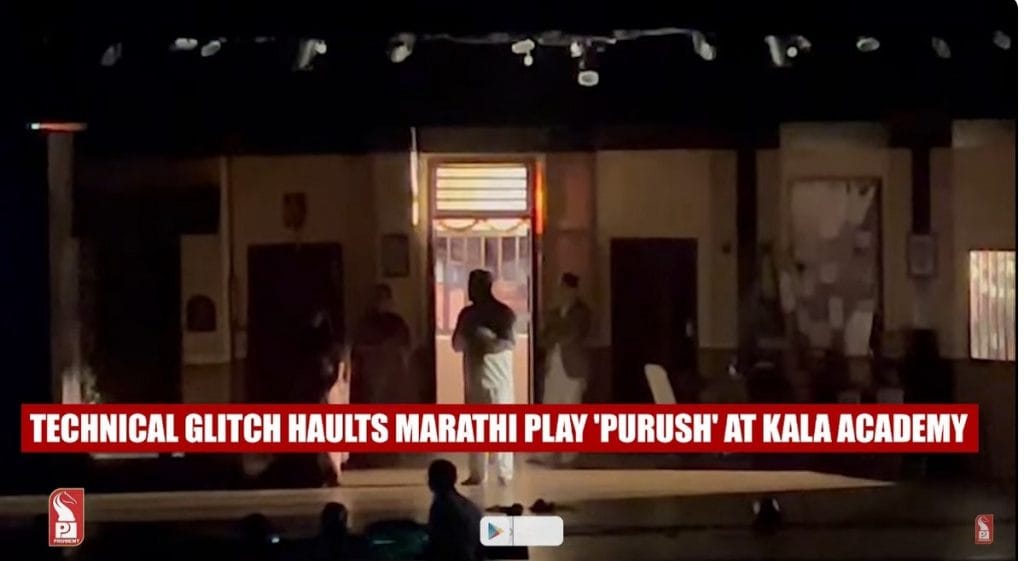
Panaji: Clad in white, renowned Marathi actor Sharad Ponkshe was midway through a pivotal scene in the play Purush when the lights at Panaji’s Kala Academy began to flicker. Minutes later, the auditorium went dark, forcing Ponkshe and his troupe to apologise and pause the show. The incident quickly snowballed into a political controversy, as well as a wake-up call for Goa’s premier art institution.
“Goa’s Kala Academy used to be one of the best places to perform in, but I was frankly quite disappointed and even embarrassed today,” Ponkshe told the media after the show on 15 April 2025. “The facilities were sub-par, including the lights and backstage rooms. I think it’s high time the Goan authorities do something about this.”
Soon after, Govind Gaude, Goa’s culture minister at the time, accused Ponkshe of taking a “supari” to malign him. Ponkshe shot back that the only chant in the darkened auditorium was “Gaude, Gaude.”
The row has put a harsh spotlight on Kala Academy, which has been rendered virtually unusable for the very artists it was once built for.
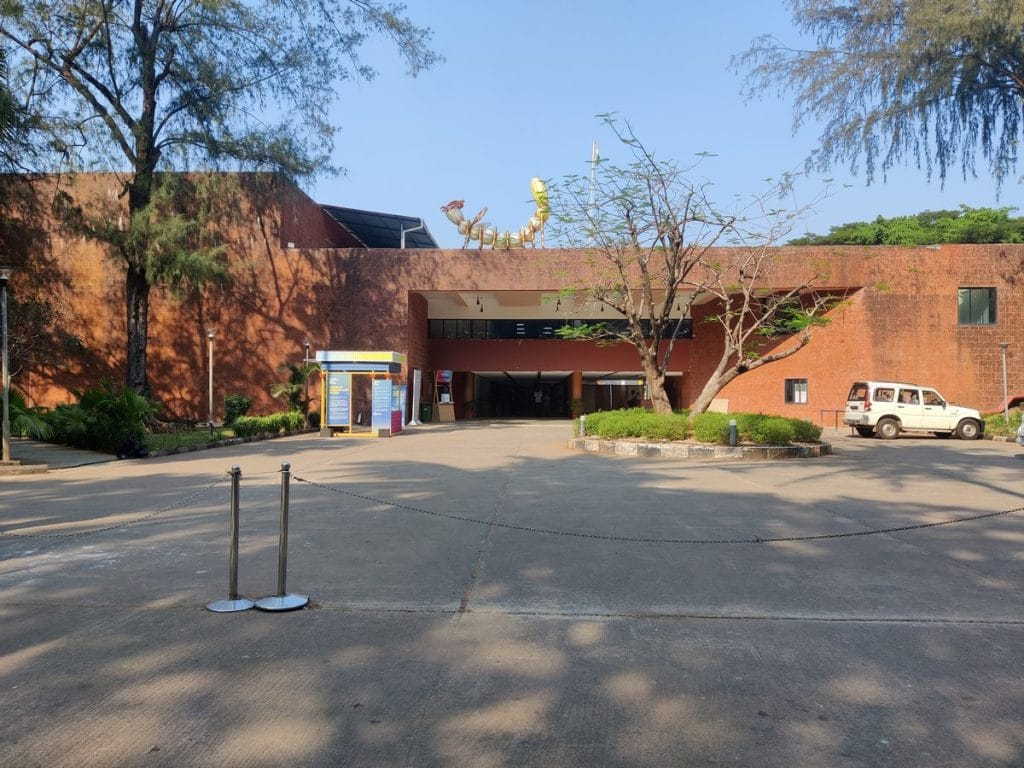
The 55-year-old government-run institution is today inseparable from its airy Charles Correa-designed complex, completed in 1983. But a series of ham-handed changes made during renovations carried out by the Goa government between 2019 and 2023 have damaged both its structure and its functionality, say architects and artists.
“Being an artist, I consider Kala Academy as my mother. It has given me a stage, it has given me name and fame and many awards, it has honed my talent,” said actor Devidas Amonkar. “Now, big-time plays are being disrupted due to poor lighting, and famous actors are calling out our poor facilities. It is a tragedy.”
The problems go well beyond sound and lighting issues. The open-air amphitheatre’s ceiling collapsed in 2023. Corrosion and water stagnation have spread across the complex, and even the violin practice room’s false ceiling fell six months ago. At the centre of this saga are disheartened artists, a tender-less renovation contract, demands for public accountability, and a former culture minister who famously defended the botched renovations with a Shah Jahan analogy.
At the end of the day it’s taxpayers’ money that went into this. You shut us out of our space, took our money, and then changed essential aspects of our stage and Academy
-Devidas Amonkar, actor
In late 2024, the state-appointed Kala Academy Task Force decided to take up a structural audit on priority and roped in IIT Madras for the task, which submitted an initial recommendation report on 9 January. But progress has been sluggish.
Now, Goa artists such as Amonkar are leading the fight to preserve the Academy, forming a group, Kala Rakhan Mand, to press the government to restore the institution to its original stature.
“Kala Academy was one of the best art institutions and stages in the country by a mile. Everyone from Zakir Hussain to stalwarts of the National School of Drama have performed here,” said Francis Coelho, an event manager and member of Kala Rakhan Mand. “Not to mention countless Goan schoolchildren and local tiatr artists. Imagine what you’re taking away from the people when you dilute a space like this.”
Officials from the Public Works Department, however, argue that the building had structural vulnerabilities from the start.
“It was originally built with flat roofs, which is a bad idea in Goa with heavy monsoon rains. Plus, it was built so close to the river that obviously water will seep in underground,” said Marvin Gomes, chief architect of the PWD. “Apart from these few choices, it’s a beautiful building.”
Also Read: NCPOR in Goa studies extremes—from Antarctica to deep ocean research
Goa’s cultural darling
Kala Academy has, for decades, brought together the best of Goa and beyond. From stages graced by Zakir Hussain, Pandit Bhimsen Joshi, and Girish Karnad, to the Mario Miranda murals decorating the auditorium ceiling, to Charles Correa’s evergreen designs, every corner of the Academy oozes cultural legacy.
Older patrons recall the space as the ‘it’ location for any performance in the state, including by global greats. Legendary British guitarist John McLaughlin has performed here, as has Russian cellist Mstislav Rostropovich. As the only institution in India with faculties for both Indian and Western classical music alongside theatre and dance, its range was peerless. The DD Kosambi Festival of Arts, the Serendipity Arts Festival, and the International Film Festival of India all found a home in Kala Academy.
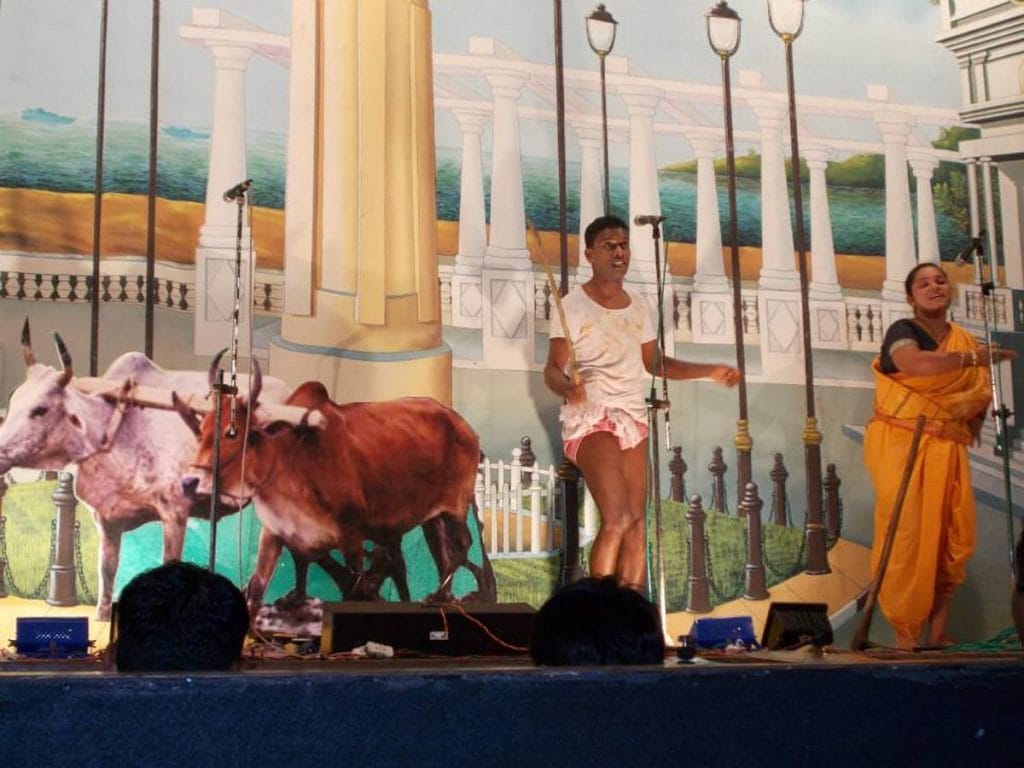
But for Goans, it is more than a mere venue. For those growing up in Panaji, it was the site of school annual functions and family outings. Most importantly, it was the home ground of tiatr, the uniquely Goan performing art.
“Tiatr is inspired by Italian travelling theatre, and it is the core of cultural conversation in Goa. For years, whenever any issue like migration, Portuguese enforcement, or any political issues needed to be discussed, they were done in a tiatr,” said Coelho. “And Kala Academy is the home for tiatr. The plays would launch in Kala and then travel across Goa, Bombay, Bangalore, to other Goan populations.”
Before the renovation, you’d walk in, and it was a vibe. You could just sense it. Now, they’ve shut off so many rooms, half their facilities aren’t working — they’ve just made people feel unwelcome
-Francis Coelho, event manager and member of Kala Rakhan Mand
Since 1974, the Academy has provided a permanent stage for tiatr, hosting annual competitions and nurturing legends such as Tomazinho Cardozo, Mario Menezes, and Prince Jacob.
The design of the structure itself is integral to Goans’ love for it; architect Lester Silveira called it “arguably the most inviting building in the country.”
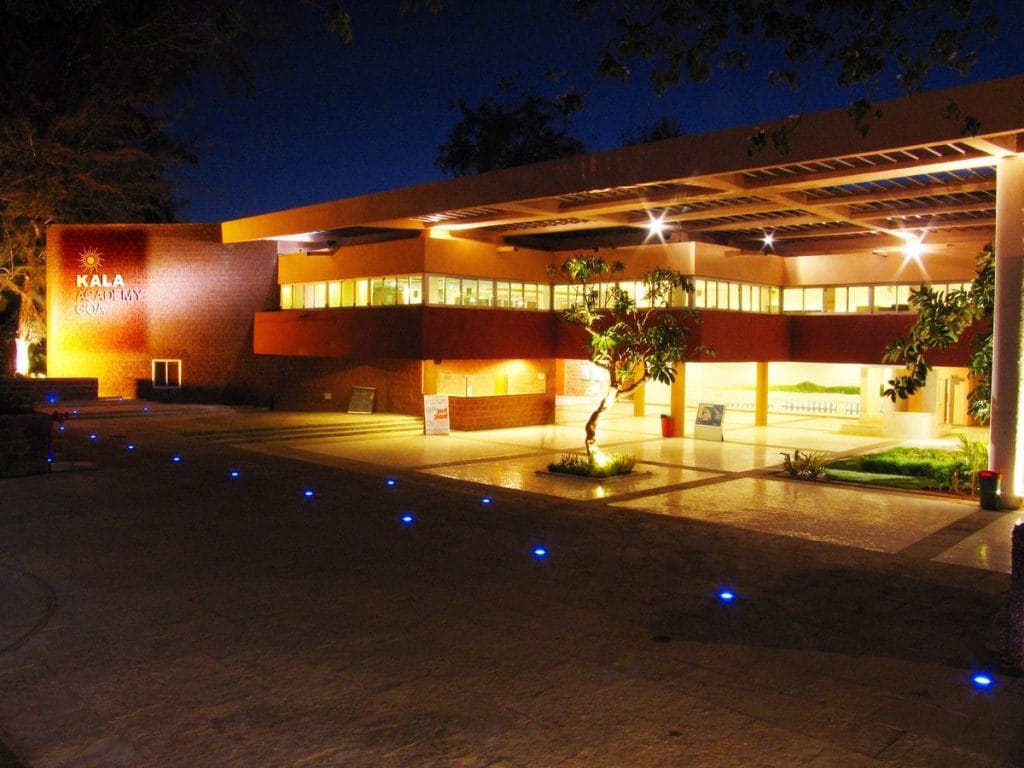
On the banks of the Mandovi River, Correa’s red laterite complex was built around open-air corridors, gardens, and a flow between indoor and outdoor spaces.
“On a regular evening, one can find people from all walks of life and of all age groups spending time out on these broad steps chatting away,” Silveira wrote in 2019.
For the Kala Rakhan Mand, preserving the Academy is about protecting public-owned performance spaces as well as the cultural nerve of the region. Coelho compares it to Mumbai’s Ravindra Natya Mandir or Delhi’s Siri Fort Auditorium: affordable, public-owned spaces that democratise art.
“It’s not like we don’t have other theatres and auditoriums in Goa, of course, we do. But this was a public space – any artist group, any school, any professional or any amateur wants to put up a play or display their art, they go to Kala Academy,” said Coelho. “That is the point of a government auditorium – access, affordability, and quality. How else do you foster art in a nation?”
A dying ‘vibe’
Once abuzz with chatter and a flurry of rehearsals and recordings in every corner, Kala Academy now stays quiet on most days.
“Before the renovation, you’d walk in, and it was a vibe. You could just sense it. Now, they’ve shut off so many rooms, half their facilities aren’t working — they’ve just made people feel unwelcome,” said Coelho.
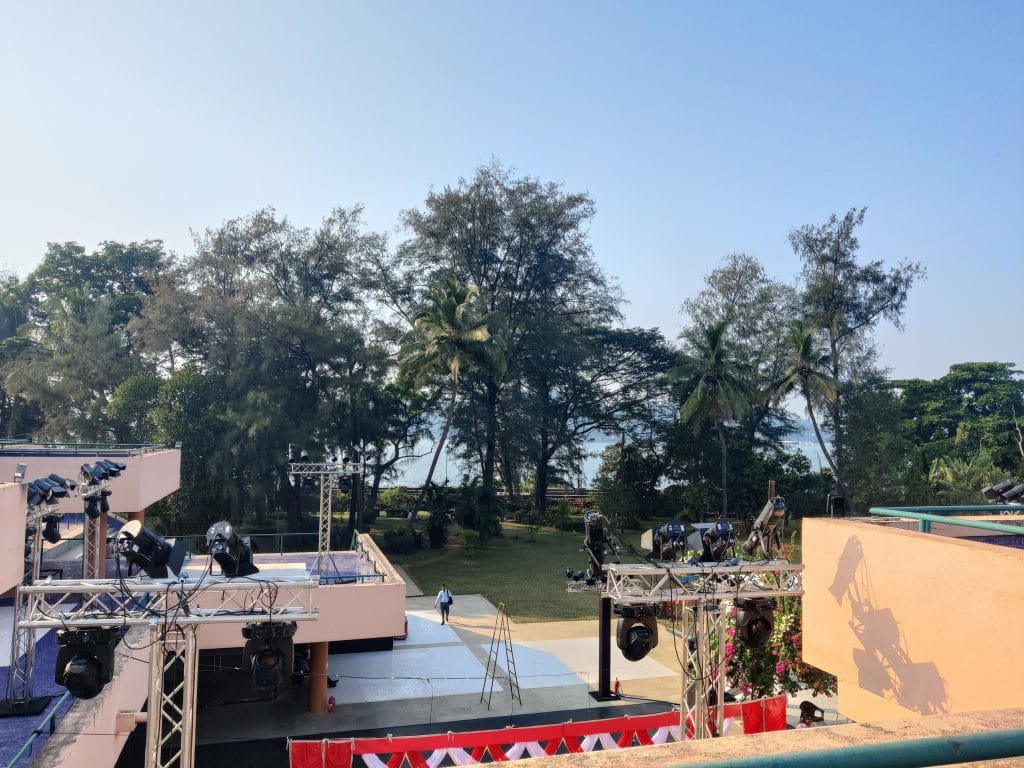
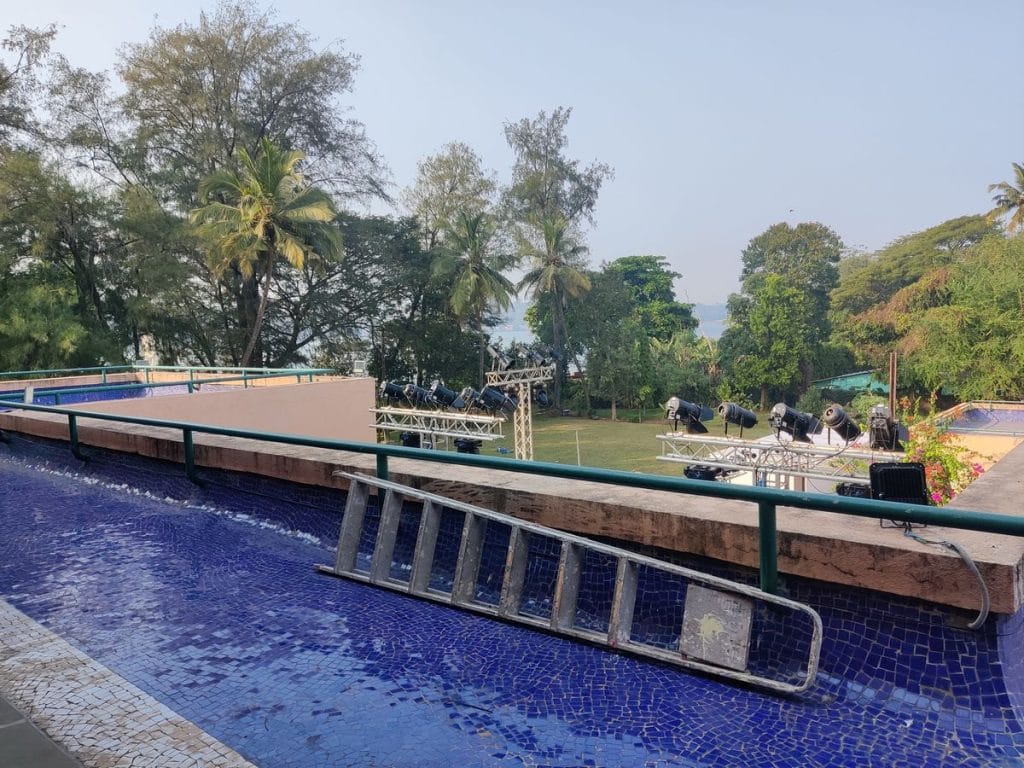
The mosaic-tiled terraces, which were once regular haunts of theatre troupes, now lie empty, broken in some places and waterlogged in others. The lighting and sound systems at the Dinanath Mangeshkar auditorium—named after the Goan musician and father of Lata Mangeshkar—were once considered among the best in the country. Today, they remain largely unused. High-profile performers now prefer to bring their own equipment to avoid the kind of technical failure that halted Sharad Ponkshe’s performance in Purush.
In the wake of that shambolic blackout, even political leaders like Yuri Alemao, Leader of Opposition in the Goa Assembly, called out the shoddy renovation work. In a series of posts on X, he asked, “Is the government drafting the death certificate of the iconic Kala Academy?”
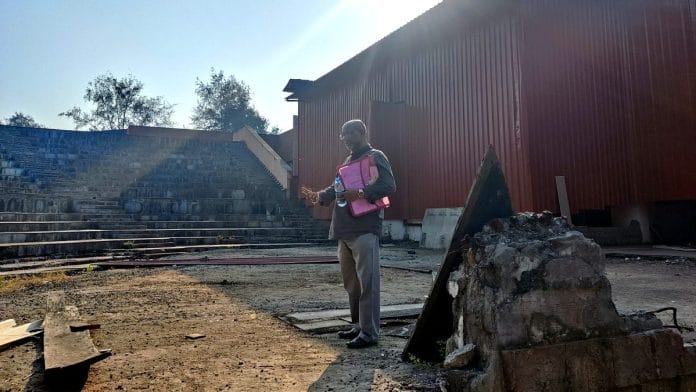
The most jarring sight, however, is the open-air amphitheatre. One of the Academy’s two main performance spaces, it could seat close to 1,000 and accommodate hundreds of performers at a time. But now the stage that hosted the likes of Asha Bhonsle and John McLaughlin lies barren and decrepit. The remains of the 2023 roof collapse have still not been cleared.
The infamous renovation
Back in 2018, Goan cultural circles began talking seriously about renovating Kala Academy, which had started showing signs of wear and tear. Situated close to the sea, the structure was constantly exposed to seawater underground and saline air aboveground, leading to heavy corrosion.
“Even houses in Goa that are near the coast need a certain amount of yearly maintenance, and more thorough restoration every few years,” explained Coelho. “That’s just the cost of building in an area like Goa.”
In 2019, Govind Gaude, the culture minister and Academy chairman at the time, announced that parts of the complex—specifically the open-air amphitheatre—would need to be demolished as it posed a ‘safety risk’ to performers.
This did not go down well. The Charles Correa Foundation (CCF), led by the late architect’s daughter Nondita Correa Mehrotra, immediately offered to assist the government in restoring the building. In a statement, they cited Charles Correa’s fondness for the structure and its place “in the hearts of most ponnjekars”. They even launched an online petition to save the building from the wrecking ball.
We had the original layout and plans for the building, and together with the government, we were certain that we could figure out a way to preserve it. But we were never asked for help
Nondita Correa Mehrotra, director of the Charles Correa Foundation
“We had the original layout and plans for the building, and together with the government, we were certain that we could figure out a way to preserve it,” Mehrotra, herself an architect, told ThePrint. “But we were never asked for help.”
After public outcry, artists’ protests, and intervention from the Bombay High Court in Goa, the government decided the Academy would not be demolished, only restored.
Yet even as the CCF was in talks with IIT Madras and other experts to formulate a restoration plan, the Academy unilaterally appointed contractor Techton Buildcon Pvt Ltd for the work in 2021, without a tender process. This was in violation of Public Works Department guidelines, which mandate a formal tender for any non-emergency construction work in government-owned buildings.
When opposition MLA Vijay Sardesai asked in the Goa Assembly in July 2022 why there was no formal tendering process, Gaude defended the decision by invoking a Mughal emperor.
“Do you think Shah Jahan invited tenders during the construction of the Taj Mahal? How is the Taj Mahal beautiful and everlasting even today? Because Shah Jahan never invited any quotations. Now it’s almost 390 years, and the Taj Mahal stands just as it is,” Gaude said.
No Taj Mahal
For three years, from 2021 to 2023, Kala Academy remained shut for renovations by Techton Buildcon. Without a tender process, there was little clarity on what the proposed changes were, and it wasn’t until 2023 that the cost was revealed – upwards of Rs 75 crore, according to the Kala Rakhan Mand.
“They didn’t even let us see what was going on — they had put up large 12 ft patras during construction,” recalled Coelho. “So we had no clue what it was they were doing.”
Despite the secrecy, it was soon apparent that there were problems. The reopening was repeatedly delayed, from August 2021 to February 2022, to December 2022, and several other dates until November 2023, when it finally opened.
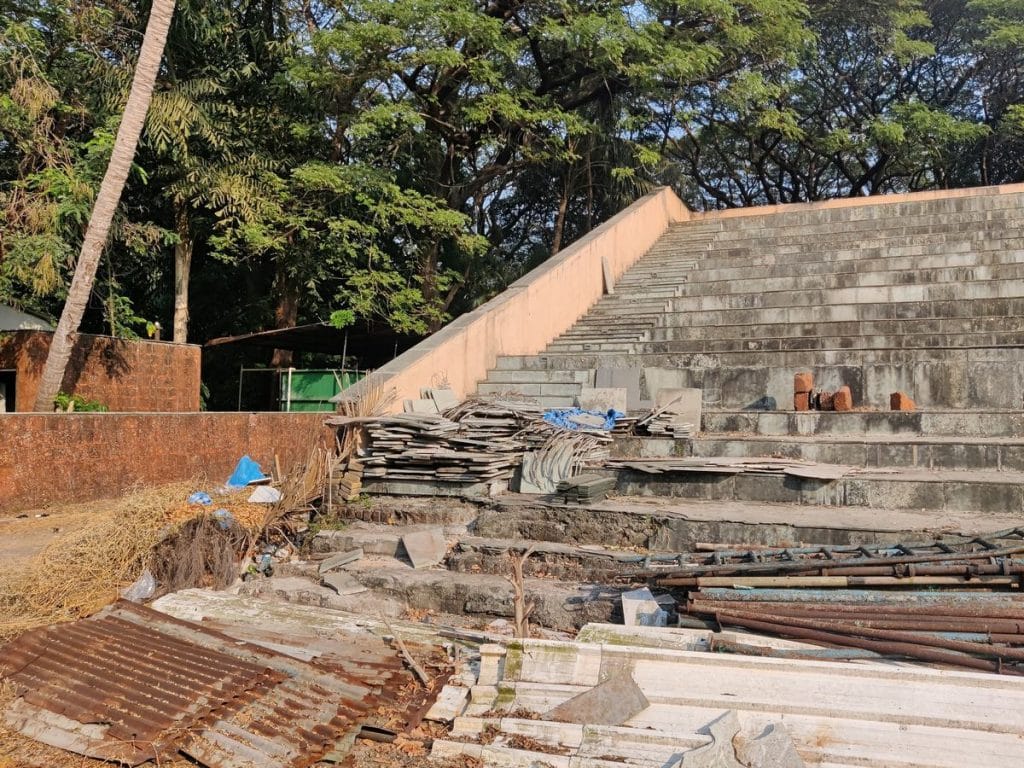
In the middle of this came a crisis. On 17 July 2023, even as renovations were being finalised, the concrete slab covering the stage of the open-air amphitheatre came crashing down. The collapse enraged the artist and architect community, as protecting the amphitheatre was one of the main reasons the renovation was sanctioned in the first place.
Months later, the Academy finally reopened to the public, with the PWD telling the media that plans to repair the open-air amphitheatre were underway.
“As you can see, nothing has come of it,” said Amonkar, gesturing to the broken concrete and overgrown vegetation on what used to be the amphitheatre.
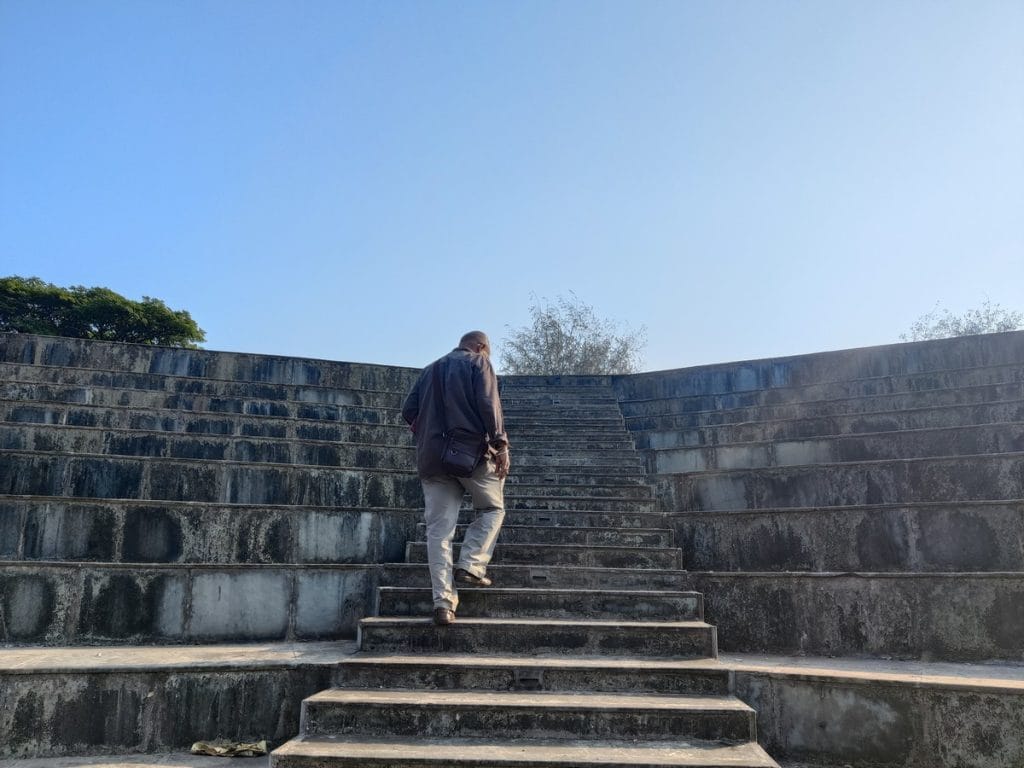
For two years now, the Kala Rakhan Mand has observed the “death anniversary” of the amphitheatre, complete with processions, garlands, and mourning rituals. They say it is to remind the government of its broken promises.
The breakdown extends to the flagship Dinanath Mangeshkar auditorium as well. Artists say its utilities have plummeted since the renovation.
Coelho, who runs a performing arts academy, held a show there weeks after the reopening and noticed the difference.
“They replaced the stage lights — pin spots, baby spots, fresnels — with LED lights, which are completely unsuitable for theatre. The beautiful teak flooring of the stage was replaced with cheap wooden flooring,” he said. “The catwalk above the auditorium to adjust lights and mics is now no longer accessible, and worst of all, they’ve ruined the acoustics of the auditorium.”
A new task force
Frustrated after years of being blocked from the Academy and returning to find it in even poorer shape, Goa’s artist community decided to take action. And so, in 2024, the Kala Rakhan Mand was formed.
The group demanded answers from the state government on why the community were not consulted for the changes, what the renovation cost, and why the Academy was, in some ways, worse off than before.
“At the end of the day it’s taxpayers’ money that went into this. You shut us out of our space, took our money, and then changed essential aspects of our stage and Academy,” said Amonkar. “Someone needs to answer for this.”
In response to the growing outcry, the Chief Minister Pramod Sawant-led government formed the Kala Academy Task Force in November 2024. The body—which includes Gomes, Coelho, and Amonkar, among others—invited a team from IIT Madras to conduct a comprehensive structural audit.
The initial diagnostic report from the audit, a copy of which is with ThePrint, paints a bleak picture of the ‘restoration’. It documents standing water beneath the auditorium stage, gaps in waterproofing treatment across the complex, as well as cracks induced by corrosion along different walls.

The report, submitted on 9 January, is yet to receive a response from the state government. Post this, it is expected to submit a more detailed report. So far, apart from identifying current problems with the structure, it recommends the need for thermal scanning and corrosion tests to understand how deep the damage runs, and what further measures will be required to fix the Academy.
“The task force will provide recommendations for different changes to be made to Kala Academy, the budget for it, and the time period. Then the government will look at the feasibility of it and make a call,” said Gomes. “But it will take time, let’s see.”
Also Read: How Skill India lost its way by creating a parallel NGO universe of frauds
No longer for the people
While designing the Kala Academy, Charles Correa invited Robert Newman, a professor at MIT’s School of Architecture and Planning, to engineer the acoustics of the auditorium.
Newman had famously designed the acoustics for performance venues such as the Lincoln Centre in New York and the Joseph Meyerhoff Symphony Hall in Baltimore. His contributions ensured that Kala Academy had among the best acoustics in the country, suited to the nuances of tiatr and the resonance of Western and Indian classical music alike.
“When the Kala Academy was first built, the clients were the artists themselves. My father would have long conversations with artist groups, and it was designed keeping in mind their comfort and needs,” said Nandita Mehrotra. “This time around, the client was only one government department.”
Artists used to say that even a whisper from one corner of the stage could be heard in the last row of the auditorium. That is no longer the case. The sound system, chosen specifically for Konkani musical theatre, has been replaced with a Bose system that performers say isn’t conducive to the medium.
“The thing is, it can be done. We can look for ways to restore the Academy in a more responsible way,” said Mehrotra wistfully. “It is worth doing — for the people of Goa.”
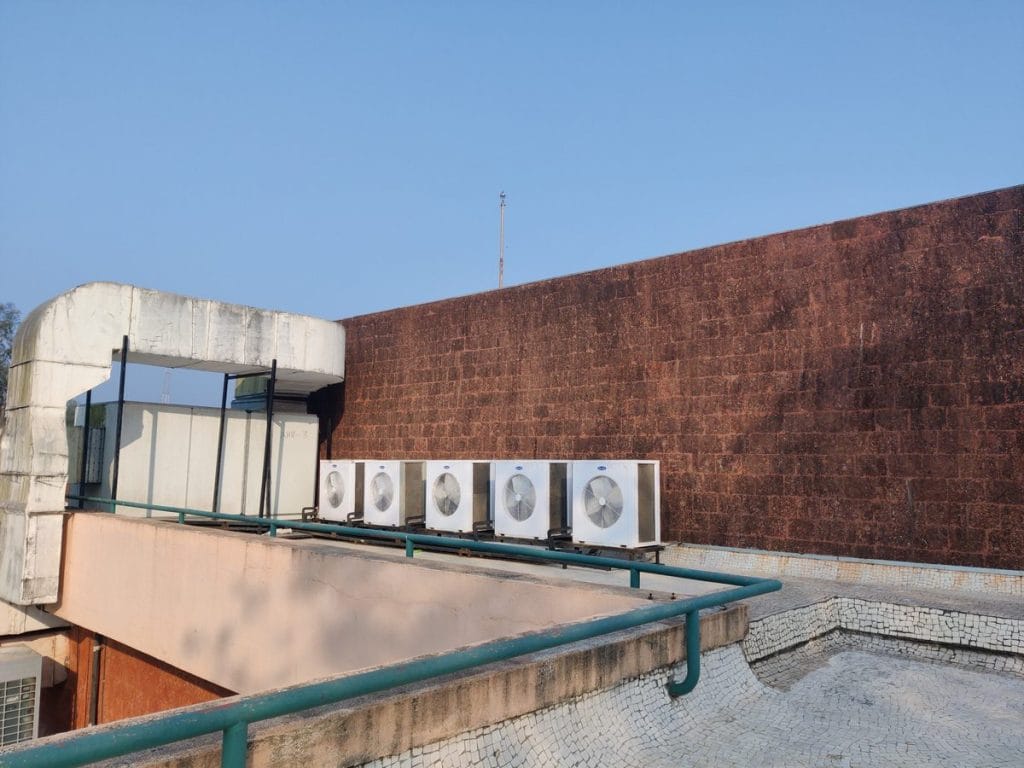
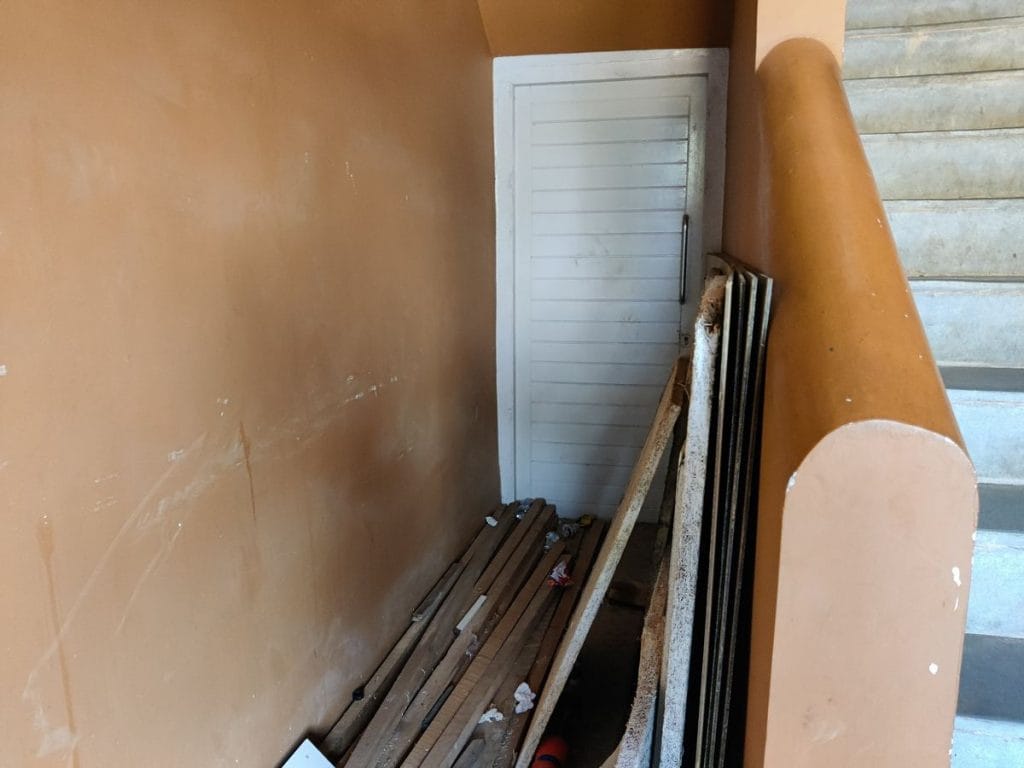
Back at Kala Academy, a 12-year-old boy tried practising his violin while perched on a first-floor parapet. He was soon interrupted by the mechanical whirr of AC vents placed nearby on the terrace — another questionable design choice made during the renovations. He moved to another spot and tried again, but the din proved inescapable.
After a while, he packed his instrument and left, becoming only the latest victim of the Kala Academy’s new avatar.
(Edited by Asavari Singh)