









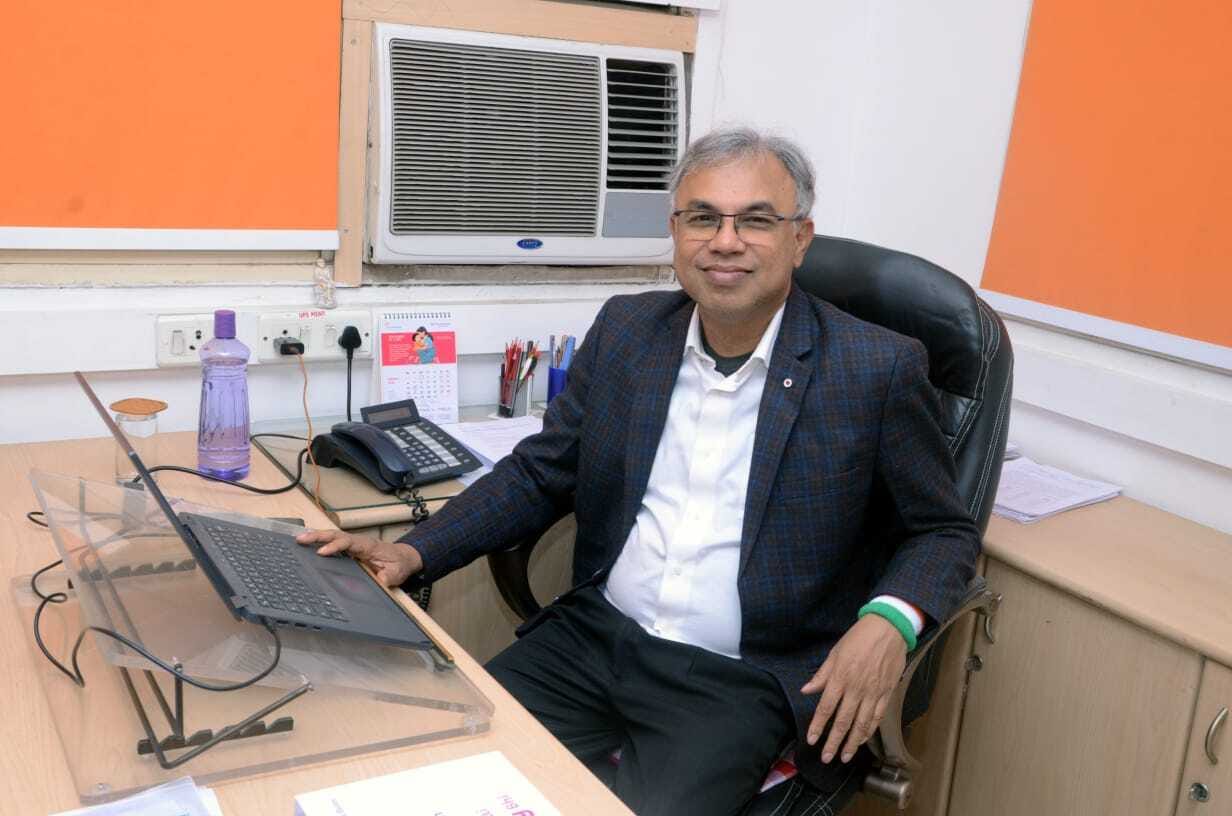
New Delhi: There are a few dates in his life that Dr Syed Khalid Ali remembers as significant ones, and 14 August 2024 is one of them. It was the day the first participant from Rohtak, Haryana, was enrolled in the Phase-III trials of one of Panacea Biotec’s biggest ventures—India’s first indigenous dengue vaccine.
As the Chief Scientific Officer of Indian biotech company Panacea Biotec, Khalid had worked with vaccines and preventative medicine his whole life. But the dengue vaccine—DengiAll—was a milestone not only for the company, but also for his country.
“DengiAll has been in the making for over 15 years, and it comes at a time when half the world’s population is at risk of dengue,” said Khalid. “There’s no question about need. We needed such a vaccine yesterday.”
In the brightly-lit conference room of Panacea Biotec’s Delhi office, Khalid explained the unique challenge of creating a vaccine for dengue. In the past, only two dengue vaccines have ever been developed worldwide; only one is still in circulation. Studies have found these vaccines also have issues, as they don’t protect against all four dengue types and have shown side effects in some people. A third, new dengue vaccine is the Butantan-DV vaccine by the Butantan Institute in Brazil, which received regulatory approval in November 2025, but has yet to begin production. It is the only one that comes close to DengiAll.
DengiAll will be the first vaccine to use attenuated dengue strains that target all four dengue types equally, and require only a single dose—changing the game of dengue prevention and offering more protection than any vaccine ever before.
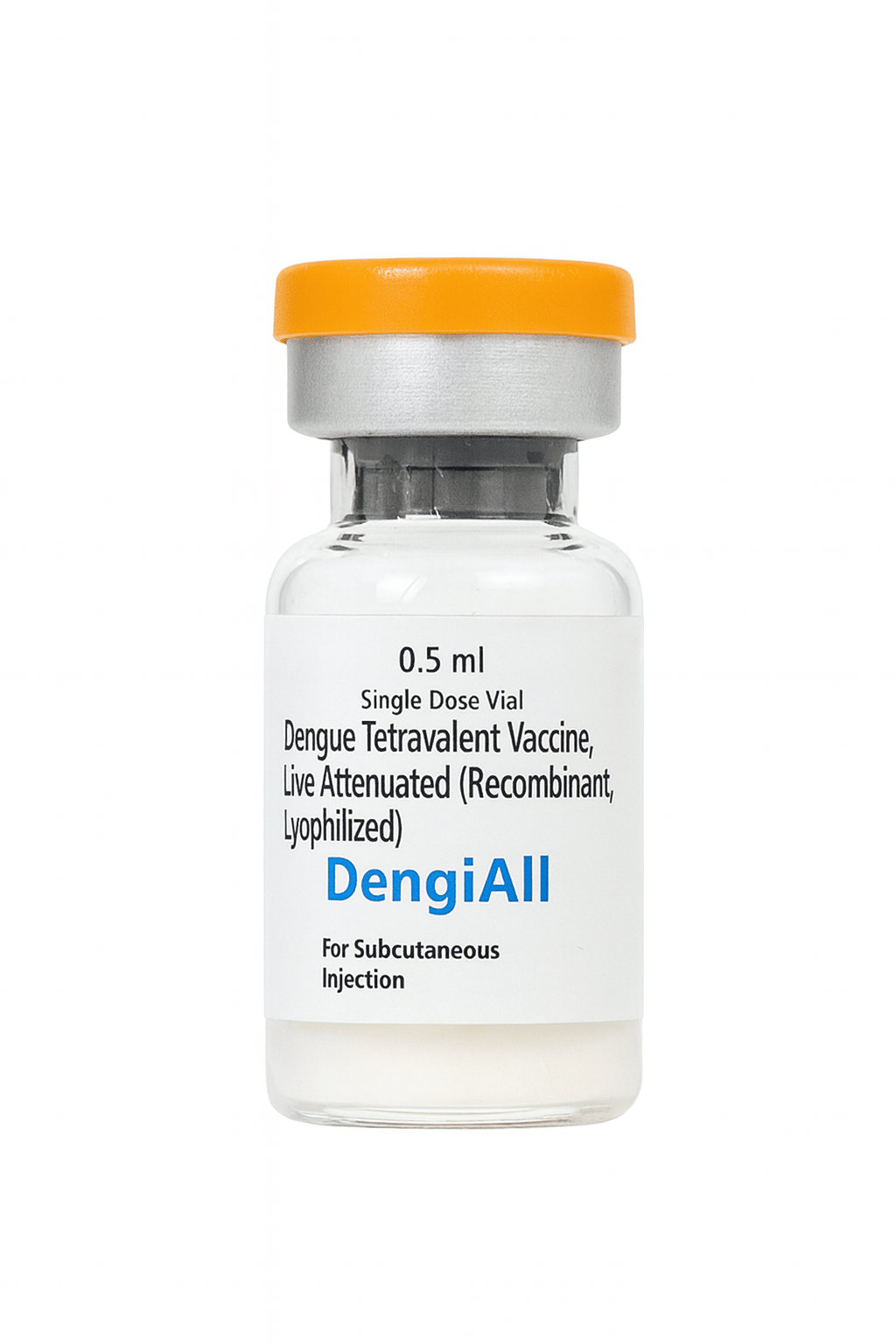
The eyes of India and the world are on DengiAll, and consequently on the Delhi-based pharmaceutical company that is producing it. Having worked on the vaccine since 2008, Panacea Biotec is now tantalisingly close to success. Enrollment for Phase-III human trials at 20 locations across India is now complete, with support from the Indian Council of Medical Research.
“Dengue has puzzled scientists and immunologists for decades now. People infected with it can show anything from mild flu-like symptoms to even death,” explained Khalid. “A lot of it has to do with the serotypes of dengue, and how they interact with each other.”
DengiAll plans to enter the markets by 2027, as the first indigenous single-shot dengue vaccine in India and only the second in the world.
“Innovation is in the DNA of Panacea Biotec, and DengiAll represents that,” said Harshet Jain, a member of the board of directors at Panacea Biotec. “With dengue being a major concern, especially in the Global South, the social impact of our vaccine will be greater than ever.”
Also read: No, Covid vaccines didn’t cause those heart attacks. Don’t let hysteria win
Why is a dengue vaccine significant?
At the Panacea Biotec office on Mathura Road, conversations around DengiAll are cloaked with an air of eagerness. With the Phase-III human trials enrollment & dosing now complete with over 10,000 participants, the company is now in the arduous waiting period for approval. It is the largest trial for DengiAll yet, and also the most robust—neither the participants nor the administrators knew which dose was the vaccine and which was the placebo.
In business since 1984, the scientists at Panacea are no strangers to being vaccine pioneers; the company made the world’s first developers of a fully-liquid pentavalent vaccine that targets five diseases (tetanus, diphtheria, hepatitis B, HiB, whooping cough) in one shot. They were also India’s first private manufacturers of the polio vaccine. With DengiAll, the company seeks a place on the world map.
In clinical terms, DengiAll is a live-attenuated, tetravalent, single-shot vaccine against dengue. In simple terms, it means that the vaccine is made from a mutated strain of the wild dengue virus, it protects against all four serotypes of dengue, and requires only one shot for a balanced and robust immune response.
The four subtypes of dengue are—DEN1, DEN2, DEN3 and DEN4—caused by aberrations in the same dengue (DENV) virus. These are known as serotypes, have more or less the same symptoms and are all transmitted through the female Aedes aegypti mosquitoes.
Interestingly, both Brazil’s Butantan and India’s DengiAll have the same origin—a mutated strain of dengue virus from the United States’ National Institute of Health (NIH). This strain contains a weakened version of the dengue virus, offering protection against all four serotypes. In 2008, Panacea Biotec and Butantan Institute were the first companies to license the strain developed by the US and bring it back to manufacture it as a vaccine in their respective countries. Now, both companies are close to the finish line.
Given how dengue behaves in nature, each of these characteristics of DengiAll is a milestone for the vaccine, and builds confidence in its ability.
A virus that is transmitted through mosquitoes, the most common symptoms of dengue are fever, nausea, and flu-like symptoms. Severe dengue, however, can even cause blood haemorrhage and is a life-threatening disease.
“The catch is— if you get infected with one serotype, you’re only protected from that one type. You can very likely get infected with dengue again, with another serotype,” said Khalid. “In fact, the second infection is more likely to be severe, even life-threatening.”
How DengiAll changed the game
Vaccines are a delicate science, but have some broad principles. Most vaccines are, more or less, a weakened or mutated version of the original virus that causes the disease. The virus is weakened enough not cause any disease but still induces a protective immune response. By injecting this virus into the body, the vaccine makes the body familiar with the disease, thus building immunity to it through antibodies.
The game changes when it comes to dengue, though.
If a person is infected with DENV1 (dengue 1 serotype) virus, they develop antibodies in their immune system to counter it. These antibodies would protect them from getting the DENV1 virus again by fighting the virus and not letting it enter the bloodstream. However, if the same person is infected with DENV-2, DENV-3, or DENV-4 virus, these antibodies will make that virus stronger and increase the severity of the disease. This phenomenon is known as ‘antibody-dependent enhancement.’
“Sometimes instead of protecting you against the virus, the antibodies tend to bind together with the virus to attack you even harder,” said Dr Lalitendu Mohanty, Vice President – Clinical Research & Strategic Medical Affairs, Panacea Biotec. “And these antibodies can come from either a previous infection or a vaccine.”
But for a disease that has no cure, there is no option but to prevent it using vaccines.
“If your vaccine only protects you against one type of dengue, it puts you at risk of severe infection from the other types,” said Mohanty. “So, partial immunity could actually be life-threatening in the case of dengue.”
For diseases like COVID-19, tetanus, and measles, even getting one shot of a two-dose vaccine protects against the disease as it provides partial immunity. But for dengue, that’s not always the case. Developing partial immunity might worsen the body’s ability to tolerate the disease. This is why DengiAll was made with the precision to counter all four types of dengue, and Panacea Biotec designed it to just require one shot.
Before this, the two main dengue vaccines were Dengvaxia by the French company Sanofi Pasteur, which was released in 2015, and Qdenga by the Japanese company Takeda, released in 2022.
Dengvaxia was the first-ever dengue vaccine to be released in the world, but a few years after its rollout, it was found that the vaccine increased the risk of severe dengue for people who had never had dengue in their lives. It was only effective in people that have previously been exposed to dengue. Major controversies erupted in countries like the Philippines, where the rollout of the vaccine and its subsequent issues led to widespread vaccine hesitancy in people. Sanofi announced that it would stop manufacturing Dengvaxia by 2025, due to low demand.
Qdenga is the only one still available in the market, but it does require two shots, and it uses a genomic backbone of only DENV-2 dengue serotype, with structural proteins from DENV-1, DENV-3, and DENV-4. Takeda claims that its vaccine provides efficacy against all four serotypes.
“Even though there were two existing dengue vaccines in the market, there was still an unmet need for single dose vaccine with a balanced immune response across serotypes,” said Mohanty. “This is where DengiAll comes in.”
Also read: Primary dengue infections as likely to turn severe or fatal as secondary, landmark study says
Making DengiAll
Panacea Biotec has been working on developing a dengue vaccine since 2002.
“There are different types of vaccines—live, live-attenuated, inactivated, virus-like particle, mRNA, whole cell—depending on how the pathogen is treated for the most effective results,” explained Jain. “From 2002 to 2008, we tried building many variations of the dengue vaccine.”
When the research team at Panacea Biotec heard about the US National Institutes of Health’s NIAID creating a new weakened strain of dengue vaccine, they jumped at the opportunity. Panacea Biotec was one of the first companies to put in a bid for the strain and the second to receive it in the world. A virus strain is the base of a vaccine, which is then developed and synthesised further to make it ready to be administered.
“The NIH vaccine strain was novel, but it had a few drawbacks. It could only be stored in -60 to -70 degrees temperature, which is not viable in a country like India,” explained Khalid. “Our job was to make this strain into a viable vaccine by ensuring its components remain the same, and that it doesn’t have adverse effects on the human body.”
Across multiple laboratory tests, animal trials, and human trials over 17 years, the scientists at Panacea Biotec made DengiAll fit for the public. Now, it can be stored at the regular 2-8 degrees Celsius temperature, like other vaccines, and they’ve developed and patented the formula to mass-produce the vaccine. Their initial Phase-1 and Phase-2 trials also showed 77-82 per cent protection against all four types of dengue.
For Phase-III, they decided to approach the Indian Council of Medical Research (ICMR) for the government’s support and credibility.
“ICMR had the strength and footprint that a dengue vaccine needs, given its national significance,” said Khalid. “We want them to verify our product and put their trust in us. And we were confident our vaccine could match their standards.”
While phase-III clinical trials can take anywhere between six months and three years, Panacea Biotec decided to err on the side of caution for DengiAll. Every participant, after being injected, will be followed for a period of two years to see whether the vaccine worked effectively.
Panacea may not have to wait until 2027 to find out whether its product is successful or not. As per the Drug Controller General of India (DCGI) protocol, when the trial gets 124 confirmed cases of dengue, Panacea Biotec can go in for an interim analysis to check the vaccine’s efficacy and seek clinical approval.
According to experts like Dr Nimesh Gupta from the National Institute of Immunology, though, verifying DengiAll works equally well against all four serotypes of the disease may take much longer.
To accurately test that the DengiAll vaccine protects against all four serotypes in real life, the participants in the trial need to be exposed to all of the serotypes. However, this will depend on natural dengue outbreaks and the number of serotypes circulating in a region and in the country as a whole.
“No one can predict which serotype of dengue is naturally occurring in nature and when,” he explained on a call with ThePrint. “It is unlikely to happen in two to three years, since it depends entirely on nature, seasons and disease circulation.”
While acknowledging the positive results of Phase-I and Phase-II trials of DengiAll, Gupta also cautioned that Phase-III will be the ultimate test of both efficacy and immunogenicity. Waiting for all four serotypes of dengue outbreaks and testing against them all will require time and patience, he said.
Dengue’s global impact
The 9th Lancet Countdown Report on Health and Climate Change, released in October 2025, flags dengue as one of the diseases whose transmission potential has increased due to climate change. With global climatic conditions changing, there’s been a spread of aedes mosquitoes habitats’, and dengue is increasingly becoming a problem even in the Global North. In 2024, 14 million cases of dengue were reported worldwide. This number is only set to increase.
Panacea Biotec is aware of how its vaccine could upend the global capability to deal with dengue. Given the previous track record of dengue vaccines, the pressure is imminent to make it fast and make it right.
“We’ve put in years of our work into developing this vaccine. Now, whatever happens at the trials and however long it takes to get approval, we know it is out of our control,” said Mohanty.
Even as they wait for the trial to take its natural course, the Panacea team is ready to jump in the moment they get enough dengue cases to begin the interim analysis of their products.
“We know things take time, but we also know that we won’t waste a single second in taking this vaccine to the masses,” said Khalid. “Over 10,000 people die every year from dengue, and every day we delay, we’re denying them their life.”
(Edited by Theres Sudeep)