





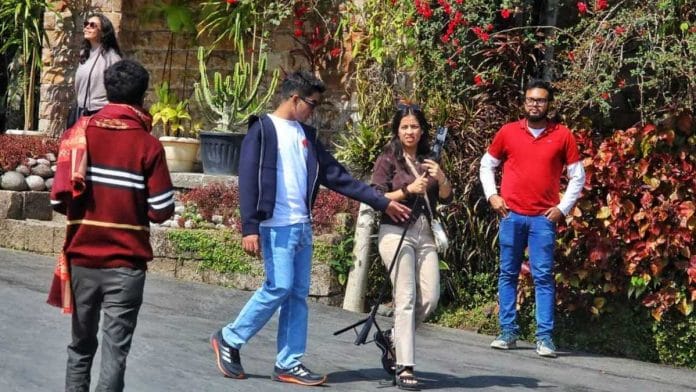



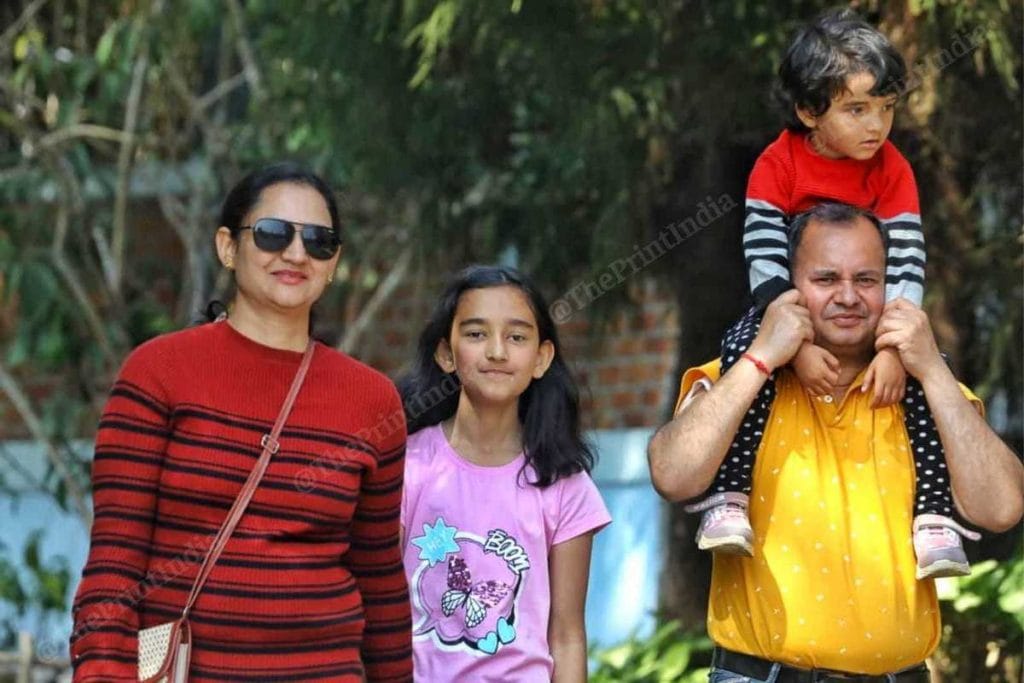
Mawlynnong, Meghalaya: On a sunny morning, Dr Shailendra Singh roamed around the pristine lanes of Mawlynnong with his family. It lived up to its reputation as the cleanest village in Asia, but Singh was not entirely pleased that Tuesday. He’d wanted to visit on a Sunday, but it was a no-entry day.
In January, Mawlynnong in the East Khasi Hills district did something that’s unheard of for a tourist hotspot. It banned visitors on Sunday, the day when the biggest crowds pour in and the most money flows. Villagers say their rejection of the customer-is-king mindset is about peace of mind and an undisturbed church service.
The decision meant that Singh, who works with the Indian Air Force, had to take two days of casual leave to make the 90-km trip from Shillong, where he was recently posted.
“It is a very long drive from Shillong. Sunday is the day when I feel the most relaxed — they could have chosen a weekday instead,” he grumbled. “I had to take leave for this, and being in the Air Force, we don’t get many leaves.”
After over twenty years of being one of India’s favourite ecotourism hotspots, Mawlynnong is drawing a line. It first tasted fame in 2003 when Discover India magazine crowned it the cleanest village in Asia. Long before Swachh Bharat became a national slogan, it was a rare utopia where every scrap of litter vanished into bamboo baskets and every resident, young or old, did their bit to clean the streets and keep the lush foliage in tiptop shape. BBC, Condé Nast, and countless travel blogs covered ‘God’s Own Garden’ over the years. It regularly featured on ‘best ecotourism destinations in India’ lists. If in 2015 Prime Minister Narendra Modi praised it on Mann ki Baat, then in 2026 industrialist Anand Mahindra called it “a role model for the rest of India” in an X post.
But trouble has been brewing in paradise for years. Rambunctious weekenders arrived by the busload and played loud music. The plastic ban became difficult to enforce. Nearby villages with a less ingrained focus on cleaning now have litter piling up. A few months ago, a video went viral of a Finnish man, married to a Khasi woman, telling off a bunch of Indian tourists for throwing plastic bottles on the ground. It got more than 1,800 comments on Instagram, with many complaining about tourists lacking civic sense.
This is better for the tourists as people used to get disappointed when few shops or cafes were open on Sunday. Now at least they know not to come
-Bah Precious, finance secretary of the village committee
Not long after this, the village administration decided enough was enough. No visitors allowed on Sunday. Word was sent out on social media and through taxi drivers and tour operators. Homestays have the choice of catering to their guests or not, but those who check in are warned that they may not get the best hospitality on Sunday.
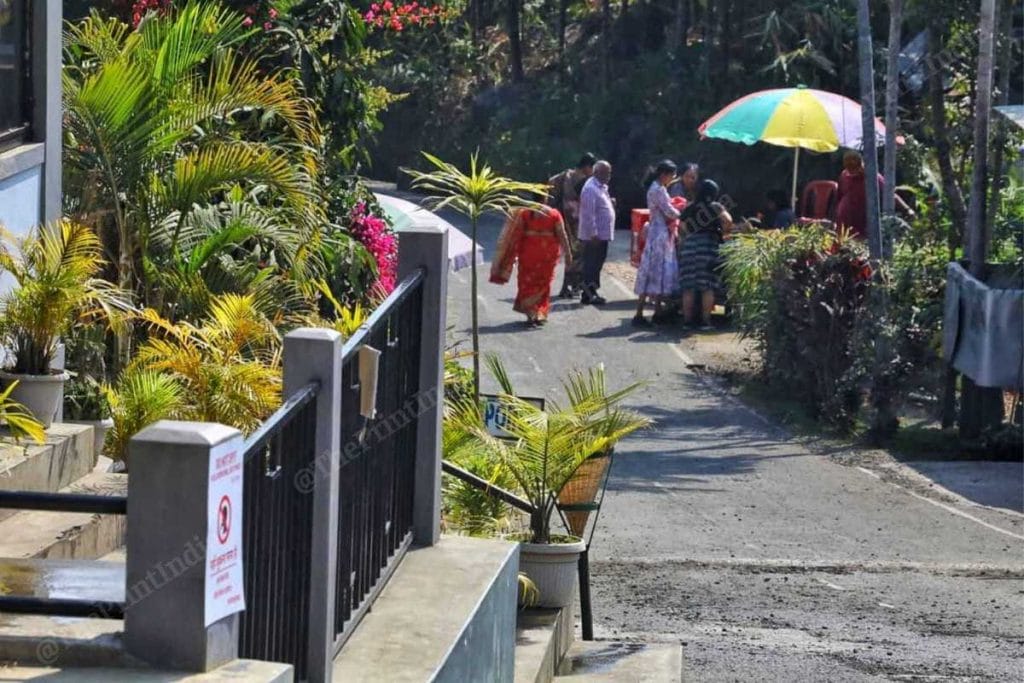
There are no barricades but a small signboard on the approach road states, ‘Visitors are not allowed on Sunday’. Those who do show up are usually turned away by villagers manning the ticket counter.
Bah Precious, finance secretary of the village committee, said many villagers had always closed their businesses on Sunday.
“Earlier, only one or two cafes and shops used to open on Sunday, but now with this notification every shop and cafe will be closed. We still consider letting people in, but we tell them they won’t get many services,” he added.
Also Read: Assam went to war on Kaziranga poachers. Rhinos are winning
Why did Mawlynnong pull the plug?
The decision to shut the village to visitors on Sundays did not come overnight. The constant flow of visitors, vehicles, and cameras had begun to affect the rituals and rhythms that villagers held dear.
Residents say the issue had been discussed for years in the village council’s weekly meetings. But at this year’s dorbar, the annual assembly of the village council, a radical proposal was floated: it was time to stop tourists on Sundays and reserve the day for church and community gatherings. Households and homestay owners were consulted before the rule was announced, and Precious said there was no pushback.
“The decision was taken to preserve both the cultural identity of the village and the discipline that once made Mawlynnong stand out in the first place,” said Precious.
The notice announcing the change on social platforms such as Instagram listed three reasons: church services, the inconvenience to visitors when residents did not provide services on Sundays, and the need “to prevent these situations from giving a bad impression and damaging the village’s hard-earned reputation as ‘Asia’s Cleanest Village’.”
The village’s obsession with cleanliness goes back to over a century ago. Residents trace it to the arrival of Christian missionaries in the Khasi Hills in the late 1800s— a time when severe sicknesses, including the plague, are said to have besieged the village. Along with scripture, missionaries preached hygiene as protection: keep the surroundings clean, wash clothes, boil drinking water. Over time, these practices became everyday discipline.
The other villages are there but the so-called cleanest village is Mawlynnong. If I would want to visit any village I could have done it nearby Shillong only
-Shailendra Singh, visitor to Mawlynnong
Ever since, the aspirational flex here has never been an expensive house but a spotless one. Cleanliness here became a form of worship. That same pride extends to every inch of the village. Single-use plastic and plastic bags are banned. There are bamboo dustbins on all the internal pathways and waste is segregated before disposal. Maintaining public spaces is not left to a committee alone. Every household participates, and littering invites spot fines imposed by the village committee.
This collective ethos makes it a wonder in India. Mawlynnong sees around 300 visitors a day on average. During the peak season between October and April, when travel to Meghalaya is highest, the number can go up to 500.
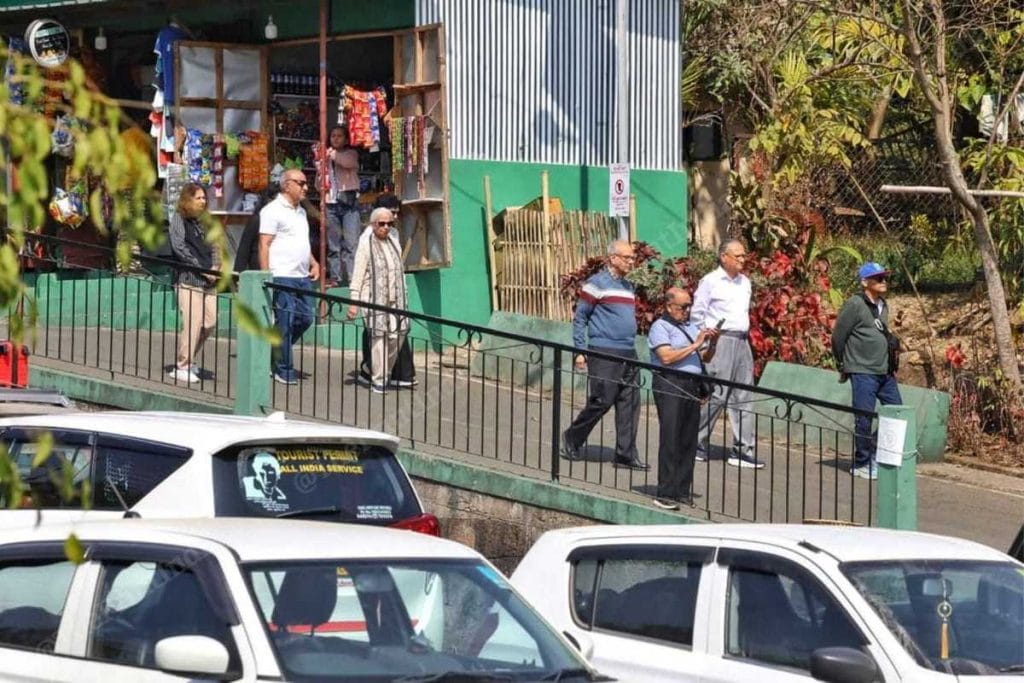
On a Tuesday afternoon in February, about 50 tourists arrived within an hour, including Singh’s family, a group of senior citizens, and couples taking selfies at scenic spots. Residents say most visitors come from nearby states such as Assam and West Bengal, though tourists from cities like Delhi, Mumbai, and Bengaluru have also increased after Covid.
With the uptick, keeping the village clean has become more demanding. Sweeping and waste disposal were once managed informally by residents themselves, but the rising numbers made that difficult. The administration eventually hired villagers to sweep public spaces and collect garbage.
“There are a total of15-20 people who work as employees to clean the roads and footpaths,” said Precious. “We run a cleaning drive on Saturday where the entire village comes together to clean, but Sunday is for church, so those 15-20 people also go on leave.”
The price of a day off
Mawlynnong’s decision seems counterintuitive from an economic perspective.
The traditional occupations of growing betel nut and broomstick grass are now supplemented by a booming tourist industry. The village of just 104 households has seven homestays, but as many as 96 are listed in the surrounding area on booking websites. It is a mandatory stop for anyone heading to see Meghalaya’s living root bridges, which India nominated for UNESCO World Heritage status in January.
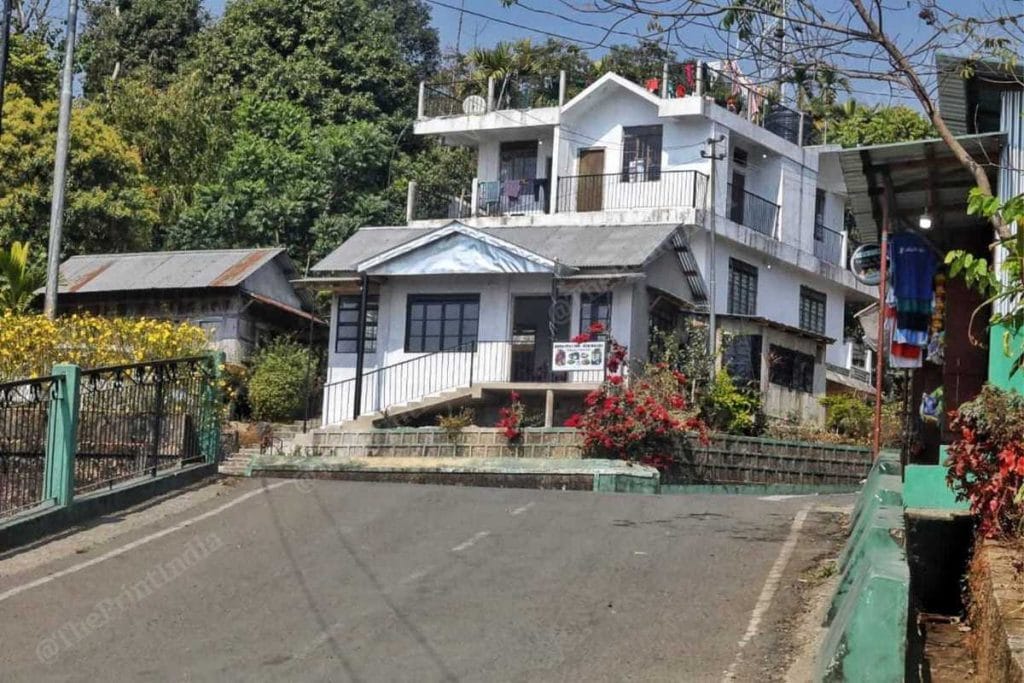
The village has earned a tidy sum from tourism. Parking alone costs Rs 200 per vehicle, while homestays and small eateries run by local families see brisk business from visitors. Homestays charge between Rs 1,000 and Rs 5,000 a night, depending on the property, meals, and room size. Residents say prices have risen gradually as tourism picked up. Several souvenir stalls have popped up outside the village, and many houses display small boards advertising rooms or tea stalls.
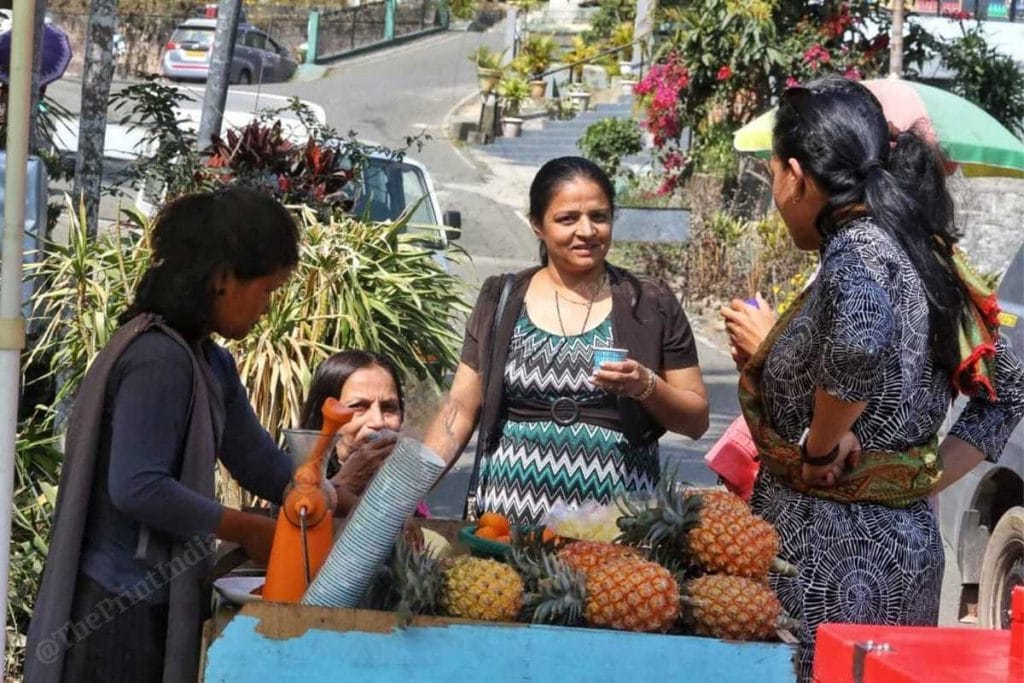
However, sacrificing the windfall from the weekend rush may also serve tourism better in the long run, according to Precious. Expectations would be set clearly.
“This is better for the tourists as people used to get disappointed when few shops or cafes were open. Now at least they know not to come,” he added.
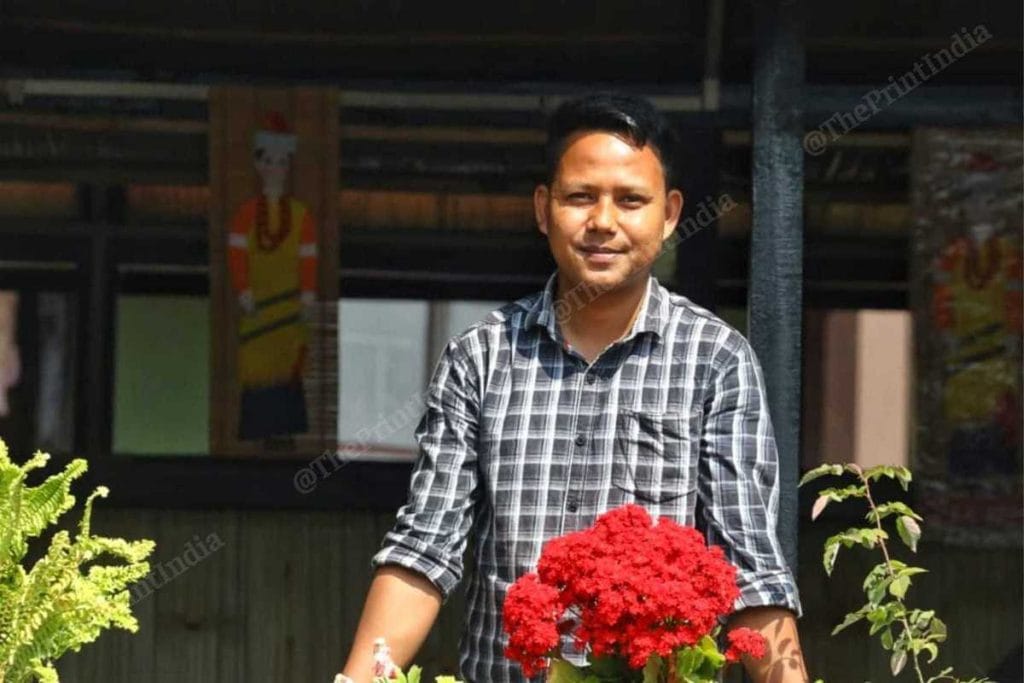
Barisukh Khongjee, 24, runs a charming little café in the village, serving vegetarian and non-vegetarian thalis, Maggi, fries, tea, coffee, and juice to tourists wandering through the lanes. Even before the new rule took effect, she always shut shop on Sundays. Now everyone else does too.
“This decision is good,” she said, smiling.

Also Read: Rat-hole mining is banned and booming in Meghalaya. 22,000 mines run in plain sight
Outside the clean bubble
Shailendra and his wife Gunjan spent the day clicking photos of flower-lined footpaths, picturesque houses, and courtyards decorated with potted plants. At their cosy homestay, they ate fresh food accompanied by the staple chutney made from organic chillies and tomato. They said the village was everything it was made out to be.
There are other attractions nearby too. Mawlynnong is part of a cluster of villages in Meghalaya’s East Khasi Hills, near the Bangladesh border. A kilometre away, Riwai has a living root bridge and Dawki is home to the crystal-clear Umngot river. Yet Mawlynnong’s fame has not spread to its neighbours. Passing traffic sustains a few tea stalls and small shops, but none of the nearby villages have become destinations in their own right.
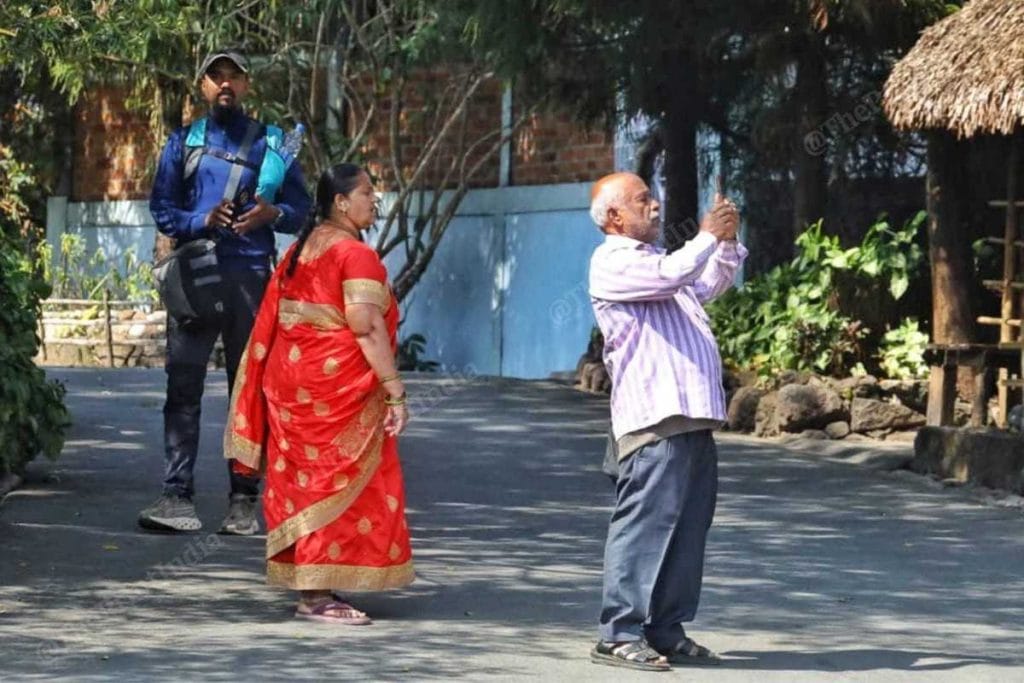
Tourists come for Mawlynnong specifically, and landing on a Sunday means a wasted trip, not a detour.
“The other villages are there but the so-called cleanest village is Mawlynnong. If I would want to visit any village I could have done it nearby Shillong only,” said Singh.
For all the talk of Mawlynnong being a model for the rest of India, the approach roads outside the village are scattered with plastic bottles and snack wrappers. Residents of neighbouring areas say tourist vehicles often halt outside Mawlynnong, leaving behind garbage. Beyond the village boundaries, there is no organised waste management or community mobilisation around cleanliness.

“Mawlynnong is Mawlynnong because of its strict community rules around cleanliness and waste management that every household follows. We also try to do that, but replicating that model requires more effort and collective participation that are not there,” said a resident of Riwai.
But even if other villages achieve ‘model’ status, the Sunday pause is not unique to Mawlynnong. Nongjrong village has closed its popular sunrise viewpoint on Sundays. The Sky View Bangladesh viewpoint near Mawlynnong stays shut. At Riwai too, shops and markets close on the Sabbath.
If anything, Mawlynnong was late to wholeheartedly embrace the sentiment that work and worship don’t go together on Sunday.
“I live for myself all the other six days, and there is only one day that is needed for God,” said Khongjee at her café in Mawlynnong.
(Edited by Asavari Singh)
They should ban tourists forever. Not just in Mawlynnong but in the entire state of Meghalaya.
I have been to the state twice – the first time as a tourist in the 2000s and then my husband was posted in Shillong for 3 years – 2006 to 2009.
What I saw and heard made me sick. The native Khasis referred to us non-tribals as ‘Dkhars’ – a pejorative. And they took every opportunity to make it clear that we were unwanted and unwelcome. The students union KSU would regularly indulge in thuggery and vandalism targeting non-tribals and their businesses. Even Durga Puja had to be celebrated with a lot of security force deployment and with lots of conditions such as closing of Puja pandals at 11pm. We lived in fear – there was an actual ‘darr ka mahaul’ – one that Ravish Kumar will never talk about. I always prayed for my family’s safety and security.
I have seen and heard too much to believe in the rosy stories painted by clever media outfits like ThePrint.