





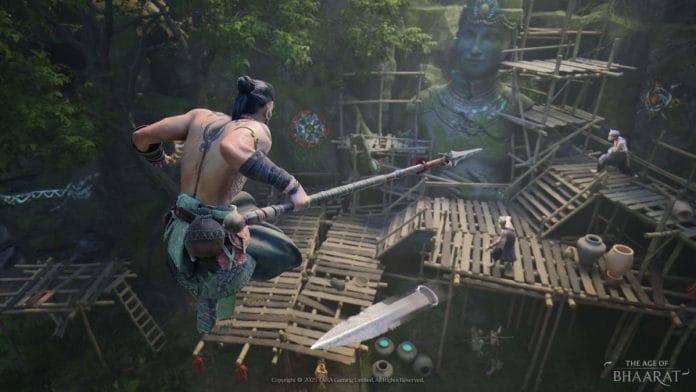



New Delhi: A brown-skinned, spear-wielding protagonist with a trishula tattooed on his back strikes at a rakshas, whose arms and eyes burn with fire. The skirmish takes place in the middle of an ancient temple, statues of Lord Ganesha and Shiva adorning the walls.
Indian culture and mythology are going global through one of the last unconquered mediums: Video games. After the successful Amish Tripathi novels and mythological movies, it was a long time coming in the ongoing Indian cultural revival.
The trailer for The Age of Bhaarat, narrated by Amitabh Bachchan, is a far cry from what hard core gamers are accustomed to: Guns, fast cars and fantasy or sci-fi worlds inspired by the West. The game is still far away from a release date but has generated a healthy mix of national pride and cautious optimism.
“You have this absolute gem of stories rooted in Indian culture that has not been done at the AAA level,” Nicolas Granatino, the executive director of Tara Gaming, the studio behind The Age of Bhaarat. “And these heritage cultures have not been treated at the highest quality in gaming or even Hollywood.”
Historically, the world’s highest grossing ‘AAA’ titles—a colloquial term used to classify PC or console games with large marketing budgets and premium production value—have been developed by Western and East Asian studios.
God of War is based on Greek and Norse mythology, Red Dead Redemption is set in the America of the 1900s, Ghost of Tsushima lets players live out their samurai fantasies and Black Myth: Wukong is based on the classic Chinese novel Journey to the West.
But there haven’t been any global hits rooted in Indian mythology or culture. For decades, world-renowned studios would outsource parts of their projects to Indian developers—designing the game’s landscape or coding the main character’s fighting moves—but the games themselves were made with a Western lens.
Now, Indian developers are no longer limited to just building mobile-first titles like Ludo King, Real Cricket and Teen Patti, mostly mass-market casual games. They are quitting their jobs at established studios like Electronic Arts and Tencent, and even consulting roles at EY, to be a part of the independent gaming revolution.
These homegrown studios are now aiming for ambitious, high-budget projects that draw on local history and culture to build distinctive game worlds.
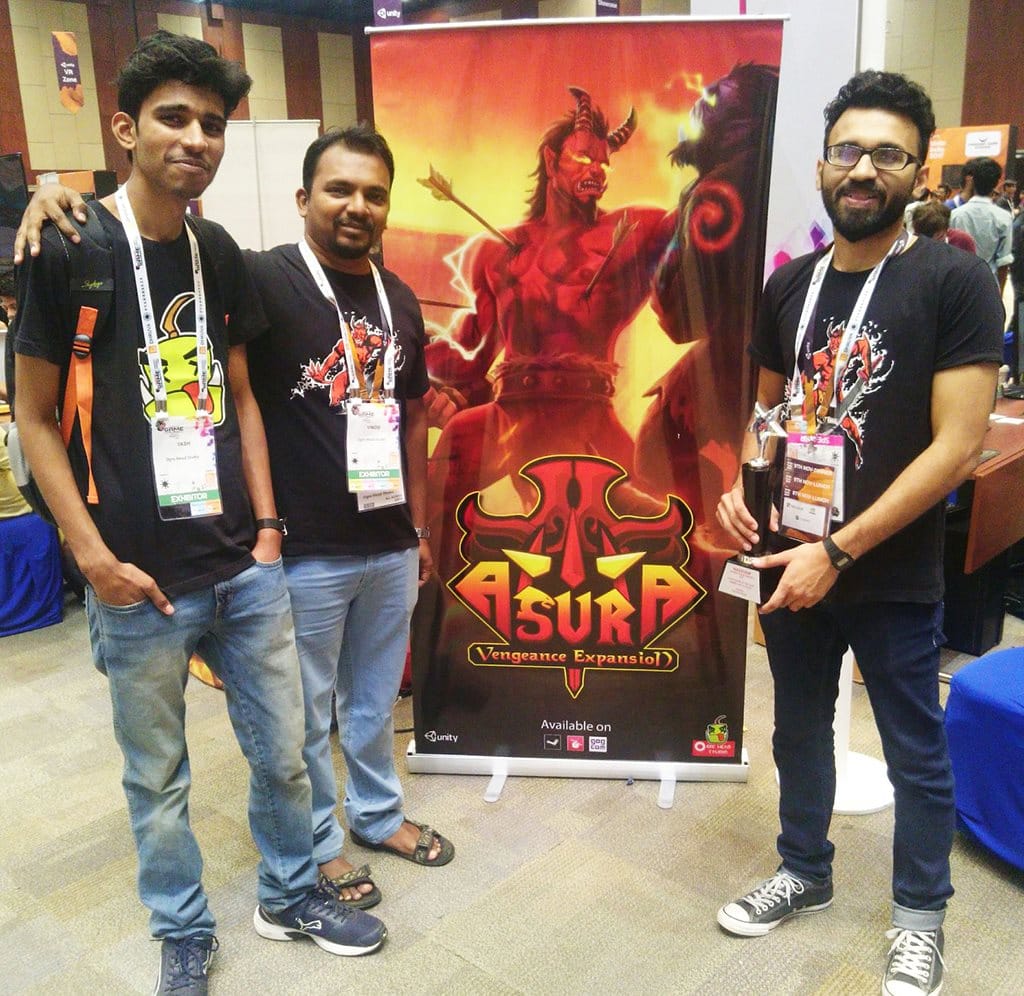
As debut games like Raji: An Ancient Epic are tasting success, financiers and developers are more willing to take risks in an industry that generated an estimated $224 billion globally in 2024 —more than movies and music combined.
Ogre Head Studio’s upcoming game Yodha is a turn-based deck (card) building game. Mumbai-based Treta Studios’ upcoming Curse of The Mask: Kaal Yoddha is an action-adventure game where you play as a skilled archer. Pune-based Nodding Heads Games is following up the success of its debut title with Raji: Kaliyuga. Visai Games released Venba in 2023, a cooking game inspired by South Indian cuisine.
“The Game Awards is six times bigger than the Academy Awards, in terms of audience,” said Granatino. In 2025, the Game Awards drew in 171 million global livestreams, compared to the Oscar’s 19.7 million viewers. “People always see gaming as kind of being this subculture, but it’s massive.”
Also read: India’s online gaming ban leaves an industry jobless. ‘This was my passion & profession’
Moving beyond gimmicks
It isn’t enough to make surface level changes to a game to declare it rooted in Indian culture. Just adding temple architecture or putting the protagonist in a sari doesn’t fool the discerning gamers, who have grown up playing critically acclaimed titles on the PC or consoles like Sony’s PlayStation and Microsoft’s XBOX.
“You have the theme. The story. The visuals. The voice acting,” commented one user on the Age of Bhaarat trailer. “The only thing left now is gameplay. I hope the developers deliver on the gameplay and make the game more than just ‘Wukong but in India’.”
This is a key gripe that Zain Fahadh, the founder of Hyderabad-based Ogre Head Studio, has with the emerging crop of India-themed games. “Their superhero is just replaced by one of our Gods with no other changes. Just to beat our chest, we call it Indian mythology,” he said.
Fahadh started Ogre Head back in 2014, before the ‘Make in India’ initiatives dominated the headlines. Growing up Muslim in Kerala, he wanted to make games based in Indian culture—and made it a point to separate this from religion.
The studio’s first game, Asura, was one of the first Indian PC games available globally when it was released in 2017. And Fahadh didn’t just want it to be a clone of Diablo, a massively popular roguelike, fast-paced action game.
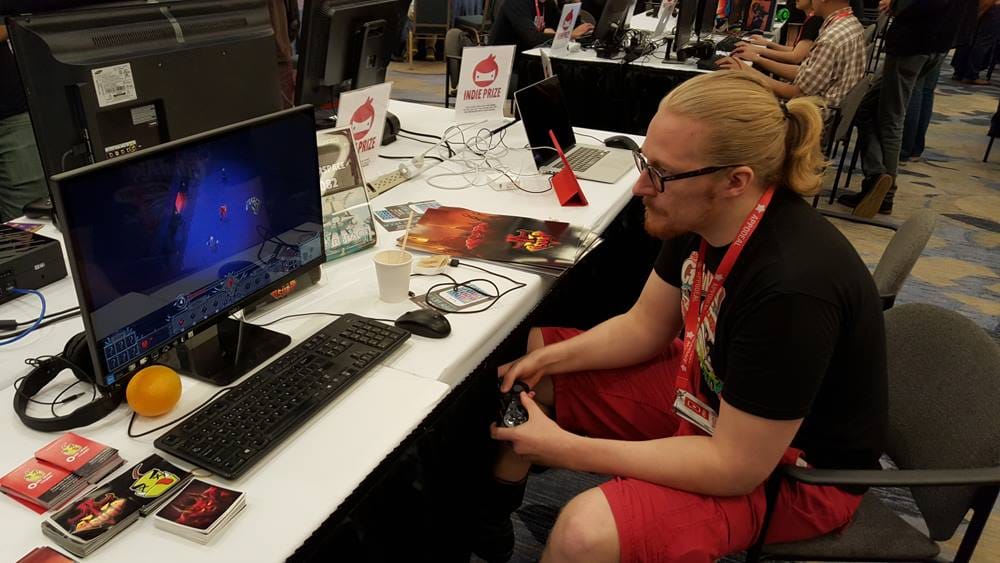
Cultural elements in the game include a Janam Kundli (birth chart) instead of a traditional skill tree, where players can spend points to unlock abilities and perks for their characters. “In our game, after you die, you are resurrected. And every time this happens, the Janam Kundli is different,” said Fahadh.
Unlockable abilities include Hatyaara (“you strike at such force that it can instantly destroy an enemy”), Agni Kavach (“conjures a shield”) and Vidyut (“calls forth a spark of lightning”).
Apart from the theme of resurrection, the story line is also quintessentially Indian. An emperor rules over his kingdom from Kurukshetra when a yogi warns him about impending doom. The king dispatches soldiers to look for a mortal as a sacrifice.
“Killing an innocent was against the law! For this reason, the soldiers were strictly ordered to sack the villages of the lower caste,” says the narrator in the game’s trailer. The child who is sacrificed is the one resurrected as Asura (demon), the character controlled by the player.
“The game touched upon the ‘untouchable’ scenario, inspired by the casteism around us, and therefore created a unique world,” said Fahadh, adding that in his game there is even a twist on the ‘loot’ system—rewards for killing characters or discovering areas.
In Asura, players can either absorb an enemy’s soul and banish it to hell or rip apart the body to collect loot. These small but deliberate mechanics show how Fahadh and his team aimed not just to give familiar gameplay an Indian skin, but to rethink and reshape it.
“For most games you play, which are culturally relevant, if the gameplay doesn’t blend well with the mechanics, you feel like you have been cheated,” said Fahadh, adding that games should be an honest representation for what the studio wants to deliver. “Otherwise, it feels like a gimmick.”
The costs of making a game
The Age of Bhaarat is an ambitious project, both in terms of the scale of the world, development team size and financial backing. It’s also highly anticipated, especially with Amish Tripathi (author of The Shiva Trilogy and Ram Chandra Series) as the narrative lead.
“The Itihasa are actually the mother of epics,” said Granatino, referring to the Ramayana and Mahabharata, adding that these stories have never been explored in gaming at the AAA level.
“God of War is based on Greek and Norse mythology. But these Itihasa are living traditions.”
Granatino went on to explain that these ‘living traditions’ are both modern, stand the test of time, and people still care about them. That is why it was important for the team to handle them with care, as opposed to ‘dead mythologies’, where creative directors have more narrative freedom.
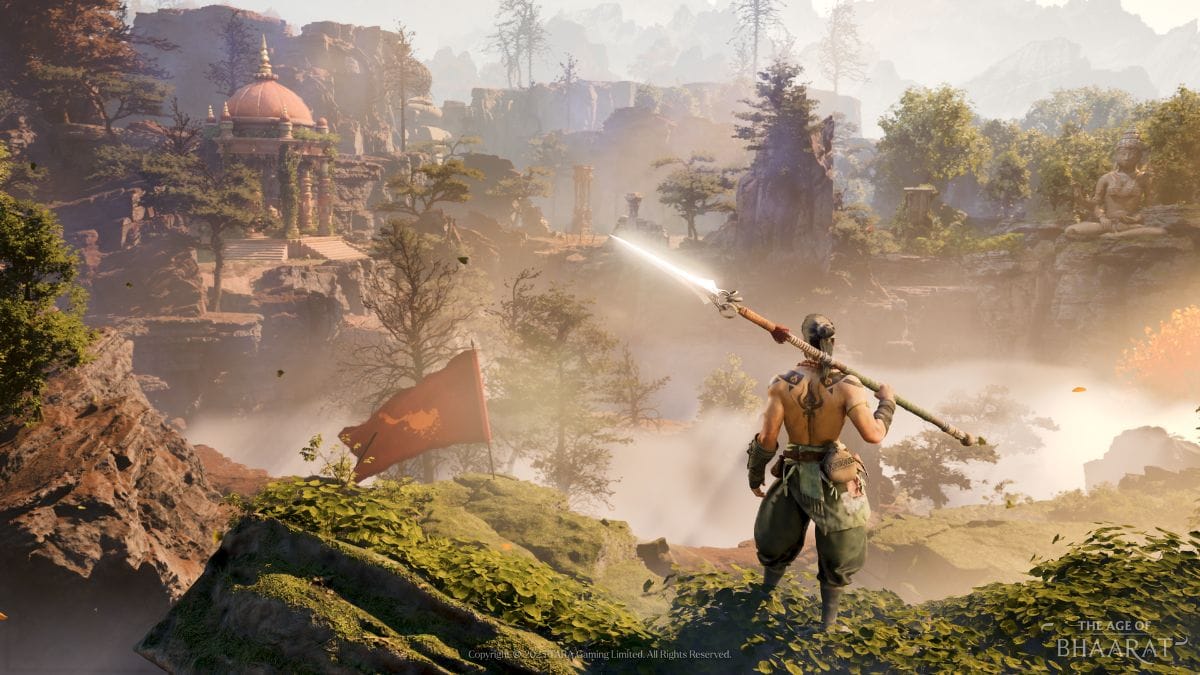
“Amish [Tripathi] has fictionalised these living traditions not only without any backlash, but very successfully,” said Granatino, before stressing that the game is being built for a global audience, despite its Indian roots. “India is still a mobile market. But if you look at the growth of the PC and console market, it’s the fastest growing segment.”
Mobile gaming is still the dominant force in India. Smartphones are relatively cheap, with close to 85 per cent of households possessing at least one. And the games are either cheap or free, charging nominal amounts for in-app purchases like extra lives or unique player costumes.
Consoles in comparison are priced between $550 to $700, with games costing upwards of $50.
This difference can be chalked up to the investment required to build such games. It takes a village to make a high-quality console game. Studio headcounts range from a couple of hundred to well over thousand people. The development cost for the upcoming Grand Theft Auto 6 has been estimated at over $1 billion.
Tara Gaming recognised this, raising $20 million to fund their vision. It counts former Ubisoft producer Nouredine Abboud, Bachchan and Tripathi as co-founders. And with an international team of 140 people, including 40 based out of Pune, the studio has set lofty targets.
But Granatino is aware of how the ‘AAA’ label is thrown around nonchalantly, in a bid to woo audiences and hype up games before release.
Gamers have seen hundreds of so-called AAA titles announced, only to be let down at the time of release. The graphics, combat and performance just didn’t live up to what was promised in the trailer. Games like Bethesda’s Starfield, BioWare’s Mass Effect: Andromeda and Electronic Art’s Battlefield 2042 were all eagerly anticipated, only to face player backlash when they were released.
“Being first out of the gate is important because you set a reference,” said Granatino, adding that their trailer not only showed cinematics but actual gameplay footage. “We have two hours of gameplay in the demo. And now the next thing for us is to deliver the alpha [testing stage] and we’re on time [expected by the end of 2026].”
Granatino may be aiming for Bhaarat to be India’s first AAA export, but each studio has their own unique vision. Not all games need to have massive budgets and complex gameplay mechanics.
But the common thread that runs across all is the Indian theme, particularly because it speaks to a developer’s lived experience. Why play a game with the main character invoking foreign gods, eating burgers and wearing suits when you can make one rooted in your own culture.
Also read: Indian gaming is a boys’ club. Women gamers are turning to Twitch & YouTube
Larger talent pool
Fahadh sees the rise in Indian mythology-based games coinciding with the nationalism wave that has swept across the country. To him, titles and studios are just following a trend, or maybe aiming to get a pat on the back from the government.
Since starting out as a character artist in 2009, Fahadh has witnessed different trends come and go—the rush for developing mobile games, then casual games (think Angry Birds or Candy Crush) and now the new holy grail: An AAA, Indian-culture game.
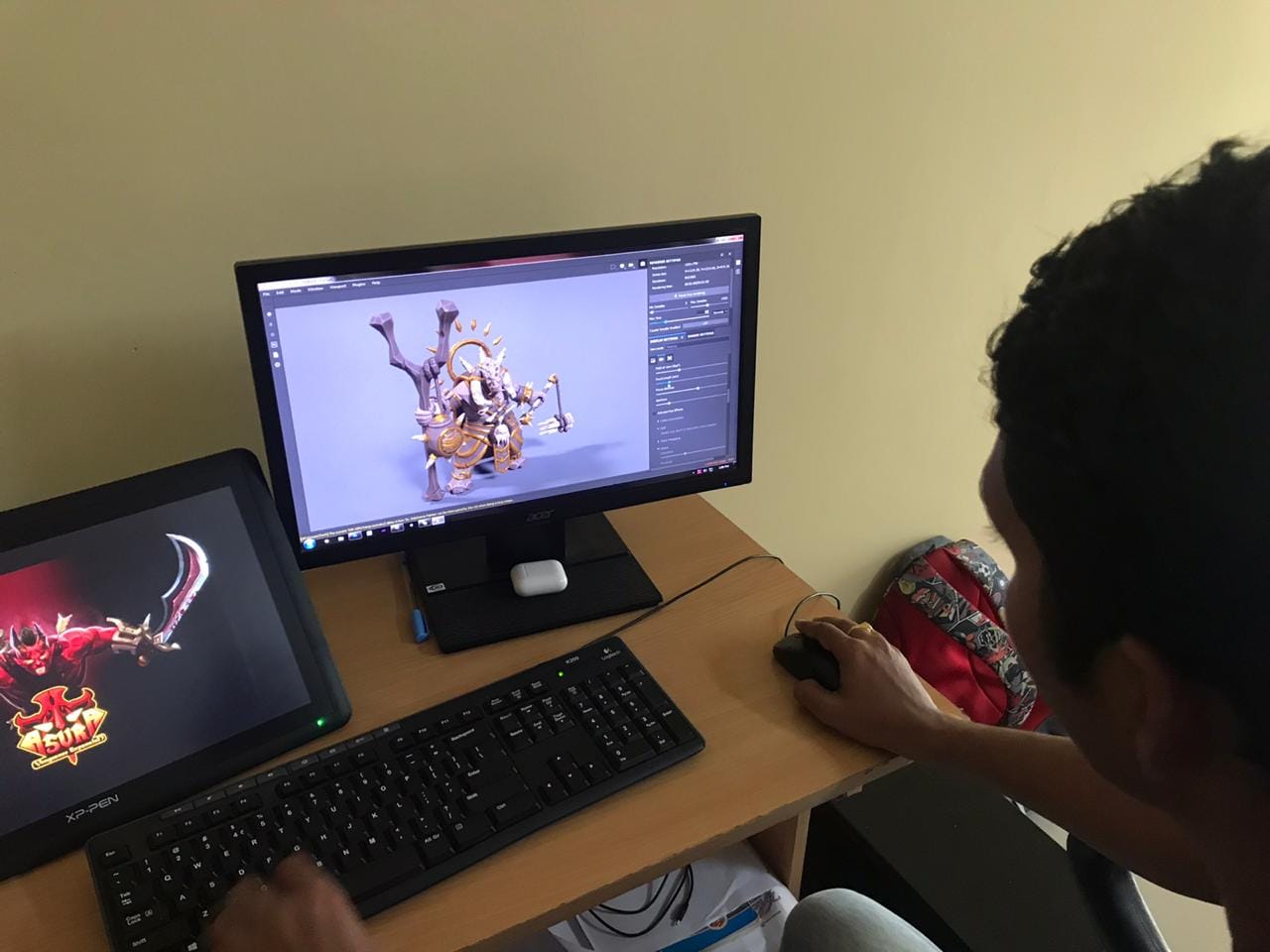
But for today’s developers and studios, two crucial elements that were previously inaccessible, are now at their disposal: Technology and talent. Some are even leaving cushy jobs at consulting firms to break into the gaming industry.
“When I started, I did not know the difference between a game artist and a game designer,” said 34-year-old Megha Gupta, who left her job at EY, in 2015 with no formal education in game development.
Between 2017 and 2020, Gupta took up contract work, mostly art projects for other games. To supplement the loss of income on account of the career switch, she handled social media for companies like Sri Lankan airlines.
After she joined forces with game developers, her company—Wala Interactive—started developing hyper casual games before pursuing their passion: Co-op (cooperative), puzzle games that could be played with friends on a couch.
But the technology has also caught up, allowing newcomers to the industry access to game ‘engines’—in-house software catered to simplifying the game development process.
“Back in 2009, it was impossible to develop your own game. You had to make your own engine, be technically sound. But this changed when Unreal and Unity [game engines] were made free—it made things more accessible,” said Fahadh, explaining why he decided to start his own studio in 2014, around the time the engines were made free.
Also read: Pixels turning into paychecks, as esports become a viable career option for young professionals
The right time
Making a global hit game for the PC or console isn’t dependent on the engine alone. Successful studios like Rockstar (GTA), Bethesda (Fallout) and FromSoftware (Elden Ring) have multiple AAA games under their belt.
Which means a chicken and egg situation arises. To develop a successful AAA game, a studio needs to have the experience of already publishing one. That’s just what it takes—an army of developers with experience, a solid marketing budget, a strong narrative and gameplay mechanics.
“India is still known for its services than its product,” said Fahadh, explaining that the main bottleneck is two-fold. Many Indian developers just don’t enjoy playing games and are accustomed to contributing development work for foreign, third-party studios.
But Siddharth Singh, the studio head at Tara Gaming, is optimistic. With over a decade of development experience, including stints at Electronic Arts and Tencent Games, he has witnessed the turning tide of talent in the country. And more importantly, the desire.
“We have people who worked on AAA titles in the UK, people of Indian origin, who have come back to work for us,” said Singh, pride coursing through his voice.
Granatino quickly pointed to studios that broke through without prior AAA pedigrees. Titles like Stellar Blade from South Korea’s Shift Up and Black Myth: Wukong from China’s Game Science became global hits, despite both studios lacking established AAA brand recognition.
“First mover has a huge advantage. The Sonys of the world came in and helped them to manage the production process [Stellar Blade was published by Sony Interactive Entertainment],” said Granatino, before highlighting Tara Gaming co-founder Nouredine Abboud’s AAA experience at Ubisoft. Abboud produced Ghost Recon Wildlands and Ghost Recon Breakpoint for the French gaming giant.
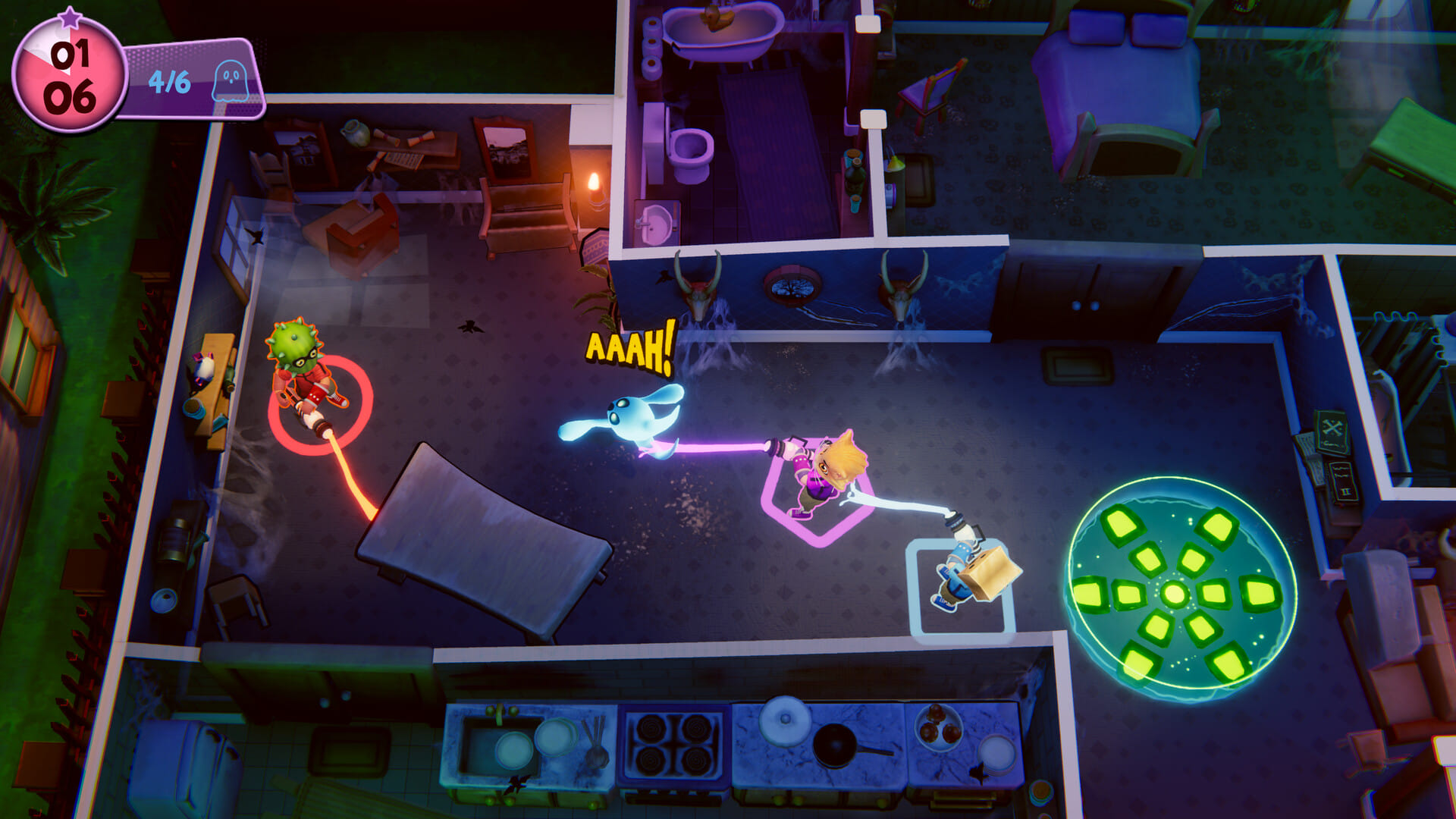
Scores of studios have opened over the last five years, spurred on by a post-pandemic access to venture capital. And many aren’t even producing Indian culture or mythology focused titles. Bengaluru-based Wala Interactive, which is completely bootstrapped, has created a physics-based, ghost hunting game called Spook-A-Boo.
But studios are taking a bet on Indian culture and mythology. Whether these titles are welcomed with open arms by the global community comes down to translating the shiny trailers (and promises) into enjoyable games.
“Today, you can easily cook up a trailer and a decent looking demo with hardly any experience,” said Fahadh, who has seen a plethora of trailers and studios come and go. “But that doesn’t mean you can make an entire experience. I can assure you that 99 per cent of games won’t see the light of the day.”
For studios with global ambitions like Tara Gaming, the timing could hardly be better for India to step into the spotlight. Siddharth Singh, who is leading the charge for Bhaarat, puts it down to a shared resolve.
“What has been missing till now has been this collective will,” said Singh. “Of bringing everything together into a cohesive unit, which can create a AAA game from the ground up in India.”
(Edited by Theres Sudeep)