





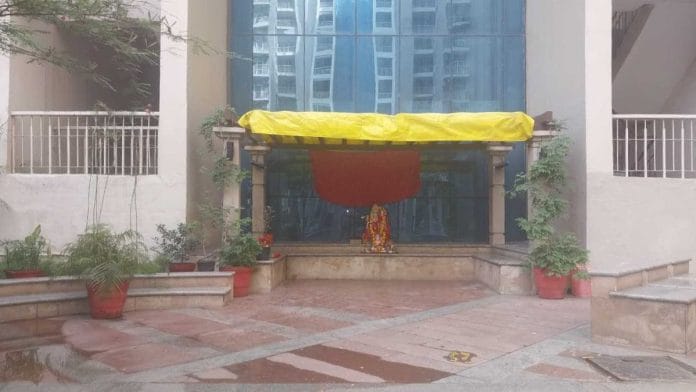



Noida: For the past two months, Mahagun Maple in Sector 50 is split into two camps: Those who support the construction of a temple within the society’s common area, and those who firmly oppose it.
At the heart of the dispute lies the open courtyard near the society park. Once, it was the soul of the community, a place where children played until dusk, where residents gathered for evening conversations, where small celebrations unfolded under open skies. Today, a temple is dividing the community and the RWA.
Across Delhi-NCR suburbs of Noida, Gurugram and Ghaziabad, more and more RWAs are opening a new, sensitive front of disagreement. Should there be a temple or a park? Should there be a small temple or a big one? Should there be other places of worship too? Should there be a temple committee and fund collection?
An idol of Radha and Krishna now stands in Mahagun Maple’s courtyard, adorned with flowers and offerings. This makeshift spot will now be built into a larger and permanent temple, a structure some residents proposed in February.
RWA conversations quickly turned into confrontations. Local authorities jumped in too, prompting a visit from Naib Tehsildar Pragya Sharma.
“Building temples in every housing society is a recent trend. Suddenly, people have become so religious that they want temples within their societies. But this has been pushed by radical groups operating in the name of religion and, of course, with political backing,” said a 60-year-old resident of the Sector 50 society, on condition of anonymity.
Notably, in 2024, show-cause notices were issued in several societies in Gurugram’s Sector 50 and 51, such as Sheetal Enclave (Mayfield Garden) regarding alleged encroachment of green areas for temple construction under the Haryana Development and Regulations of Urban Areas Act, 1975. However, strict action is unheard of.
“It has come to the notice of the undersigned that you have encroached the green area by way of erecting Temple in licensed colony namely Sheetal Enclave (Mayfield Garden) Gurugram,” reads the notice issued by the District Town Planner, Enforcement, Gurugram. The temple at the society still stands.
ThePrint has a copy of the notice.
In many societies, residents find themselves divided into two broad groups: Those advocating for temple construction, and those who, while not opposed to religion, resist the idea of unauthorised structures occupying shared or recreational spaces.
“We are not against any religion or temple,” said Amit Kumar Singh, a resident of Noida’s Mahagun Maple “But it cannot be built in a common area or park, which is meant for children to play—often the only open space they have.”
Legally, the matter is clearly defined. The Uttar Pradesh Apartment (Promotion of Construction, Ownership and Maintenance) Act 2010, states that the common areas “shall not be altered without the written consent of all the apartment owners and approval of the competent authority.”
In some housing societies, builders include temples in the original layout itself. In this case, the RWA is not involved and residents don’t have a say. However, in others—particularly where an AOA is absent or inactive—small groups of residents sometimes take it upon themselves to initiate construction.
“Why do we need so many temples— just because it is near our house?” said Advocate Sanjay Gupta, resident of Mayfield Garden, Gurugram. “If distance is the concern, why not build one inside your own home?”
In Mayfield Garden, the temples are already constructed, but residents have raised concerns regarding the use of donations and the role and accountability of lifetime trustees. They’re also concerned about the expansion of the temple area.
Divided by temple
Soon, the dispute within Mahagun Maple escalated beyond the society’s gates and reached the District Magistrate’s office, with formal complaints filed in March. Members of Bajrang Dal and Vishva Hindu Parishad arrived at the society too, adding a charged dimension to an already tense situation.
“They can build a temple,” said a resident of Mahagun Maple, “but at a place that is collectively agreed upon—not by placing an idol somewhere and then, over time, declaring it a temple site. What if people of other religions began doing the same—building mosques or churches in shared spaces?”
Two alternative locations have been proposed, but neither group can agree.
“They wanted the temple in the courtyard itself, and we don’t want that,” another resident said. “Now, members of Bajrang Dal and other political groups are visiting regularly. It feels like we are living under pressure. We can’t even express our views openly anymore.”
When contacted by ThePrint, the management of the society declined to comment. The President of the society, along with several residents who support the temple’s construction, described it as an internal matter.
Also read: Noida has an RWA problem. Office-holders grab power, residents pay the price
Spilling onto public spaces
A similar conflict unfolded earlier this year in Noida’s Sector 15, where residents protested against the proposed auction of a neighbourhood park by the Noida Authority. Many feared that the long-standing green refuge would eventually be converted into a temple.
A board appeared at its entrance in February, marking it as a “proposed site for religious use,” covering approximately 301 square metres.
Hundreds of residents from Sector 15A gathered to protest. Dressed in T-shirts reading “Let the parks be”, they held placards that read, “Dear trees, thank you for not invoicing me for oxygen.”
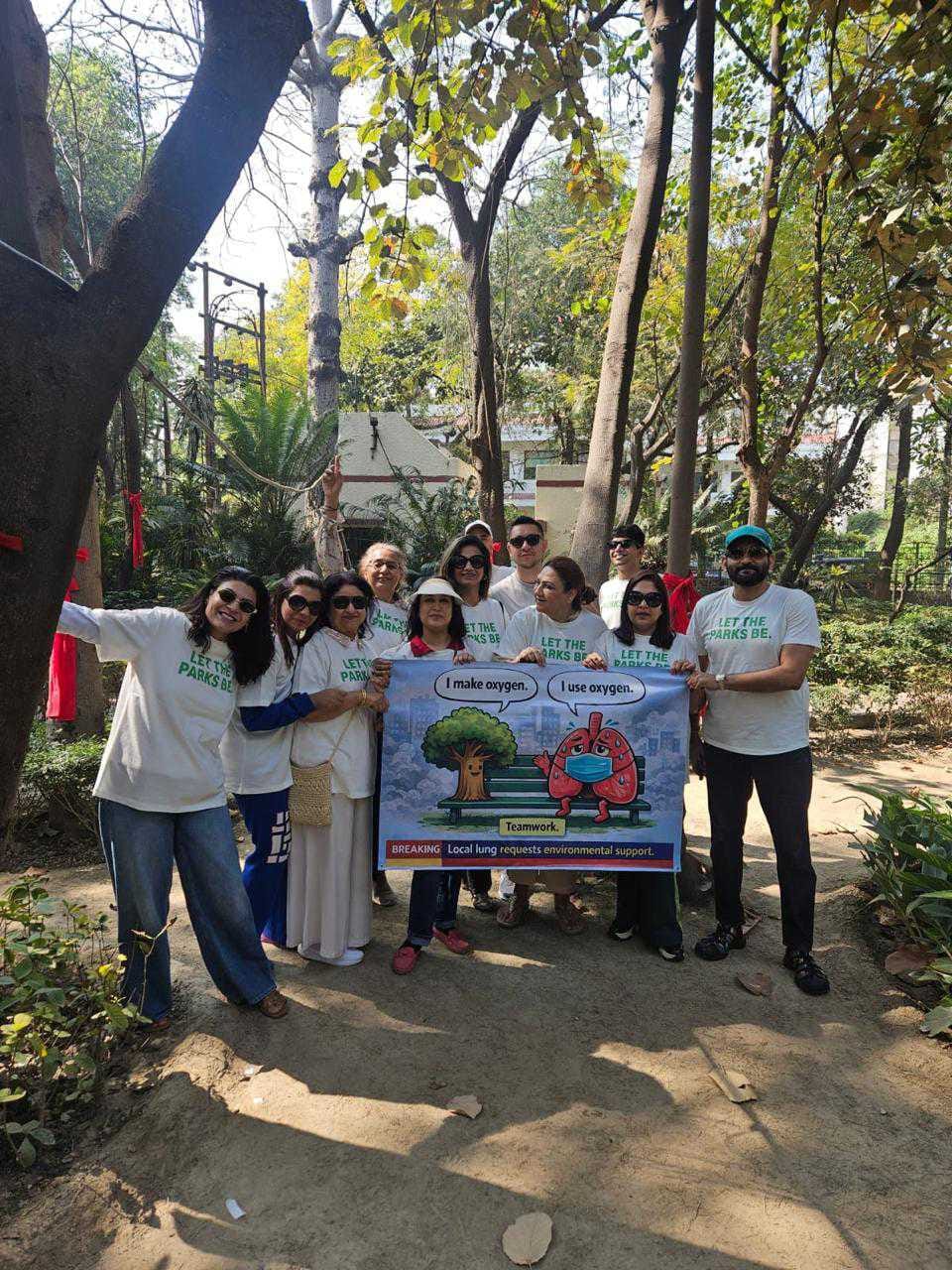
“They are destroying our 40-year-old park for a religious site. They are auctioning the land,” said 42-year-old Kalpana Mishra, who lives in an independent house in Sector 15A.
The matter soon moved to the courts. Around 59 residents filed a petition against the plan. A page has also been created on Twitter named ‘Save 15A Noida Park’, which regularly posts updates about the case, green drives and about the actions residents are planning to take to save the park. On 27 February, a Division Bench of the Allahabad High Court, comprising Justice Mahesh Chandra Tripathi and Justice Kunal Ravi Singh, directed the Noida Authority to file a detailed affidavit placing all relevant records before the court. Next hearing is on Friday.
“We will file as many petitions as needed to save this green space. This is a place for children to play, for the elderly to walk, and it should not be converted into something else by the authorities,” said Advocate Sanjay Sarin, lawyer in the case and a resident of Sector 15A.
Also read: Delhi’s single women vs RWAs. Story of the new ‘problem tenants’
Temple, money and power
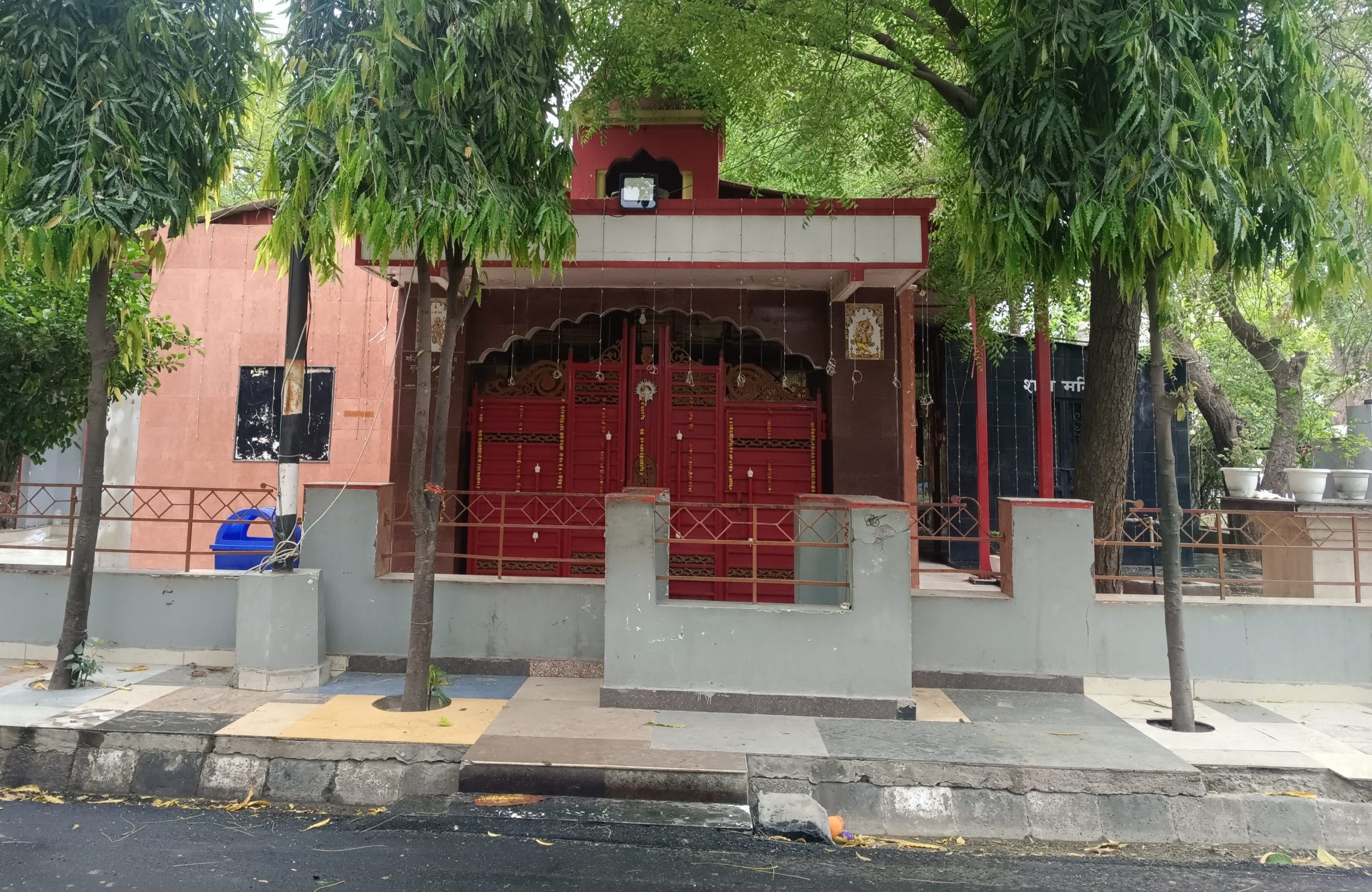
Unlike many Noida societies, Fortune Residency in Ghaziabad has had its own Shiva and Durga temple since 2021. The society is formally registered and also has a temple committee, including a president, secretary, and trustees. Here, they’ve reached the next stage of conflict. It is now about who gets to run the temple.
Recently, an election was held in the society for the temple committee. The election took place among the individuals who were already part of the committee and its lifetime members.
It soon created tension among other residents. They claimed that all residents were not informed beforehand.
“They don’t even open membership for new people, and they conducted the election among themselves and chose a president,” said one resident. He further claimed that membership was open only for one week last year. But membership for a temple committee, he said, should never be restricted.
The newly elected president of the temple committee, Rajkumar Bhati, denied these allegations. He stated that all residents were informed about the election through WhatsApp messages, and no nominations were received until 8 March, the last date for filing nominations. Bhati also claimed that those opposing the election are individuals who failed to secure positions in the AOA election and are now trying to enter the temple committee.
The opposing group wrote to the District Magistrate’s office in March, demanding a re-election and a fair electoral process in the society. They are currently awaiting a response. The temple committee has refused to hold a re-election, stating that the next election will take place only next year.
“Instead of making the membership process of the temple committee transparent and inclusive, it has been kept limited…despite repeated requests from many society residents, the membership of the temple committee has not been opened to all interested residents…an independent inquiry should be conducted into the membership that has been created in a limited and biased manner, and if necessary, such membership should be cancelled,” the letter reads.
ThePrint has reached out to the office of the DM. The copy will be updated.
Several residents say the issue is less about religion and more about internal power struggles within resident bodies. For them, the conflict reflects the complicated politics of Apartment Owners Associations (AOAs) and Resident Welfare Associations (RWAs), rather than genuine religious concern.
After building the temple, these small groups often get it registered as a trust. They then form a managing body, which helps them become influential and establish connections with local political leaders and officials.
“This has nothing to do with religion or temples,” said another resident, speaking on condition of anonymity. “It is more about AOA and RWA politics, which can be extremely messy in India. Positions in these associations often come with influence and control—over funds, decisions, and common spaces. In some cases, people treat it like a full-time pursuit. The system, instead of serving residents, ends up serving a few individuals.”
Also read: Who should run Hindu temples? Tamil Nadu is the epicentre in new tug-of-war
Financial concerns
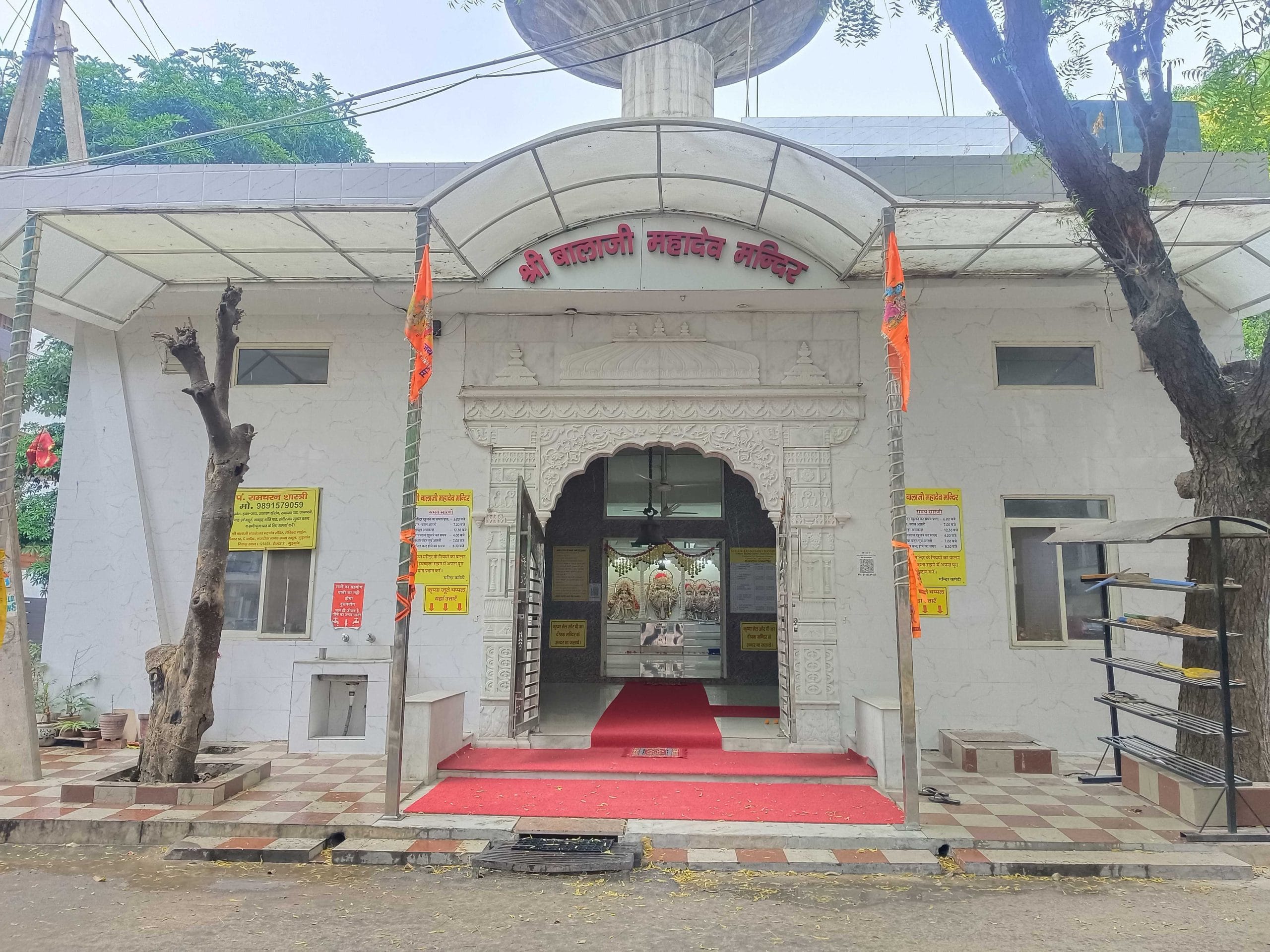
The issue of power concentration among lifetime members and trustees is not limited to one society. At the Shree Balaji Mahadev Temple in C-Block, Mayfield Garden, Sector 50, Gurugram, a similar protest is emerging against lifetime members and trustees.
“The same people hold power in the AOA or RWA as well as the temple committee. They don’t allow new people to enter that space, and if you raise your voice, they can make your life difficult,” said a resident of Mayfield Garden, on condition of anonymity. She added that anyone who speaks against the committee is often labeled as being against religion and may even face intimidation through local religious groups.
Residents also raised concerns about a lack of financial transparency. They alleged that details of temple funds, including donations and chanda, have never been shared with the wider community. Audit records have not been made public, even when repeatedly requested. Many residents who are not interested in being part of any committee say their only demand is transparency in how funds are managed and decisions are made.
“Temples have become a new source of power in these gated societies,” said the above-mentioned resident of Fortune Residency. “We only want transparency, no matter who holds power or runs the temple or the society.”
Temples are the new shops
In N-Block of Mayfield Gardens, Gurugram, residents allege that a temple was constructed by a few individuals on builder-owned land without any No Objection Certificate (NOC). The temple trust was registered in 2019 without disclosing the existence of a registered RWA, raising questions over its legal validity.
Advocate Sanjay Gupta, resident of the society, alleges that despite a mandatory annual audit clause, no financial records of donations or expenses have ever been shared publicly. An inquiry into alleged fund misuse and the validity of the trust has already been ordered by district authorities and is currently underway. There are also concerns about past unauthorised electricity use and non-payment of utility charges.
Temple disputes in these housing societies have now spilled over onto social media.
“This is a disease infecting one after another society in Noida. The government has failed to provide drinking water to these societies, electricity is inconsistent and they want to keep people busy with these useless issues so that they don’t ask the right questions,” said one user on X.
Another user compared India’s concerns to China’s.
“When China is building the most advanced level, these jokers want 128 temples in Noida.”
One such concern was raised by a resident of Ghaziabad on the online legal forum LawRato, asking the lawyers about the legal aspect for such constructions.
“I have purchased a flat in a group housing society in Ghaziabad, UP. In our society, the current RWA is trying to build a temple. The temple is not present in the original layout plan of the society. Can the RWA, with the consent of majority residents, build a temple even if it is not part of the original plan? How can we prevent this? Myself and a few residents are against building the temple. What legal remedies do we have?” wrote the resident.
“Temples have now become shops. People are opening them everywhere—they want one near them,” Gupta said.
(Edited by Theres Sudeep)