





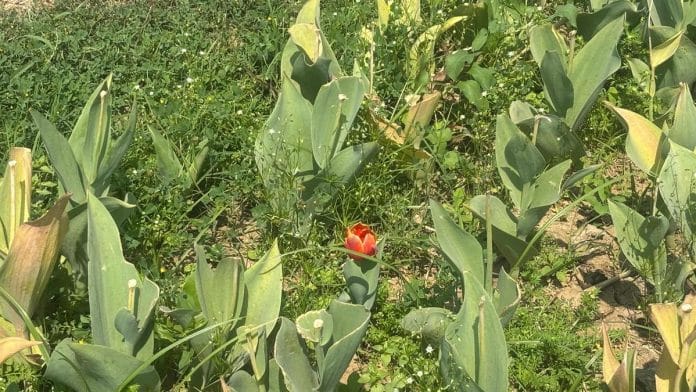



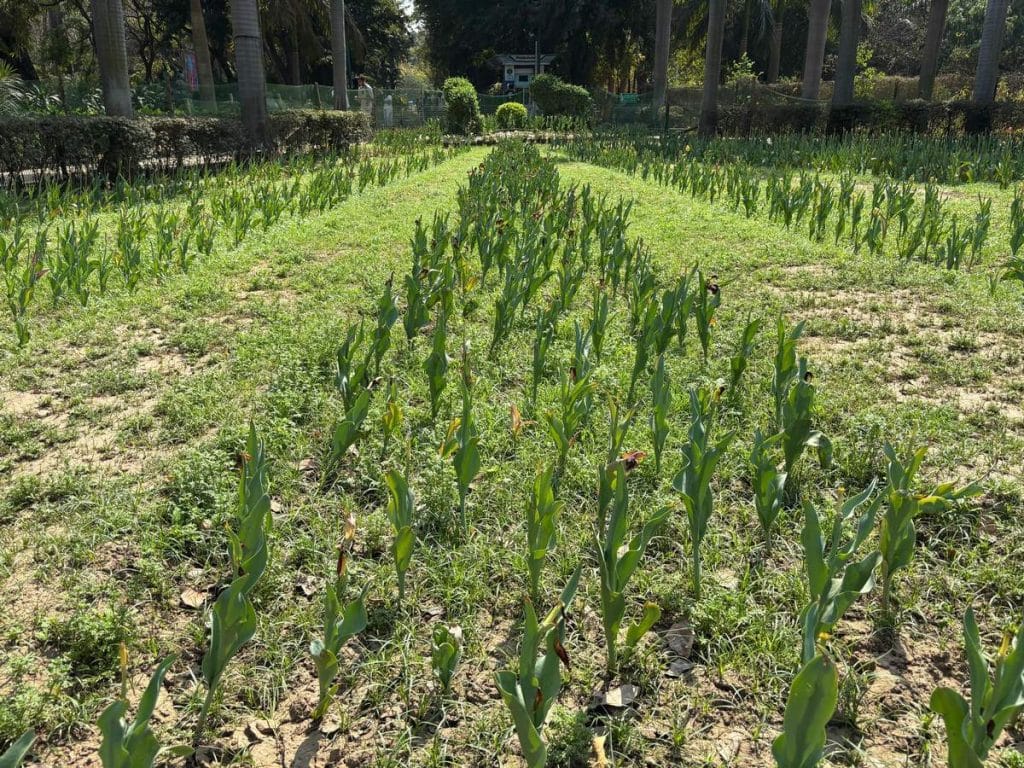
New Delhi: Selfie season had arrived in the capital, and Chief Minister Rekha Gupta herself reminded residents last week that they could skip Kashmir and pose with tulips right here in central Delhi. Many dressed up for photographs and rushed to the diplomatic boulevard of Shanti Path, expecting rows of colourful blooms. What they found instead was a graveyard of flowers. The stems stood tall, but the blossoms were gone.
The fourth annual tulip festival by the New Delhi Municipal Council (NDMC) was officially inaugurated on 23 February and scheduled to run until March 10. But by the time the CM invoked the tulips at the inauguration of another two-day NDMC flower festival, most petals had already fallen. From the main display along the 2-km stretch of Shanti Path to smaller clusters in Lodhi Garden, Central Park, and several roundabouts in Lutyens’ Delhi, patches of bare soil lay exposed under the sharp spring sun.
From the G20 in 2023 to the AI Impact Summit last month, the tulip display has become a fixture of Delhi’s diplomatic welcome during major international events. The blooms, though, are indifferent to the events calendar. This time the season ended almost as soon as it began, lasting just long enough for dignitaries and delegates at the AI Summit to catch an eyeful of blooms.
A flower designed for colder climates is painstakingly recreated each spring in Delhi — imported bulbs, precise planting schedules, and weeks of care for blooms that last barely a fortnight. The horticultural gamble comes at a heavy cost. This year, over 5 lakh bulbs were procured, with the vast majority imported from the Netherlands. At roughly Rs 37 per bulb, the imported stock alone cost nearly Rs 2 crore. Unseasonably hot weather, a delay in planting, and a late ‘invitation’ to Delhiites made the season even more blink-and-miss-it for residents this time.
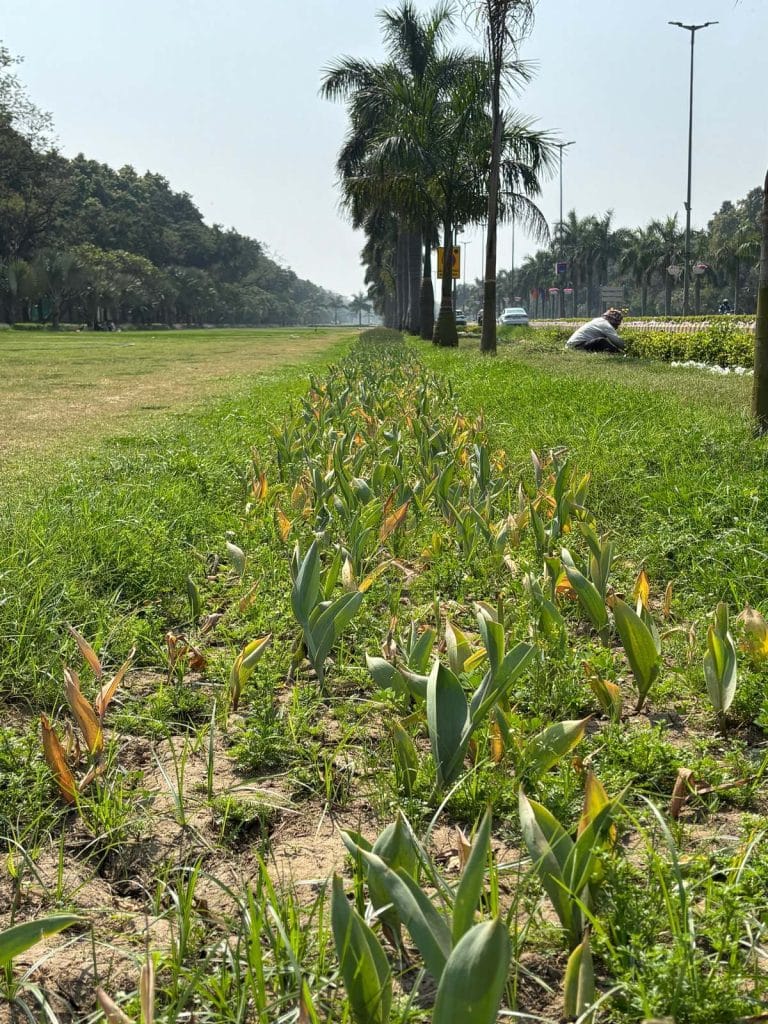
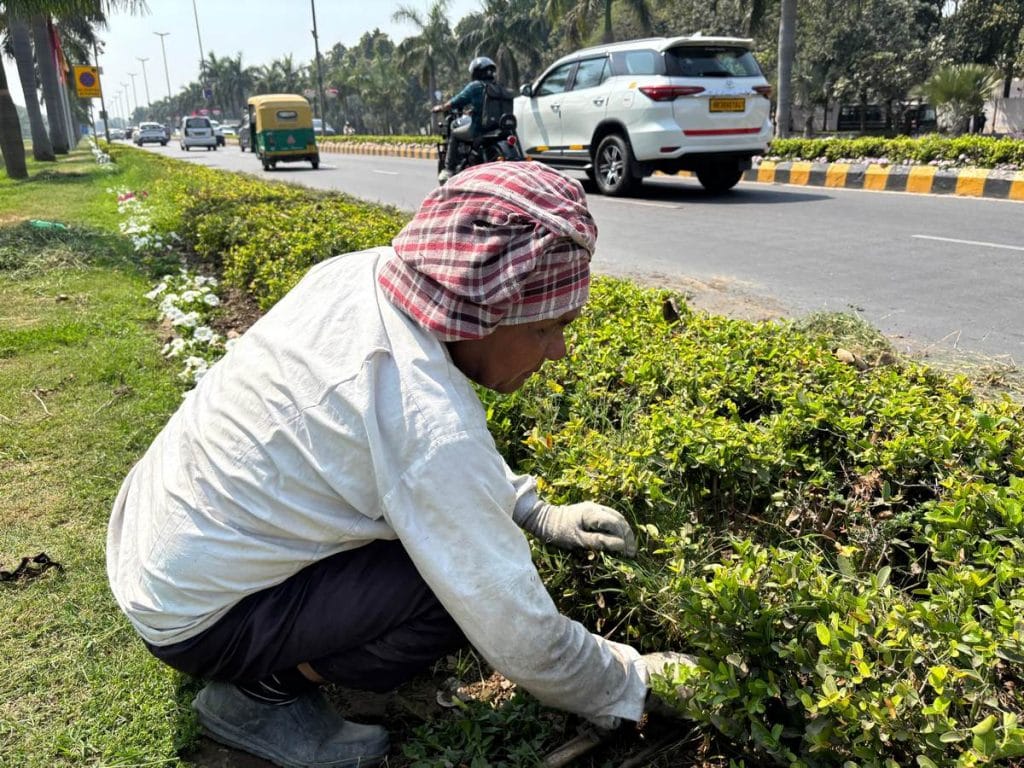
On Saturday afternoon, a few college students who had arrived at Shanti Path to take much-advertised photographs with the tulips stood staring at the empty beds in disbelief. A lone gardener, Samay Singh Chauhan, moved slowly along the beds, clearing weeds and brittle leaves from the soil. Three young women in brightly patterned outfits walked up to him and asked where the tulip festival was.
“Everything has dried now,” he told them, gesturing toward the empty beds around them. The women left, disappointed.
“So many people come well dressed to take pictures,” said Chauhan, watching them go. “They think the festival is still on. But there’s nothing left to see.”
Also Read: India’s ‘cleanest village’ Mawlynnong banned tourists on Sunday. Villagers need a break
‘No benefit to all this’
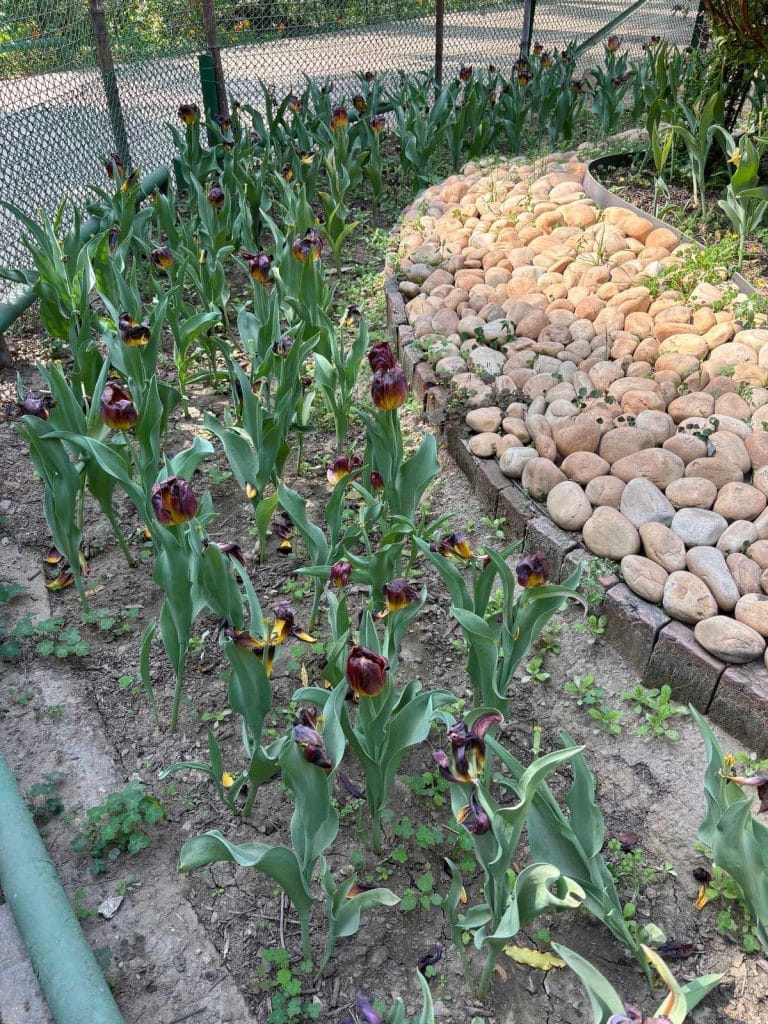
Even about two weeks ago, Delhi’s famous tulips were showing signs of strain, with bright patches of yellow, pink, and white blooms punctuated by bare stalks. Visitors who had parked along Shanti Path were playing a game of find-a-flower in some stretches, calling out excitedly when they found a photo-ready bed.
With Delhi recording its hottest February in three years, the tulips have been struggling. Last Saturday was the hottest day in the first week of March in the last 50 years.
“How will the tulip survive in this heat?” gardener Chauhan asked, pausing from his work. Tulips grow from bulbs buried beneath the soil and take about a month to flower. “When the temperature rises, the bulb dries up and dies.”
Tulips are usually planted between middle and late December, but this year they were planted in the first week of January, said Jitender Singh Dabas, assistant director in NDMC’s horticulture department.
The flowers in Delhi typically peak mid-February, a window that coincided this year with the AI Impact Summit, held between 16 and 20 February. The beds along Shanti Path were already abloom and ready to greet the foreign delegates, but the stretch was heavily secured.
“Even we couldn’t enter to do our work,” Chauhan said. “When the delegates from the Netherlands came to see the tulips later, half the flowers had already died.”
By the time the public was invited to the tulip festival on 23 February, many of the flowers had already begun fading. Last year, by comparison, the festival had begun earlier, on 10 February, and ran until 23 February.
This flower has such a short life. It has no fragrance, nothing. If you kept paper flowers instead, it wouldn’t make much difference
-Samay Singh Chauhan, gardener with the NDMC
Of the 5,17,500 bulbs purchased from the Netherlands, 3,25,000 were planted in NDMC areas while 1,92,500 were supplied to the Delhi Development Authority, according to Dabas. Alongside the imported bulbs, about 15,000 were developed locally at an incubation centre in Lodhi Garden, while another 20,750 were sourced from the CSIR-Institute of Himalayan Bioresource Technology in Himachal Pradesh.
“Each imported bulb cost around Rs 37 this year. The bulbs developed locally are roughly half that price,” Dabas said, adding that the expenditure is not part of a separate festival budget but is covered under NDMC’s annual horticulture maintenance allocation.

The tulip festival began as a small horticulture experiment with a trial planting of 17,000 bulbs in 2017-18, when each bulb cost about Rs 25. Over the years, the scale has expanded rapidly.
In 2021, around 62,800 tulip bulbs were imported. The number rose to 1.4 lakh in 2022, two lakh in 2023, 3.25 lakh in 2024 and more than 5.17 lakh in 2025.
Maintaining the display is labour-intensive. Around 40 to 50 gardeners work along the Shanti Path stretch, with the tulip season adding nearly six weeks of extra work. The plants require frequent watering, and damaged or stolen flowers have to be replaced.
“In my mind there is no benefit to all this,” said Chauhan.

Inside Delhi’s Tulip House
Competing narratives about tulips have bloomed in Delhi. Officials such as NDMC vice-chairperson Kuljeet Singh Chahal have claimed that the flowers make the capital a “cleaner, greener, and more vibrant city”, bringing Rashtrapati Bhavan-level horticulture to ordinary residents. But environmentalists such as Bhavreen Kandhari have called the project “wasteful” and a net addition to Delhi’s carbon footprint.
In 2023, looking to address at least some of that criticism, the NDMC inaugurated its ‘Tulip House’—a storage-cum-propagation chamber intended to extend the life of the delicate bulbs and eventually reduce the city’s dependence on Dutch imports.
Each imported bulb cost around Rs 37 this year. The bulbs developed locally are roughly half that price
-Jitender Singh Dabas, assistant director in NDMC’s horticulture department
At Lodhi Garden, storekeeper Sanjay Sharma unlocks the door to the facility. Behind it are two temperature-controlled rooms where bulbs are stored before they are planted across the capital. A few potted tulips sit inside the chambers — part of a stock of nearly one lakh plants sold to the public this season at Rs 200 to Rs 350 a pot, depending on the variety.
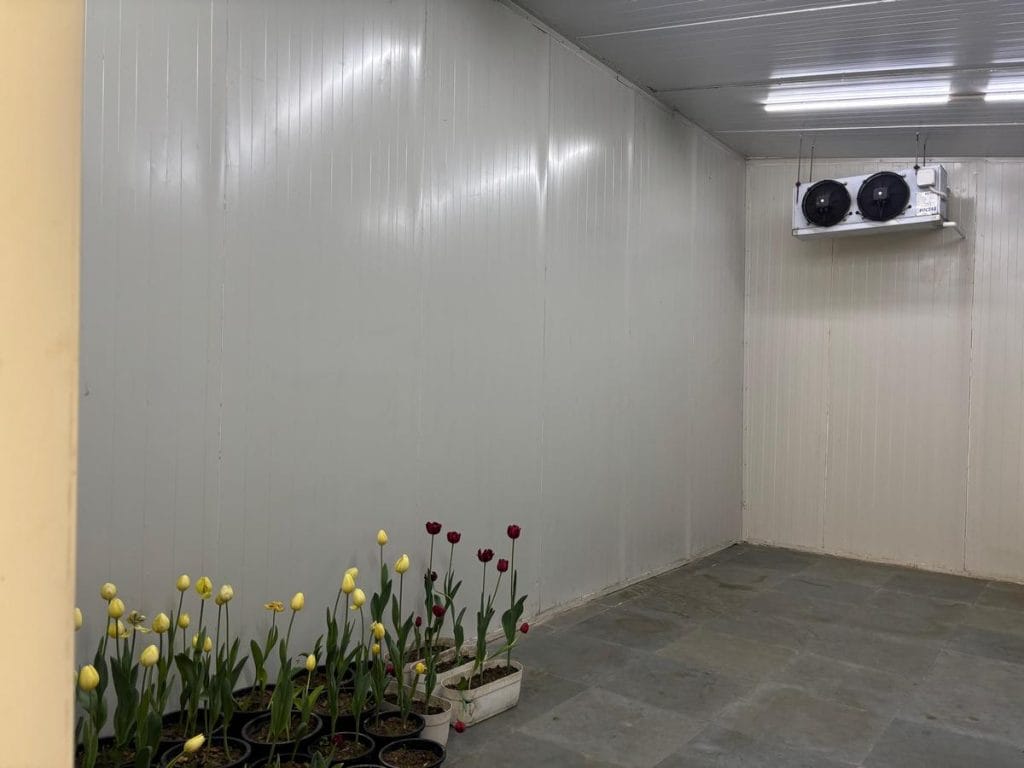
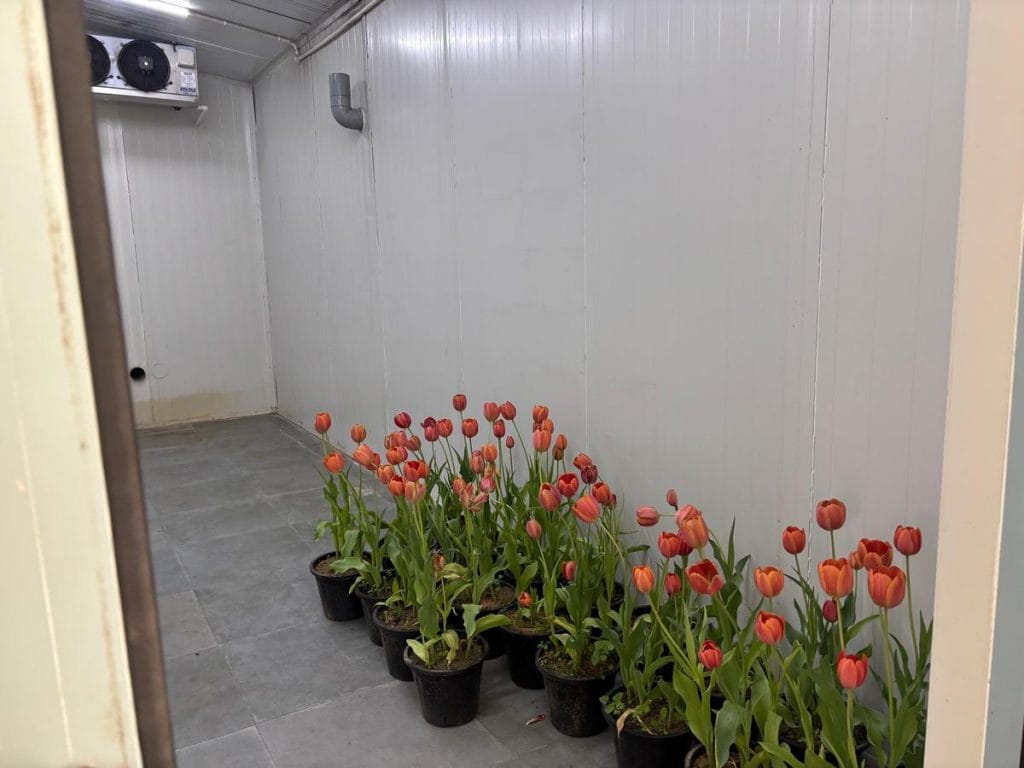
“All the tulip bulbs that come from Himachal and from the Netherlands are stored here. From here they are distributed to places across the city,” Sharma said, adding that the flowers themselves are not grown here.
The bulbs usually arrive around November, Sharma said. From the time they are planted, it takes about a month for the flowers to bloom. Ideally, the flowers last close to a month, but it was not to be this time.
“Because of the heat this time, everything got ruined,” Sharma said. “They were planted late, and the temperature also rose quickly. The flowers dried up about 15 days ago.”
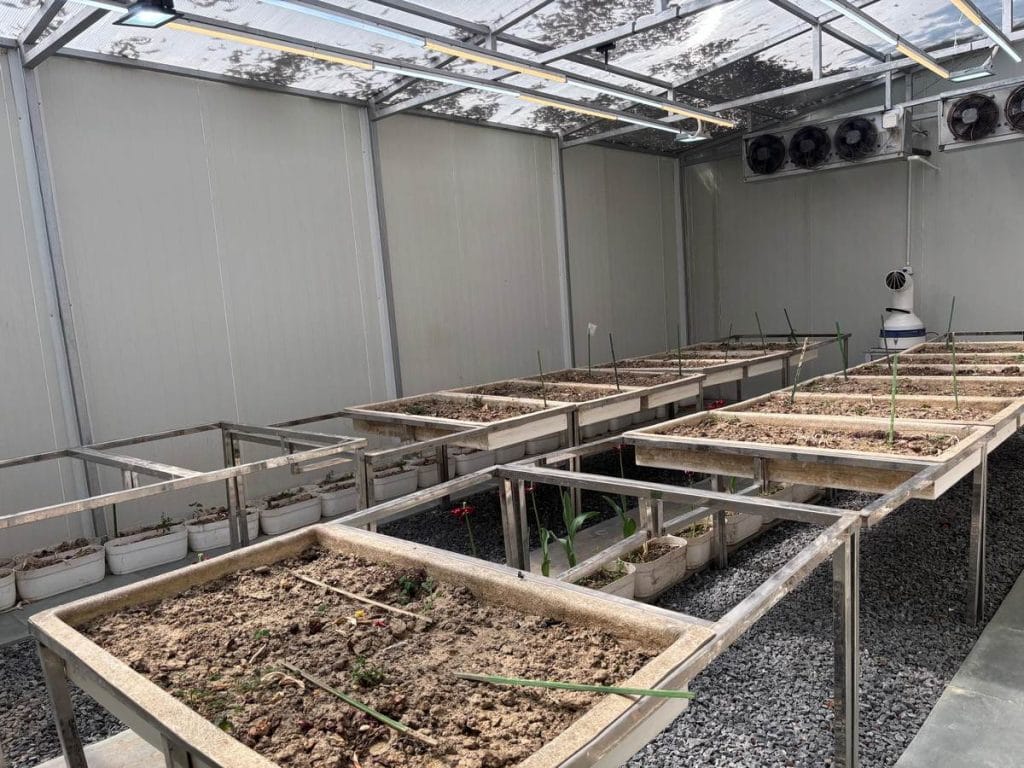
The scope is limited, however. Tulip House can store around 50,000 bulbs in cold storage and propagate about 2,000 more in controlled temperatures, which is a fraction of the more than five lakh bulbs imported each year. The purpose of bulb reuse is also not always met.
In theory, after the flowering period ends, the bulbs are dug out and returned to cold storage for reuse. In practice, most do not survive.
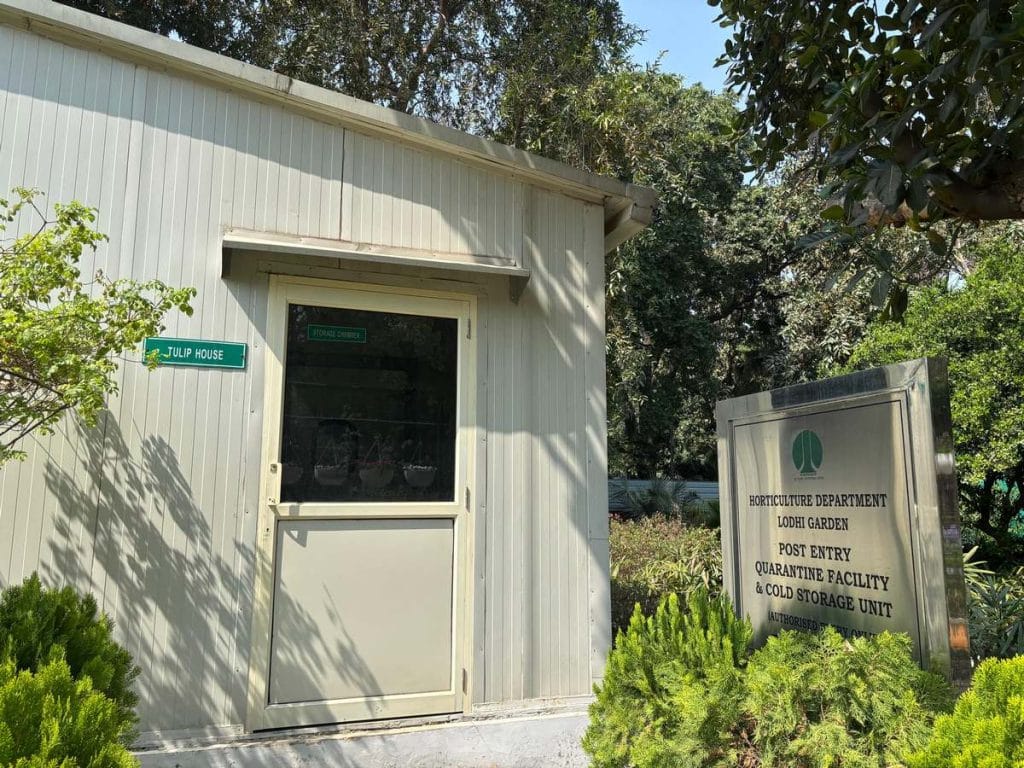
“They say the bulbs are kept in cold storage in Lodhi Garden. But most of them rot. The machines meant to keep them cool often fail, and the survival rate is very low. So they have to be ordered again,” said gardener Chauhan.
Dabas also acknowledged that reusing the bulbs remains difficult.
“We try to reuse as many as possible, but tulips have a very short life cycle and require winter conditions to survive,” he added.
Also Read: Grown in Karnataka, sold as American — Inside India’s gherkin empire
Atmanirbharta in tulips
To avoid the cost of flying in half a million tulip bulbs for a short-lived display every year, the NDMC has partnered with scientists at the CSIR-Institute of Himalayan Bioresource Technology (IHBT) in Palampur, Himachal Pradesh.
The initiative, now in its third year, aims to gradually reduce India’s dependence on imported bulbs.
“It is a slow, costly process, but over the next 10 to 12 years we hope to reduce imports by about 20 to 25 per cent,” said Dr Bhavya Bhargava, a scientist in the institute’s floriculture division. He added that researchers are currently working with around 10 to 12 tulip varieties, classified broadly into early, mid-season, and late-blooming types.
The institute’s role begins after the imported flowers complete their bloom cycle in Delhi.
“When tulips flower, the bulb loses energy and its size shrinks,” Bhargava said. “Once NDMC finishes the flowering season, the bulbs are dug up and sent to us. We grade them according to size.” Last year, around 85,000 bulbs made it back to IHBT.
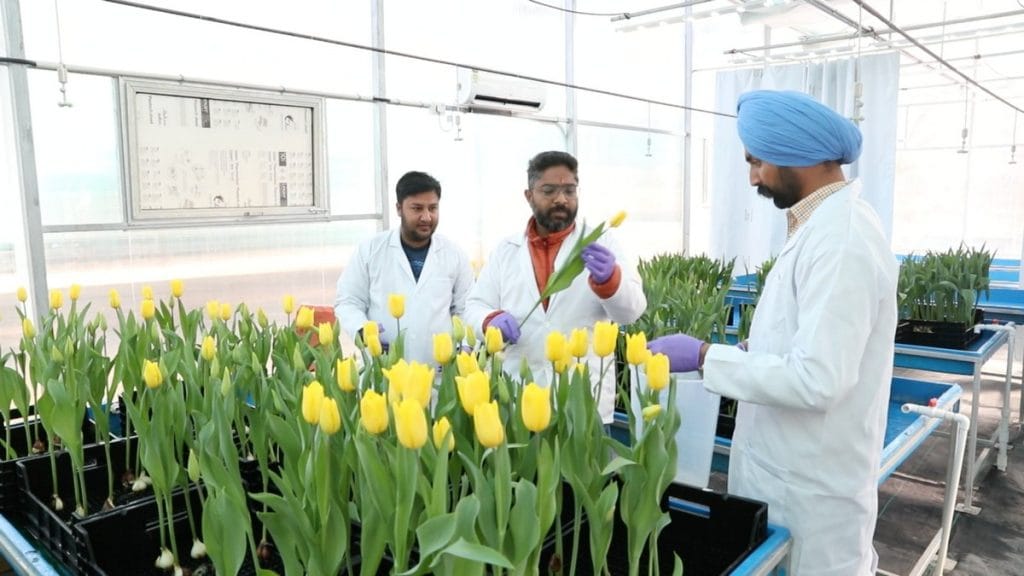
Flowering bulbs typically measure more than 12 centimetres in circumference. After blooming, many shrink to smaller sizes. These bulbs are then sent to farmers in colder Himalayan regions such as Lahaul and Spiti, where the climate provides the right conditions required for tulip growth.
“Small bulbs can take up to three years to reach flowering size,” Bhargava said. “During that period, the buds are removed so that the plant’s energy goes into increasing the bulb size rather than producing flowers.”
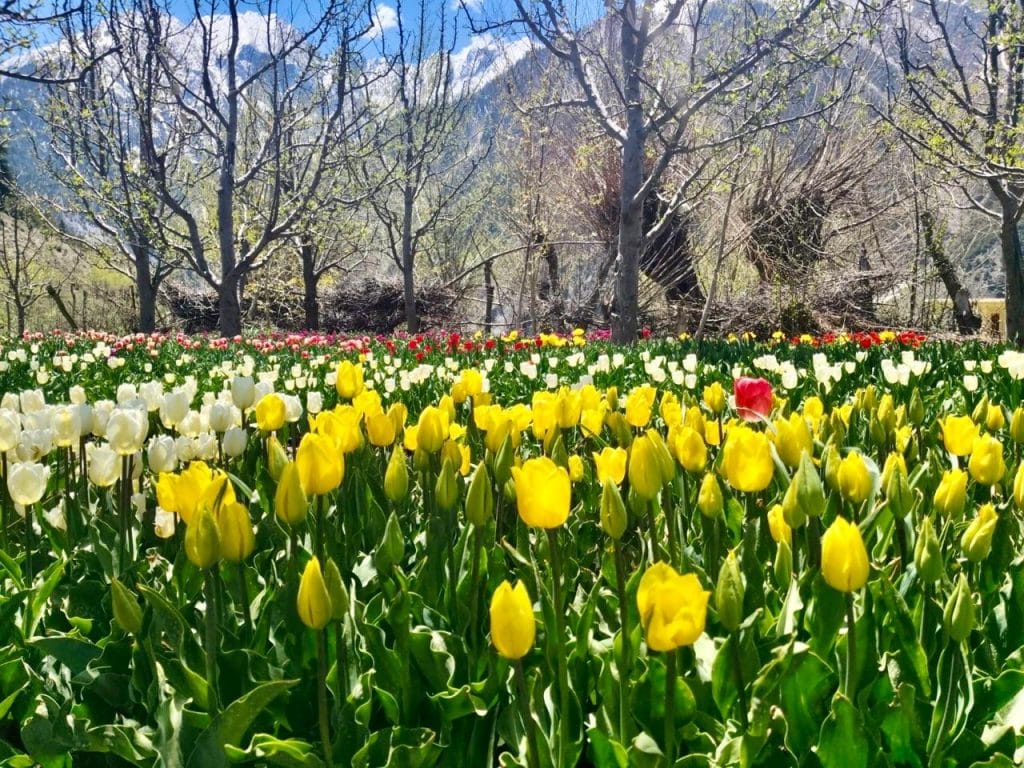
Once the bulbs mature, they are supplied back to NDMC for planting in Delhi. Last year the institute provided around 20,000 bulbs to the civic body; this year the number rose to roughly 22,000.
Tulips are naturally adapted to colder climates, where bulbs remain dormant in frozen soil before sprouting in spring. The plants require a prolonged chilling period to break dormancy.
“In colder regions like Lahaul and Spiti this happens naturally under snow,” Bhargava said. “But in warmer cities like Delhi those conditions have to be artificially created.”
For this reason, bulbs are often stored in temperature-controlled environments before planting. Even then, their blooming window in Delhi remains short. Once temperatures begin rising toward late February and March, the flowers wilt quickly.
Beyond supplying bulbs for Delhi’s displays, the institute is also exploring ways to cultivate tulips commercially in colder Himalayan regions. Bhargava said researchers are working with farmers in Lahaul and Spiti and testing cultivation conditions in other high-altitude areas such as Leh. The institute is also experimenting with hydroponic techniques to grow tulips without soil in controlled environments. Using specialised trays and climate-controlled chambers, researchers have been able to produce tulip flowers in less than 35 days.
But the long and expensive journey of the tulip—from the Netherlands to Delhi, then to Himachal and back again—did little to deliver Delhiites the promised Dutch makeover.
Back on Shanti Path, the tulip diplomacy is done and dusted, and Chauhan is left with the drudgery of the cleanup. The gardener, who has worked with NDMC for 35 years and is set to retire next year, said the whole rigmarole feels futile.
“This flower has such a short life. It has no fragrance, nothing. If you kept paper flowers instead, it wouldn’t make much difference,” he said.
(Edited by Asavari Singh)
Friends
Tulips 🌷 are Cool region flowering crop.
Experimental studies are welcome.
Ro. 2 crores are nothing for the international City like New Delhi to have a Glimpses of Netherlands or our Kashmir.
Everything is not always Profitable.
OK G bye bye