





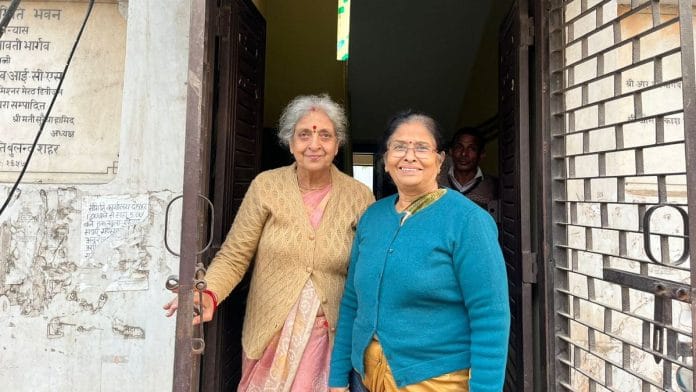



Bulandshahr: In India’s districts, the magistrate is usually the most powerful person. That power often extends, informally, to the spouse. The “DM’s wife” occupies ceremonial posts on women’s welfare committees, unquestioned. But in Bulandshahr, 70-year-old Kalpana Gupta decided she’d had enough. Refusing to accept that the DM’s wife should automatically head the Zila Mahila committee, she took her years-long fight all the way to the Supreme Court and shook up the system.
It was Bulandshahr’s own version of the war against the ubiquitous, infamous Nepo gangs. First Bollywood, then politics and judiciary. Now it has come to the coveted IAS. A DM’s wife getting an automatic seat at the head of the Zila Mahila Samiti, a body meant to be run by marginalised women, was all kinds of wrong — nepotism, privilege, and misogyny rolled into one. At a time when more women are themselves becoming IAS officers and district magistrates, the rule’s shelf-life had long been over.
“We were really bothered by the way the DM’s wives were managing things. All the dirty politics and one-sided decisions were hurting the Samiti. We had enough of it for years. Now, without a DM’s wife as the head, we are running it successfully,” said Gupta, seated at the Samiti office, surrounded by other members.
A long-simmering dispute escalated in 2022, when the Samiti tried to amend its bye-laws to remove the district magistrate’s wife as ex officio president and to instate her as ‘patron’, only for the Deputy Registrar to annul the change. The matter then went to the Allahabad High Court and, after that, the Supreme Court.
To run the Samiti this smoothly, we had to go to two courts, make repeated visits, and finally we are able to run it without the administration’s interference
-Kalpana Gupta
Gupta’s battle in Bulandshahr has since blown up into a test case before the Supreme Court, with judges describing the ‘DM’s wife’ rule in the bye-laws of the Zila Mahila Samiti of Bulandshahar as “atrocious”, “insulting” and a “colonial-era mindset”.
Last month, the Uttar Pradesh government told a Supreme Court bench of CJI Surya Kant and Justice Joymalya Bagchi that it had finalised a bill revamping the Societies Registration Act, 1860, to override bye-laws like those of the Bulandshahr Zila Mahila Samiti that mandate DM’s wives as ex officio presidents.
However, in civil services circles, the practice still has defenders.
Also Read: UP IASOWA is changing—Its ‘Akanksha’ programme has gone beyond masala & mathri
Two sides of ‘Mrs DM mandate’
What started as a challenge to a provision in the registered bye-laws of Bulandshahr’s Zila Mahila Samiti has now triggered a state-wide clean-up of societies where “Mrs DM” or the wives of senior officials are automatically written in as presidents or patrons.
Bulandshahr is not the only place where a DM’s wife sits on a women’s organisation. Across Uttar Pradesh, they also head district Akanksha Samitis, committees linked to the IAS Officers’ Wives Association that inspect girls’ hostels and run charity projects. Akanksha, however, is a voluntary NGO, at least on paper, created and run by IAS families themselves.
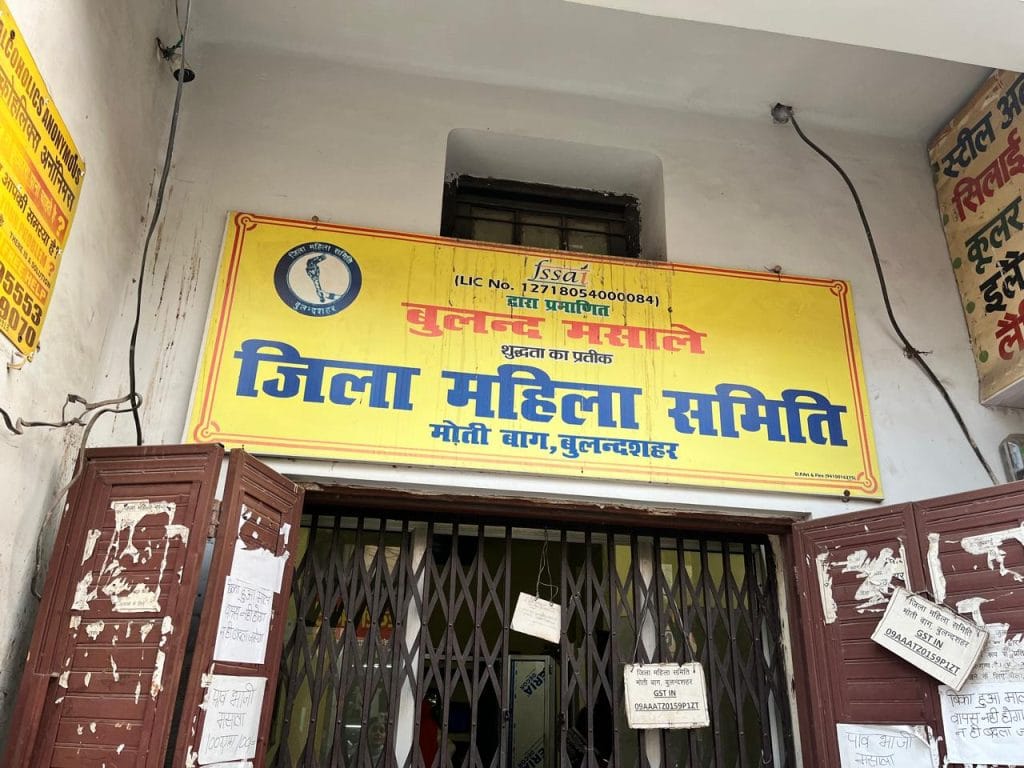
The Zila Mahila Samiti is different. It is a member-based, government-supported cooperative society set up on nazul (government-leased) land, and meant to be run for widows, orphans, and poor women. Yet its bye-laws reserved the presidency for the collector’s wife, effectively turning a welfare body for the poorest women into an extension of the district’s most powerful household.
Within the civil services, though, the arrangement is often described as informal convention rather than a binding rule.
“There are no ‘provisions’. In some states, the DM’s wife or the SP’s wife heads all sorts of welfare bodies, nominated by the members or by the Head of Department of government departments like Women and Child Development. Such appointments are completely honorary, and the wife of the officer has no financial or administrative authority,” said retired IAS officer Shailja Chandra.
If someone from the administration will be [in the Zila Mahila Samiti], a fear will be there among the people and no one will try to encroach or misuse it. The administration will also present their side in the Supreme Court
-Abhishek Kumar Singh, Additional District Magistrate of Bulandshahr
She added that she had never heard of any statutory function being entrusted to an officer’s wife without following due process: “That includes justifying the selection and considering applicants who are qualified for the job.”
That view is articulated by some serving officers as well. An AGMUT-cadre additional district magistrate, who was selected to the IAS in 2018, said he had never encountered such a position for his wife during postings in Goa, Kashmir, Arunachal Pradesh, and Delhi.
“There were welfare committees but no consensus that she has to be the head or anything. As a DM’s wife she has many responsibilities such as attending public gatherings at schools, donation camps, and district events, but nothing like this,” said the officer, declining to be named. “There are expectations around protocol, of course, but no compulsion that says the wife must head a committee or run an organisation.”
He added that these engagements are usually voluntary and depend on the spouse’s profession, availability, and interest.
“My wife is a full-time doctor. Her schedule doesn’t allow her to take on additional responsibilities even if someone asked. In other places I served, officers’ spouses who were interested took part in welfare activities, but it was never compulsory and certainly not written into any rule,” he said.
However, Clause 3(5)(b)(1) of the Samiti’s bye-laws, accessed by ThePrint, states this unambiguously, in Hindi: The president shall be the wife of the District Magistrate, Bulandshahr, nominated by the District Magistrate.
“The entire litigation was about a bye-law that mandated the appointment of the officiating DM’s wife as the ex-officio president of the Samiti,” said Waqas Mohammad, counsel involved in the case. “In 2022, the rule was amended — the DM’s wife was not removed entirely but redesignated as ‘patron’.”
An internal battle
Beyond the principles of privilege and nepotism, it was also a fierce power struggle at the heart of the Bulandshahr Zila Mahila Samiti.
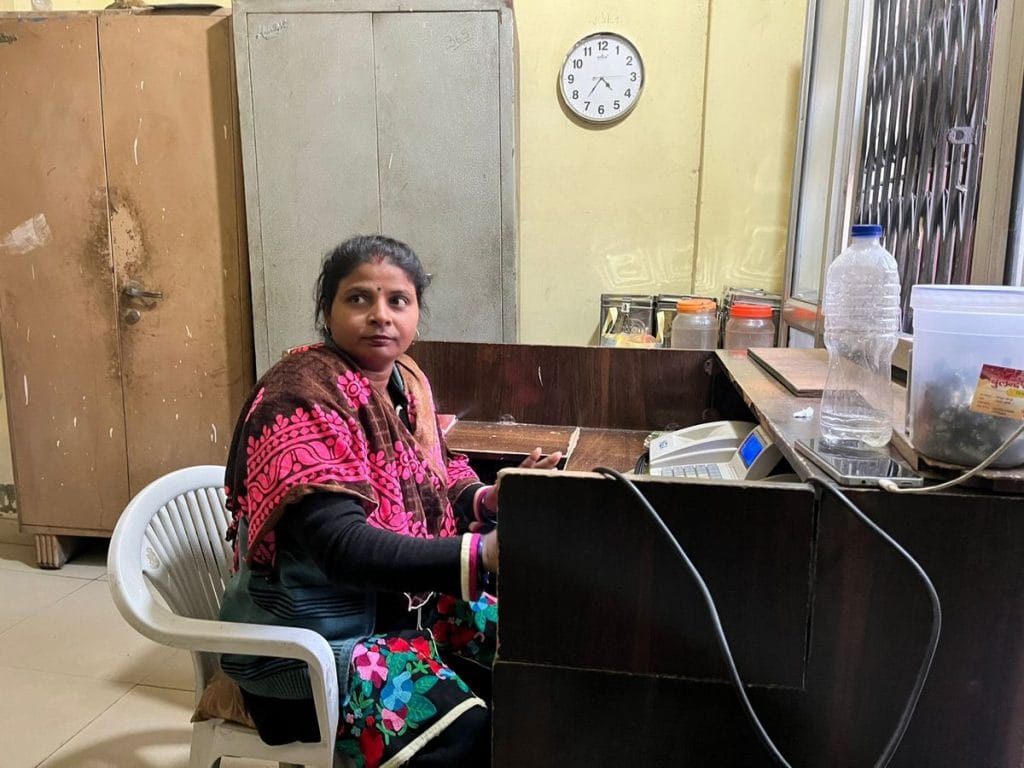
Thirty-five-year-old Nisha has worked with the Samiti as a masala grinder for the last 10 years and has seen many internal rifts play out. None affected her directly until 14 August 2024, when a few committee members paid her 14 days’ wages and told her not to return. She said the shutdown followed months of infighting that stalled Samiti projects and brought work to a halt.
When Nisha and other workers protested at the district magistrate’s residence, they were allegedly thrown out unceremoniously. Nisha characterises the Supreme Court’s assertion that the DM’s wife had no automatic right to head the Samiti as “karma”.
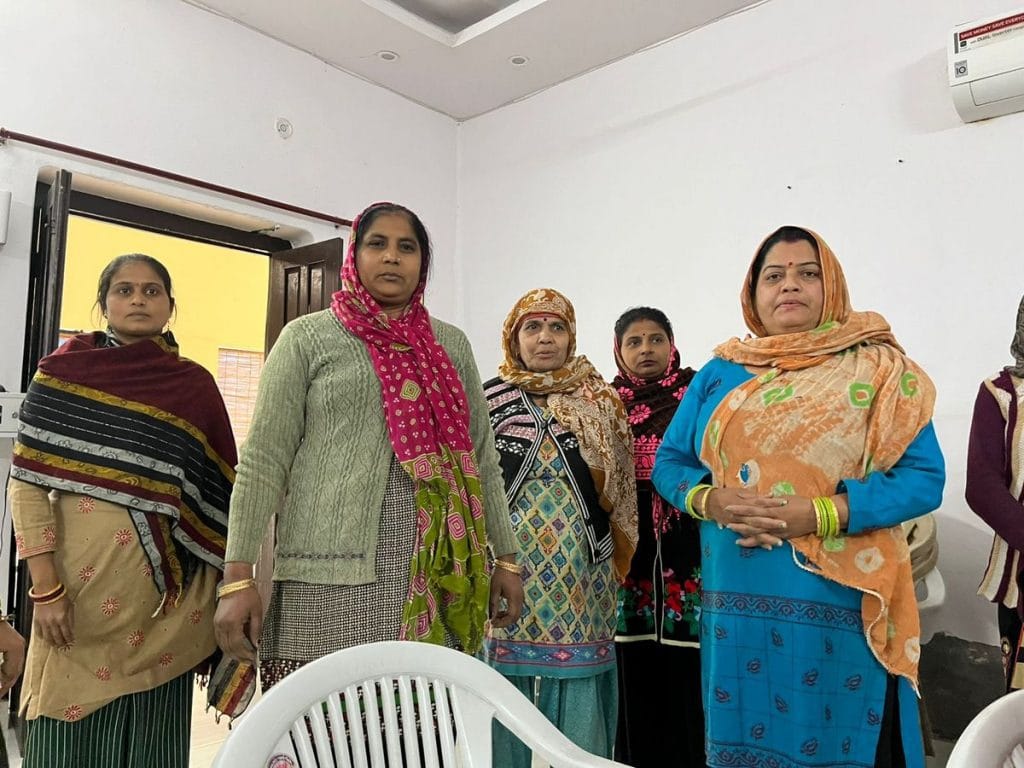
“First, she dragged us out from her residence and then the Supreme Court dragged her out from the Samiti. We were helpless and left without work because of all this,” said Nisha, as other labourers nodded along in the Samiti office.
Sarita Singh, the wife of then DM Chandra Prakash Singh, declined to elaborate on the matter.
“I am not there anymore and I don’t want to speak about this,” she said over the phone.
We never wanted to remove [the DM’s wife] from the post. We needed her guidance, but the constant partiality and interruption disturbed the committee’s work
Mamta Gupta, former joint secretary of the Samiti
The Samiti’s doors finally reopened on 12 February 2025, and the labourers resumed work. Today, more than 10 workers grind spices there, which are sold locally and outside the district.
“To run the Samiti this smoothly, we had to go to two courts, make repeated visits, and finally we are able to run it without the administration’s interference,” said Kalpana Gupta.
The defence of the old system
Bulandshahr’s current administration has shown little interest in the dispute. District Magistrate Shruti Singh said she had “much more important work” and had never visited the Samiti.
Additional District Magistrate Abhishek Kumar Singh, however, defended the earlier arrangement, arguing that the DM’s wife should head the body because the Samiti sits on government land.
“If someone from the administration will be there, a fear will be there among the people and no one will try to encroach or misuse it. And the administration will also present their side in the Supreme Court. As far as I know, the people who went to court are corrupt and want to misuse it,” he alleged.
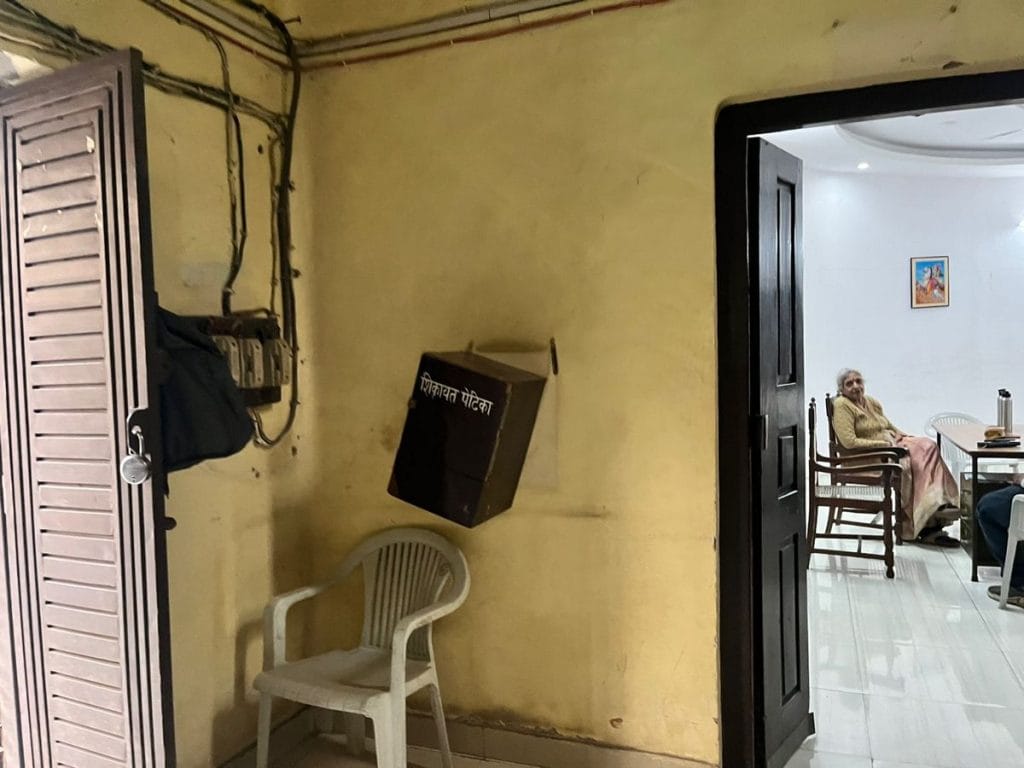
The administration frames its involvement as necessary to maintain order and prevent misuse of the Samiti’s assets.
What has also been contested is the Supreme Court’s criticism of the “colonial mindset” behind the Samiti’s rules.
“People forget that many of these committees were just local welfare bodies — Red Cross, St John’s Ambulance, small district societies. This wasn’t some formal colonial legacy; it emerged because officers’ wives were often the only educated women in the area and took up social service. In Bengal, for instance, if a DM’s wife was interested, she naturally got involved. There was never any government order behind it. The old convention came from a time when wives of IAS officers stayed at home,” said Sanjeev Chopra, a retired IAS officer and former director of LBSNAA.
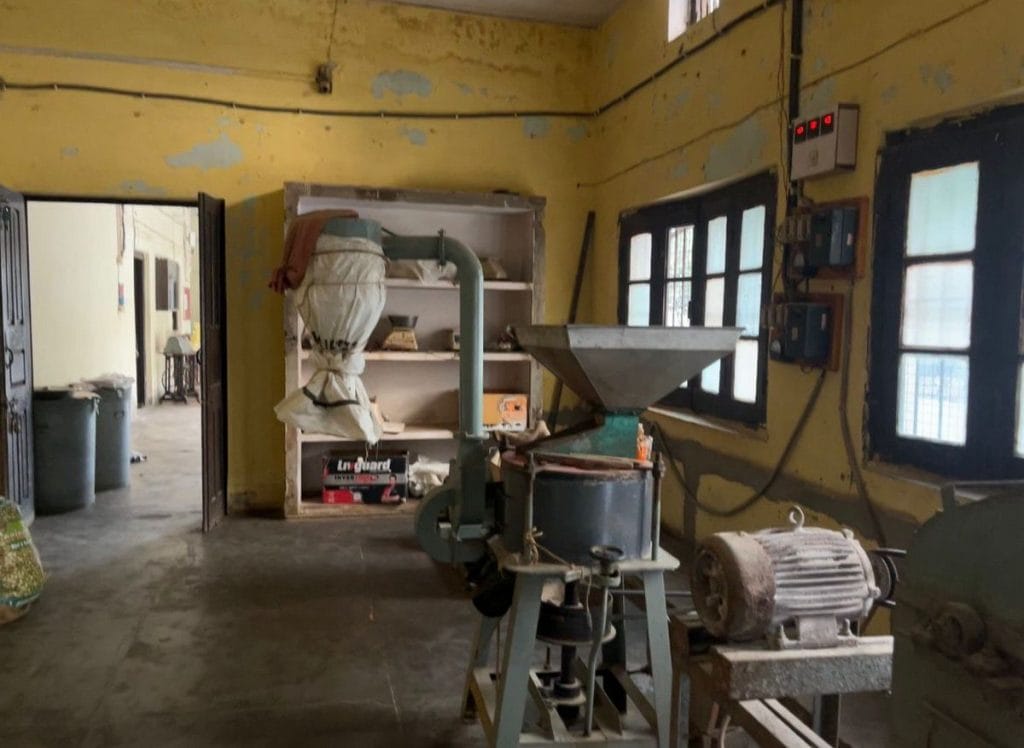
Back at the Samiti, in Bulandshahr’s main market, a yellow board hangs on an iron gate. “Zila Mahila Samiti” is written in red. The group is known for its ‘pure spices’, sold even in Kolkata under the brand ‘Buland Masale’. The Samiti opens at 10 am and closes at 5 pm. Kalpana Gupta and Mamta Gupta are working as members for now, as elections are due and new positions will be decided then. They visit regularly, though some members have stayed away since the Supreme Court’s remarks.
“There are 50 women in the committee. Apart from seven, all are with us. Those seven wanted to run this committee with the DM’s wife. We are against it. We are in a democracy,” said Kalpana Gupta.
Also Read: Fauji wife 2.0—Army spouses are turning ‘sarkari ghar’ lifestyle into online careers
‘Never wanted to remove DM’s wife’
The Zila Mahila Samiti in Bulandshahr was formed in 1957. For decades, the DM’s wives headed it without friction, largely because not every incumbent took an active interest and left day-to-day functioning to elected members. About a decade ago, however, tensions began to surface. Several long-serving office-bearers, some holding positions for over a decade, pushed for fresh elections.
In 2016, Kalpana Gupta was elected secretary. The following year, the Samiti split into two groups: one aligned with Garima Singh, wife of then DM Anjney Kumar Singh, and the other with Gupta. As disagreements escalated, the DM intervened and appointed office-bearers from the faction close to his wife, deepening resentment.
“In 2017, elections were held not at the Samiti premises but in the camp office, and a karyahak sachiv (acting secretary) from the DM-aligned group was chosen, even though the majority was with us,” said Gupta.
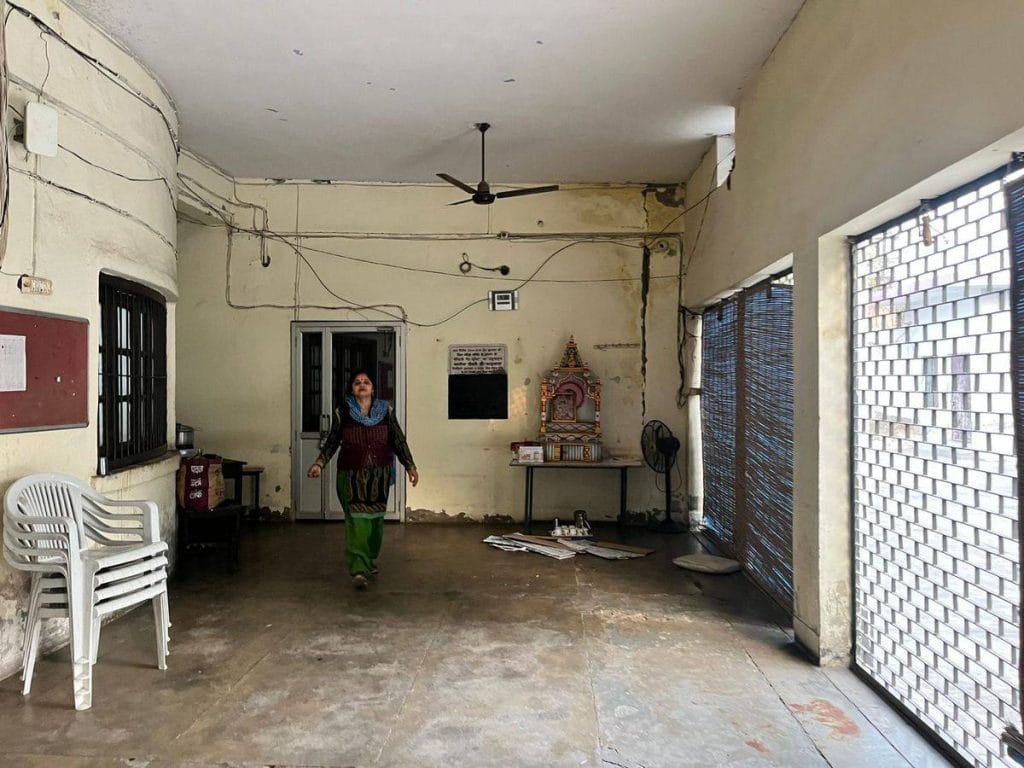
For the next two and a half years, members allege, no proper elections were allowed and decisions were taken unilaterally “with the administration’s support”. In 2019, Gupta approached the Allahabad High Court seeking court-monitored elections.
Although her first plea was rejected, the second petition succeeded, and the court directed the Samiti to conduct elections with a verified list of members. A representative from the Election Commission was present during the process, in which Gupta was elected upadhyaksh (vice-president).
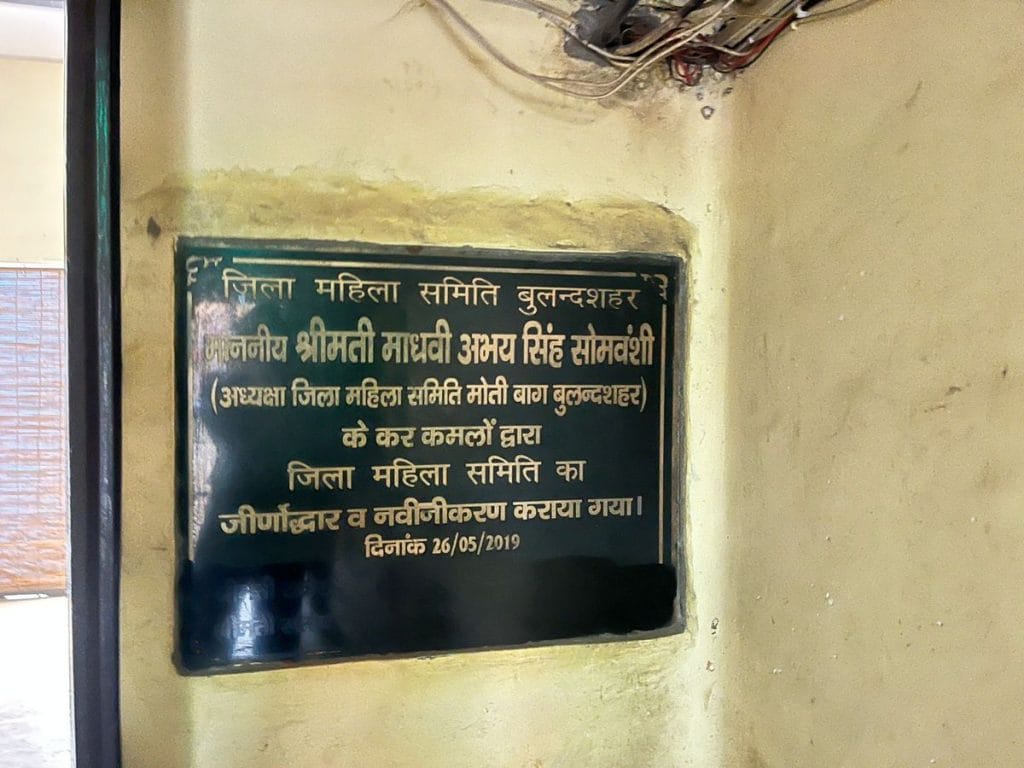
The conflict didn’t end, however, even when a new DM and his wife arrived.
“They did not let the Samiti run smoothly. Some members were furious about my election and again went to DM’s wife Sarita Singh. We registered a new constitution in the registrar office that states the DM’s wife will guide and advise us but won’t automatically hold the position of the head,” said Gupta.
The revised bye-laws formally designated the DM’s wife as patron, an arrangement one group said was meant “so that we could seek her guidance,” while the opposing faction said it “triggered” fresh disputes about autonomy and control.
“We never wanted to remove her from the post. We needed her guidance, but the constant partiality and interruption disturbed the committee’s work,” alleged Mamta Gupta, the former joint secretary of the Samiti. “The other members were corrupt and wanted to continue the corruption. That’s why it bothered them when someone else got elected through a fresh election.”
(Edited by Asavari Singh)
If Samiti does not want DM wife as president , It is samiti loss. DM or DM wife have no personal stakes, their job is transferrable. There are so many other organisations who call DM or DM wife , for which they are unable to give enough time.