








New Delhi: Over the past decade, killings and grievous attacks on suspicion of possessing or transporting beef have repeatedly made headlines across India. But few had the patience or the attention span to follow through the ebb and flow of each case. What does the forensic report reveal about the meat in question?
ThePrint looked into some of the high-profile cases of cow vigilante mob lynchings.
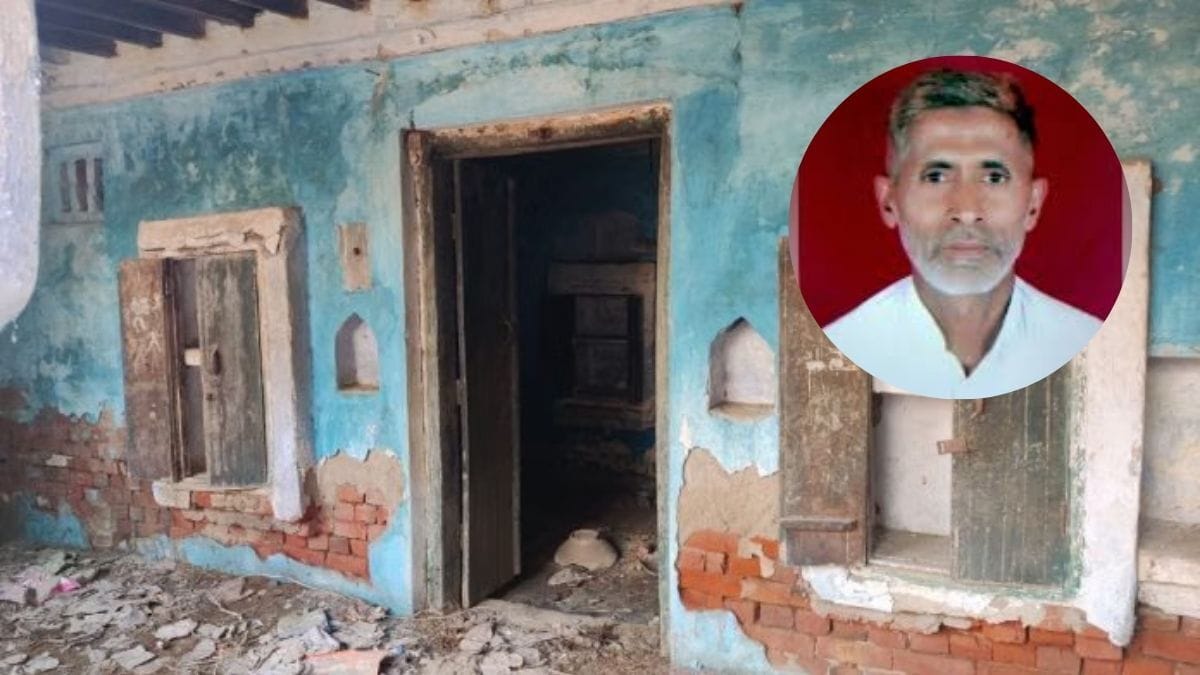
Mohammed Akhlaq (September 2015, Uttar Pradesh)
Mohammed Akhlaq’s lynching in Dadri was among the first cases to jolt the nation in 2015. His case also illustrates how murky lynching investigations can become.
Akhlaq was accused of slaughtering a cow and storing its meat in his refrigerator. Three days after Eid, a mob entered his house. His wife was dragged, his mother locked in a toilet. People he grew up with and neighbours he called friends killed him.
Three months after the lynching, the Uttar Pradesh Veterinary Department concluded that approximately 4-5 kg of meat found in the refrigerator was mutton, not beef.
“To the best of my knowledge and after a proper physical examination, it appears the meat is of goat progeny,” a veterinary officer stated in his report.
The sample was sent to a forensic lab in Mathura for confirmation.
Six years later, a fresh report by the University of Veterinary Sciences and Animal Husbandry directly contradicted the earlier finding, claiming the meat was “of cow or its progeny.”
The Uttar Pradesh government has since filed a withdrawal petition in the case.
“My brother did not slaughter any cow. There was no cow meat in our house. It was a rumour that brought the mob to our house that misbehaved with my mother, assaulted my nephew, and killed my brother brutally,” said Jaan Mohammad, Akhlaq’s brother. “Our country failed us then, and it failed us now, when the UP government decided to take the case back.”
Lukman Khan (August 2020, Haryana)
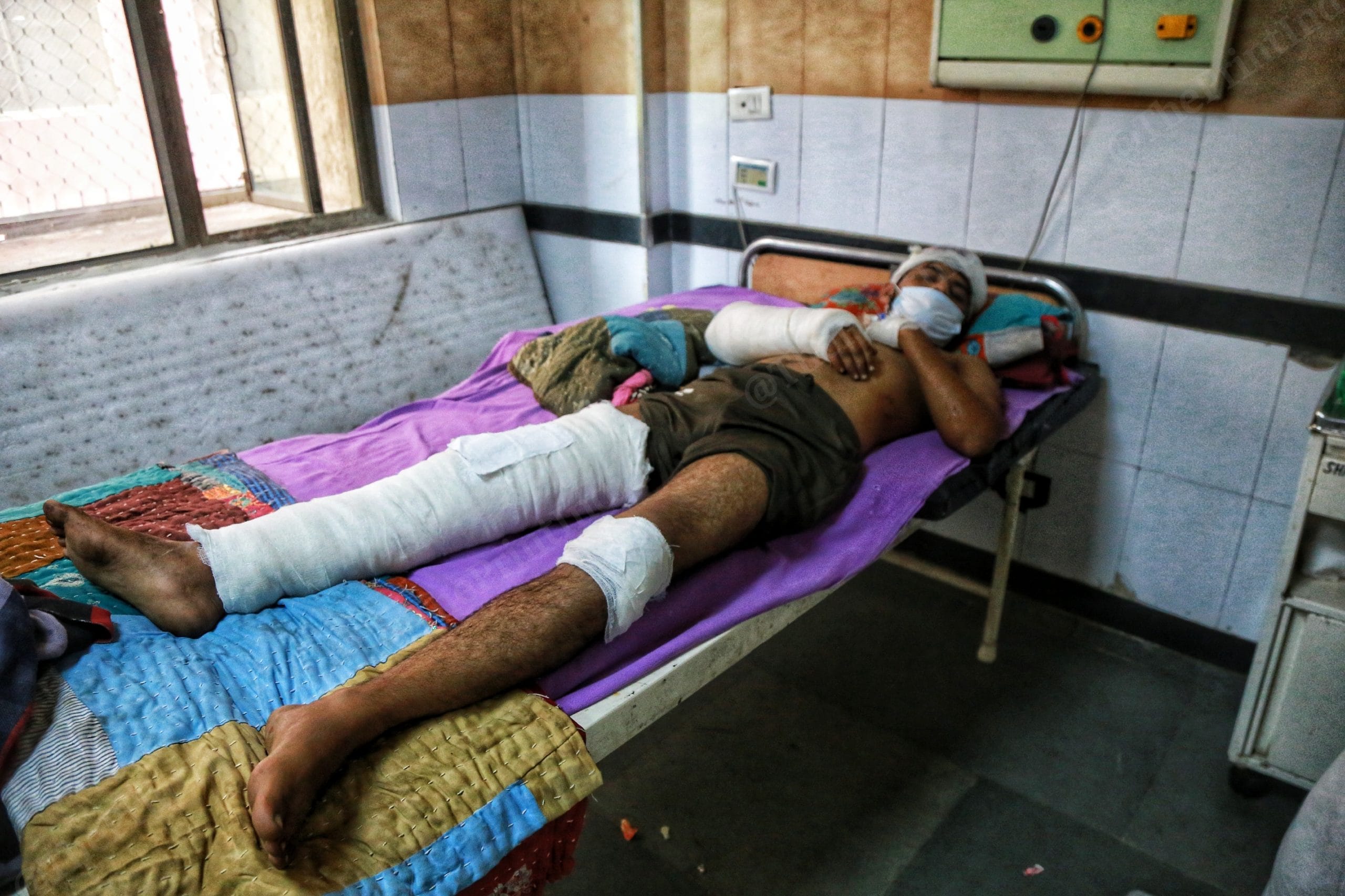
Lukman Khan, 30, is a father of four and paralysed. On 31 July 2000, he was attacked by a mob of eight to 10 men under a flyover while he was transporting meat in his pickup truck through Islampur village. Lukman had told ThePrint then he was beaten for about three hours in the presence of police, and was finally rescued at a cremation ground when the mob was ready to burn him alive, repeatedly calling him a Muslim and asking him to chant “Jai Shri Ram”.
The police sent a sample of meat for forensic testing, and the report later confirmed the meat was not from a cow or its progeny. The finding appeared in a supplementary chargesheet, though the specific laboratory and testing timeline remain unclear from court documents reviewed by ThePrint.
Khan was a resident of Nuh and worked as a pickup truck driver. His father Bilal, who now sells fruit from a roadside cart, says buffalo meat trade has been a traditional occupation in the area, with Gujjar meat traders continuing the business without incident. But Khan, a Muslim, became a target.
“They must have asked me to chant ‘Jai Shri Ram’ some 50 times. When I said it wasn’t in my religion and called Allah’s name instead, they beat me harder,” Lukman said.
Villagers in nearby Ghasera describe routine harassment.
“I sell biryani here by the road, and Bajrang Dal members routinely come and upend my shop, throw away biryani rice and demand money from us,” said Irshad, a local shopkeeper.
They must have asked me to chant ‘Jai Shri Ram’ some 50 times. When I said it wasn’t in my religion and called Allah’s name instead, they beat me harder
Naseeb Qureshi (March 2023, Bihar)
Hindu groups in Bihar’s Chhapra killed 47-year-old Naseeb Qureshi on suspicion of carrying beef. Naseeb and Firoz Qureshi were on their way home when 10-15 people, including the village sarpanch, attacked them.
The incident occurred in Rasulpur. The victim was brutally beaten with sticks and sharp weapons. While Firoz managed to escape, Naseeb was later found at Daroda hospital, where his body had been thrown, police said.
“There was no beef found on him or near the site of the attack,” Rahul Kumar Shrivastava, SHO of Rasulpur Police Station, told ThePrint.
Naseeb died on the way to Patna. After his death, his family filed an FIR and a case was registered under BNS Section 103 (murder).
There was no beef found on him or near the site of the attack
Afan Abdul Ansari (June 2023, Maharashtra)
Afan Abdul Ansari breathed his last on his 32nd birthday — 24 June 2023.
Ansari and his colleague Nasir Hussain were transporting meat from Sangamner to Mumbai when they were lynched by a mob of 11 people, who were charged with murder, rioting, and unlawful assembly. Ansari and Hussain too were booked for violations under the Prevention of Cruelty to Animals Act.
Asgar, Ansari’s uncle, told ThePrint the family trades in water buffaloes, not beef.
Police sent the recovered meat for forensic testing but refused to share findings with ThePrint. Despite repeated calls to Ghoti Police Station and conversations with the Station House Officer, the police declined to disclose the report’s contents. A final report in the case has been filed.
Shafiullah, a representative of the meat transport industry, said extortion by cow vigilantes is common on transport routes.
“Transporters have to regularly pay bribes to ensure safe passage,” he told ThePrint.
Regional animal transport is vital for supplying sheep, goats, and buffaloes to the Deonar slaughterhouse in Mumbai, with animals sourced from Kolhapur, Ahmednagar, Malegaon, Sangamner, Nashik, and Palghar. The movement of livestock depends heavily on documentation, including online permission from the BMC, government doctor certificates, and RTO clearance.
Transporters have to regularly pay bribes to ensure safe passage
Sabir Malik (August 2024, Haryana)
Sabir Malik, a 25-year-old ragpicker and migrant worker from West Bengal, was lynched by a mob in Haryana’s Charkhi Dadri on 27 August 2024.
Following claims that migrant workers from Assam and Bihar had been consuming beef in Hawassa Khurd village, Hindu groups entered people’s homes searching for meat. Police arrived, seized meat samples, and detained five migrant workers “as a precaution.”
Malik, however, was taken to a bus stand by a mob on the pretext of selling him scrap metal and beaten to death.
After the lynching, Haryana Chief Minister Nayab Singh Saini said, ““There can be no compromise on the safety of cows. If villages get to know of a slaughter… then who can stop them?”
The Forensic Science Laboratory in Faridabad later confirmed the meat recovered by police was not beef.
“We have received the report, which has confirmed that it was not beef,” Bharat Bhushan, Badhra Deputy Superintendent of Police, said.
“The FSL report confirmed what we had been shouting from the rooftop of our lungs. The allegations of beef consumption were totally fake,” Sajaudin Sardar, Malik’s brother-in-law, told ThePrint.
The FSL report confirmed what we had been shouting from the rooftop of our lungs. The allegations of beef consumption were totally fake
Ashraf Munyar (August 2024, Maharashtra)
Ashraf Munyar, a 72-year-old resident of Jalgaon district, was traveling on the Dhule-CMT Express with two plastic boxes of meat for his daughter in Malegaon. Co-passengers suspected him of carrying beef.
Dozens of men surrounded him, slapping and abusing him. Video of the assault went viral. In the footage, the men repeatedly demand: “What are you carrying? Where are you going? Where are you from? Don’t you get goats there? How many people are going to eat it?”
Munyar said the boxes contained buffalo meat.
Officials from Mumbai Railway Police told ThePrint the meat was thrown into a creek, making forensic investigation impossible. The investigation was conducted on 30 August, a day after the video went viral.
Police booked unnamed men for assaulting Munyar under multiple sections of the BNS, including unlawful assembly, rioting, wrongful restraint, causing hurt, mischief, criminal intimidation, and intentional insult with intent to provoke breach of peace.
Mohammed Shahedeen (January 2025, Uttar Pradesh)
On 1 January 2025, Mohammed Shahedeen was lynched to death by a mob over suspicion of killing a cow in Uttar Pradesh’s Moradabad.
Shahedeen had taken a freelance job driving a pickup truck to earn extra money. He was beaten by a mob for almost an hour before police arrived and took him to a hospital, where he was declared dead.
His family spent the entire day of 1 January going from place to place before police confirmed which hospital he had been taken to and his condition.
“Who gave them the right to take a life over an animal’s death?” Shahedeen’s wife, Rizwana, asked ThePrint the night her husband was killed.
A year later, a partial chargesheet was filed. No arrests have been made. Instead, Adnan, Shahedeen’s aide, has been charged with his murder, according to advocate Simab Qayyum.
The Allahabad High Court has halted further investigation after Shahedeen’s family filed a petition arguing that Supreme Court guidelines from the Poonawala judgment on lynching investigations had not been followed. They sought Rs 50 lakh compensation and formation of a Special Investigation Team.
The forensic report has not been released, as the investigation remains on hold. The case involves allegations of culling a bull. The Poonawala judgment laid down binding guidelines for investigating lynching cases. The Allahabad High Court has directed that investigation proceed under the supervision of a nodal officer and under Section 103(2) addressing lynching.
Who gave them the right to take a life over an animal’s death?
Chaman Kumar (May 2025, Delhi)
Chaman Kumar, a Nepali national, was attacked by four to five men in North Delhi over suspicion that he was selling beef. The attack was triggered by a complaint from a 15-year-old boy who purchased meat from Kumar’s shop and suspected it to be cow meat.
Police seized meat from the shop and sent it for forensic analysis. According to DCP North West Bhisham Singh, FSL reports confirmed the meat belonged to a cow or its progeny. A chargesheet has been filed in the case.
Kumar and his family have since left Delhi, police sources said.
Nadeem (May 2025, Uttar Pradesh)
The video of his lynching sits at the top of Nadeem’s phone gallery. It is not a memory he intends to forget.
In the video, Nadeem, a meat transporter, and three colleagues—Akil, Akeel, and Arbaz—have been stripped naked and are covered in blood.
“Bajrang Dal members attacked us four while we were transporting meat. They lynched and looted us,” Nadeem said.
On 25 May 2025, a group of men on bike chased Nadeem’s pickup truck in Aligarh and beat the four occupants for over an hour, including in the presence of two policemen in a van. The victims had told the police they had the license and registration papers, which the mob tore and looted cash and mobile phones from them. A sample of the meat was collected and sent to a forensic investigation laboratory in Aligarh.
The forensic report came back confirming they were transporting buffalo meat, not beef.
The single-page document, signed by the joint director of the veterinary hospital in Jalali and accused by ThePrint, contains several fields filled in rough, hasty handwriting—registration number, case number, FIR details. The conclusion reads: “On the basis of chemical analysis, the sample does not belong to the cow or its progeny.”
Still, Nadeem and his colleagues remain charged under Sections 3 (prohibition of slaughter), 5 (prohibition of beef transport), and 8 (punishment for slaughter or transport) of the Uttar Pradesh Prevention of Cow Slaughter Act, 1955.
Nadeem filed an FIR against 14 perpetrators, who were booked under various sections of the Bharatiya Nyaya Sanhita, including rioting, unlawful assembly, attempt to murder, extortion, and dacoity. Notably, they were not charged under Section 103(2), which specifically addresses mob lynching.
The four men have been unable to work since the attack.
“We have not been able to open our shops or work because there has been that much fear in the neighbourhood ever since the lynching took place,” Nadeem told ThePrint. He sustained severe head injuries requiring 36 stitches.
On the basis of chemical analysis, the sample does not belong to the cow or its progeny.
How forensic testing works
Meat samples are tested using DNA analysis, as per an assistant at a Delhi-based forensic laboratory who spoke to ThePrint on condition of anonymity.
Laboratories maintain DNA samples from restricted animals, including cows, camels, tigers, elephants, and others. DNA extracted from recovered meat is matched against these reference samples.
“A DNA match confirms the meat is from a restricted animal in our sample kit,” the official explained. “If there is no match, we can only confirm that the meat does not belong to any animal in our reference kit; we cannot identify the actual species.”
DNA testing can determine the gender of the animal and differentiate between types of bovine meat. Even tissue samples are sufficient for testing. Labs often test samples multiple times to confirm results.
Timeline: Testing typically takes 36 hours in the laboratory. However, delays frequently occur due to case backlogs. “It depends on the pendency of cases and burden on a lab,” the official said.
Environmental factors: Timing matters for accuracy. “Due to humidity or other environmental concerns, the meat can get putrid. That is why the sooner the testing happens, the better it is.”
Resource constraints: Sourcing new DNA reference samples is expensive, so laboratories work with existing sample collections. This means labs can definitively identify restricted animals in their database but can only rule out — not positively identify — unrestricted animals.
In practice, this means a report stating “the sample does not belong to the cow or its progeny” indicates the meat is likely from a legal source like buffalo or goat, but the specific species may not be confirmed.
(Edited by Prashant Dixit)
The armed sanghi mobs are simply provoking Muslims into armed action on the streets; its only the wisdom of Muslims who are acting with restraint and patience that no major communal riot is taking place in the country. it will be good for the country if the sanghi admn attempts to uphold their constitutional duty of maintaining law and order in the country.