





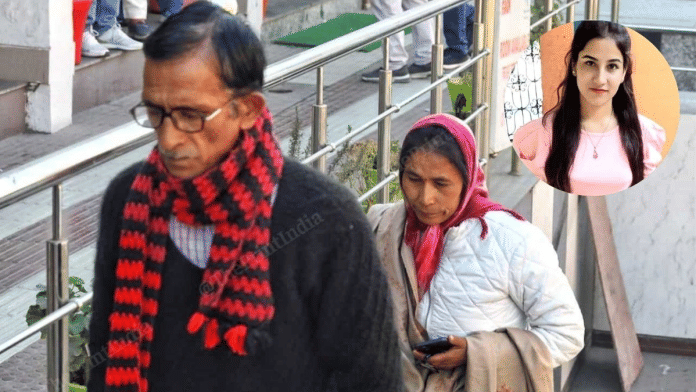



Srinagar: Soni Devi and Virender Singh Bhandari now lead two lives — farmers by dawn, protesters by day. For the past three years, the parents of 19-year-old Ankita Bhandari had submitted to the routine of milking their cow and fighting for their daughter, who was brutally murdered in September 2022 and whose family alleges she was sexually assaulted. Now, a meeting with Uttarakhand chief minister Pushkar Singh Dhami, meant to bring closure and justice, has upended their lives once again.
When Devi stepped out of the meeting on 7 January and reached the government guest house for the night, her WhatsApp buzzed continuously. The messages stunned her.
“We fought for Ankita and you met the Chief Minister and compromised,” read one of the messages.
Devi, who had been preparing to eat her first meal in two days, pushed the plate away and broke down.
“I only repeated to the chief minister the same demands we have been raising on the streets. I didn’t succumb,” she said, crying. “Ankita is my daughter. I won’t trade her justice for some money. I know what I have lost.”
Uttarakhand erupted in fresh protests over the murder of Ankita, a receptionist at the Vanantara resort in Rishikesh, after Saharanpur-based actor Urmila Sanawar, who claims to be married to former BJP MLA Suresh Rathore, released audio recordings of her conversations with him alleging the involvement of politically connected VIPs. Ankita’s family demanded a CBI investigation under the supervision of a sitting Supreme Court judge and the release of call details of all three convicted men and the VIPs named in those recordings.
While the state has finally conceded to a CBI probe, the victory rings hollow for Ankita’s parents. The order lacks the Supreme Court–monitored oversight they have been demanding, which they say is crucial to exposing the “VIP guest” allegedly linked to the crime.
“This is a convenient order,” Devi said, her voice feeble but firm. “Why not a probe under the supervision of a Supreme Court judge? What is the state trying to hide? They think that because we are from a village, we are ignorant.”
But securing this order itself was a herculean task.
Inside the Dhami meeting
On the afternoon of 7 January, a call from the Pauri district magistrate informed Devi and Virender that CM Dhami wanted to meet them. The call ended amid the hiss of a pressure cooker. By 1 pm, just as the couple sat down for lunch, they received another call that a car was waiting on the Pauri main road.
“We left the food untouched and walked for an hour to reach the road and take the car,” Virender said.
During the meeting, Ankita’s parents had made two demands: a CBI probe monitored by a sitting Supreme Court judge, and the identification of the VIP allegedly involved in the case. After the meeting, officials handed them a pre-written statement to sign. But Virender refused to sign it.
“I said I would write my own demand letter, in my own handwriting. They thought we were illiterate,” he said. The parents then wrote a letter there, signed it, and handed it to the officials.
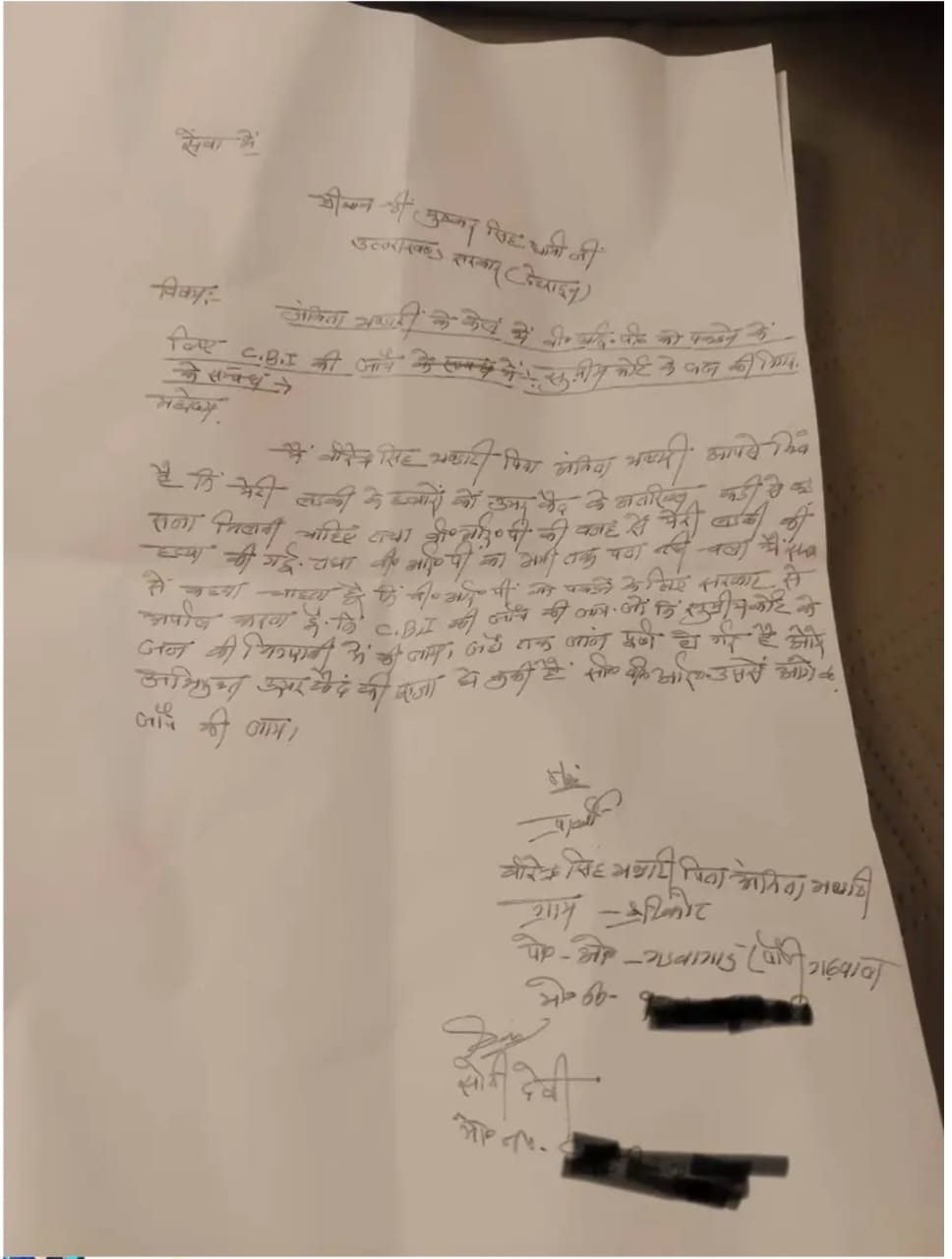
They returned to the government guest house that evening unsure of what the meeting had achieved, but the two were relieved that they had not backed down.
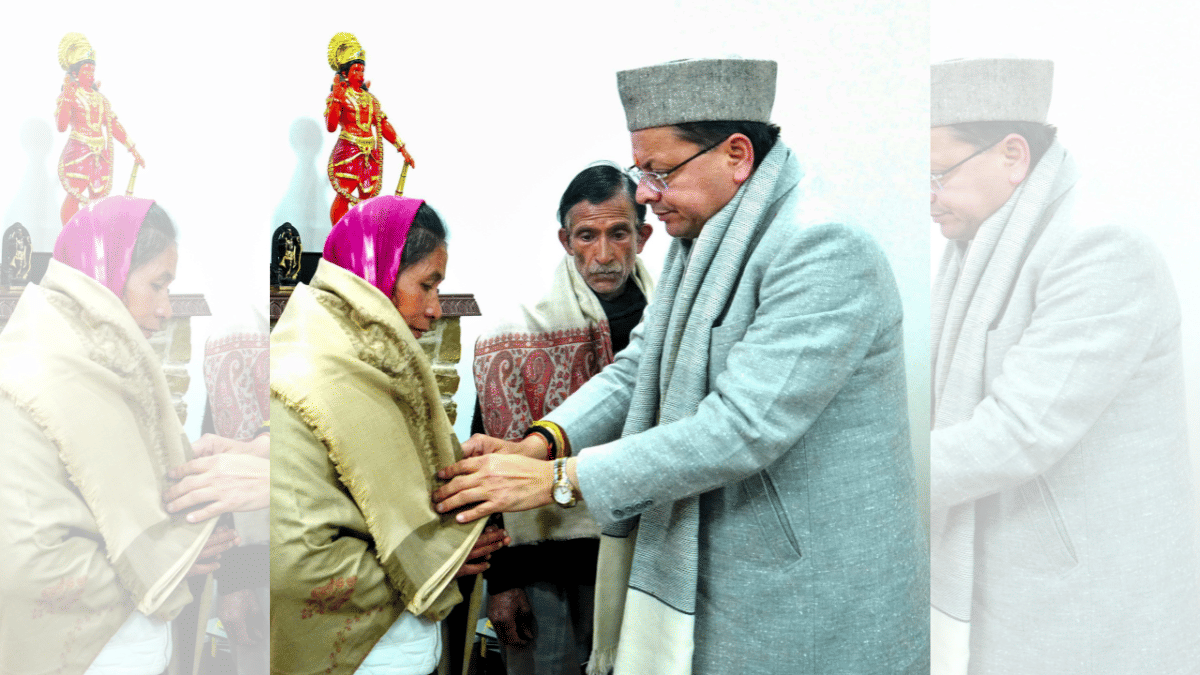
Soon after the meeting, a photograph of the chief minister draping a shawl around the parents’ shoulders went viral. Criticism flooded social media and the parents’ phones, alleging the family had withdrawn from the fight and accepted money from the government. They had gone to demand justice, but returned to accusations of betrayal.
“There have been attempts to bribe us, both by the government and the middlemen from the culprits’ side,” said Virender. “But I never succumbed.”
Devi, too, has turned into a fiery activist — protesting, negotiating with power, and fighting for justice for her daughter.
“The CM is our raja, and we went to him with our demands because we want justice for our daughter,” she said quietly. The allegations of compromise have deeply troubled her, especially when the state’s response barely meets their demand.
A call from the secretariat informed them that a CBI probe had been ordered. The parents finally ate their first meal after two days.
“But as we spoke to our lawyer, we realised that the order is incomplete,” said Devi.
Also read: BJP leader’s son’s resort in Rishikesh where Ankita worked didn’t have govt approvals
The VIP question
For Devi and Virender, the last two weeks have felt like the eruption of a long-simmering volcano. Inside their home in Pauri, which even lacks a proper road, time stands frozen. Every day revolves around conversations around their daughter Ankita and the fight for justice.
Outside, all of Uttarakhand is out in the streets. After the statehood movement of the late 1990s, nothing moved people with such urgency. Even those who fought for statehood are now protesting for Ankita, who was killed on 18 September 2022 and her body recovered from a canal six days later. Even the resort was partly demolished to destroy evidence. A plea in the Uttarakhand High Court, which included the statement of the JCB driver Deepak, said BJP MLA Renu Bisht had ordered the demolition.
In May 2025, a Kotdwar sessions court convicted three accused — Pulkit Arya, the owner of the resort and son of former BJP minister Vinod Arya; Saurabh Bhaskar, manager of the resort; and Ankit Gupta, assistant manager — and sentenced them to life in prison.
The judgment appeared to close the case. The matter had settled — until Sanawar released the audio recordings of her alleged conversations with Rathore in December.
In those recordings, Sanawar claims Rathore told her that Ankita was killed after she refused to provide “extra services” to two VIPs — BJP national general secretary and Uttarakhand in-charge Dushyant Kumar Gautam and BJP Uttarakhand general secretary (organisation) Ajaey Kumar.
The opposition targeted the BJP, with CM Dhami claiming that Gautam was not in Uttarakhand at the time of Ankita’s killing. Amid the political crossfire, Ankita’s family and Uttarakhand residents took to the streets, protesting against the government.
“I don’t care about politics,” Devi said. “From the beginning, we have been asking for a CBI probe and for the name of the VIP to be made public. Even after the life sentence, we said there were more people involved. Nobody listened to us — until this audio leak.”
While the state government has refused to utter the name of the VIP, Ankita’s parents have refused to return to silence. Their perseverance eventually led Dhami to concede and meet them, but that meeting marked the beginning of yet another battle.
Also read: Elbows scratched, fingers & back injured, Ankita was ‘thrown into river alive’, finds probe
Living with loss
In the aftermath of the upheaval first brought by Ankita’s murder and then by the allegations of compromise, Devi found an unlikely confidante in her cow, Radha. When the nights became unbearable—when thoughts of what her 19-year-old daughter must have endured refused to let her sleep—Devi would run to the shed and speak to the cow.
“Radha has also fought for Ankita. I would spend hours with her, and that is what gave me the strength to keep fighting,” Devi said.
When she returned home after meeting the chief minister, Devi went straight to her cow and broke down.
“I cried uncontrollably. I whispered everything into her ears,” she said, looking down at her fingers as she struggled to articulate her emotions.
For Devi, her cow and her family were her entire world. She had simple dreams: see her children grow up and earn a living so she could stop working one day.
Far removed from the world of politics and power, her daughter’s death hurtled her into what was an alien world for a village woman. Yet, it also revealed a strength she did not know she possessed — a quiet resilience.
“There is a fire within me and my husband to secure justice for our daughter. It is what has kept us alive; without it, we would have died long ago,” said Devi, as she held the hand of her visibly frail husband.
Their lives have not moved forward. They have not married off their elder son, even though they had wanted to. Every day, the conversation revolves around Ankita. Devi often stops mid-sentence, overcome by emotion, and feels dizzy.
She has been living with a stone in her stomach for three years but has not sought treatment. Her husband is sick almost every day. Their living conditions are so poor that after returning from a meeting with the chief minister, Virender was attacked by a bear on the way home.
“Our daughter’s death has upended our lives. We don’t know how to feel normal again,” said Virender.
The final message
Ankita’s last message to a friend still haunts her father: “I am poor, but I will not sell myself for Rs 10,000.” She had written the message in defiance to the demand for “extra services” from a “VIP”.
Since then the word VIP has come to symbolise not just Ankita’s own ordeal but also the outrage gripping Uttarakhand.
Protests with slogans “Don’t shield the VIP” have erupted across the state.
For Bhawana Pandey, an activist in Dehradun who was also at the forefront of statehood, the agitation has grown beyond Ankita. It is now a fight to protect all girls from the hills who are coerced into “providing extra services” for money.
“These girls are poor. They come from the hills to earn a living and support their family. But these VIPs (rich-powerful people) exploit their vulnerability for their own benefits,” said Pandey.
Headlines have followed: “Kya hai Ankita Hathyakand ki VIP theory” and “Who’s that VIP?”
Ankita was a bright student, Devi says. She scored 88 per cent in her Class 12 examinations. Her education was supported by her father’s farm income and the money the family earned from selling cow’s milk.
“She was very intelligent and dreamed of doing something big — of one day owning her own house in the plains,” Devi said.
Ankita’s father, Virender, often stares at the wall, lost in thought. And sometimes, he breaks the silence to murmur.
“My daughter said there was some VIP involved. I will not find peace until that VIP is identified.”
(Edited by Prashant Dixit)