





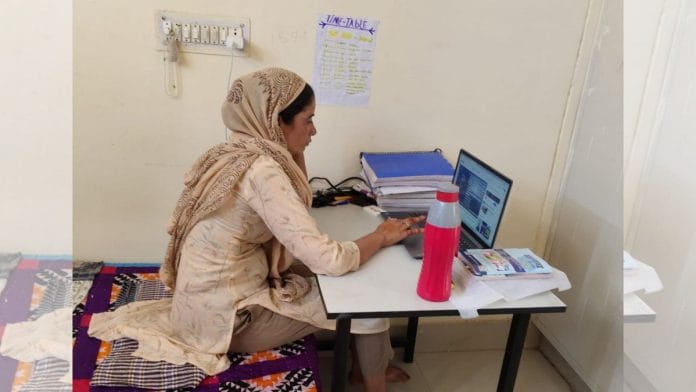



Alwar: In Sorkha Khurd, one lament often comes up in everyday conversation: “Beti jawaan ho jaaye toh ghar wale chain se nahi baithte”—once a daughter comes of age, families cannot sit in peace. And when there are two daughters close in age, families often prefer to marry them off at the same time.
Barfina, 15, with radiant eyes and a long golden-brown braid, sits cross-legged on a woven charpai in the courtyard of her family’s home. Her head is modestly covered, her back straight.
“I don’t go to school now,” she said quietly. “I used to go to madrasa. But when no other girl was coming, I stopped.”
Barfina’s sister, Alifna, is only a year older. Conversations about Alifna’s marriage have already begun, and by extension, so have the unspoken assumptions about Barfina’s future. Barfina still wants to study, but she doesn’t know how to pick up the thread again.
“I don’t know how or where to restart,” she said. “There isn’t enough money, and with this education gap, I don’t think I would fit into the regular system. Anyway, in my house, marriage is seen as more important than education.”
In their Meo community, the onset of puberty marks a girl as ready for marriage, irrespective of her chronological age.
Across town in Kishangarh Bas, Zayda’s life once moved along a similar edge of inevitability. She left school after primary classes, but her fate changed about 10 years ago.
On a hot summer evening, she recalled, workers from a local NGO began going door to door in her village, speaking to parents who had never attended school themselves and urging them to send their daughters back to school. The workers spent evening after evening persuading families who believed education beyond a certain point was unnecessary or even dangerous for girls.
You cannot just give information about a scheme. You have to show them what it looks like
-Noor Muhammad, member secretary of AMIED
Slowly, the resistance of several families began to ease. Zayda eventually completed her Class 10 board examinations through the open school system. She now lives in Jaipur and is preparing for the Rajasthan Administrative Service (RAS) exam.
Zayda’s story shows what is possible through sustained grassroots effort, yet the reach of these interventions remains limited. For every Zayda, there are still girls like Barfina who slip through the cracks.
The two live just 15 kilometres apart. The distance between their lives — and between a childhood and a child marriage — came down to who arrived at their door and then kept showing up.
“My father was against girls’ education,” Zayda recalled. “But after speaking with one of the grassroots workers, he began to reconsider and started thinking about the possibility.”
Also Read: ‘I am not afraid of death’—one woman’s war on child marriage in Rajasthan
Who gets a knock on the door?
Zayda’s return to school after dropping out did not happen overnight. It was the result of a methodical, persistent campaign.
Field workers from the Alwar Mewat Institute of Education and Development (AMIED) became fixtures in her life, arriving in the evenings to sit with her parents and neighbours. Rather than just extolling the benefits of an education, they mapped out how girls who had dropped out could return through bridge courses or open schooling.
Gradually, the conversations began to have an effect.
“A few other young girls from my neighbourhood also started going back to school,” Zayda said.
Organisations such as AMIED have been working steadily across villages in the region for years, trying to counter a pattern where girls’ education is cut short by poverty, social expectations, and the looming prospect of early marriage.
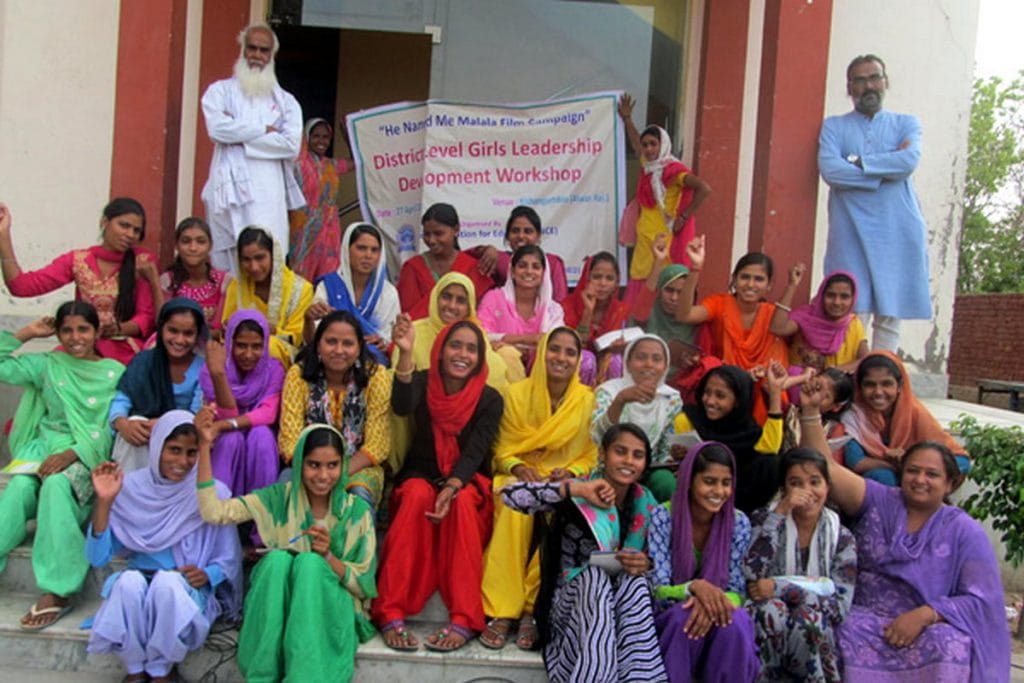
It’s built up an extensive network, covering more than 350 villages in the Ramgarh, Kishangarh Bas, Umrain, Laxmangarh, and Tijara blocks of Alwar. Beyond the district, they also operate in Sapotra, Hindaun, and Karauli, reaching hundreds more villages.
Their teams navigate communities with large Dalit, tribal, OBC, and minority populations where multiple vulnerabilities— poverty, early marriage, educational exclusion —converge. The work begins with identifying girls who have slipped out of the education system, and then negotiating with parents. They visit homes repeatedly, countering fears about “safety” or “honour”, and reframing education as security rather than rebellion.
The organisation receives support from a mix of international philanthropy, domestic non-profits, and institutional partnerships, including Plan India, ActionAid Association, American Jewish World Service, Population Foundation of India, Childline India Foundation, Azim Premji Foundation, IPE Global, Nasim Foundation, and UNICEF Rajasthan, along with contributions from private family trusts.
Families say, ‘Anyway, education will not change anything for us. Why take the trouble?’
-Seema, ASHA worker in Alwar
It all pays off when there’s a story like Zayda’s. Persistent engagement shifts family attitudes, a bridge course closes the learning gap, and an open school exam becomes a turning point.
But scale remains a challenge. For the hundreds of villages covered, there are thousands that have not been accessed. Barfina’s village, Sorkha Khurd, is just 15 kilometres away from Kishangarh Bas, but it has never been reached.
Moreover, funding is precarious — grants tied to project cycles of three or five years, renewed only if donors are satisfied with outcomes.
The reach of government schemes is also patchy. Rajasthan’s flagship incentive for girls, Laado Protsahan Yojana offers families up to Rs 1.5 lakh in direct transfers across seven milestones — from birth through to graduation or age 21— and has reportedly benefited lakhs of girls since it was rolled out in August 2024. But Barfina has never heard of the scheme.
The ASHA worker for her block, Seema, said families are informed about such schemes. But information alone is insufficient. When Seema tries to tell parents about restarting schooling through alternative routes, they often push back.
“Families say, ‘Anyway, education will not change anything for us. Why take the trouble?’” Seema added.
Persistence makes the difference
The problem is not the absence of a scheme, but the lack of a ground force for persuasion.
Noor Muhammad, member secretary of AMIED, has worked in these blocks for decades. Most families here are first-generation learners, he said — for them, education is not a lived reality but an abstraction.
“You cannot just give information about a scheme. You have to show them what it looks like,” he said.
In his experience, visible role models matter more than pamphlets.
Muhammad has observed anecdotally that fathers who work as drivers are often more willing to keep their daughters in school.
“Drivers travel. They see other towns, other families, other possibilities. Their horizon is slightly wider,” he said.
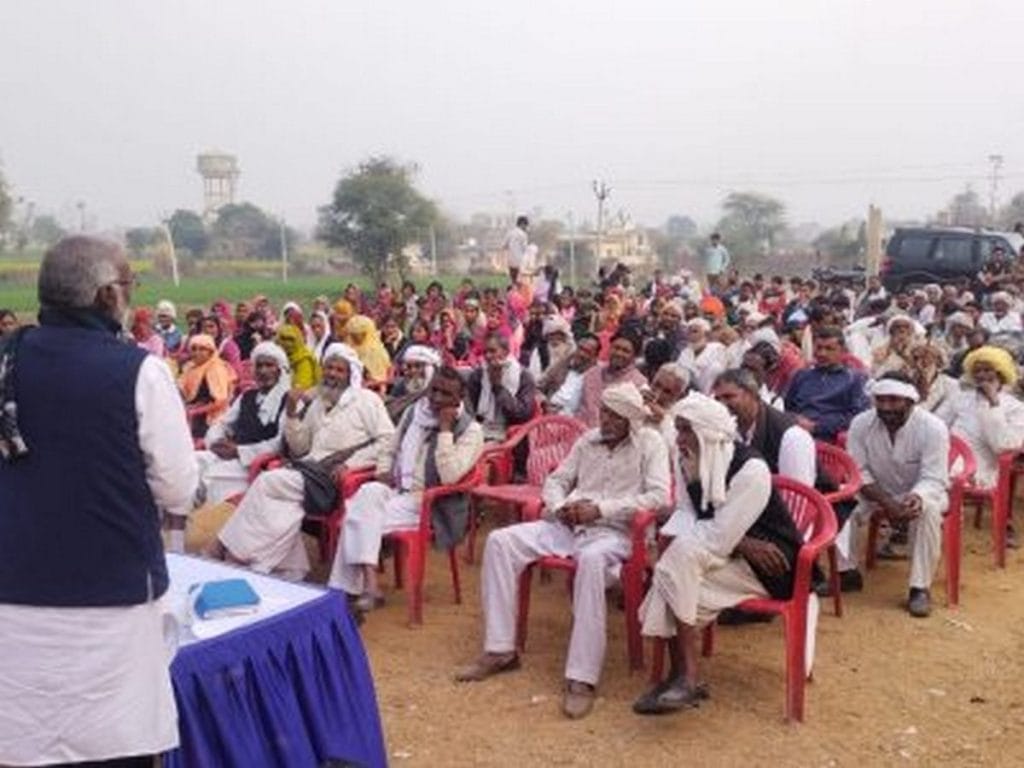
Families rooted entirely in agricultural labour or confined to a single locality, however, often have no reference points for imagining different futures. In these communities, many students also struggle to adjust to a regular school environment. During moments of friction, encouragement and affirmation become the only things keeping a girl in the system.
AMIED’s workers act on that insight. When a girl from the village scores well in Class 10, they carry that news door to door. When someone secures a job, however modest, they cite her as proof of what is possible. They repeatedly reassure families and girls that their effort matters, that progress is possible, and that education can still open doors.
Zayda is the embodiment of these possibilities, studying on a government scholarship, with her RAS tuition sponsored by AMIED. Her journey shows that the model works when the support is comprehensive.
How can scale be achieved?
Social norms do not transform on grant timelines. This is where innovative financing, such as outcome-based investing, could help drive long-term change.
“From my experience, girls’ education and delayed marriage can be framed as investable impact outcomes, but not as conventional market opportunities,” said Srichandana Nagoji, a CSR professional who has advised philanthropy and community initiatives across India and the APAC region. “Outcome-based and blended finance models, where the emphasis is on paying for verified social outcomes rather than financing activities or infrastructure, can be a strong model for CSR to explore.”
In other words, programmes that keep girls in school and delay marriage can attract impact investors because the results are measurable, even if they do not generate commercial profits.
There is reasonably strong evidence that continuity in education is one of the most reliable protective factors against early marriage, according to Nagoji.
Issues like child marriage or girls’ workforce participation don’t resolve in 18-36 months. This creates a mismatch between social reality and financial design
-Srichandana Nagoji, CSR professional
National Family Health Survey (NFHS-5) data shows that girls who complete secondary or higher education are far less likely to marry before 18 than those who finish only primary school. In Rajasthan, attendance drops sharply between ages 15 and 17—the same period when the risk of marriage spikes.
From a CSR and impact-investing perspective, this makes education retention, learning outcomes, and post-school transitions measurable outcomes that can be funded. In such models, funding is tied to results, organisations have flexibility to adapt programmes locally, and credible third-party verification ensures accountability.
One example is the Educate Girls Development Impact Bond (DIB)— the world’s first DIB in education. Launched in 2015, the goal was to improve access to quality education for marginalised girls in rural Rajasthan. The model tied funding directly to outcomes: the UBS Optimus Foundation provided upfront capital of US$ 270,000 to the service provider, Educate Girls, while the Children’s Investment Fund Foundation acted as the outcome payer, promising repayment with returns if agreed-upon targets were met.
Over three years, the programme worked across 166 schools in 140 villages, reaching 7,300 children. The results exceeded expectations: 116 per cent of the enrollment goal was achieved, bringing 768 out-of-school girls into the education system, while learning targets were surpassed by 160 per cent, with students showing gains equivalent to an additional year of instruction compared to their peers.
But Nagoji warns that outcome-based financing is not a silver bullet.
“These models work best when outcomes are carefully chosen to avoid perverse incentives, the hardest-to-reach girls are not excluded, and rights-based safeguards are built into both design and monitoring,” she said.
Despite clear successes, the model has not scaled widely so far. The structure is complex, requiring coordination between multiple stakeholders and careful programme design. Designing an outcome-based model requires legal structuring, outcome pricing, performance management, independent verification, and coordination across funders, implementers, and evaluators. Building governance systems for these interventions is expensive, and the overhead costs discourage traditional funders who prefer most funding to be spent directly on activities or beneficiaries, Nagoji said.
In this scenario, CSR capital is particularly well-suited to absorbing early risk, supporting experimentation, and funding the underlying systems that make such models viable.
“In India, governments and CSR funders are still more comfortable funding activities than paying explicitly for outcomes,” Nagoji added. “Issues like child marriage or girls’ workforce participation don’t resolve in 18-36 months. This creates a mismatch between social reality and financial design.”
Beyond schooling, Nagoji noted that skills-to-livelihood models are critical. In rural India, families often see limited economic returns to girls’ education beyond a certain point, which weakens resistance to early marriage. Linking training with credible employment pathways, placement, and retention— rather than mere skill acquisition—can shift household decision-making around marriage.
Also Read: What is Nata Vivah? Contractual marriage recognised by Rajasthan High Court
The accountability vacuum
A sarpanch or ASHA worker may know a child marriage is being planned in their village but do nothing because of personal belief or social pressure. Similarly, there may be no one to monitor if a girl is coming to school or not.
Even when laws, schemes, and funds exist, enforcement often collapses at the village level.
“It’s not so much a question of funding, it’s a social issue,” said Shireen Vakil, who has worked with philanthropic organisations and impact initiatives.
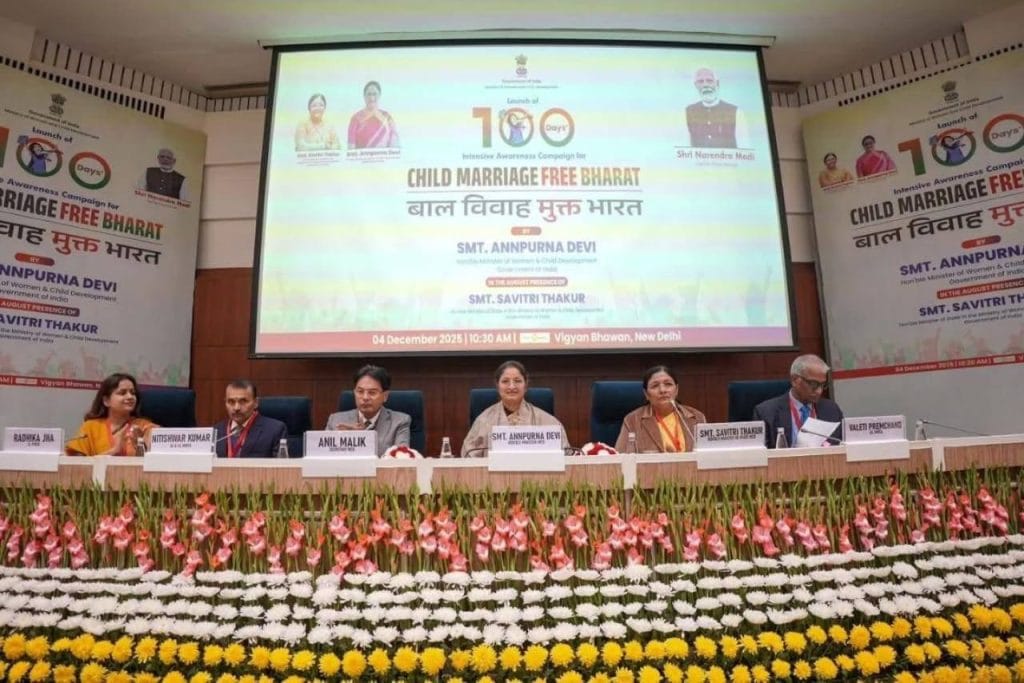
Large government campaigns struggle with the same problem. Under the “Bal Vivah Mukt Bharat” initiative, which aims to reduce child marriage by 10 per cent by 2026 and eliminate it by 2030, Alwar district has launched a 100-day campaign. The district administration and the District Child Protection Unit are coordinating nukkad nataks, conducting awareness drives at schools and anganwadi centres, and dispatching Jagrukata Rath (awareness vehicles) covering the entire district.
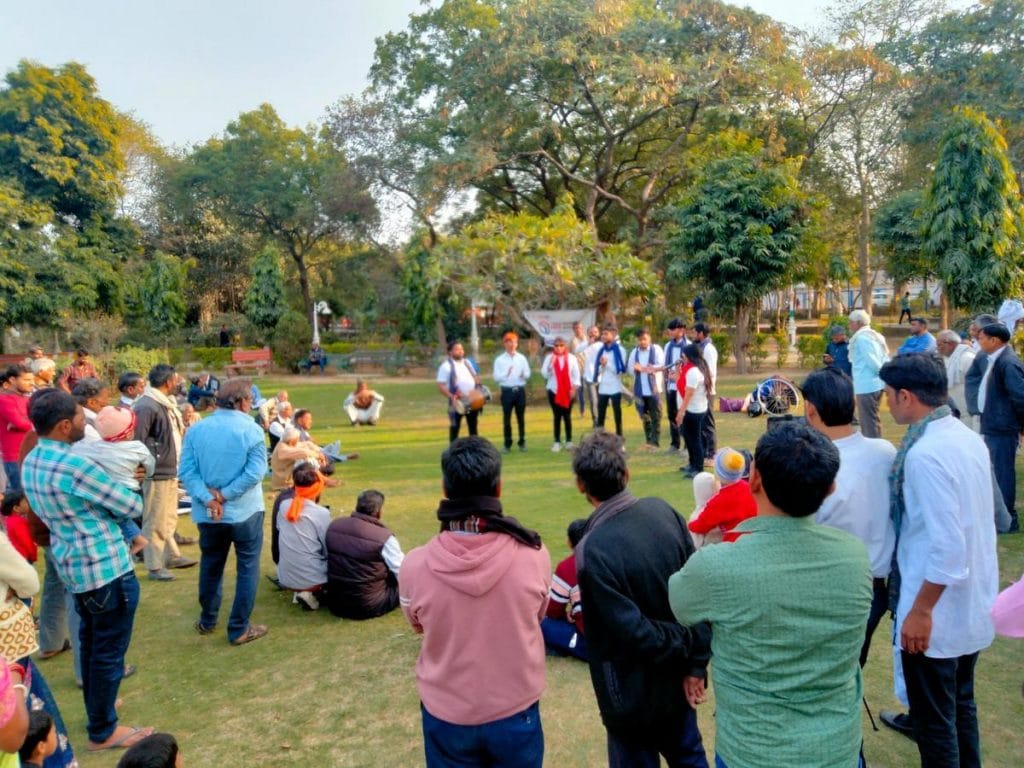
But Ravikant, the District Child Protection Officer, acknowledged that the campaign’s success hinges on the same ground-level functionaries — sarpanches, patwaris, village development officers, Anganwadi workers — who are already inconsistently engaged. There is no standardised training programme for any of them on child marriage prevention.
“Each department conducts its own sessions, such as GPDP [Gram Panchayat Development Plan] training for sarpanches, regular workshops for Anganwadi workers, and occasional other training,” Ravikant said.
Programs often operate independently, with no standardised metrics to measure success or overlapping benefits. Multiple schemes target the same groups—pregnant women, adolescent girls, or school-going children—making it difficult to measure which interventions are working. Experts agree that better data sharing across health, education, and welfare systems would help establish robust investment tracking mechanisms for transparency and accountability. Funding operational research is also crucial to estimate the actual effectiveness of interventions and further tailor programs.
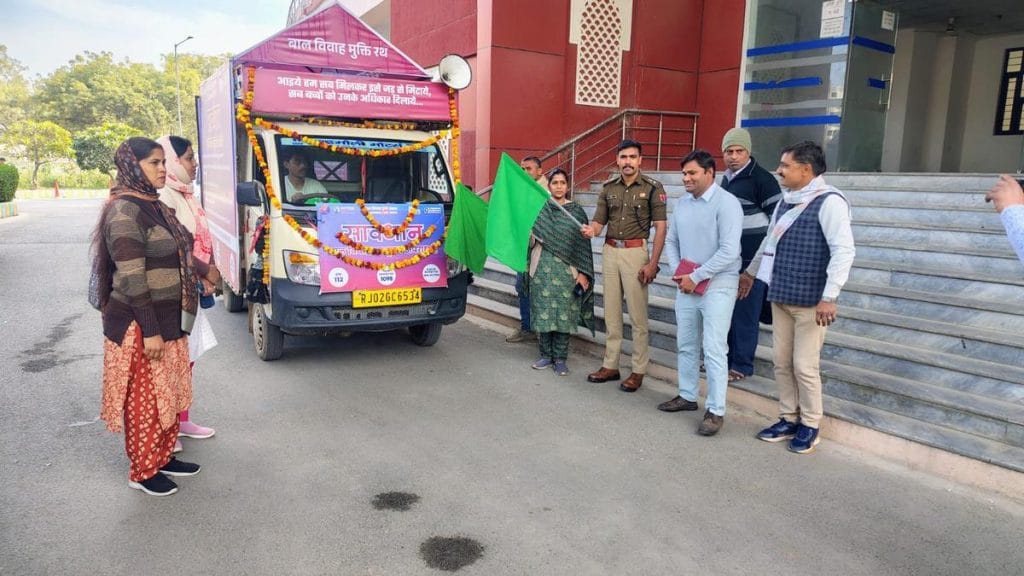
Lacunae also exist in consequences for inaction on the ground.
In Alwar, the jati panchayat often intervenes when a child marriage is annulled, sometimes ostracising the family from the community. Ravikant said he was not aware of a single case where a sarpanch or local official faced consequences for failing to report or prevent a child marriage.
Vakil said what’s needed is a system that doesn’t rely on individual initiative. Birth registration, school enrolment records, Aadhaar-linked age data, and marriage registrations could be layered to automatically flag girls at risk of early marriage. Anonymous reporting mechanisms would let people raise concerns without exposing themselves to community pressure. Village-level dashboards could recognise communities that successfully prevent child marriage, linking tangible rewards, grants, infrastructure, recognition to positive outcomes. Further, random social audits, modeled on MGNREGA processes, could independently verify cases and create fear of detection for those ignoring the law.
Zayda was married at 20 and widowed within a year. But her education became her anchor, giving her the ability to support herself and pursue her own aspirations even after a crisis. Barfina, meanwhile, is still waiting for someone to knock on her door.
This story is part of a series on child marriage reported under the Laadli Media Fellowship 2026, supported by UNFPA. Read part 1 here.
(Edited by Asavari Singh)