





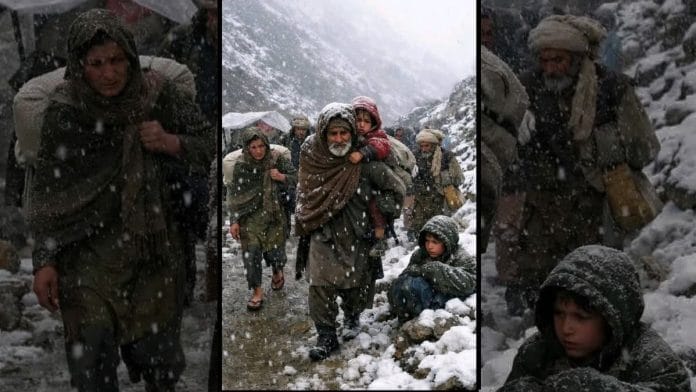



New Delhi: The Pakistan military is forcing thousands of people out of their homes in a remote valley in Khyber Pakhtunkhwa for a military operation. But the Pakistan Prime Minister Shehbaz Sharif government has called the displacements in the Tirah valley ‘voluntary’. The development has angered local people, activists and tribal leaders in Khyber Pakhtunkhwa.
“Thousands of families did not leave their homes voluntarily. This denial is deeply concerning,” Moniza Kakar, a Pashtun human rights activist and lawyer, told ThePrint. “Displacement on this scale does not occur without orders and enforcement on the ground. The forced removals from Tirah Valley are happening in full view of the state, yet the federal government now claims there is no operation and no displacement plan.”
The Pakistani Army had earlier set a 25 January deadline for the evacuation of Tirah Valley to clear the region—a stronghold of Tehrik-e-Taliban Pakistan (TTP) militants. The valley is home to roughly 1,50,000 people near the Afghan border, according to local officials, tribal elders and residents.
An estimated 80,000 people have now already left Tirah for Peshawar, the capital of Khyber Pakhtunkhwa Province. Many residents say the evacuation has been rushed, poorly coordinated and dangerous, unfolding amid heavy snowfall and freezing temperatures.
“Instead of trading blame, the KP government and the centre should be cooperating to address the people’s plight. Locals cannot be left to fend for themselves in such severe weather, especially when they have been uprooted from their native areas,” Dawn wrote in its editorial.
Families leaving the valley must pass through multiple security checkpoints along a single main road that has become severely congested. A journey that typically takes under three hours has stretched into days, leaving evacuees without adequate food, water or sanitation.
Local officials said at least two children were killed on 22 January after their vehicle skidded off an icy road and plunged into a ravine. Rescue efforts have been hampered by continued snowfall.
Displaced families are required to register in Bara, a town near Peshawar, before they can receive government assistance. Each family is being given PKR 250,000 (Rs 81,791), intended to cover rent and basic expenses for two months, the expected duration of the military operation.
“Once these families reach Peshawar, they are completely abandoned; there are no camps, no shelter, no medical support, no compensation, and no rehabilitation mechanism. Women, children, and the elderly are left exposed to freezing conditions, and the deaths reported are not unfortunate accidents but foreseeable and preventable consequences of state action and inaction. If the federal government disowns responsibility, then it must explain who ordered the removals and who will be held accountable,” Kakar said.
A ‘voluntary’ displacement
On 24 January, the Sharif-led government denied that the army had ordered the evacuation of Tirah Valley. The Ministry of Information called reports of forced displacement “baseless, malicious, and driven by ulterior motives,” insisting that residents relocate each winter voluntarily due to harsh weather, Dawn reported.
Information Minister Attaullah Tarar reiterated the government’s position, saying counterterrorism operations were intelligence-driven and limited in scope. “Those elements giving the impression that it is a forced evacuation are giving a wrong impression and spreading misinformation,” he said.
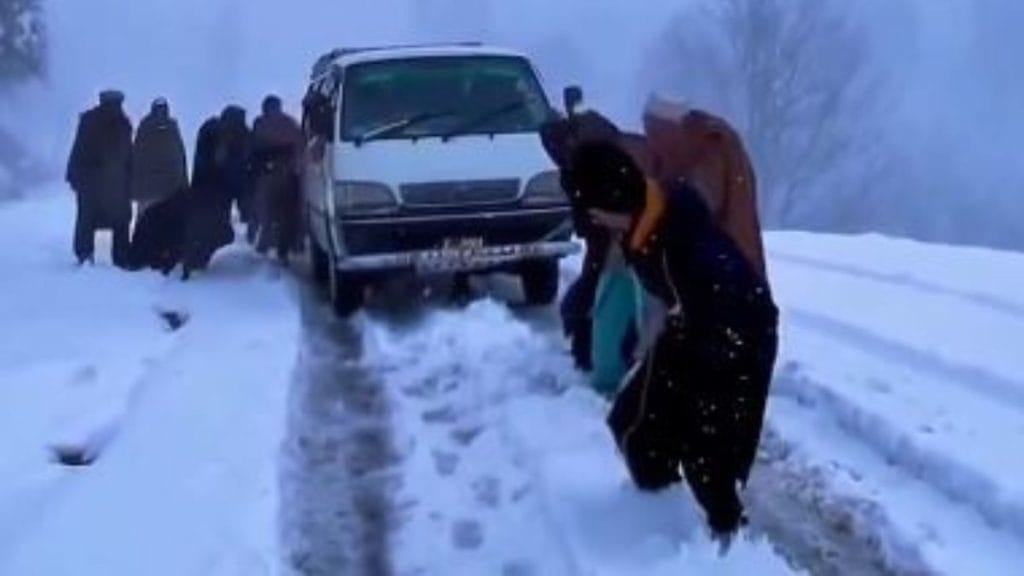
But, according to residents and members of a local tribal council, Jirga, that negotiated directly with security officials, an agreement reached on 20 December required all residents to vacate the valley by 25 January to allow for a full-scale operation against militant groups.
Also read: PCB ad uses India-Pakistan handshake controversy to promote T20 series against Australia
Repeated violations
Northwestern Pakistan is predominantly inhabited by Pashtuns, an ethnic minority in the country who constitute a significant share of the TTP’s fighters and recruits.
In a post on X, The Pashtun National Jigra called it ‘a humanitarian crisis’.
For many, this is not the first time. Military operations in northwestern Pakistan since the US-led invasion of Afghanistan in 2001 have displaced millions of civilians. While aimed at militant groups, such offensives have also resulted in civilian casualties and widespread destruction, fueling resentment toward the state.
The Pakistani Army, which plays an outsized role in domestic and foreign policy, has faced repeated allegations of human rights abuses.
Opposition to the planned operation has grown as well. Mahmood Khan Achakzai, a senior opposition lawmaker, told Pakistan Parliament last week, “For the past 20 years, people are being forced to leave their areas where they had been living for thousands of years.”
“Is it not terrorism to force people out of their homes?” he added. “For God’s sake, don’t do this.”
Khyber Pakhtunkhwa’s chief minister, Pakistan Tehreek-e-Insaf’s (PTI) Sohail Afridi, said he had “never supported the operation,” calling it “imposed by the barrel of a gun.” He accused federal authorities of making decisions “behind closed doors” and warned of growing mistrust between the province and the central government.
The planned military operation comes as the TTP stepped up attacks on Pakistani security forces.
Pakistan recorded at least 3,387 combat-related deaths in 2025, which is a 73 per cent increase from 1,950 in 2024, according to a report by Pakistan Institute for Conflict and Security Studies. Fatalities among civilians, militants and members of the security forces rose to reportedly unprecedented levels.
(Edited by Saptak Datta)