





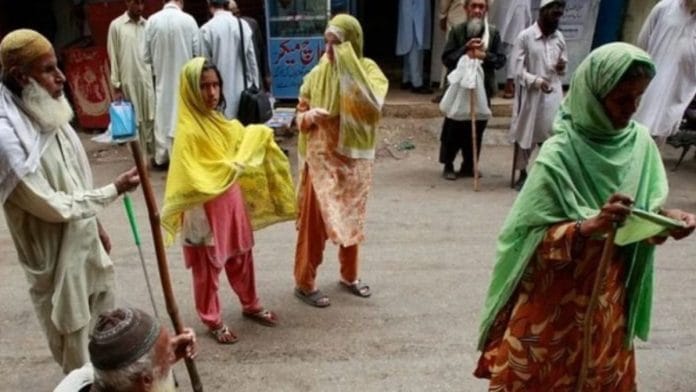



New Delhi: At airports across Pakistan in 2025, more than 66,000 travellers never made it past the departure gates. Authorities said they were all heading to beg in Riyadh. Over 50,000 Pakistanis were deported this year for begging, mainly from Saudi Arabia with 24,000 cases, followed by the UAE at 6,000 and Azerbaijan at 2,500.
Pakistan’s Federal Investigation Agency (FIA) on Wednesday told the National Assembly Standing Committee on Overseas Pakistanis and Human Resource Development that it had offloaded 66,154 passengers in 2025 as part of a crackdown on organised begging networks and illegal migration.
“This year, 155 Pakistanis have been facing daily deportation from various countries. In the past eleven months, approximately 52,000 Pakistanis have been expelled from 41 countries,” the report said.
According to FIA Director General Riffat Mukhtar, nearly 51,000 of those stopped were travelling on work, tourist or Umrah visas that the authorities deemed questionable.
Illegal migration and organised begging, Mukhtar told ministers, were “damaging Pakistan’s international standing.”
The begging problem
This is a recurring problem in Pakistan, and the government, earlier, out of growing disrepute, had pushed to ban organised begging in the country.
In February this year, Pakistan passed a bill banning organised begging under the Prevention of Trafficking in Persons (Amendment) Bill, the Prevention of Smuggling of Migrants (Amendment) Bill and the Emigration (Amendment) Bill.
Federal Law Minister Azam Nazeer Tarar, who tabled the bills, accused trafficking gangs of “smuggling beggars abroad” and “tarnishing” Pakistan’s reputation. The legislation introduced penalties for traffickers and formally added “organised beggary” as a prosecutable offence.
Under the amended trafficking law, prison terms for traffickers would rise from three to seven years, and from seven to 10 years, alongside fines of up to PKR 1 million.
Also read: Pakistan announces a film to counter Dhurandhar ‘propaganda’. It’ll celebrate Lyari
Rules and reputation
Beyond legislation, Pakistan is deploying administrative penalties as well. The government this year suspended the passports of 2,000 individuals accused of travelling abroad to beg in countries such as Saudi Arabia, Iraq and Iran, often under the pretext of religious pilgrimage. These passports have been banned for seven years.
Last November, the government placed 4,300 beggars on the Exit Control List, according to a Dawn report. This was done after Iraqi and Saudi diplomats reportedly told Islamabad that their prisons are overcrowded with Pakistani beggars. Pakistani nationals accounted for a significant number of pickpockets arrested at Mecca’s Grand Mosque in 2023, too.
Officials told parliamentary committees that nearly 90 per cent of beggars apprehended overseas are Pakistani. Over the last two-and-a-half years, about 44,000 beggars have been repatriated from countries such as Saudi Arabia.
A policy report by Pakistan’s Centre for Business and Society found that begging often generates higher income than unskilled labour. According to Dawn, Pakistan has an estimated 38 million professional beggars within a population of 230 million. The average daily income per beggar is around PKR 850, amounting to PKR 32 billion in daily charitable giving or roughly PKR 117 trillion annually, about $42 billion.
Religious customs also play a role. In Pakistan, visiting shrines and giving alms are deeply embedded practices, a reality exploited by organised begging rings that often involve children. In Karachi alone, 3,000 children went missing in 2010, according to a BBC report. The Asian Human Rights Commission estimates that between 2.5 and 11 per cent of Pakistan’s population survives through begging. About 1.2 million children live on the streets of major cities.
(Edited by Ratan Priya)