








New Delhi: When Ananya Dang started baking during the pandemic, it was a way of expressing her love for her family and friends. Soon, the hobby turned into a passion and finally into a profession. Eventually, Dang, a Delhi resident, let go of her Master’s in Finance and set her sights instead on a much sweeter degree—French Pastry making. Dang is among a new class of entrepreneurs—the pandemic bakers—who turned uncertainty, surplus time, and social media into small but resilient food businesses as offices emptied and livelihoods collapsed in 2020. Six years on, several of these kitchen experiments have hardened into serious, sustainable businesses.
“I never baked, I never cooked, but as lockdown started, I knew I had to do something to keep myself entertained. At the time, I was newly unemployed, and I thought, ‘Let’s try some new things this time’,” Dang said.
What began as a coping mechanism during lockdowns has, for many, outlasted the crisis itself. From cloud kitchens to brick-and-mortar cafes, several at-home bakers who emerged during Covid-19 have built ventures rooted in quality, community and craft. Several of the “I never baked before the pandemic” bakers have now changed courses and professions entirely, opting instead to work their love by chance. Many of these cloud kitchens have managed to ride the tides as they come and adapt themselves to the ever-changing market, while their counterparts withered away.
Also read: Heirloom recipes to home baking — 3 entrepreneurs are serving the Parisian experience in India
Attention to detail
Shewta Nag Joshi’s Artventure Educraft initiative, which merged art and education, came to a screeching halt in 2020. In a bid to pass the time and hopefully earn a little extra cash, Joshi turned to baking. In May 2020, Quarantine Bakers was born.
What began as a small bakery with tea cakes and breads has evolved into thoughtfully designed creations. Quarantine Bakers now specialises in bespoke cakes, uniquely crafted artisan breads, pies, gluten-free bakes, salads, soups and more. “The inception of Quarantine Bakers taught me, ‘Start where you are. Use what you have. Do what you can’,” Joshi said.
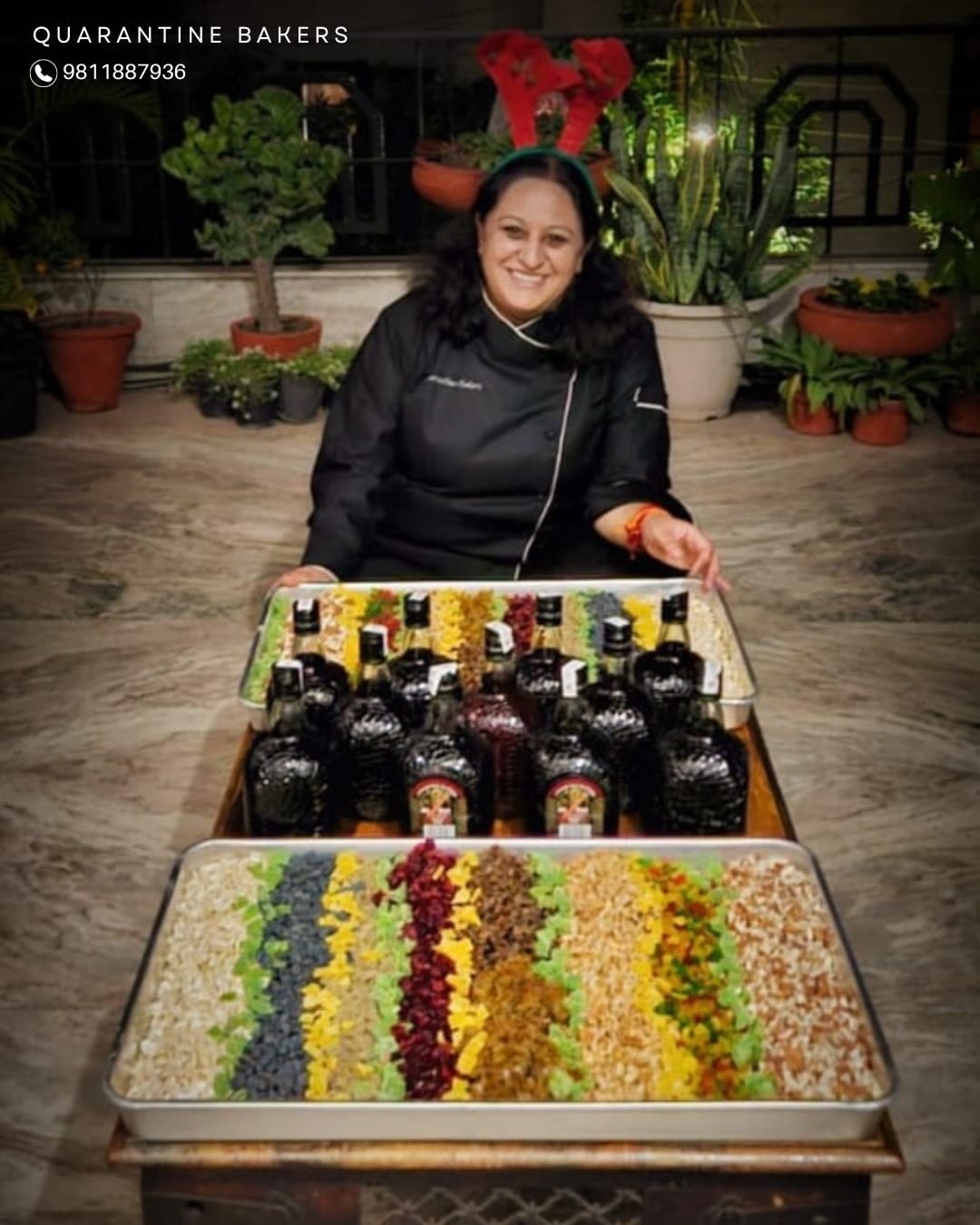
Today, she gets at least six to eight orders a day and delivers not just in Delhi-NCR but across the country.
“Capturing moments and emotions through cakes is what I have been trying to do. Customers now give me the creative liberty to go ahead with my take on their brief. It gives me immense happiness with their faith in my creativity. With no formal training in the field, I spend my non-baking time in continuous experiments with ingredients and research on varied techniques,” Joshi said.
As the market changed after the lockdown lifted, so did Joshi’s business model. “My journey has always been rooted in relationships rather than competition. The customers who trusted me in the early days became my strongest supporters, and through word-of-mouth and repeat orders, that circle steadily grew over the years.”
For Joshi, it’s the difference of quality over quantity despite the rising tide of at-home bakers. “By respecting individual preferences for flour, sweeteners, and dietary choices, I ensured that each request was honoured without ever compromising on taste,” she said.

Also read: Indian chefs are inviting you home for food & stories. Pop ups are the newest dining trend
No compromise on quality
Ananya Dang was encouraged by her family and friends to open a cloud kitchen during the pandemic. She let go of her plans to study finance at the University of Manchester and eventually decided to focus on baking.
Over the next three months, Dang baked at least one new thing every day.
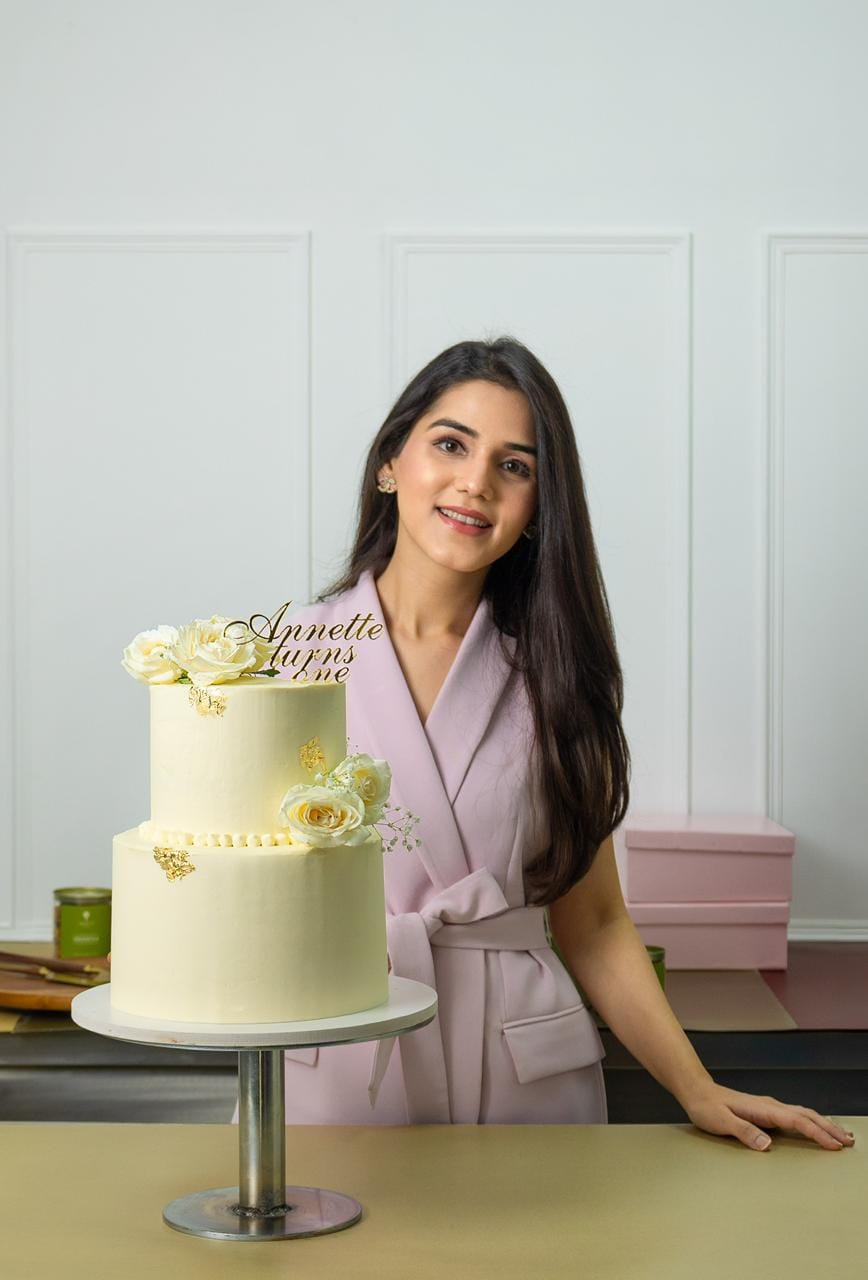
“I realised that I was getting more joy from baking and that it was something I could do well, if I pursued it professionally,” Dang said. “So instead of a finance degree, I eventually took a break from Whipping Love and studied French Pastry making at Le Cordon Bleu in London.”
During her sabbatical, she interned at The Oberoi in Delhi and restaurants in London, and she discovered that most of these high-end places use pre-mixes. For Dang, the post-Covid-19 world was about quality: “For most of these big names, their quality is not up to the mark. Their hygiene is not up to mark. If you have something from a random chain versus if you have something from a brand like mine, you’ll notice the difference in quality. It’s unmatchable.”
Upon her return, Dang opened the Delhi-based online kitchen, Annette Patisserie, with a target audience of mostly mid to high spenders and online shoppers between the 20-55 year age bracket across Delhi NCR.
“I refuse to settle on the quality. It’s okay if that means I am getting fewer customers, as long as I am living up to the quality,” said Dang on her brand philosophy. “I import a lot of my ingredients from Belgium and other such places. People started noticing that change in taste, texture and presentation, and eventually, they keep coming back to you. You just have to have faith in your brand.”
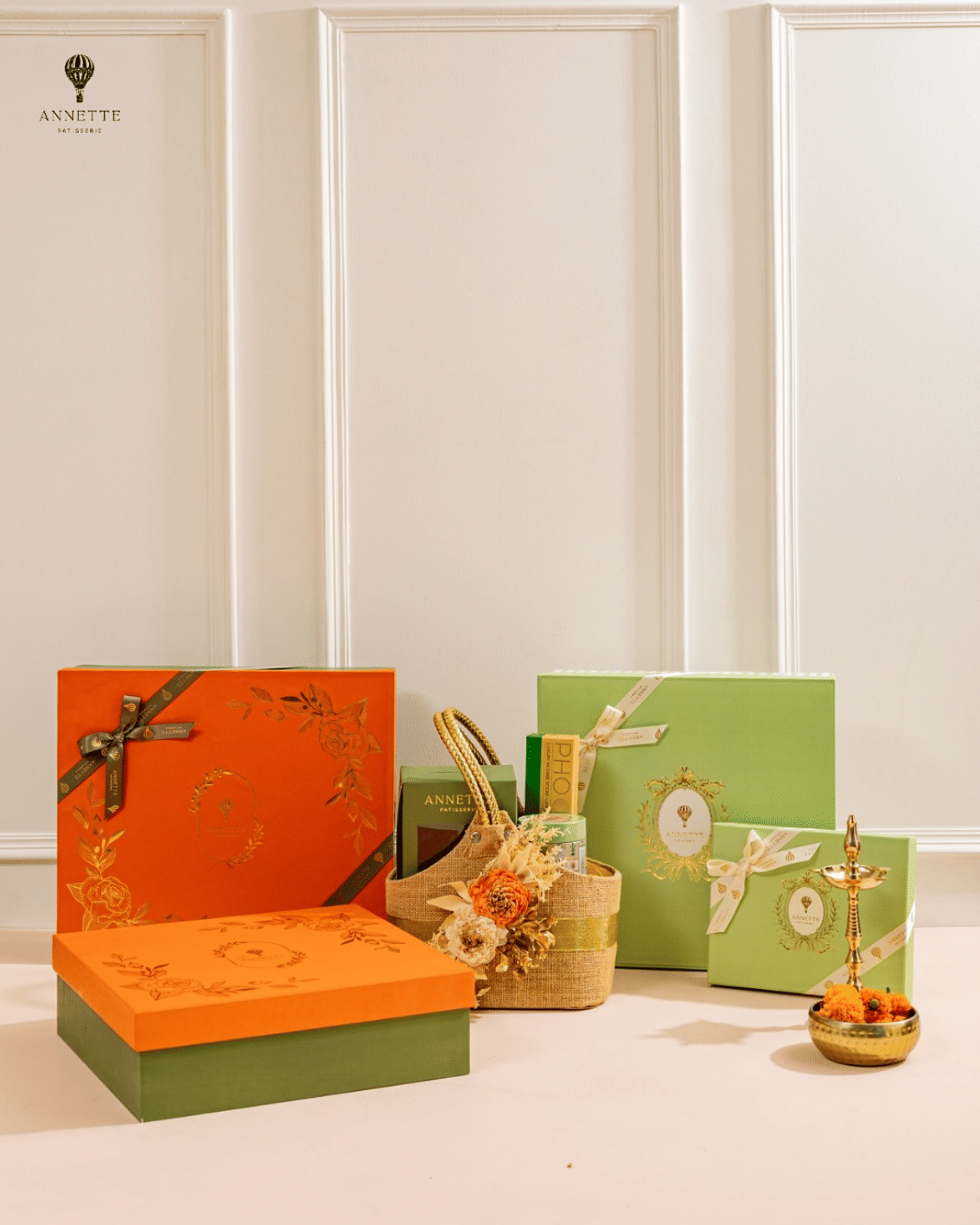
From breads and cakes, Dang is not venturing into the weight-conscious world of healthy desserts, with a guarantee of premium ingredients for the masses who want to eat healthy.
Also read: Himachali Fine Dining pops up in Pune. Askalu, gucchi & khambir on 6-course menu
Building community
Sneha Bhandare, a resident of Dabolim, Goa, started cooking for those who had recently lost their livelihoods in May 2020. While she couldn’t venture out of her home during the lockdown, in an agreement with the local authorities, Bhandare was able to feed the needy.
Soon, she started baking for her friends and family, word spread, and orders started coming in. And while she initially refused, Bhandare found a community waiting for her.
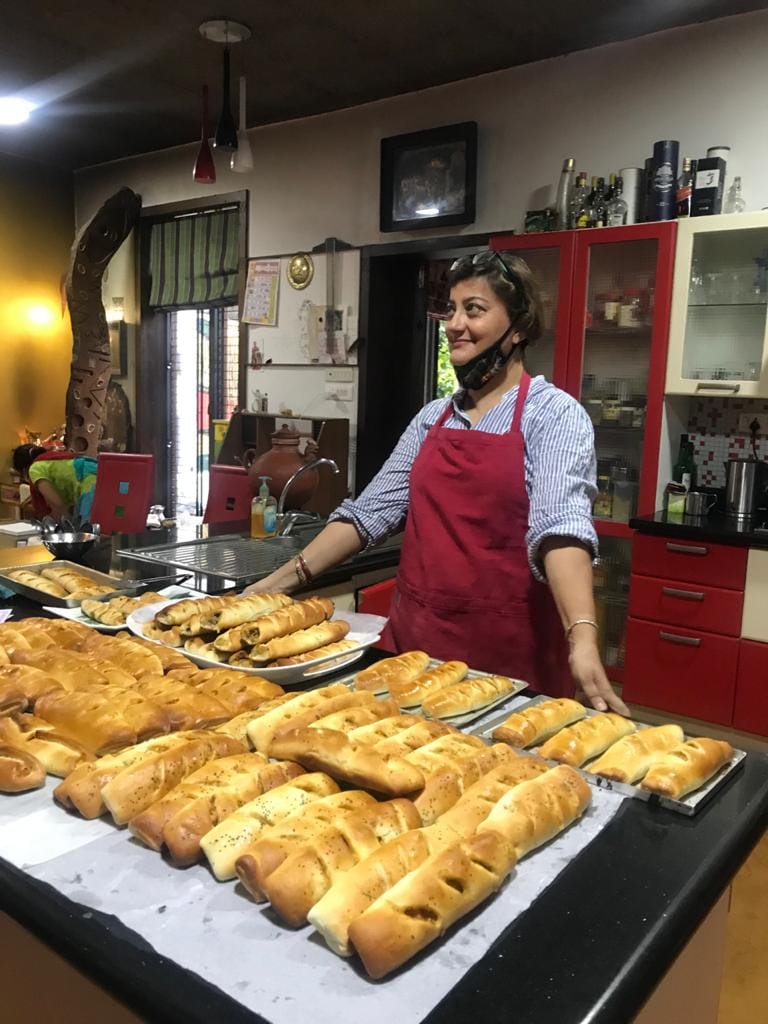
What started as a way of giving back to the community in a time of crisis slowly transformed into an unlikely dream. Encouraged by her family, Bhandare soon opened her very own cafe, initially equipped with just four chairs, the small space with a forest-theme near her home, evolved into an 80-seater restaurant and bar.
Bhandare’s aim with Café Chai Coffee was community. For her, big names and franchises aren’t competitors, “What we offer can’t be mass-produced…it’s personal. People come back because they connect with the space, the food, and the intent behind it. We focus on warmth, consistency, and authenticity rather than scale.”
Like most pandemic bakers, Bhandare didn’t set out with a business plan in motion but has since been able to open a second restaurant, Asian-themed Baowich, born from her love for baos, and an artisanal banquet space designed to host intimate gatherings for 40–100 guests.
“What started as an act of service slowly and naturally evolved into a business. The growth was organic, unforced, and guided more by instinct than strategy,” she said.
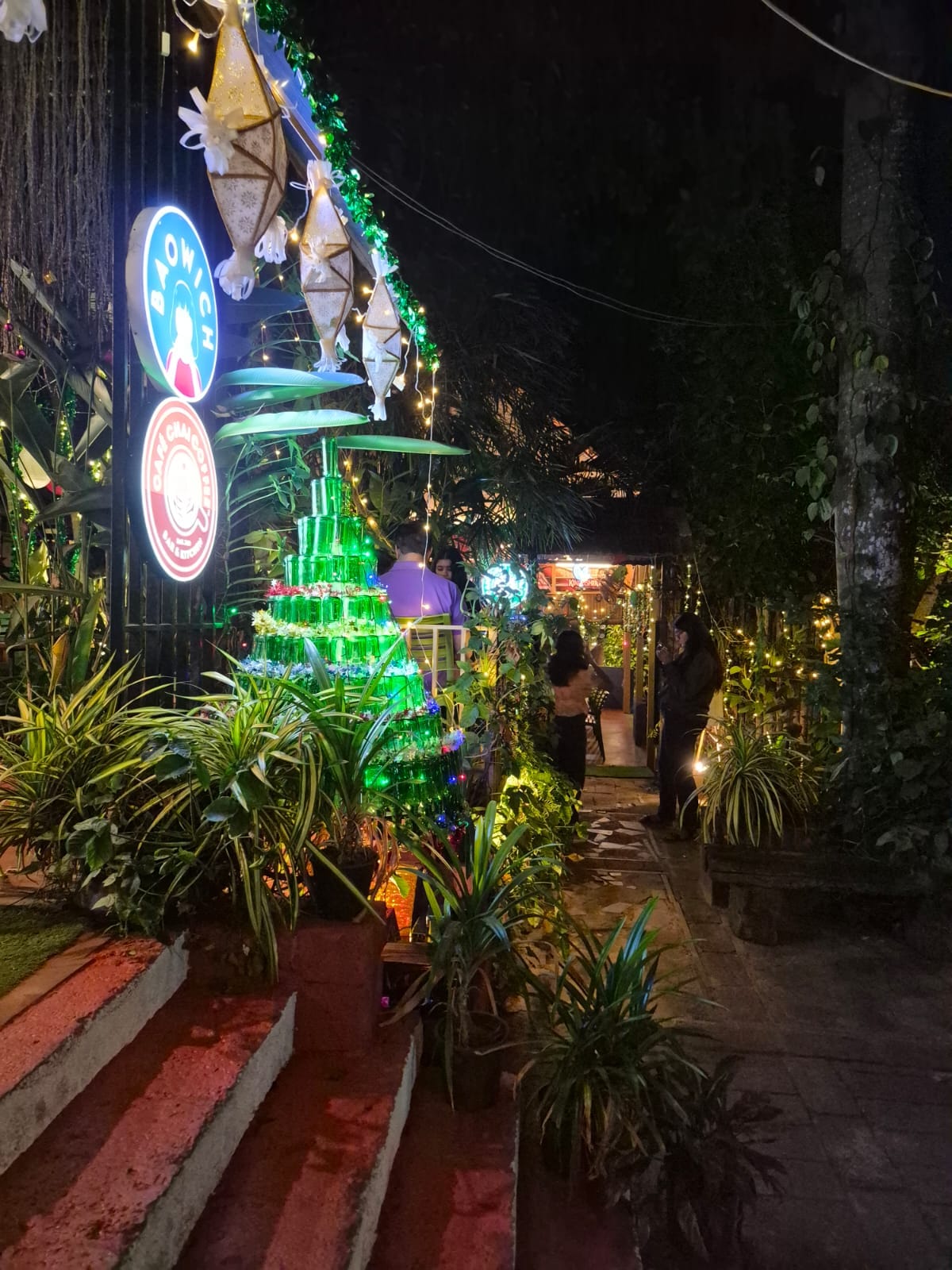
For Bhandare, the cafe was never about money, but rather about the effort behind the scenes—the ingredients, the skill, the ambience (comfortable, not manufactured). “That attention to detail…across food, people, and space… is what drew people in. Guests could sense the honesty behind the effort.”
Pandemic baking phenomenon
Pandemic bakers turned to the home baking experience during the global coronavirus crisis.
Author Emily St James argues that “bread baking is a thing we do in a crisis,” tracing the history of bread baking and how it is related to the human experience. For James, baking is also a way of connecting with history.
According to a study published in Digest: A Journal of Foodways and Culture, home baking surges during times of crisis and food shortages. The study, titled ‘Comfort Food: A Tale of Two Pandemics,’ which compared the Spanish Influenza of 1819 and the Covid-19 pandemic, found that an increase in baking alleviated concerns about people’s ability to support themselves in the event of a scarcity.
2020 was no different, and the phenomenon was not localised. In the United Kingdom, cupcakes, sourdough and banana bread were among the most baked items according to a 2021 survey. The United States’ National Online Consumer Survey found that 31 per cent of people baked at least once a week and 24 per cent of people baked one or twice a month in 2022.
Many, like Sam Oldham of Hive Bakehouse in England, had a simple reason—he just didn’t want to stand in the queue at supermarkets during the lockdown. He eventually began making bread in his shed in 2022. In 2023, the former account manager for Warburtons turned his passion for baking into a full-time job and a booming bakery in the Westhoughton Industrial Estate.
Tui Tuileta, who lost his job in the pandemic, turned to baking to satisfy his hunger for cookies. Now the Hawaii-based baker is baking 400 cookies a week out of his parents’ oven.
In Brooklyn, L’Appartement 4F, a bakery by day and a wine bar by night, found success through its novelty croissants. The co-founders, Gautier and Ashley Coiffard, told TIME magazine, “After just a month, they had made the $5,000 they were hoping to save for their wedding.”
(Edited by Theres Sudeep)