





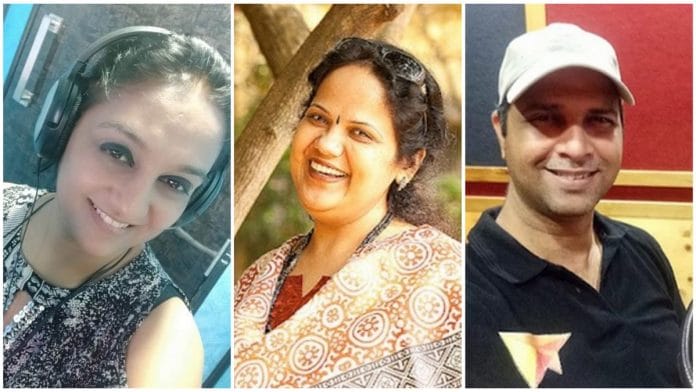



New Delhi: The baritone voice travels with commuters every day: ‘Agla station Mayur Vihar… darwaaze baaye taraf khulenge.’ More than just a voice of instruction, it is a familiar rhythm and reassurance — an emotion for millions of passengers who travel on the Delhi Metro. The Hindi voice belongs to Shammi Narang and the English one to Rini Simon Khanna. The neutral, pan-Indian cadence of these Doordarshan News stalwarts has become the gold standard for public announcements and is now a necessary commuting accessory.
Every city has given that template its own twist. If Delhi has Narang and Khanna, Mumbai adopted Prasanna V’s bass-heavy Marathi and Mridula Ghodke’s finesse; Chennai turned to popular RJ-turned-voice artist Devasena ES; Ahmedabad chose Disha Doshi’s balanced Gujarati. Most of these voices come not from the DD era or TV presenting, but from radio, advertising, dubbing, and studio work.
For commuters such as Rajesh Iyer, 37, who travels daily from East Vinod Nagar in Mayur Vihar Phase II, the voice signals calm amid the passenger crush.
“It’s like someone is personally guiding you through the city—it feels safe,” he said.
In other cities, announcement scripts have been crafted to connect with commuters in their regional language. But the blueprint—the pause, the modulation, the understated dignity—remains rooted in the style that Narang and Khanna first introduced.
Also Read: Bollywood didn’t invest in background scores enough. Naren & Benedict are changing this
In Maharashtra, voices of Tata Tea, AIR, and Shinchan
Mumbai, the city that never sleeps, has dense crowds and frenzied speed. It needed a voice that rose above it all with authority.
The man behind the Marathi announcements on Mumbai’s Metro Lines 2A and 7 is Prasanna V, an RJ and multilingual voice artist who has worked in English, Hindi, Marathi, Urdu, and Konkani, including for ads ranging from Tata Tea to Aarogya Setu.
His journey is the archetypal voice artist story—corporate professional turned RJ turned full-time voice talent.
“I started voiceovers in 2009,” he said. “By 2013, I quit my job and became a full-time artist.
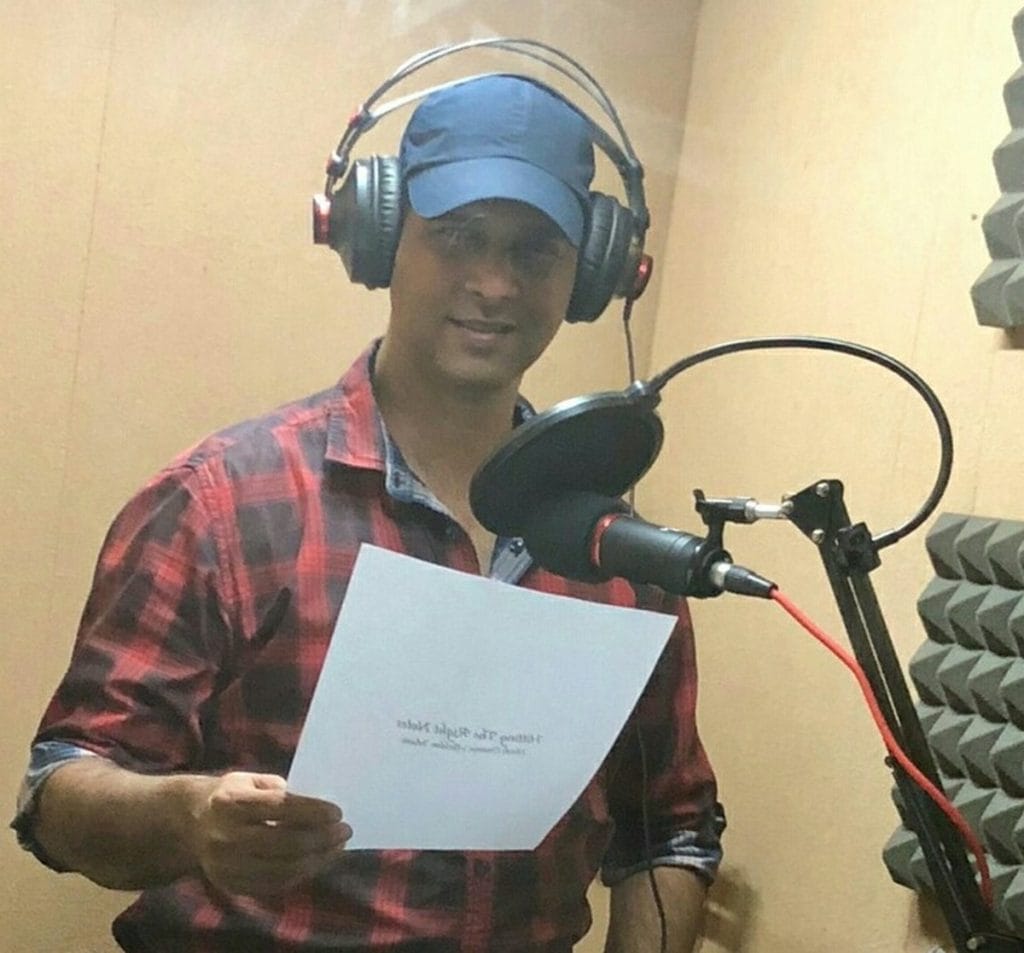
When he was selected for the Mumbai Metro in January 2022, it was a “big day” for him.
“The first brief was clear: follow the calm, paced rhythm of Shammi Narang. He is an icon. His Delhi Metro voice is unforgettable. I used to travel in Delhi and tell my friends — maybe one day, when Mumbai Metro expands, I will be part of it,” he said.
When his voice went live in 2022, he decided to surprise his mother. “I took her on the metro. That moment, hearing myself with her by my side, was surreal,” Prasanna added.
For Mumbai, Prasanna’s bass tone became critical. “The commuter is distracted, on the phone, stressed, thinking. The voice must be such that people stop everything and listen. Bass helps attract attention.” Pronunciation, too, had to be perfect, given that Marathi is a marker of identity and cultural pride.
Another Marathi voice that metro commuters know well is that of former Akashvani Pune newsreader Mridula Ghodke, whose announcements guide travellers in Pune, Mumbai, and Nagpur. She’s a Marathi purist and a stickler for perfect diction.
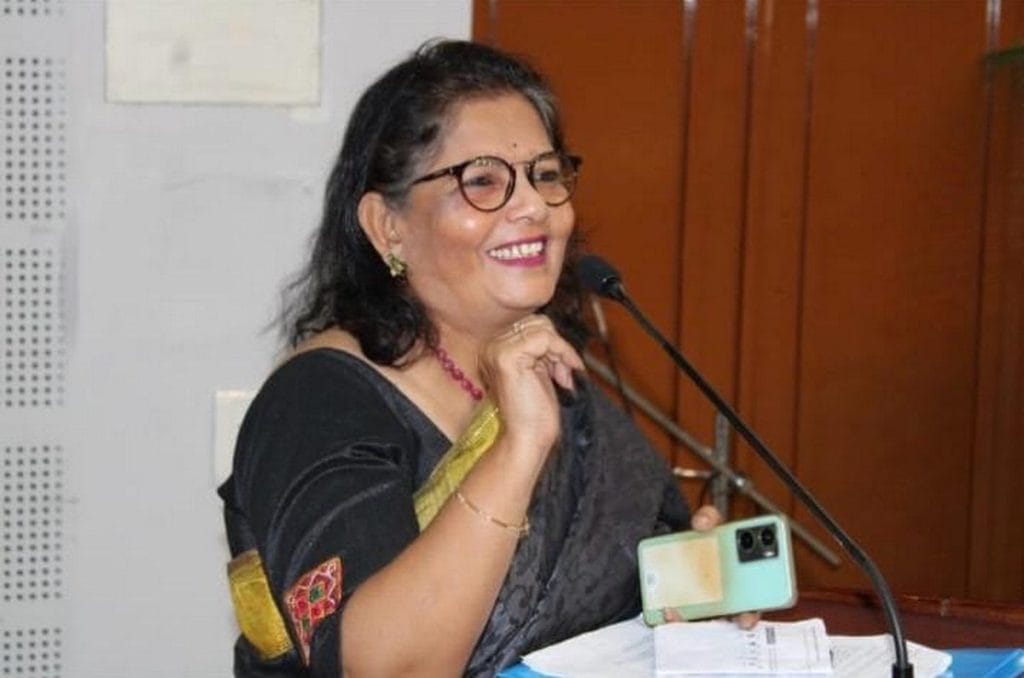
“Clarity, accent, and tone are very, very important because the attention should be drawn to your voice. Marathi has its own style… every language has its own style. It is important to have that style,” she said.
Ghodke, who retired from AIR Pune in 2019, has had a four-decade-long career in news reading, including as the in-charge of the Marathi national news division at Prasar Bharti. She’s also worked as a producer for government scheme ads, an interpreter and language consultant for Rashtrapati Bhavan, and conducted mock interviews for the UPSC in Maharashtra.
Her career began early, recording for Ceylon Radio’s Crown of Thorns series at the age of 12, and she still thrives in the studio.
“I love the mic, the atmosphere, the sound. Every recording is a new thing. I enter the studio as a student—I have to learn, improve, and give my best,” she said.
When it comes to Mumbai’s English metro voices, it’s befitting that a showbiz name sits behind the mic as well. Ani Ramniklal Shah is the Hindi voice of Shinchan and the English announcer for the Mumbai Metro on the Andheri West to Gundavali stretch.
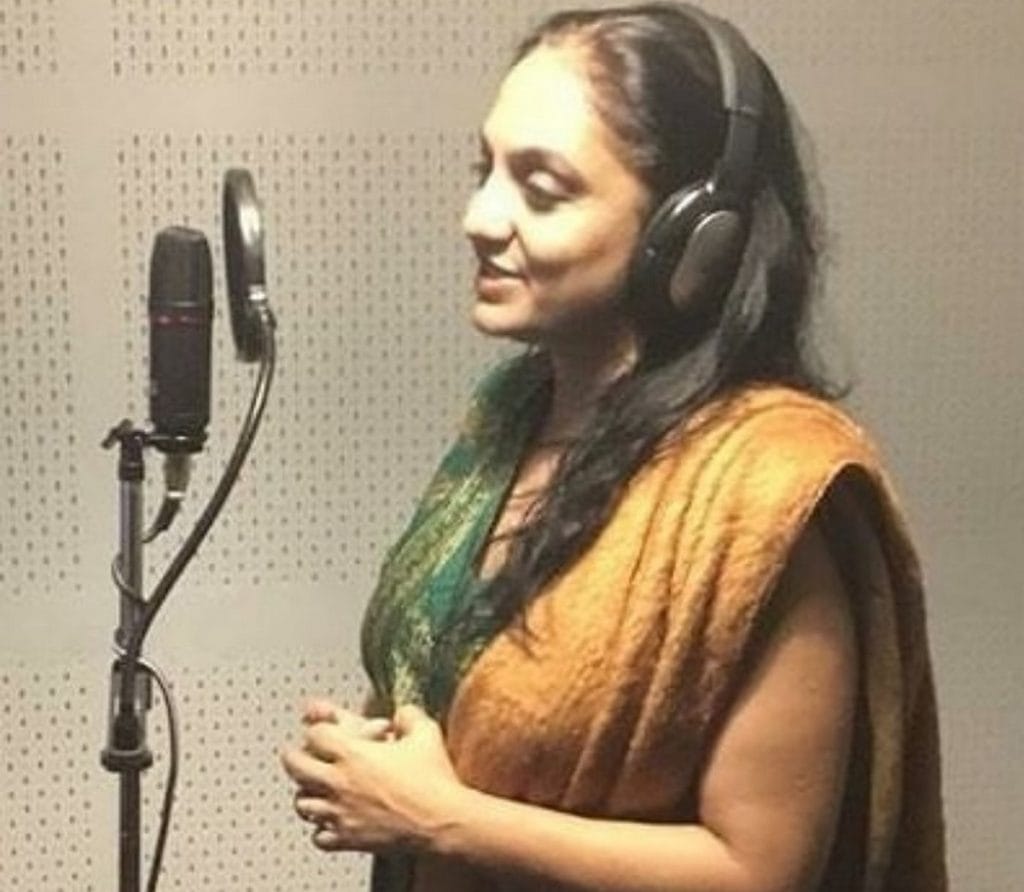
Shah, who moved to Mumbai from Nagpur after Class 10, started voice work as a side hustle to supplement a corporate job, then switched to it full time in 2020. A studio contact in Nagpur tipped her off, saying, Metro ka audition bhejna hai? She recorded and sent in a sample.
“I usually dubbed cartoons, TV shows, movies. Metro required a straight and collected voice. The seriousness must come across—like an instructor but not overbearing. Like a friend. Polite, requesting, yet authoritative,” said Shah, whose voice debuted on the Mumbai Metro in April 2022.
She embraces her own regional accent while speaking English because it sounds “authentic”.
“The pronunciation needs hard work, but it’s worth it,” she said, recounting that she initially stumbled over the pronunciations of ‘vehicle’ and ‘prohibited’. “I still laugh about it.”
Ex-RJ’s warm Tamil on Chennai Metro
Chennai Metro embraced its Tamil identity from the get-go, giving Hindi a wide berth. The voice it chose was already a familiar background track in the city: Devasena ES.
In the mid-2000s, Chennai heard her on evening drive time shows as RJ Deva on Radio Mirchi, with her warm delivery and chatty Tamil making her a mainstay. She later built a strong portfolio in dubbing and advertising, becoming a sought-after voice for Tamil promos and corporate films.
An invitation to apply for the metro gig came from a studio official when she was helping with a friend’s film production. A few months later, in 2014, she found herself in a studio recording prompts for the Chennai Metro. The brief was not about personality or even a strict “neutral” accent, as preferred in some metros. It was about clarity.
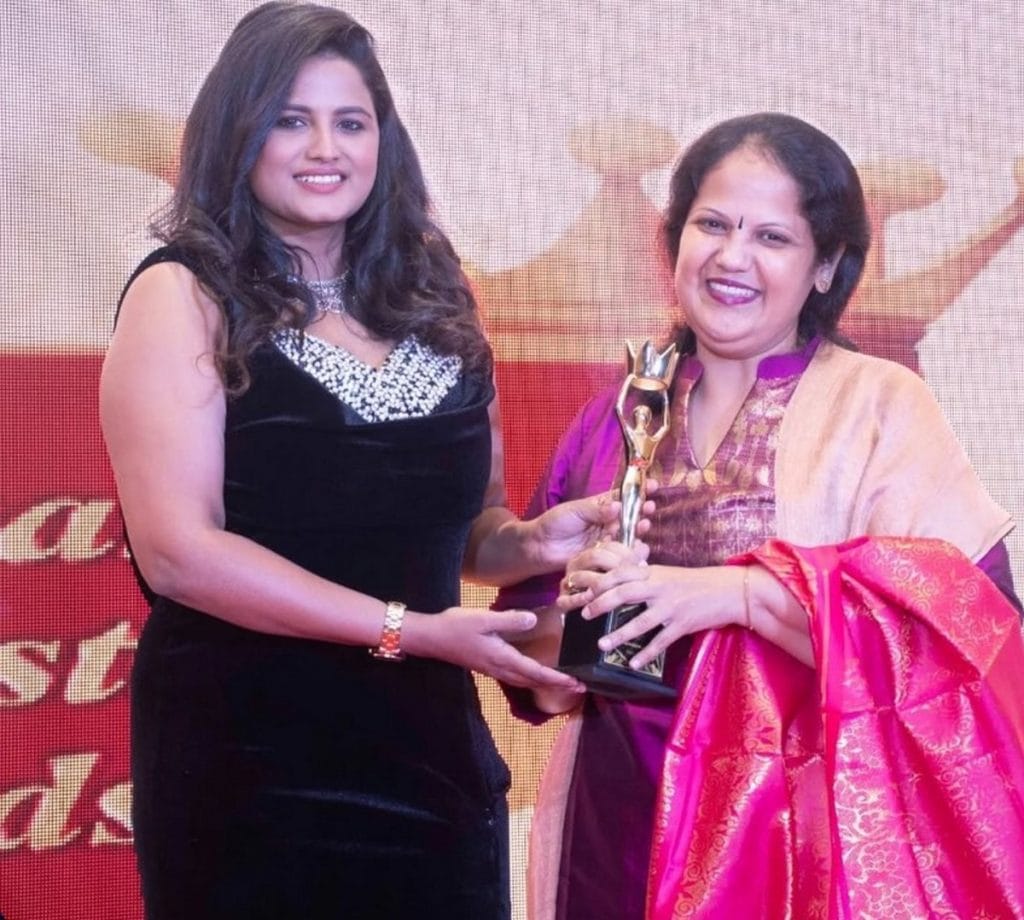
“The language is formal, so there was no specific instruction on accent. I tried to be as clear as possible and pleasant,” she said, adding that safety and emergency announcements have a more urgent tone and the others carry more warmth.
When the system finally went live, she didn’t know if they had chosen her.
“I took the train myself, heard my voice and confirmed that yes, it was indeed me,” she laughed.
Now, even strangers recognise her style of speaking.
“Once at a textile store, a stranger turned around and asked if I was the metro voice. That was a pleasant surprise,” she said. “I’m humbled to be a part of this city’s soundscape, the place where my heart and home are.”
Gujarati identity, Delhi inspiration
Before she became the voice of Ahmedabad Metro, Disha Doshi was a well-regarded Gujarati voice-over artist, known in regional advertising and educational audio books for her steady, composed delivery. Her CV included everything from corporate explainers to radio spots and IVR systems, but she said becoming the voice of Ahmedabad Metro felt “unreal”.
“I was recording in a studio in 2017 when I got the call. When my voice got selected, it was huge for me. I never expected to get a chance to work for the metro,” Doshi told ThePrint, adding that she vividly remembers the nervous excitement of that day.
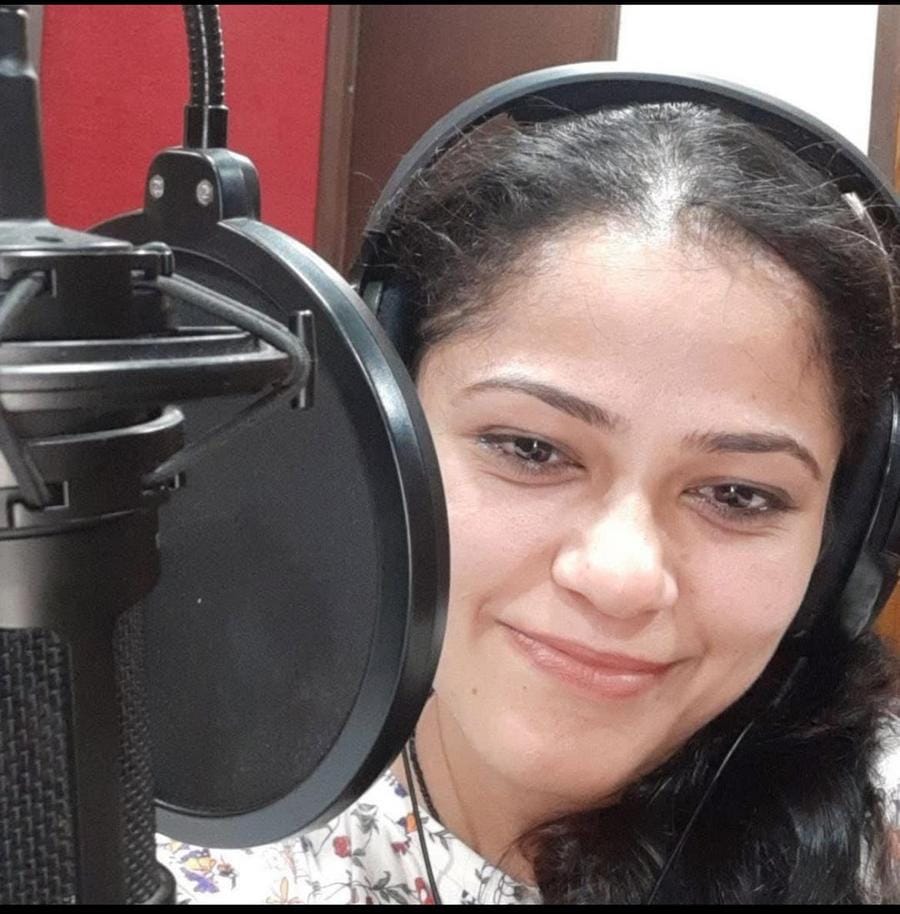
Being a native Gujarati speaker made pronunciations a breeze, but settling on the right tone took some deliberation.
“I added warmth to my voice. For safety announcements, a more serious tone is required. Clarity was a must,” she said. “More than voice, it is the language that adds cultural identity. People find their mother tongue more relatable, more reliable.”
Even so, her inspiration came from Delhi’s Narang and Khanna.
“The understanding of requirements — I got it from Shammi and Rini. I am a frequent traveller in the Delhi Metro. I always hear their voices in my head. It was like indirect guru-shishya classes inside the metro,” she added.
Also Read: Malayalam rap is having its moment—it’s gone from ‘junkie’ music to being played at temples
The stalwarts
Rini Simon Khanna was only in Class XI when the then Information and Broadcasting Minister Vasant Sathe heard her at a school event and introduced her to radio artists. Growing up in an Air Force family, she was soon offered live commentary for the Air Force Day parade.
“My work at the Air Force Day Parade was appreciated enough for me to get calls from All India Radio, and very soon, I was roped in for major events like the 1982 Asian Games and the launch of cellular service, Airtel,” she told ThePrint.
A Doordarshan news anchor from 1984 to 2006, her “please mind the gap” announcement sounded nothing like her clipped newsreading.
Communicating calmness and authority were a priority for her.
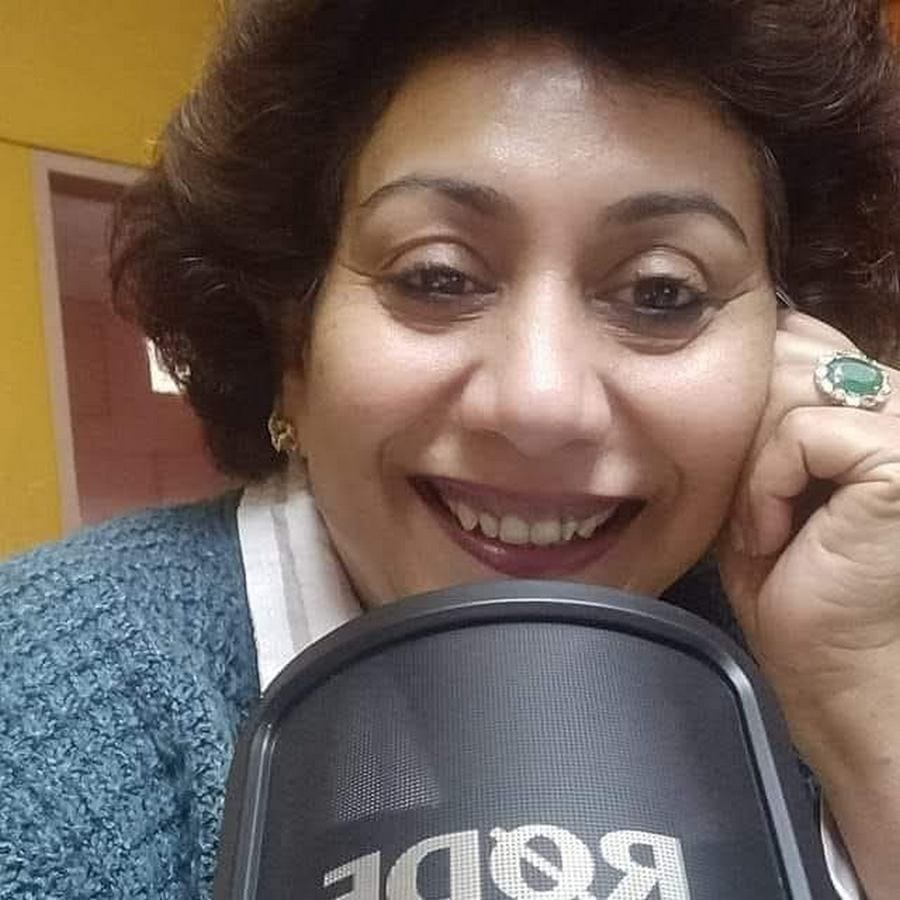
“Public transport is a very overwhelming experience. There are crowds, rush, fatigue, the noise of a bustling city, a commuter burdened with thoughts and pressure. So, it should be a voice that cuts through all of that. And, cuts through with calmness so the connection happens,” said Khanna, who recorded for the Delhi Metro for the first time in 2001, with the announcements going live the following year. “The voice should make you feel safe, give you direction, and make you feel you belong. You could be one among millions, but someone is connecting to you directly.”
She added that regional-language announcements bridge the last mile.
“India speaks in many rhythms. Vernacular is very important, especially for first-time commuters who are scared of what the metro holds, for senior citizens who need familiarity, and for travellers from smaller towns. It makes it easier for them to navigate,” she said.
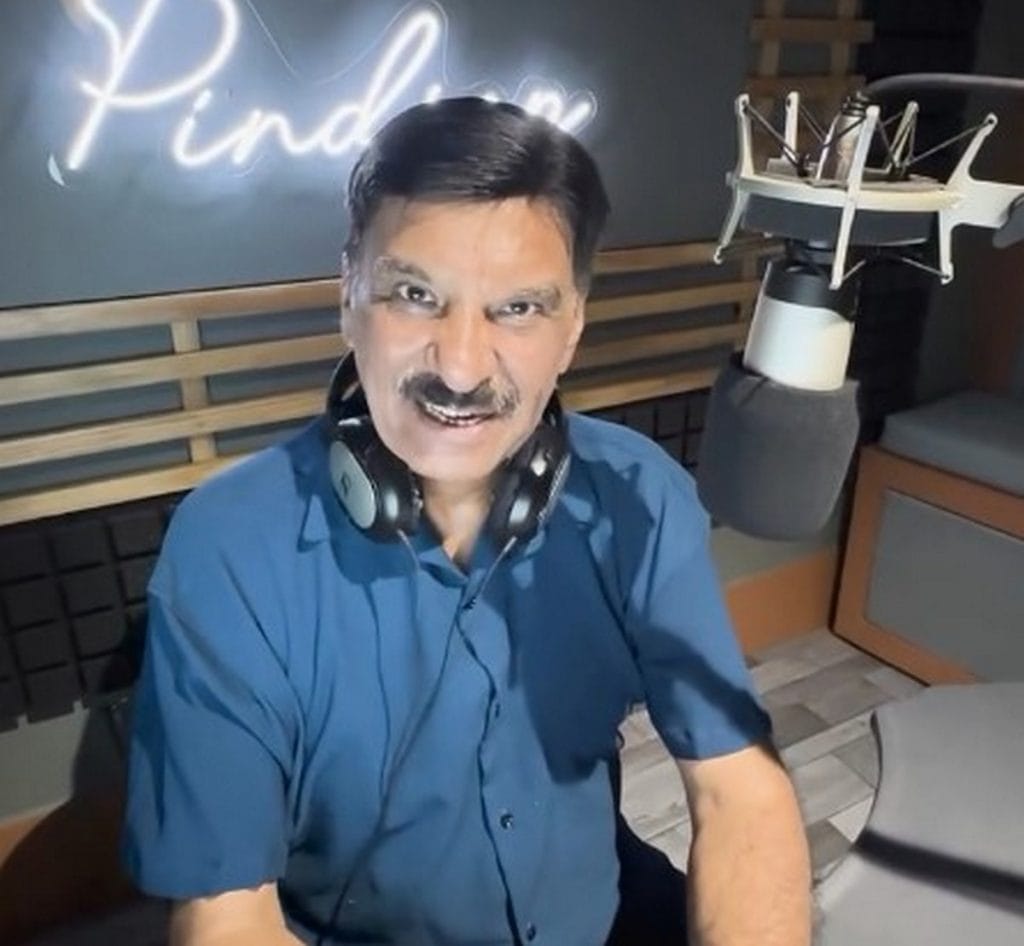
Meanwhile, for Shammi Narang, voice work began, as he put it, by “pure destiny”. As a mechanical engineering student at the JC Bose University of Science and Technology in 1977, he was visiting IIT Delhi when an American technical director picked up his voice during a routine mic check and asked him to visit the Voice of America studio at the United States Information Service (USIS) in Delhi.
“Before that, I didn’t know why I was being called—what is a voice, and what will you do with me by calling me?” he laughed. “They liked my voice. They made me read one script, then another. And then came the surprise: Rs 200 for the session. In 1977, Rs 200 was like Rs 20,000 today. That experience instantly attracted me.”
Over the next few years, he juggled a job at Larsen & Toubro with part-time freelance voicing. Eventually, he quit his job and became a household name as a Doordarshan news anchor in the 1980s and 1990s. Voice work was a constant, but the most distinctive line was arguably his famously soothing ‘Agla station…’ on the Delhi Metro.
Earlier this year, when comedian Akash Gupta joked about it, Narang replied to the Instagram clip: “I’m glad I could make your commute a ‘calm-ute’.”
“It all started with only seven to eight stations,” Narang told ThePrint. “Our voice is a little different from normal conversation. You speak with patience so that it reaches people.”
(Edited by Asavari Singh)