







New Delhi: Indian cricketer Sneh Rana still gets “goosebumps” recalling the moment she received her first India call in 2014. Women’s cricket in the country has travelled a long way since then. And the historic 270-run triumph over England on 13 July, in the first-ever women’s Test at Lord’s, depicts the red ball dominance of the Indian women’s cricket team.
Thirty-two-year-old Rana, an all-rounder in the 11-member squad, played a key role. She picked up two wickets in the first innings and four wickets for 42 runs in the second innings.
“No change comes overnight. When we started to play in 2011, there were no funds; there were barely any fees to play the matches. We never had U-19 or U-23 teams. Today, we have a well-established ecosystem in women’s cricket, and it reflects in our performance,” Rana told ThePrint in an exclusive interview.
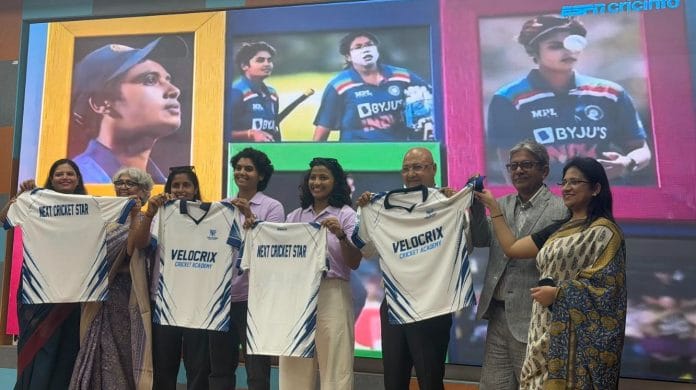
She was at the launch of Velocrix Cricket Academy, started by her friend and teammate Meghna Singh, at Sarvottam International School in Greater Noida on 22 July.
Rana, who hails from a small village in Sinaula—20 kilometres from Dehradun—underlined the importance of such academies to nurture young talents. She herself joined a cricket academy at the age of nine, but because there was no training camp near her house, Rana used to travel to Dehradun. Unfortunately, the Cricket Association of Uttarakhand lacked official BCCI affiliation at that time, forcing Rana to represent another state. In 2011, she went to Punjab. After playing under the state crest for three years, she was called up for the Indian team.
“It was a big deal to leave your house and pursue a dream which didn’t really have acceptance in the society,” she said. “We used to play when no one knew women’s cricket; no one was aware that women could also play this sport. People would come to my house and taunt my parents, ‘Why are you sending her to play?’ That was the mindset. But my parents have been my biggest support system; my backbone.”
Rana earned her maiden national call-up primarily on the back of picking up 32 List-A wickets for Punjab over two standout breakthrough seasons.
Importance of female-led academy
Women cricketers have repeatedly reported inappropriate conduct and sexual harassment by coaches at various state and private academies, including Meghalaya Cricket Association, Kerala Cricket Association and Baroda Cricket Association. The incidents sparked major investigations and structural changes within these associations.
Rana certainly doesn’t dismiss the fear.
“I can understand that parents feel scared because you hear so much on social media and in the news about the harassment women face. So naturally they are concerned and fear sending their daughters to academies,” Rana said. “A female-led academy, and by someone who has played for India, there is surely a lot of credibility and assurance to those negative thoughts. Ladki ko dekh kar ladkiya aati hai (Girls will come when they see female coaches).”
Rana, in fact, had a message for parents. According to her, if a daughter shows even a flicker of interest, even if it’s one per cent, in cricket or any other sport, get her into an academy and back her fully. They should tune out the noise and trust the potential of their child.
That message comes from someone who has weathered plenty of doubt herself.
Also read: Indian para sport is on the rise. At Commonwealth send-off, a vision ‘beyond ‘competitions’
The ‘comeback queen’
Rana is famously known as the “comeback queen,” having clawed her way back from a nearly five-year international hiatus caused by a severe knee injury, returned to the national side shortly after losing her father, and repeatedly rebuilt her career out of form slumps and rejections that would have ended most players’ ambitions.
She made her debut in 2014, only to be sidelined by injury two years later. It took years of grinding through domestic cricket before she earned an India recall in 2021, just months after her father’s death, and she marked that comeback with an unbeaten 80 in a drawn Test against England. Success didn’t guarantee stability, though: she was dropped from India’s T20I and ODI squads after the 2023 season, and spent nearly a year and a half on the outside before earning an ODI recall, one she repaid by being named Player of the Series in a tri-nation tournament in Sri Lanka, taking 15 wickets across five matches at an economy of 4.73.
The high point of that run came against South Africa, where Rana claimed her maiden five-wicket haul at the moment India needed it most. With the Proteas chasing 277 off the back of a 140-run opening stand between Laura Wolvaardt and Tazmin Britts, Rana returned figures of 10-0-43-5 (break this down for layman readers) to drag India back into the contest. She followed it up with a four-wicket haul in the final, helping India seal a 97-run win over Sri Lanka.
“It’s all about mindset. I don’t give much attention to any trolling. Even if someone is saying bad things, at least they are talking about you. I think people speak things because they have hope and they know your potential,” she said.
Also read: From Yuvraj Singh to Abhinav Bindra—who are the sportspersons backing student protests
More leagues like WPL
The right-arm off-break bowler credits the Women’s Premier League (WPL) for bringing in a significant change in the women’s cricket ecosystem.
Rana’s WPL journey has been a mirror of her international career. She started in 2023 with the Gujarat Giants as a premier off-spinner, even stepping into the captain’s role when Beth Mooney went down injured.
In 2025, Rana went unsold at the auction, only to be drafted in as a late injury replacement for Royal Challengers Bengaluru. She used the opportunity to reinvent herself. She was no longer just the reliable spinner, but a power-hitter as well, punctuated by a blistering 26 off six balls against the UP Warriorz. That one innings did more than win a match. It rewrote her reputation, turning her into a clutch finisher almost overnight.
By 2026, Delhi Capitals had taken notice, snapping her up on the back of that resurgence. She settled into the role of a seasoned all-rounder for the side, chipping in crucial runs down the order and turning to her off-spin whenever the situation demanded it.
“The tournament gave a platform and opportunity to those who were doing great in domestic cricket but were missing out on an India call-up. These players usually get lost in the circuit; WPL is a platform where they get to showcase themselves,” Rana said, adding that sharing the dressing room and playing alongside international players helps them significantly.
According to her, India needs more domestic-level cricket leagues for women; not only would it help unearth fresh talent, but it would also give existing talent the platform to grow.
“Women’s cricket is moving in the right direction, all thanks to Jay Shah and BCCI. It is in safe hands; now we need more and more girls to come out and pursue the sport,” Rana added.
(Edited by Saptak Datta)