





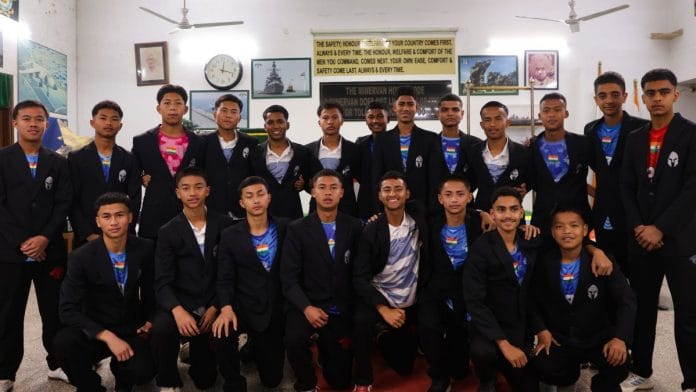



New Delhi: For 47-year-old Ranjit Bajaj, the founder of Minerva Academy Football Club, the dream is simple—to help India qualify for at least one edition of the senior FIFA World Cup before he dies. For now, he is making his peace working with a bunch of under-16s and helping them make a mark on the world of football. Despite infrastructure challenges, funds crunch and the stubborn realities of Indian football, Minerva FC are in Spain for the coveted MIC Cup. The tournament features some of the world’s best under-16 players and is often dubbed the Junior World Cup.
Adamant about going to the tournament, Bajaj resorted to crowdfunding and a personal loan.
Bajaj claimed that he’s not got any support from the government. “They have unrealistic expectations. In global football, it is really difficult. It will never happen if the young players do not get the support,” he told ThePrint.
In Indian football, stories like this aren’t rare. With limited funds and almost no support for grassroots programmes, academies are often left to fend for themselves, turning to personal loans and public donations to give their players a chance at international exposure.
Minerva Academy Football Club is a premier professional football academy and club based in Mohali, Punjab. It is a fully residential club and academy. It operates as a “School of Excellence” where professional football training is integrated with on-campus academics and living facilities.
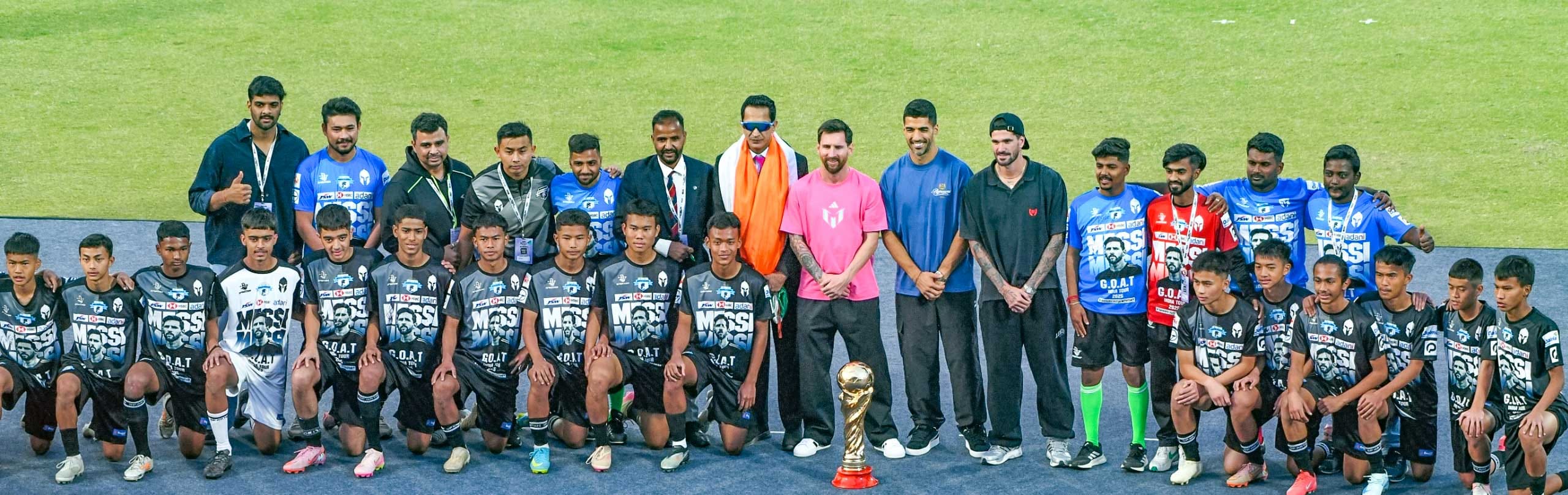
Bajaj and his team arrived in Spain on 25 March to compete in the MIC Cup, which is scheduled to kick off on 1 April.
“The entire process was very difficult. Initially, visas got rejected, and we thought our dreams would be shattered. Eventually, we got the visas. Crowdfunding as of 26 March was around Rs 45 lakh. We are hoping to get another Rs 10 to Rs 15 lakh. My total personal loan is around Rs 2 crore,” Bajaj said.
Also read: Indian women’s football team’s Asian Cup exit doesn’t tell the story of their rise
International exposure
In 2022, Minerva’s U-12 team lifted the MINA Cup, a youth football competition held annually in Dubai. The tournament attracts elite academies from around the globe, including teams like Manchester City, FC Barcelona, and Liverpool. Minerva then went on to win the U-13 age group at the Gothia Cup in Sweden in 2023. Last year in July, Minerva’s U-14 team clinched the Dana Cup title in Denmark, defeating Maltese side KFF Club by 15-0 in the final.
“During Dana Cup, I had to mortgage my wife’s gold to raise funds. For the MIC Cup, it was my turn. The ultimate goal is to make the Indian football team better and make them qualify for a senior FIFA World Cup,” Bajaj said, adding that Indian football fans are actually pushing the team.
“We never expected to raise Rs 45 lakhs. People who understand the game and understand the stature of such tournaments where my team is participating have come forward to help us. It’s the 1.5 billion Indians who push us every day. They believe in us. And, we want to win for the fans,” he said.
Bajaj believes exposure at such tournaments is what separates Indian players from the global footballers. Giving examples from Europe, he said, even top players have come through similar pathways.
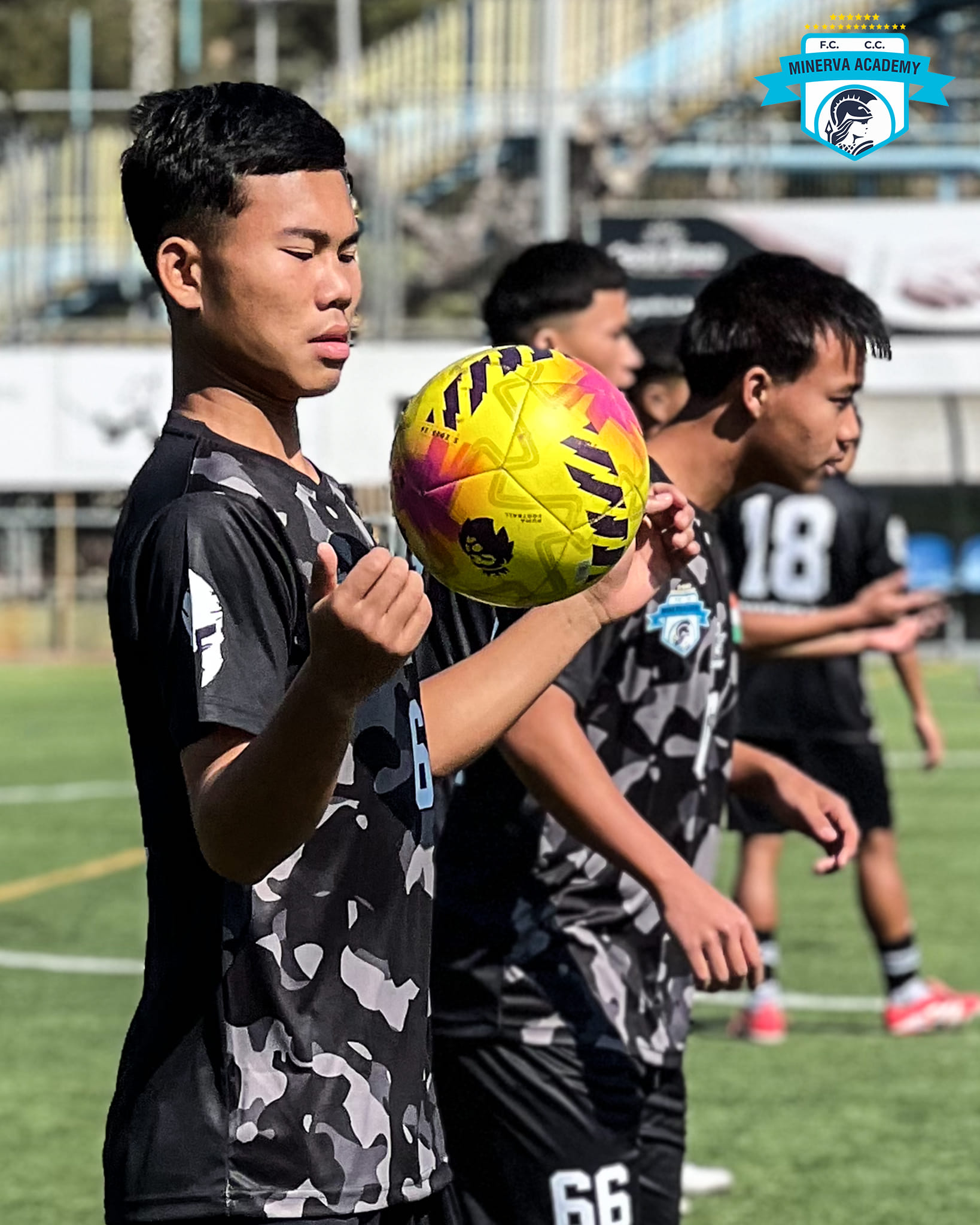
“The biggest problem is that our system does not understand the stature of these cups. Lamine Yamal played the MIC Cup for FC Barcelona in 2021-22, so did Lionel Messi and Neymar,” Bajaj said. “If our players have to reach that level, they need to compete in these tournaments. Unless they play against the best, it won’t be possible.”
For Bajaj, the goal is not immediate results, but creating a pathway for Indian football.
“My dream is to produce even one player who can play in the first division in Europe or Latin America. That will be the starting point. People will then understand the gap,” he said, adding that the difference between Indian players and foreign players is not visible at the early stages, but emerges over time.
“Till 15 or 16, there is no real difference. The gap comes in the next few years—when foreign players get better exposure, diet and training. That’s where we fall behind,” Bajaj added.
Also read: Indian football is staving off ‘permanent paralysis’ & the game clock is ticking
The Indian dream
Many in the Minerva squad come from middle-class families. For them, the trip to Spain is not just a tournament—it is their first glimpse of football beyond India and a chance to prove themselves on the international stage.
Tony Huidrom, 14, a central-defensive midfielder from Manipur, is the captain of the team. For him, winning the MIC Cup could be easily achieved if the team continues their dominant performance on foreign soil.
“We just need to work as a unit and implement the same things on the field that we have trained in Minerva,” he said. “These tournaments are about the whole Indian dream. For players back home who believe they can come out of India and play in Europe, this means a lot.”
Huidrom idolises German midfield maestro Toni Kroos. The boys have to balance daily rigorous practice for eight hours, a strict diet, and their academics. It’s instilled a strong sense of responsibility in the team.
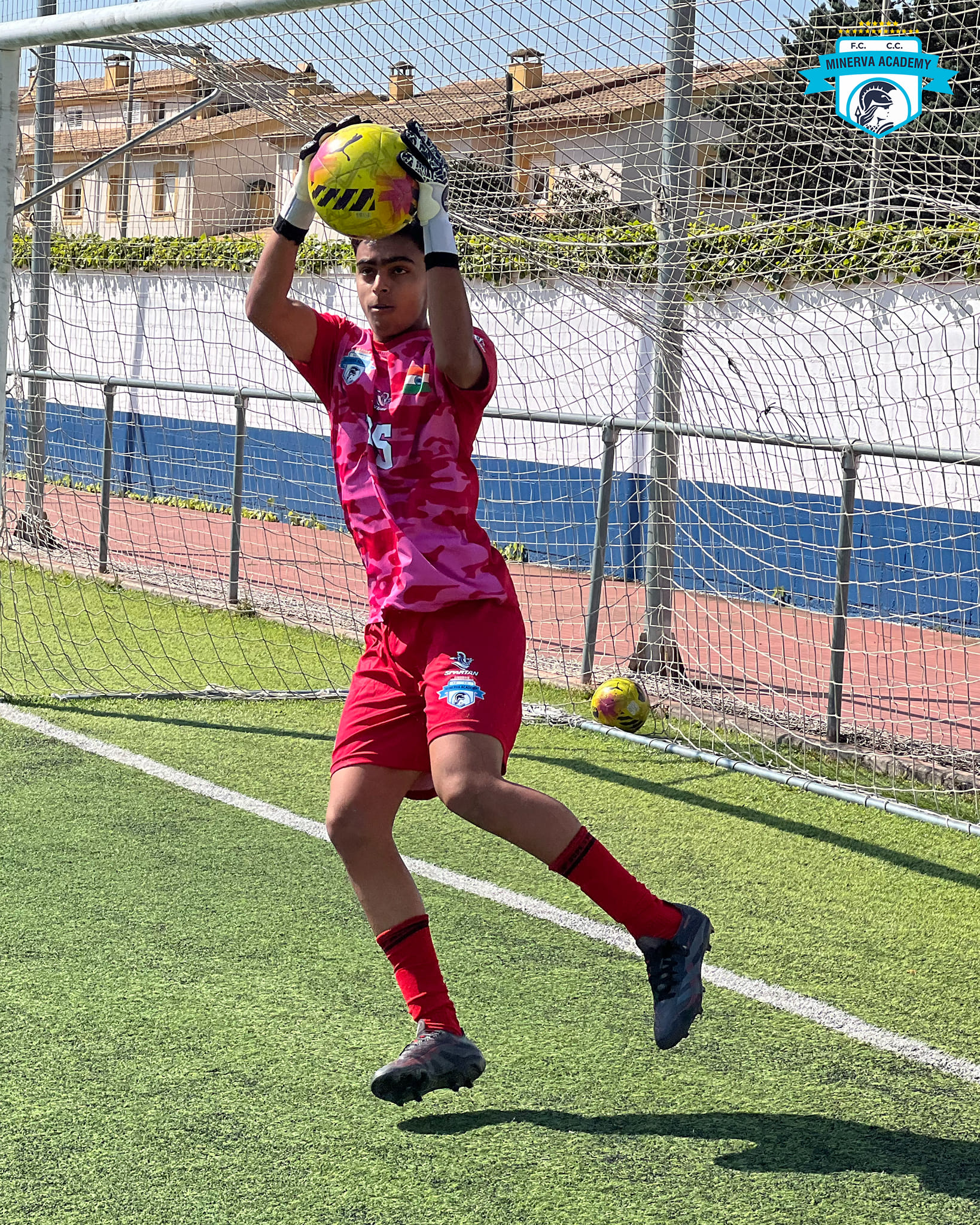
Fifteen-year-old Daksh Panwar, the goalkeeper of the team, doesn’t feel the pressure ahead of the tournament. He is a die-hard fan of German goalkeeper Manuel Neuer.
“As the goalkeeper, I will have to keep my composure. The entire team depends on the last man. If we get nervous, we won’t be able to perform at our very best,” Panwar, a resident of Haridwar, Uttarakhand, told ThePrint. “Last time, we performed well in Europe, but this tournament is bigger. The pressure is there, but it will only push us.”
For 13-year-old Chetan Tiwari, from Phagwara, Punjab, the level of football in Europe and Asian countries is far higher than in India.
“Football is a culture in Spain. The stadiums, the fields, and even the quality of grass, everything is different here. My teammates and I dream of playing football in such an infrastructure in the future,” he told ThePrint, adding that he plays as an attacking midfielder and idolises Neymar.
To the boys, Bajaj is more than just a coach or manager—he is a “second father, a boss, and a constant source of motivation.”
Also read: ‘I met Messi’ was the headline of the GOAT tour. Football and fans were ignored
Back home
Back in Imphal, Huidrom’s father, Huidrom Sanajaoba Singh, said that the journey had been anything but easy. With limited means, the family has had to make sacrifices to keep Huidrom’s football dreams alive.
“It’s not all about financial sacrifices. We have adjusted our time and daily routine and prioritised their training over anything else. We have always supported his dreams and managed expenses according to his football needs,” Singh told ThePrint.
Singh was also initially worried about his son’s future when he saw Huidrom taking a keen interest in football.
“When he was nine years old, his dedication and discipline toward football made me realise that he had started to dream something big,” he said. “I worried about his studies, but I chose to support and trust his passion.”
Singh is a proud father, but that has not stopped him from being anxious.
“He is far from home. It’s not easy to let go of your child at such a young age. He was about to step into an unfamiliar world, but pride gave us strength,” Singh said. “Before he left, I told him to focus on hard work, never forget his values, and success always takes time.”
Like Singh, Oinam Sanayama Singh, father of Oinam Sailex, a 15-year-old right back in Minerva, supported his son’s dream since he was six years old.
“At a very young age, I noticed that he understood the nitty-gritties of football. He not only played but also watched and analysed matches. That’s when I knew he was meant for this,” Sanayama told ThePrint.
For Bajaj, these sacrifices define the journey of a successful team.
“This is football. When you see their smiles, you realise what hard work can do,” Bajaj said. “These boys are proof of that. They have worked for this, and they have earned it.”
(Edited by Theres Sudeep)