





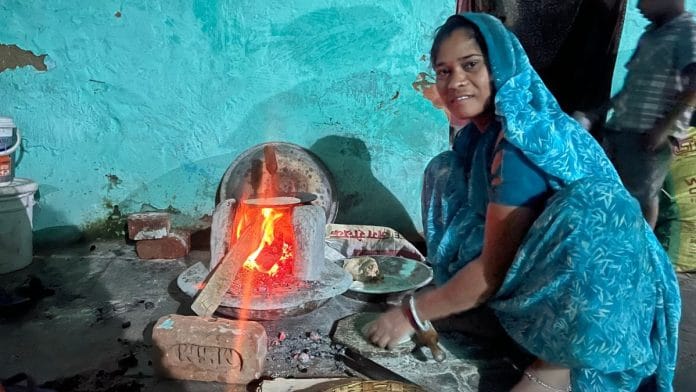



New Delhi: Thirty-year-old Meena Singh painted a brand new chulha after her LPG ran out a week ago. Singh’s husband, a daily wager, who earns Rs 6,000 a month, cannot afford to buy a new cylinder. A sharp spike in LPG prices and supply anxiety triggered by the fallout of the US-Iran-Israel war pushes low-income households back to firewood stoves and, in some cases, out of the cities altogether.
“There are days when he doesn’t get the work. We were already tight on budget, and now we are back to chulha. Seven years ago, Modi was promoting that we should shift to LPG, but see we are forced to come back to chulhas,” said Singh.
Singh lives in a one-room quarter with her two kids in Dwarka. Her husband works nearby at a construction site. Singh’s neighbour has already shifted, fearing the situation will worsen soon.
“If things get worse, we will also leave, just like our neighbours. We are just waiting for some money to come by,” she said.
Now, labourers from the industrial clusters of Noida and the Gurgaon area are heading back to their villages, fearing another lockdown.
“People here are worried that the government might soon announce a lockdown. So people are going back home,” said Singh. The numbers aren’t that huge, but slowly, from Delhi to Surat to Tamil Nadu, people are returning to their villages.
Those who aren’t leaving Delhi are going to the old method of cooking—the chulha.
The impact is not just limited to kitchens. It has now reached small eateries, dhabas, and halwai shops, which have begun hiking food prices to offset rising fuel costs. It has made the basic meals unaffordable for daily wage workers. Those who earlier depended on buying cooked food are now cutting down on meals or skipping them altogether.
Migrant workers are hit hardest because many lack the local documentation required for a registered LPG connection. Without official status, they are excluded from the government’s supply guarantees and subsidised rates. This forces them into the informal market, where they have no choice but to pay heavily inflated prices, often double or triple the official rate, just to cook their daily meals.
At Anand Vihar Railway Station, Manikant Tripathi, a popcorn seller, said that he has never been able to access an LPG connection in the city due to a lack of documents.
“We have a gas connection at home. Only one. Here, I don’t have the proper documents to get one. For the last eight years, I have been buying the gas in black, but it was never this expensive,” said Manikant.
Also read: FIR filed against content creator for ‘defaming’ FSSAI. ‘I questioned their silence’
Back to villages
Leaving all his belongings, as well as without food and money, 29-year-old Sanjay Kumar is set to go back home. For the last 15 days, he barely got to eat anything in Delhi, where he was working at a Halwai shop. When his last drop of savings was exhausted, it was his cue to go home.
“I don’t have the money to buy LPG at this high price. Earlier, I used to get it for Rs 100 per kg, and now it’s more than Rs 300. I earn Rs 10,000. How much can I save with such expenses?” asked Sanjay Kumar Singh on his way to Anand Vihar railway station with two labourers.
Rakesh Kumar brought his wife to Delhi from Bihar in search of a new life together. But now, as the LPG crises deepens, he is going to take her back to Lakhisarai village.
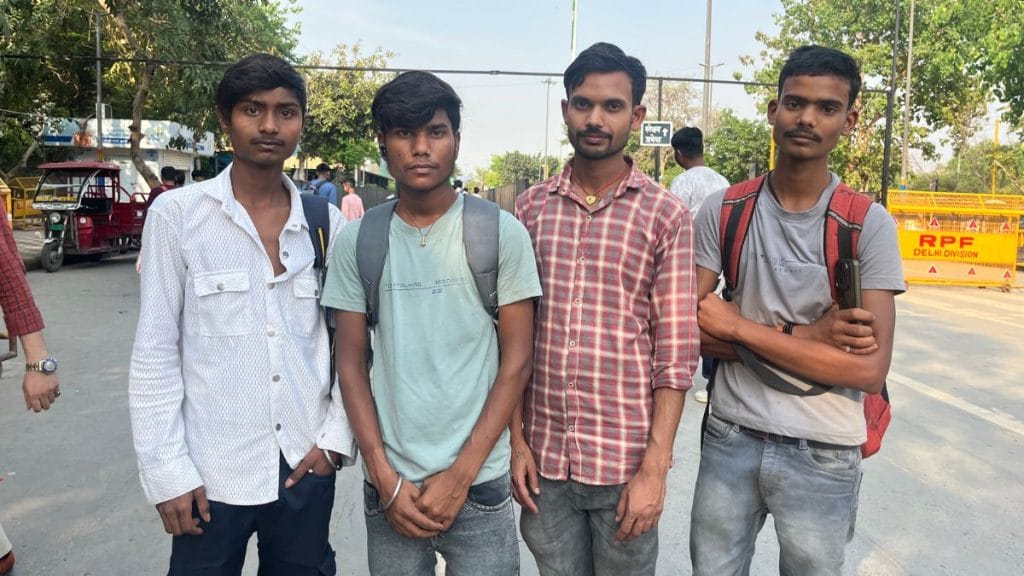
“I would have managed if I were alone. With family, it gets difficult. I can’t make her starve,” said Rakesh.
He tried to manage, but had to leave at the end.
“We were cooking on the chulha, but the landlord says it’s making their walls black. We didn’t have any other option. We’ll leave soon. Go back and cook there; no one will stop us there,” said Rakesh while looking at his wife.
It’s been over a year since the last major revision in domestic LPG prices. Today, commercial cylinders cost between ₹1,700 and ₹1,900, while domestic LPG stands at around ₹900 per cylinder—keeping clean cooking fuel out of reach for many low-income households. But since the war began on 28 February and the subsequent Strait of Hormuz closure, there have been severe supply disruptions of LPG. Black market prices for each cylinder have been hiked by Rs 300 to Rs 400, and some have even bought cylinders for double the price, like 4,000.
The government has reiterated that there is no shortage of LPG gas and cautioned against panicking. The Indian government has assured that there will be no lockdown due to the ongoing crises.
“There is no shortage of LPG in the country. Oil Marketing Companies have adequate stocks, and supply lines are functioning smoothly,” said Hardeep Singh Puri, the Union Minister for Petroleum and Natural Gas.
(Edited by Saptak Datta)