





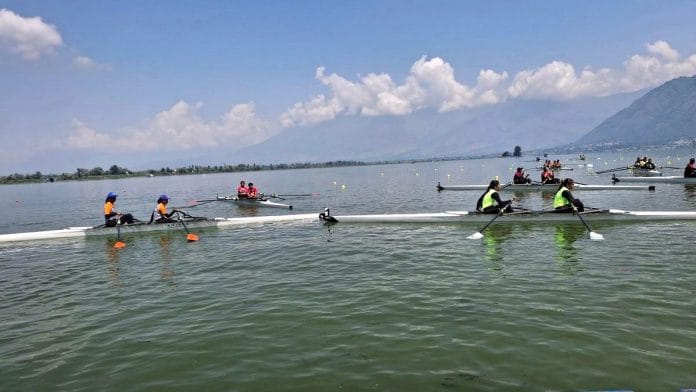



New Delhi: It took a five-minute conversation with Prime Minister Narendra Modi during Mann Ki Baat this past August to turn kayaker Mohsin Ali, son of a carpenter, into a local hero in Kashmir. The PM congratulated him for his performance at the Khelo India Water Sports Festival on Dal Lake, and said Ali was proof that “the country is going to progress a lot.”
Overnight, the once-quiet home of the 19-year-old in Srinagar’s Kand Mohalla, a hamlet within Dal Lake, turned into a gathering point for neighbours and relatives eager to share in his moment.
“I was in shock the whole time. It is one of three landmark moments of my life,” Ali told ThePrint. The first was winning the gold medal for the 1,000-metre kayaking event at Khelo India, and the second was walking down Kartavya Path as part of J&K’s tableau at the Republic Day parade.
“When we received the invitation for R-Day, my parents were almost in tears. It was a proud moment. It has now motivated me to bring gold for the country in the Asian Games this year,” said Ali, who moonlights as a shikarawala.
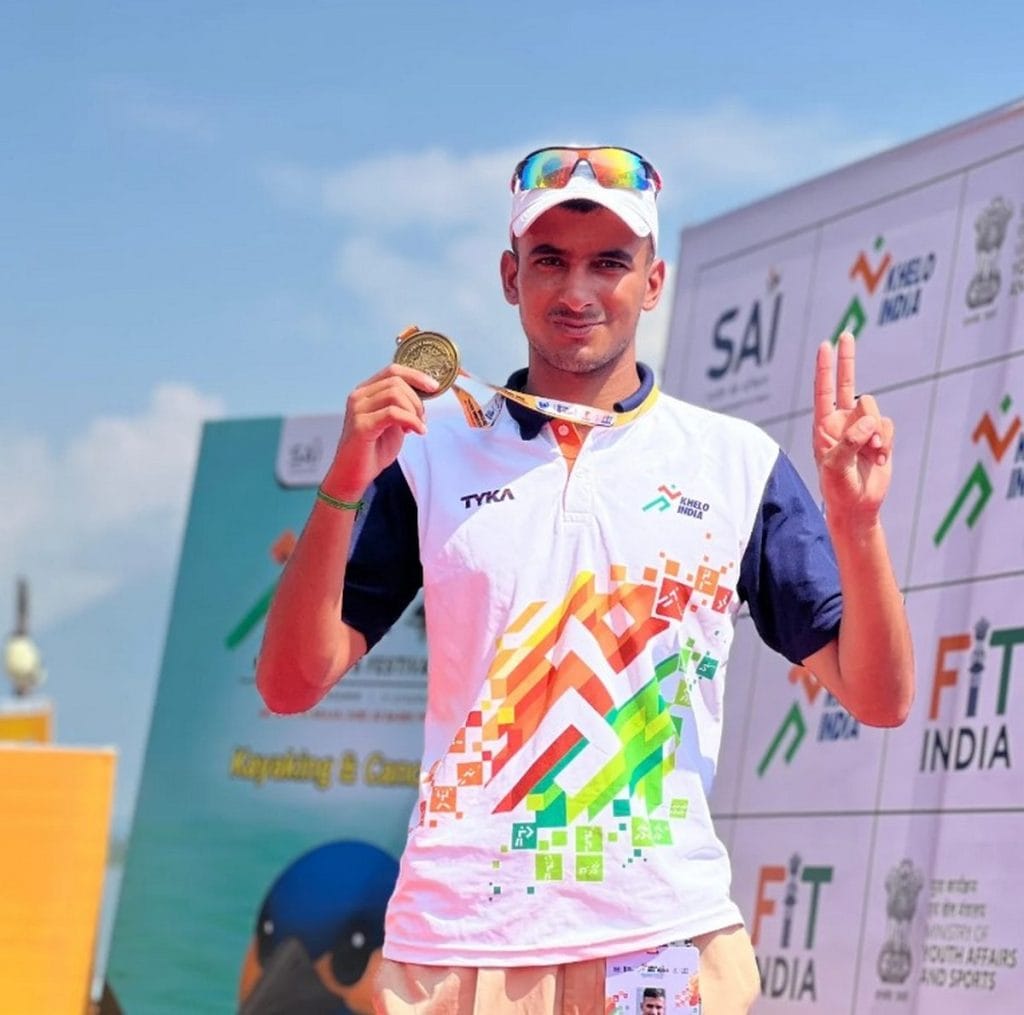
Ali’s journey mirrors the rise of water sports in Kashmir. Dal Lake and the Jhelum are no longer just scenic backdrops but developing hubs for kayaking, rafting, jet skiing, and paddleboarding.
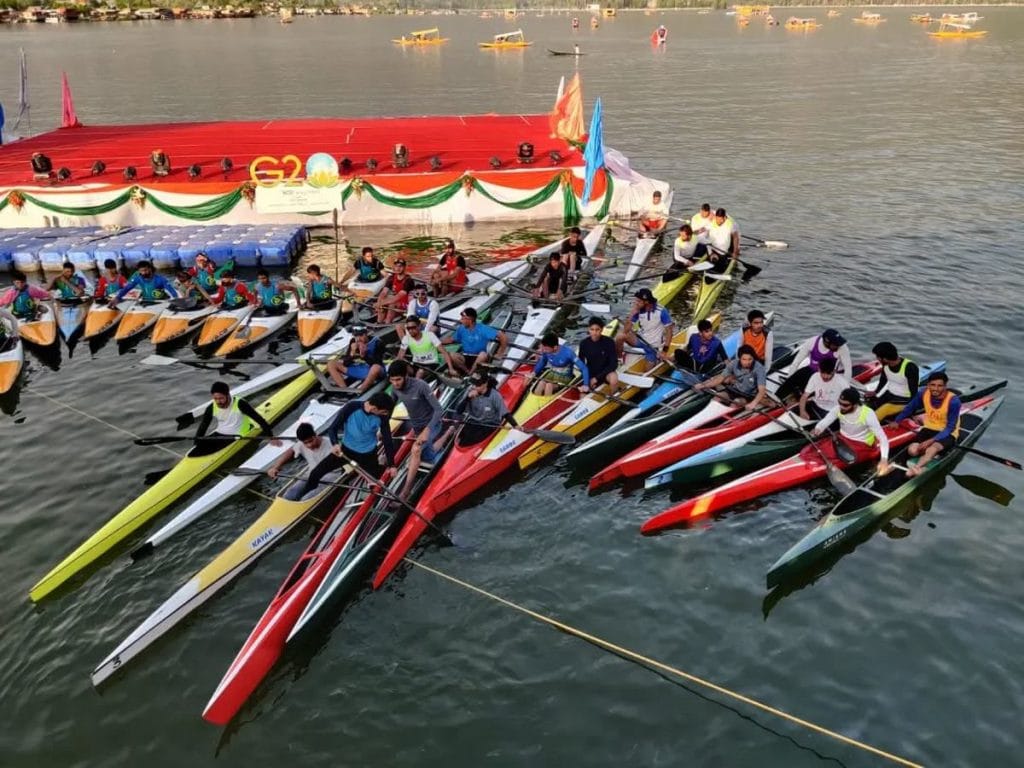
After positioning Gulmarg as a winter sports playground, there’s a new focus on water. With tourism numbers falling after the Pahalgam attack last April, the government has deployed water sports as part of the recovery strategy. In August 2025, Dal Lake hosted the first Khelo India Water Sports Festival, bringing more than 400 athletes from across the country for events in kayaking, water skiing, rowing, canoeing, shikara race, and dragon boat race.
Medal-winners included local athletes such as Mohsin Ali, Sajad Hussain and Muhammad Hussain, all of whom came from modest backgrounds and were trained at the Sports Authority of India centre on Dal Lake.
Since then, there’s been a waterskiing championship in October, and, this month, tenders went out for jet skiing infrastructure at Ranjit Sagar Lake under the 2025-26 water sports plan. In the 2026-27 budget, the J&K government increased the outlay for Sports and Youth Affairs to Rs 55 crore, up Rs 17 crore from the previous year, also mentioning the “expansion of adventure tourism to extend tourist season.”
Dreams are now taking root of Kashmir bringing India its first Olympic medal in water sports.
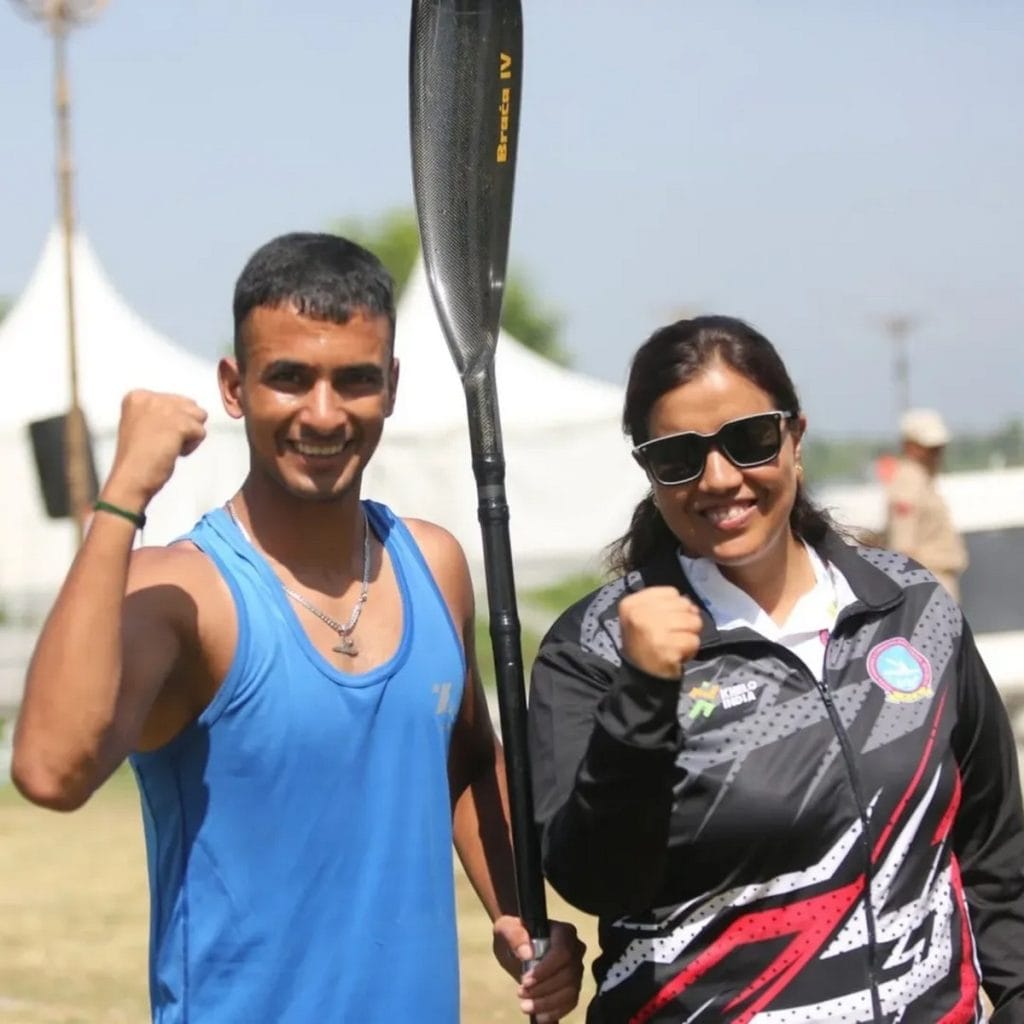
“Kashmiri youth like Ali have the potential to change these statistics. They just need the right support,” said Bilquis Mir, a canoeist and coach who trained Ali. During the Mann Ki Baat interaction, Modi also acknowledged her, saying, “I congratulate your coach who worked so hard to train you.”
To Kashmiris, she’s the “Aqua Queen”. Mir represented India at the ICF Sprint World Cup in Hungary in 2009, coached the national canoe teams from 2010 to 2015, and served as a jury member at the Paris 2024 Olympics. She is now director of water sports at the Jammu and Kashmir Water Sports Council. Though a shoulder injury ended her own Olympic hopes, she’s training athletes like Ali in the hopes that they can represent India on the global stage.
“I have a single dream in life and that is [for students] to win an Olympic medal in water sports for my country,” Mir said.
But even as ambition grows, there are challenges, including limited infrastructure, seasonal weather constraints, and an under-developed coaching ecosystem. While speaking about Ali’s journey, Mir pointed out the severe lack of support that nearly crushed his dream.
“He didn’t even have enough money to eat eggs for protein, so meat was out of reach. The boat and paddles we trained with on Dal Lake were of poor quality. I can’t expect these things from his father, he barely makes ends meet,” she said.
Also Read: ‘Goal Machine’ Anushka Kumari, 14, was taunted, stopped. Now she’s India’s rising football star
From Dal Lake to Paris
Mir’s commitment to Kashmir is best measured by what she left behind. Despite receiving high-paying job offers from the Sports Authority of India and even sports organisations in Hungary and Germany, she turned them all down. Her personal mission is to help build an image of Kashmir beyond the reductive ‘two Ts’ of tourism and terrorism.
Her tryst with water sports goes back to when she began paddling on Dal Lake at the age of seven. It wasn’t easy. The sight of a young girl in track pants with the zeal to compete was met with social resistance. She was mocked, judged, and faced constant backlash for defying traditional expectations.
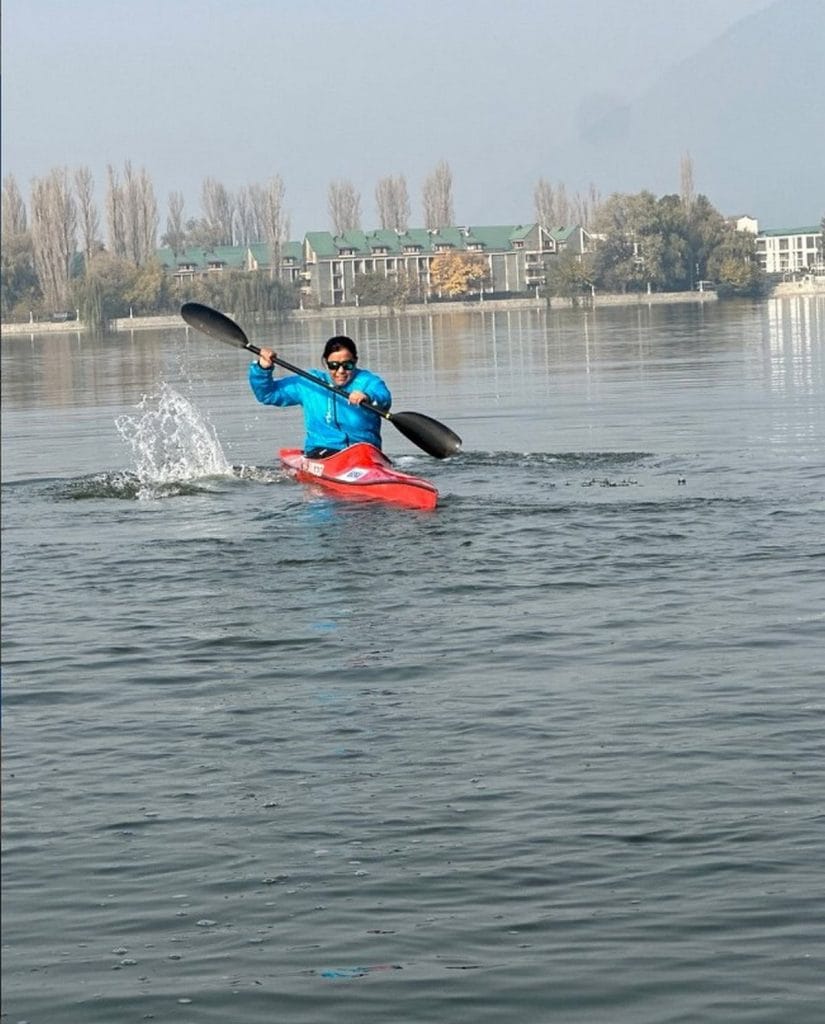
Years later, she arrived in Paris as a jury member at the 2024 Olympics, judging water sports events, the contrast between those days and being on one of the world’s most prestigious stages hit her.
“That night, I was overwhelmed. Memories of my struggles and the physical and mental pain I faced came rushing back. I couldn’t believe it was real,” she said, her voice breaking as tears welled up and slowly rolled down her face. “It was all worth it.”
Back home, Mir is determined to ensure that young athletes don’t have to endure the same hardships she faced. Her current battlefield is her coaching centre at Pokhribal Lake, near Badamwari and Kathi Darwaza. One of her steepest hurdles is a chronic lack of high-quality gear. Rather than asking for cash, she has reached out to financially stable friends and acquaintances, urging them to donate equipment.
Some contributed dumbbells, others got paddles, while some provided food. Through these collective efforts, Mir now trains around 200 students across sub-junior, junior, and senior categories.
A more deep-rooted obstacle was convincing parents to let her teach girls.
“At times, the questions I got were insulting. They would ask why I was corrupting their daughters. But I kept going from door-to-door, village-to-village, telling girls and their families that they had this option,” she said.
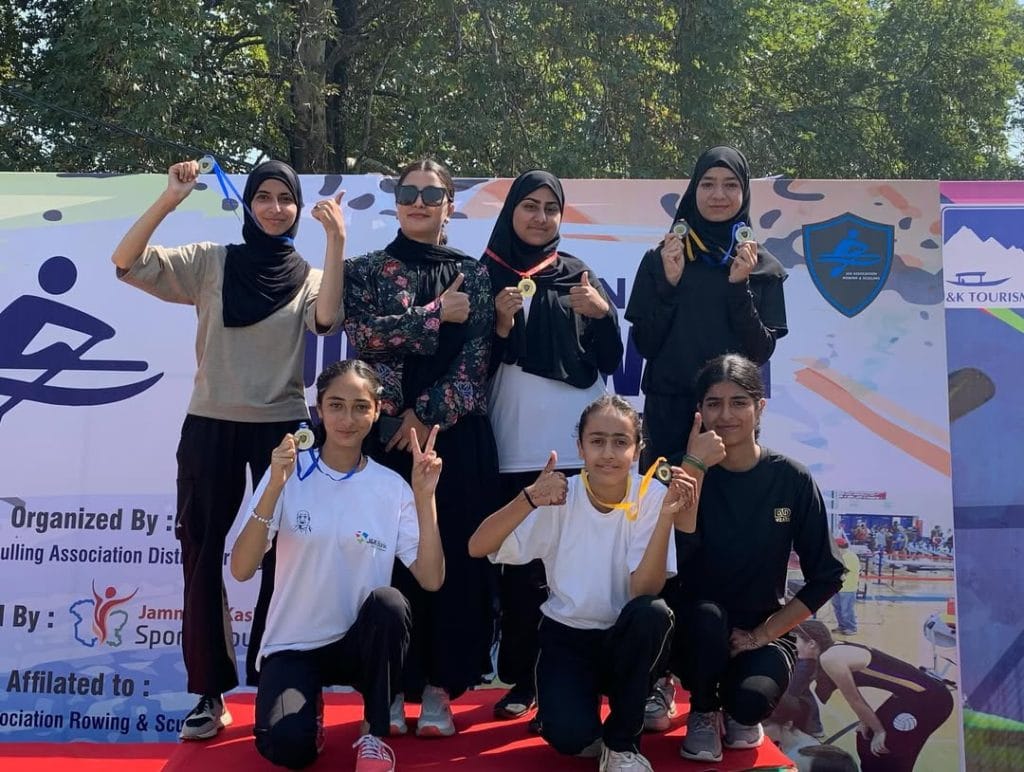
Her first batch in 2013 had 20-25 girls. But even when they showed promise, their families were reluctant to send them out of state for a competition.
“I’ve seen promising young athletes shelve their dreams because of this. It still hurts,” she added.
But things are changing. Today, 50 per cent of Mir’s students are girls. And she has trained a total of 3,000 students to date. The impact is visible: under her guidance, Kashmiri athletes have secured 110 national-level medals in water sports in the past four years.
“When the girls started getting jobs, after winning at the national level, the tide turned,” she added.
But Mir wants to aim higher, and so do her students like Ali.
“These kids want to take India to the highest podium,” she said, adding that if backed properly, water sports in Kashmir could improve India’s Olympic standing. The country finished 71st at the Paris Olympics.
“Water sports like kayaking can help India move from 71st to at least 20th, because canoeing alone has 16 medals in the Olympics,” she said. “Europe dominates it. We can attempt to give some competition.”
Also Read: Real Kashmir Football Club to Songs of Paradise—how OTT is revisiting Kashmir
A ‘CBSE model’ for sports
Even after national recognition, Mohsin Ali, a Class 12 student, still works as a shikarawala to make ends meet. The same waters where he ferries tourists are where he clocked 4:12.41 in the men’s 1,000-metre singles kayaking race to secure his first national gold.
He was just seven years old when he decided that a kayak paddle, not a shikara oar, would define his future. He proudly told PM Modi that he has travelled to events in Bhopal, Goa, Kerala, and Himachal, and that his dream is “to get the national anthem played for the country” at the Olympics. But financially, the rewards are few and it’s a daily struggle.
“Unlike other states, we don’t get cash prizes for winning gold in any sport,” he said. “In Haryana, athletes get cash prizes for winning gold, silver and bronze. But we don’t get any support like this.”
For Mir, the problem runs deeper than prize money. What Kashmir lacks, she argues, is a strong system to support sports, right from the school level.
Europe dominates water sports, according to her, because children are introduced early to swimming, gymnastics, and canoeing.
“It’s about time school-level sports follow a research-backed system rather than being limited to short, unplanned activity periods,” she said.
She stressed the urgent need for a well-defined roadmap for young sportspersons, not unlike a CBSE or NCERT syllabus.
“Whether a child is training in Kashmir or Uttarakhand, there should be a unified system to record performance, development and outcomes, something India can achieve given its strength in information technology,” she said.
While foreign coaches are often hired for national teams, she added, there is little emphasis on developing a systematic coaching framework at the grassroots.
For Mir, research is critical to understanding the volume of emerging talent, the efficacy of current training methods, and what the next steps should be.
“Only then can Kashmir, and India at large, sustainably develop water sports and produce elite athletes for the future,” she said.
(Edited by Asavari Singh)