





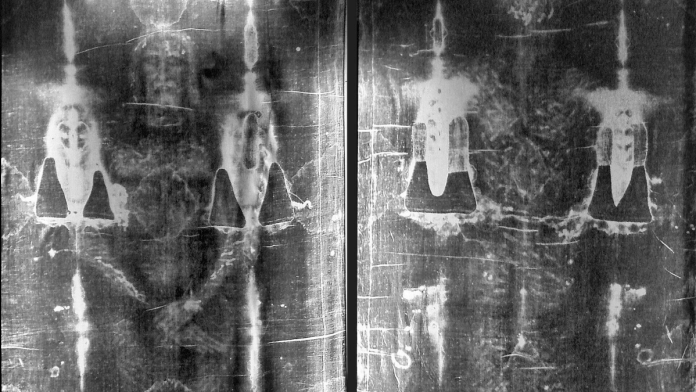



New Delhi: A recent DNA analysis of the Shroud of Turin reveals its Indian origins, which deepens the mystery around the 4.4 metre long linen cloth, which many believe belonged to Jesus Christ.
The study, titled ‘DNA Traces on the Shroud of Turin: Metagenomics of the 1978 Official Sample Collection’, posted on Bioarxiv, found that about 40 per cent of the human DNA found on the shroud is from Indian lineages.
“The presence of approximately 38.7 per cent of Indian ethnic lineages could have resulted from historical interactions or the Romans importing linen from regions near the Indus Valley, associated with the term ‘Hindoyin’ found in rabbinic texts,” the study reads.
The shroud is currently housed in the Cathedral of Saint John the Baptist in Turin, Italy and is one of the most studied Christian artefacts featuring bloodstains and injuries consistent with the crucifixion. Its documented history dates back to 1354.
The new DNA analysis has added an unexpected layer to the enduring mystery of the shroud and reinforces how centuries of handling and environmental exposure have shaped the cloth’s biological profile. The findings neither conclusively establish the shroud’s age nor settle debates over its authenticity, but they highlight the artefact’s complex journey across regions and cultures — keeping alive questions about whether it is a relic of Christ or a product of medieval devotion.
According to researchers from the University of Padova, the yarn used to make the shroud may have likely come from ancient India’s Indus Valley.
“It is potentially linked to historical interactions associated with importing linen or yarn from regions near the Indus Valley,” the study concluded.
The researchers also identified a range of different animal, plant and human material contaminating the shroud over several years.
The DNA traces found on the Shroud of Turin suggest the extensive exposure of the cloth in the Mediterranean region and the possibility that the yarn was produced in India.
The research says the presence of abundant Mediterranean endemic red coral, cultivated plants, and domesticated animals such as pigs, chickens, and dogs, provide a fascinating glimpse into the diverse biological sources of the contaminants that have accumulated on the shroud over time.
“The diversity of animal and plant species identified details the significant environmental contamination of the Shroud that likely occurred in recent centuries,” the report read.
Also Read: Punjabi Christian pastors are mixing Bible with bhangra. Making Jesus relatable
Mystery of the Shroud of Turin
The history of the shroud has been a mystery for centuries. Scientists and researchers are not on the same page when trying to pinpoint its origin. Researchers, including experts from various fields including genetics, archaeology and forensic science, as well as Christian studies.
The Shroud of Turin remains a subject of intense scientific and historical debate.
The 2025 study offers compelling evidence that the shroud was not created by contact with a real person’s body but was actually crafted as a form of medieval religious art.
The recent study on the shroud used X-ray analysis and DNA testing. Researcher Raymond Rogers concluded that the vanillin test suggested an age of 1300 to 3000 years for the shroud. Giulio Fanti, professor of mechanical and thermal measurement at the University of Padua, used spectroscopic and tensile tests, yielding similar findings.
However, the recent research could not help date the age of the shroud.
“Nevertheless, our findings constitute a novel and significant contribution to the field, thoroughly elucidating the biological traces left by centuries of social, cultural, and ecological engagement,” the research stated.
(Edited by Insha Jalil Waziri)