





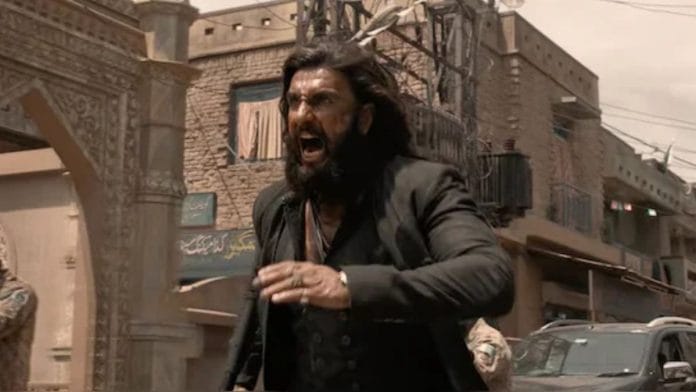



New Delhi: Director Aditya Dhar recreated the Pakistani city Lyari with 500 people on a six-acre set in Bangkok—and not in India. As the sequel is set to release, many of Mumbai’s rules will come into focus again and kick off conversations about why such blockbusters are being shot abroad.
During the Mumbai leg of the shoot earlier this year, the Brihanmumbai Municipal Corporation (BMC) imposed a Rs 1 lakh penalty, recommending forfeiting a Rs 25,000 security deposit. After the filmmakers used an unauthorised drone during the shooting, an FIR was filed on 1 February at the MRA Marg Police Station. The film was being shot in Mumbai’s Fort area, portraying a crowded alley in Pakistan. The second incident led to Dhar’s production house, B62 Studios, being blacklisted by the BMC. The makers were accused of flouting fire safety regulations.
Film shooting in Mumbai can be a trying experience, with a host of rules, permissions, payments, and penalties to navigate. While the city has advantages of unionisation, single clearance window and the fact that it is home to Bollywood, the BMC rules and penalties make a filmmaker think twice before setting up a shooting plan. This bureaucratic red tape has prompted a flurry of makers to states such as Madhya Pradesh, Uttar Pradesh and Rajasthan. Those with more expendable budgets prefer to jet set to neighbouring countries such as UAE and Thailand, along with the ever-dependable Europe.
“The issue is film schedules depend on a variety of factors, from actors’ schedules to permissions. Sometimes, if you forget to take some permission, the shoot is delayed, and BMC can even take away your equipment. So one has to be very stringent with having everything on a ledger,” said producer Mohit Shah, part of projects such as Talaash (2012), Dil Dhadakne Do (2015) and Rana Naidu (2023).
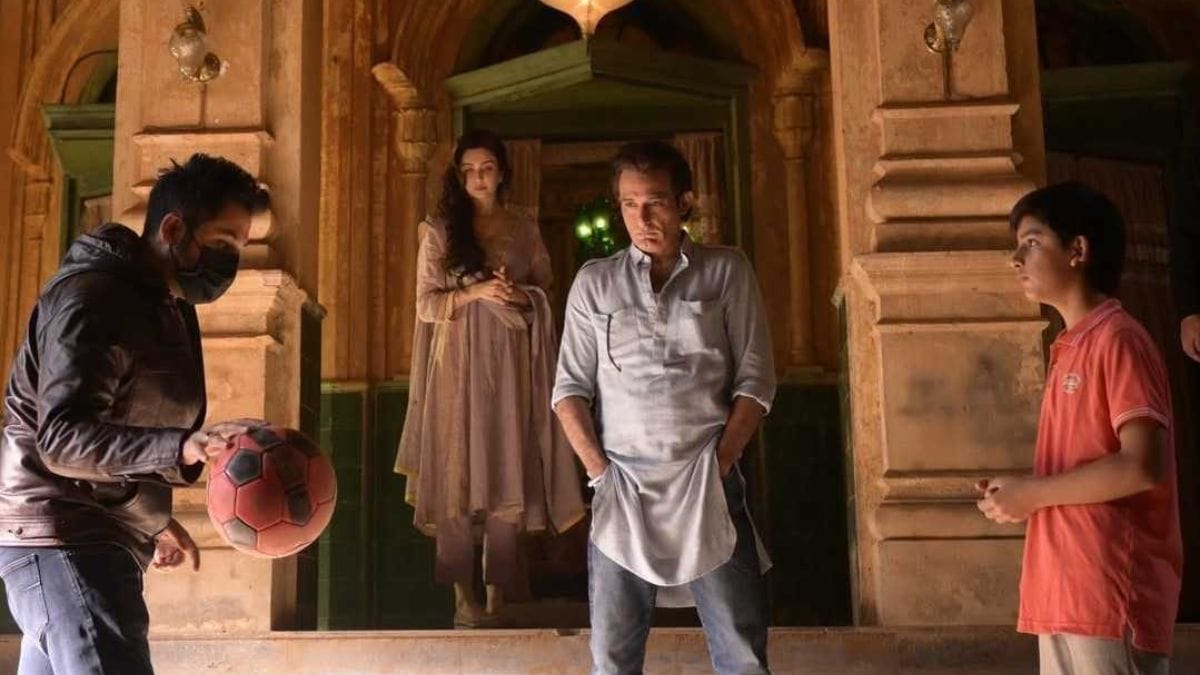
Ek Tha Tiger (2012) and Baaghi (2016) were shot in Thailand, a popular destination for Indian filmmakers to shoot action sequences. Between January and August 2024, 35 Indian movies were shot in Thailand, with an investment exceeding 265 million baht, ranking second among all foreign films made in the country. Thailand also offers a 15-20 per cent rebate to Indian films shot in the country, making it a prudent choice budget-wise.
The rules, permissions and gaps
The Devendra Phadnavis-led Maharashtra coalition government announced the single window clearance system for film shooting permissions in 2024. The BMC receives requests for shooting on the Municipal and private premises at its ward offices, and these are examined by the Assistant Commissioners and other authorities of the Corporation. Permissions for shoots can be taken on a short notice of 24 hours.
A BMC circular outlines the requirements for submitting an application, which includes N.O.Cs from both local and traffic police, the property or location owner, in case the property is not in the ownership of the municipal body.
Though part of the Fadnavis government’s ease of business reforms, the rules list is still cumbersome.
In the case of a temporary structure, a layout plan signed by the applicant’s authorised signatory, along with Structural Stability certificate from licensed structural engineer, is required. A fire compliance certificate from an agency registered under the Maharashtra Fire and Life Safety Act is also mandatory under the rules.
The applications are accepted for a minimum of 12 hrs shift, and permission is granted for a continuous 12 hrs shift. Shooting permission for night is only issued for Municipal roads and footpaths between 6 am and 8 pm. Municipal schools, gardens, and cemeteries etc are not part of these permissions.
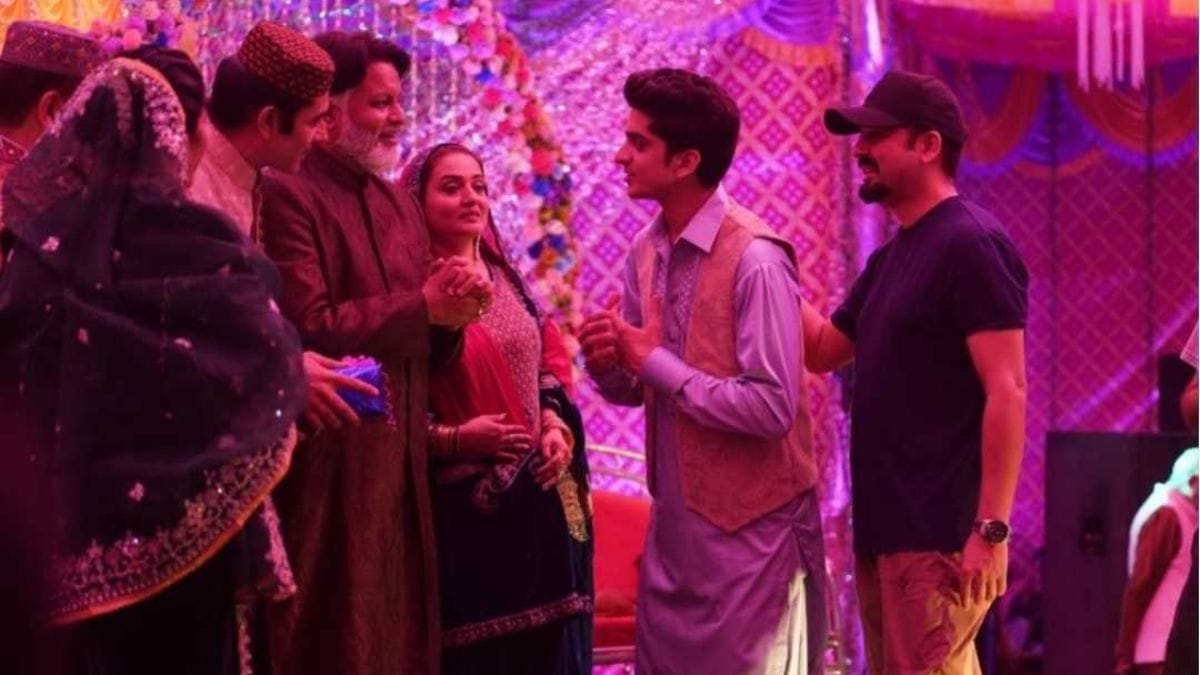
“My reason for not shooting in Mumbai is that most of my films have to be shot at night. So I prefer Punjab. BMC rules are pretty stringent when it comes to heritage properties and also night shoots,” said producer and director Honey Trehan, who directed the Netflix film Raat Akeli Hai: The Bansal Murders (2025), Punjab 95 (2016) and produced A Death in the Gunj (2016).
When it comes to shooting in any religious premises, authorities associated with the place could also ask for a complete script from the makers before the permissions can be obtained. This results in makers opting for realistic sets rather than ‘real’ locations.
Apart from the red tape, night shoots bring their own set of on-ground logistical and social challenges. Managing artificial lights and crowd control can prove to be difficult for filmmakers, particularly when big stars are involved.
“We were shooting for Talaash (2012) near the red light district, and had to use these massive lights. On one hand, there were many people waiting to catch a glimpse of Aamir Khan and Kareena Kapoor, and on the other, the sex workers were upset with us because the shoot was disrupting their business,” said Shah.
The makers had to transport ‘police vans’, which were created by modifying gypsies. But they couldn’t just be driven to the shoot location. That would have broken some rules of the local administration.
They first had to be painted with fake number plates, covered with newspapers to move them around the city, so that they are not confused with ‘real’ police vehicles. Once the shoot was over, the exercise was repeated.
“At some point, the police said that cars cannot be covered in newspapers and moved. So nowadays we load them up in a truck, move them to the location, shoot with them, and then load them back and go back. But it is an extremely expensive process,” said Shah.
The BMC’s film policy states that the fire brigade reserves the right to modify, add to, or delete these fire safety conditions depending on the situation.
“Generally, we keep a fire engine on standby if we can, but it can also be a Catch-22 situation because fire engines don’t want to be deployed on set because what if there’s an emergency somewhere else,” said Shah.
During Dhurandhar’s shoot, multiple fire torches were used, for which permission was not obtained.
Fire accidents are a major hazard on film sets. In 2021, a fire broke out after the mahurat of Om Raut’s Adipurush in Mumbai, while in 2022, a fire in the Andheri West film set led to the death of a crew member. In 2025, another fire broke out on the sets of the popular TV show Anupamaa in Goregaon East.
Making an example
Mumbai also has a more structured union system for film sets. No crew member, no matter which department he or she belongs to, can be hired unless they are members of a recognised union. While a union membership ensures the safety of the crew, covering wages, working conditions, it can make hiring a foreign crew challenging.
“The rule is you have to hire a corresponding local talent for every foreign talent you bring in. For instance, if you hire a foreign action director, you will also have to hire an Indian one for the same film,” said Trehan.
After Dhurandar’s production house was blacklisted by the BMC, the All Indian Cine Workers Association (AICWA) issued a strongly worded statement.
“For several years, AICWA has consistently raised serious concerns that many production houses continue to ignore mandatory safety norms, legal regulations, and basic human protection on shooting sets. Due to such gross negligence, every year several workers lose their lives, while many others suffer severe injuries caused by fires, electric shocks, and collapsing or unsafe sets,” said Suresh Shyamlal Gupta, President, All Indian Cine Workers Association (AICWA).
But industry insiders say a production house becomes the target of strict action only when the violation is serious. “Or in Dhurandhar’s case, where the production house has made a lot of money. BMC also wants to show that it can make an example out of someone,” said a line producer on condition of anonymity.
Arms and action movies
With a flood of action films and OTT crime series being shot in India, the demand for dummy weapons in the industry has gone up. But the rules around dummy weapons procurement have only gotten more stringent. The Arms Rules, 2016, brought the formerly unregulated prop weapons under the ambit of arms licensing.
“We have to seek permission for import from both the customs officer and the Directorate General of Foreign Trade. This has led to delays,” says Vishal Tyagi, a Mumbai-based dummy weapons and SFX supplier to Bollywood.
Tyagi has been waiting for a set of imported guns to be certified since November 2020. “Then, there are heavy customs duties. At this rate, how can we hope to upgrade ourselves to international standards?” he asked.
The 2016 act mandates that manufacturers of firearm replicas keep no more than 50 samples of each type at any given time. It also requires that a sample of each type be inspected by the Directorate of Inspection, Department of Defence Production, Ministry of Defence, with the cost borne by the manufacturer.
The licensed capacity for manufacturing replica muzzle-loading firearms is restricted to a minimum of 250 pieces per month and a maximum of 500 pieces per month.
The act has also mandated that the import of replicas of contemporary or modern firearms is only possible after submission of a certificate of innocuousness from the manufacturing company of the country of export. An undertaking from the importer that the replicas of the firearms to be imported are incapable, even with modification, of expelling or launching a shot, bullet, or projectile by the action of an explosive charge, compressed air, or any other gas.
“It’s difficult to meet the demand from makers for weapons that are not made or found in India,” said Tyagi, who has supplied products for films like Bang Bang (2014) and Border 2 (2026).
The bureaucratic red tape has ensured filmmakers make a beeline for foreign destinations such as Georgia, Spain and the Czech Republic.
Also read: Dhurandhar 2 album is very Punjabi. There are no item songs
UAE and Thailand for ease of filming
Dhar’s B62 Studios recreated Lyari on a massive custom-built six-acre set in Bangkok. Designed by the team of production designer Saini S Johray, the set was brought to life with the help of more than 500 Indian and Thai artists, many of whom had previously worked on popular projects such as The Family Man and The Night Manager.
While the original plan was to build the set in Mumbai, unpredictable weather conditions forced the team to rethink their approach. And Thailand’s cooperation and incentives to Indian filmmakers to shoot made the country an attractive proposition.
“When we shot Bang Bang (2014) (in Abu Dhabi), an entire area was cordoned off, and it was the main road. No one comes to check on the shooting or ask for permissions after the initial permissions have been granted. That makes for a smoother experience,” said Tyagi.
From Tiger Zinda Hai (2017), Race 3 (2018), to Pathaan (2023), several action films have been shot in the UAE. The Abu Dhabi Film Commission (ADFC) offers a 35 per cent cashback on films shot in the region, with eligible productions able to claim up to 50 per cent Enhanced Rebate on qualifying spend in Abu Dhabi, based on a clear set of criteria linked to a points system.
“When you cannot just save on production costs, or get more ease of shooting, and also show a foreign backdrop if needed, a production company will naturally want to shoot in a different country. Plus, one can easily now erect sets, and does not need to shoot in Mumbai or studios to achieve ‘realism’,” said the line producer.
The additional cost is usually the travel and accommodation of the film’s cast and crew, which can be reduced by a lot when the shoots take place in Mumbai. So it becomes a game of permutations and combinations in budget allocation.
One of the other hindrances to a smooth shooting experience is politically affiliated groups disrupting shootings, with demands for bribes, or even a local strongman making enough noise and ruckus to make the producer pay up to keep up with the schedule.
Not every filmmaker can afford to take the next flight to a foreign destination. Many opt to shoot in other parts of India instead of Mumbai. Among states in India, the most popular among filmmakers for shooting their films and web series are Madhya Pradesh, Uttar Pradesh, Rajasthan and Punjab.
“It was Prakash Jha who should be credited with making Bhopal a professional space for film shoots. Over the decades, she shot films in Bhopal, which would double up as Bihar, and now, from junior artistes to other crew, everyone is trained and extremely professional. He has created a film city out of Bhopal,” said Trehan.
The Madhya Pradesh government offers a financial subsidy between Rs 10 lakh and Rs 10 crore on shooting feature films, TV shows, web series and documentary shoots. The state government also provides a 40 per cent discount on accommodation of film crew in MPSTDC Hotels and other services.
“There is the risk of untrained professionals entering the SFX and dummy weapons market in these places because shootings have increased there. For makers, it’s cheaper to hire local talent than to fly the crew from Mumbai. So there is a real risk of an accident waiting to happen in many shoots, even more than usual,” said Tygai.
While Mumbai may have some of the more stringent rules, places like Hyderabad and Chennai also have their own rules in place for the respective film industries located in the cities. But there are differences, like Hyderabad has no time limitations when it comes to shooting, with permissions given for 5 days of continuous shoot, followed by a mandatory break of a day.
Filmmakers often opt for Hyderabad to shoot their films because of the sheer number of studios in the city and the facilities they provide.
“In Tamil and Telugu industries, animal rights groups are extremely active when it comes to film shoots, to ensure no animal is harmed. But we do not have time restrictions. In some other industry, there will be a different issue. You have to navigate permissions everywhere,” said Hyderabad-based producer Sudheer Edara.
(Edited by Ratan Priya)