








New Delhi: A millet that farmers grow for their cattle. Sausages made with animal blood. A kheer sweetened with mahua flowers foraged from the forest floor. Foods that Dalit and Adivasi families have eaten for generations, out of necessity, and usually behind closed doors, are now appearing in restaurant menus and books.
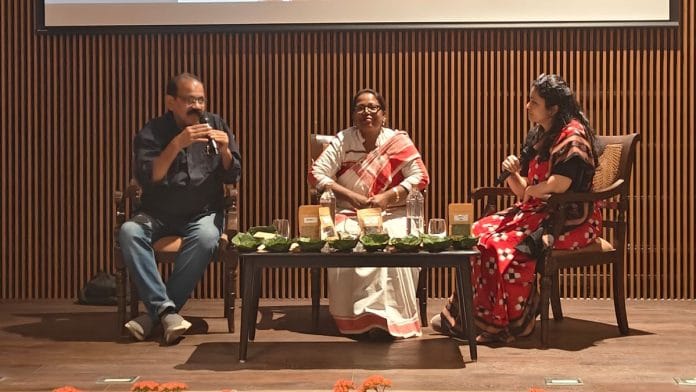
At Humayun’s Tomb Museum, Dalit writer Shahu Patole and Adivasi food entrepreneur Aruna Tirkey spoke about how culinary traditions and recipes from their communities are disappearing, and their initiatives to document them— even as the internalised stigma around these foods lingers.
The talk, held on 27 February as part of the public lecture series The Heritage Dialogues, was titled ‘Pride and Prejudice on the Indian Plate: What We Can Learn from Dalit and Adivasi Cultures Today’.
For Patole, author of The Dalit Kitchens of Marathwada, culinary practices such as meat drying or eating the carcasses of certain animals have long been obscured by caste taboos and politics.
“Adivasis and Dalits are never vegetarian,” said Patole. “Dalit food is about survival. Whatever my grandparents ate to survive is why I am still alive. My simple objective was to find what my community ate, not to criticise other communities or castes.”
Tirkey’s efforts to revive the food traditions of her Oraon community are hands-on. In Ranchi, she runs Ajam Emba, a restaurant and training centre specialising in Adivasi ingredients and cooking traditions. It’s part of a movement to champion slowly disappearing Adivasi food practices.
For anyone living in an Indian city, the menu would seem exotic, with ingredients such as mahua flowers, jirhul flowers, roselle, and dozens of local leafy greens. Seasonal offerings include dishes like madua (finger millet) momos, rice tea, and desi chicken bhaat.
Over the course of two hours, the discussion ranged from identity and discrimination to sustainability and food supply chains.
Also Read: ‘Our meals remain in the shadows,’ says writer Shahu Patole, author of Dalit Kitchens of Marathwada’
A new life for gondli
One of the accomplishments Tirkey is most proud of is reviving gondli, a type of millet, through her restaurant. The grain, which was once seen as unfit for human consumption, now appears in dishes such as gondli kheer and millet momos at her restaurant.
“When I went to buy gondli in the local market years ago, I was told it is fed to cattle,” said Tirkey.
That encounter gave Tirkey the idea for Ajam Emba. She realised she wanted to bring back heirloom grains rooted in local food traditions while also creating livelihoods. The restaurant was launched in 2017, well before fancy millet preparations became a staple of state banquets for foreign dignitaries.
“Now with the millet revival, its prices have soared, and it’s become a delicacy,” she added. “These ingredients have a low carbon footprint, require little or no inputs, and include a wide variety of uncultivated foods.”
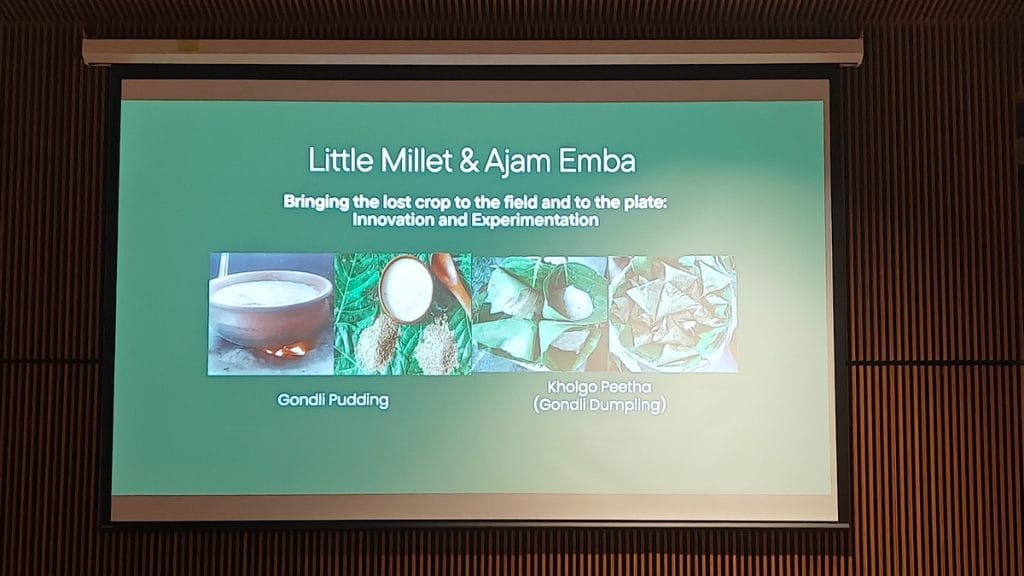
At the restaurant, food is served in reusable earthen pots and plates, as well as biodegradable leaf plates. Takeaways are packed in raw green sal leaves. Everything is sourced from local growers, and the kitchen is managed entirely by tribal women and girls.
“Our approach is to link indigenous food revival with female entrepreneurship and employment, making it a sustainable business model,” said Tirkey.
Her endeavour is also to instil pride in local food traditions, and create awareness about hyperlocal ingredients and cooking practices — something Patole’s book also attempts.
A glossary of Dalit food
In 2015, Patole’s book was published as Anna He Apoorna Brahma (‘food is an incomplete creation’). The title plays on the popular Marathi proverb Anna he poornabrahma, which means food encompasses all of creation. The book was later translated into English by Bhushan Koragaonkar as The Dalit Kitchens of Marathwada in 2024.
“I wrote my book in Marathi, and no one cared. But when it came out in English translation, everyone called it a great literary work,” said Patole.
The recipes in the book are foods everyone in his community would recognise, according to him. Many even asked why he needed to write about them. But for Patole, it was about creating a glossary that no one else had bothered to compile.
“I looked at Hindu mythological texts where the four varnas have been mentioned, along with what each should eat. We come under tamasic, perhaps even below that,” Patole said. “A common proverb in these texts says you become what you eat. But most people do not have a choice in what they eat, and yet certain qualities are attached to each food group. I have tried to bring together these different ideas in my book.”
One chapter describes hunting rabbits and ghorpads (monitor lizards) for their meat at the start of the monsoon, as well as eating the eggs of pigeons, quails, ducks, and peahens when they could be found. Preparation methods and cultural meanings are described in sensory detail.
Also Read: Kerala beef story is more activism than accuracy today. We prefer buff anyway
Through Savarna eyes
Dalits often look at themselves through the eyes of the upper castes, according to Patole. Many disavow the community’s traditional practices.
“Everyone wants to hide, and say things like ‘We don’t eat all that’. There is an aspiration to be like the upper castes. Eating their food will not make us them. As long as there is a caste system, no matter what you eat, you cannot change your caste,” said Patole.
Tirkey agreed.
“Since gondli has been associated with poverty, local people will grow and sell it, but they will still not eat it,” she said.
At the same time, some of these foods are getting new traction. Many even romanticise the ‘forbidden’ foods of Dalits, Patole said, but would not consume them openly.
“People say they ate blood sausages or recipes made with animal blood in London. I tell them, please try it here. Then let’s talk,” said Patole.
(Edited by Asavari Singh)