








New Delhi: An ancient griddle discovered in China’s Henan province could throw back the history of pancakes to 5,000 years ago.
The griddle was unearthed from the Yangshao site in Henan province. The recent archaeological find offers a rare material connection between a modern breakfast and China’s ancient culinary past.
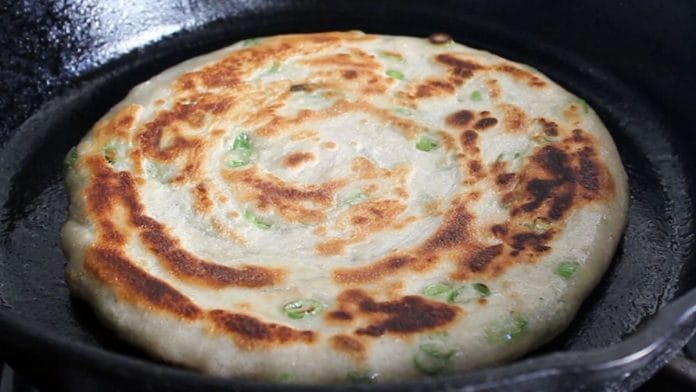
Pancakes are an integral part of Chinese legends, folklore, paintings and poems. This is originally a street food in China, made from a wheat-flour batter, cooked on a griddle, and filled with ingredients like eggs, scallions, cilantro, and various meats or vegetables, and often served as a breakfast or snack. Pancakes are now everywhere, on breakfast menus worldwide.
The discovery supports literary and artistic traces of thin griddle-cooked breads in China’s long cultural record.
The folklore traces the dish back to the creation myths surrounding the goddess Nuwa, the mother goddess who, according to traditional stories, mended the broken heavens.
According to a South China Morning Post report, it was said that the patches made by Nuwa were the earliest form of Chinese pancakes.
The report mentioned another folk story, according to which pancakes were invented by Xiang Yu, a warlord who joined in the rebellions that led to the end of the Qin dynasty.
“The pancakes were said to be an economical ancient food popular among poor people,” reads the report. The Chinese word for pancake is jian bing.
Chinese poets have also written about pancakes. The Collected Stories from Tang Times, written by Wang Dingbao, documented that poet Duan Wei was especially productive when eating pancakes. He was able to finish a poem whenever a new pancake was cooked at a gathering of poets.
Ancient Chinese paintings also feature pancakes. Writer Pu Songling (1640-1715) wrote that a well-cooked pancake is the colour of rosy clouds during dusk.
During the Yuan dynasty (1271-1368), when China was ruled by Mongols, pancakes with fillings were invented.
Also read: Delhi food has declined. From Mughals, British to modern era
Discovery from Neolithic site
The archaeological site of Yangshao, from where the material unearthed is associated with one of China’s well-known Neolithic cultures.
It existed along the middle reaches of the Yellow River in China from around 5000 BCE to 3000 BCE. This culture saw social and technological development in the region with advancements in agriculture, architecture, and crafts.
The site was first excavated in 1921 by the Swedish geologist Johan Gunnar Andersson
Earlier, pottery and textile materials were also unearthed from this site. The recent griddle adds a culinary dimension to that archaeological picture.
This discovery is significant as it underscores continuity in culinary practice from Neolithic village life to contemporary tables, showing how a simple method of cooking has persisted and evolved.
In 2022, archaeologists uncovered a prehistoric civilisation at Yangshao—a dig excavated the foundations of an ancient house, some 5,000 years old.