





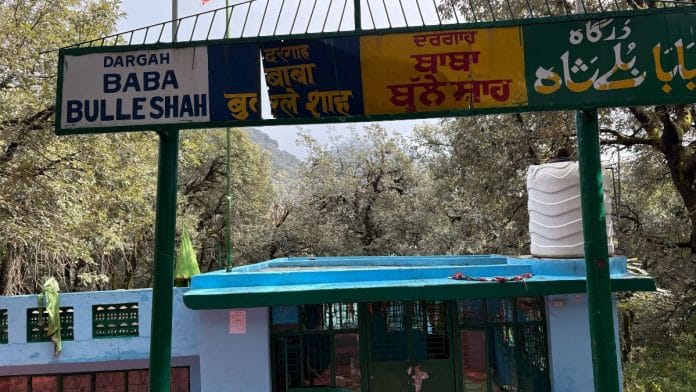



Mussoorie: On 24 January 2026, Mussoorie witnessed something it had never seen before. A group of 25-30 men, allegedly drunk, armed with hammers, iron rods, and shovels, vandalised the century-old shrine of Sufi poet Baba Bulleh Shah.
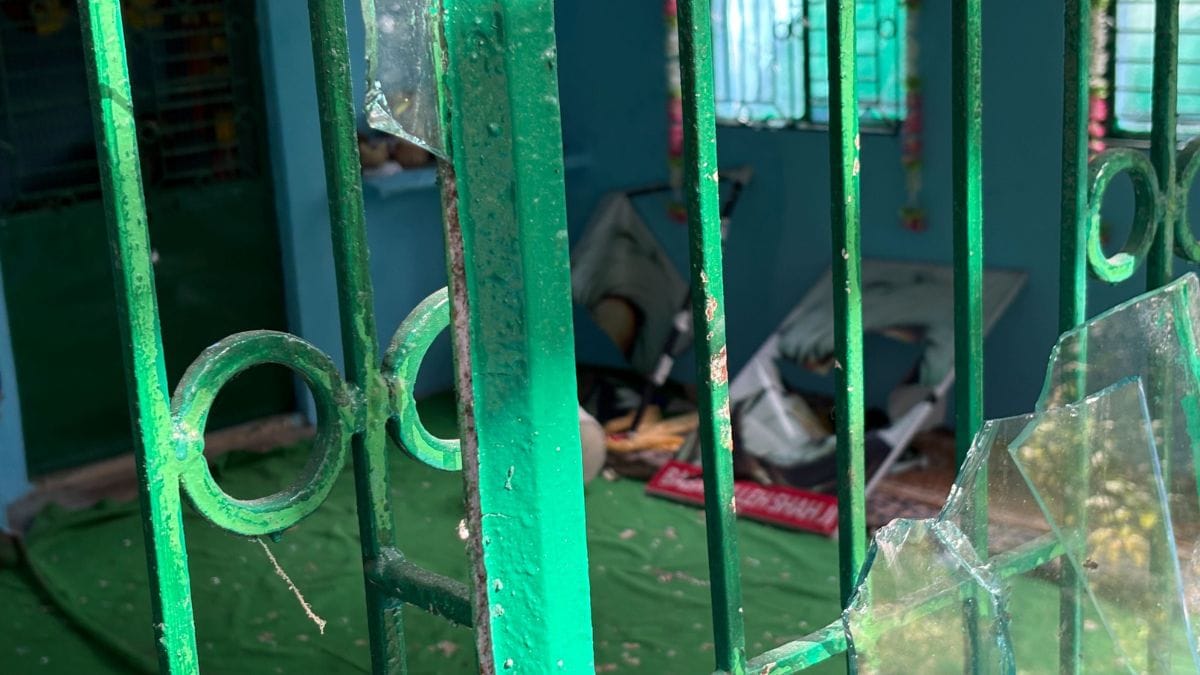
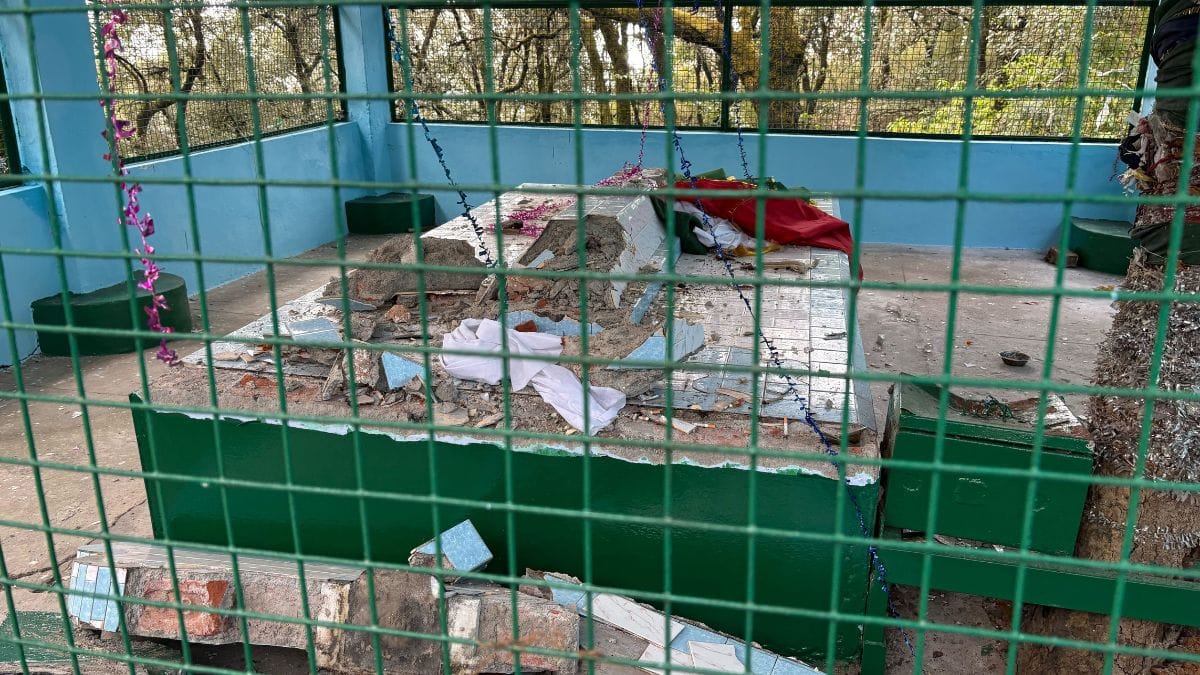
Pages of the Quran Sharif were torn, the donation box was looted, and two nearby shrines were also vandalised. Inside the caretaker’s sleeping area, posters of Bulleh Shah lay torn, the clock and bed smashed, and glass shards littered the floor. Even the colourful plastic roof decorations were not spared.
“It was a disgusting act—they took money from the donation box, tore the Quran, broke the chandelier, threw away the cloth covering, stole offerings, silver items, and even ripped up the Kalma,” said a 34-year-old Baba Bulleh Shah Committee member.
But this incident did not come without warning.
A few days ago, in a two-minute video, Lalit Sharma, the Uttarakhand state president of Hindu Raksha Dal, wearing saffron shawl and a red cap, warned that if authorities do not remove the “illegal” structure by Tuesday, 27 January, his group will demolish it themselves. Calling Uttarakhand “Devbhoomi,” he said there is no place for Bulleh Shah, and urged action to protect Sanatan interests.
Despite the deadline he set, the shrine was vandalised three days earlier, on 24 January.
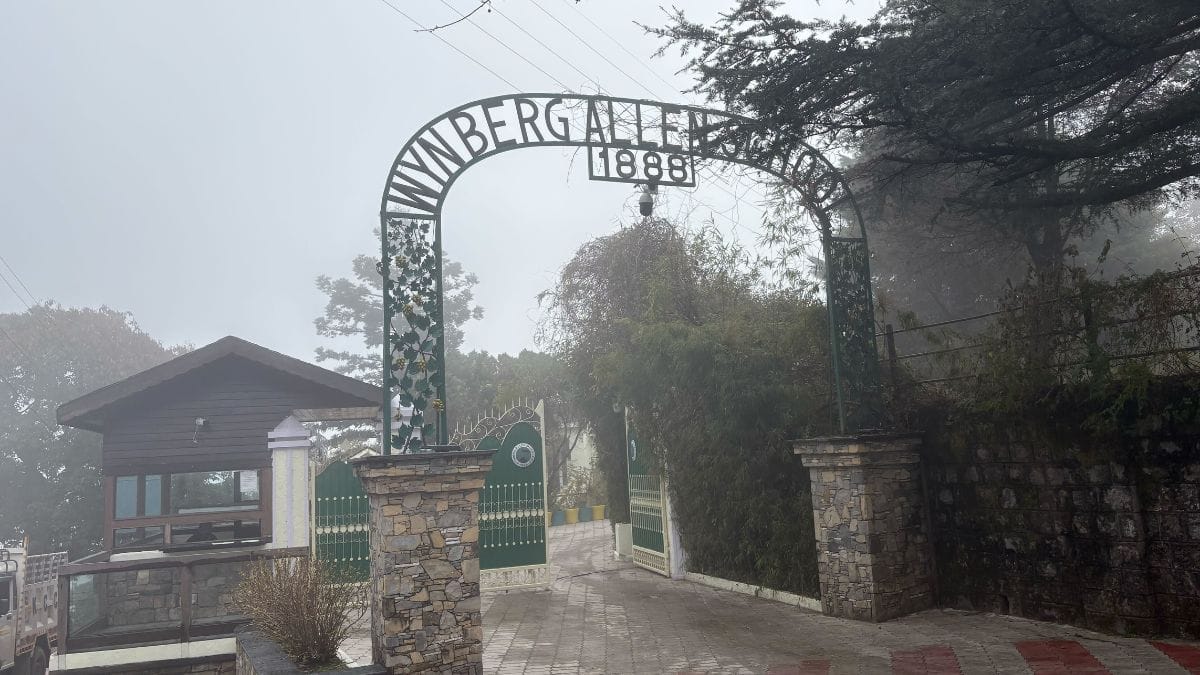
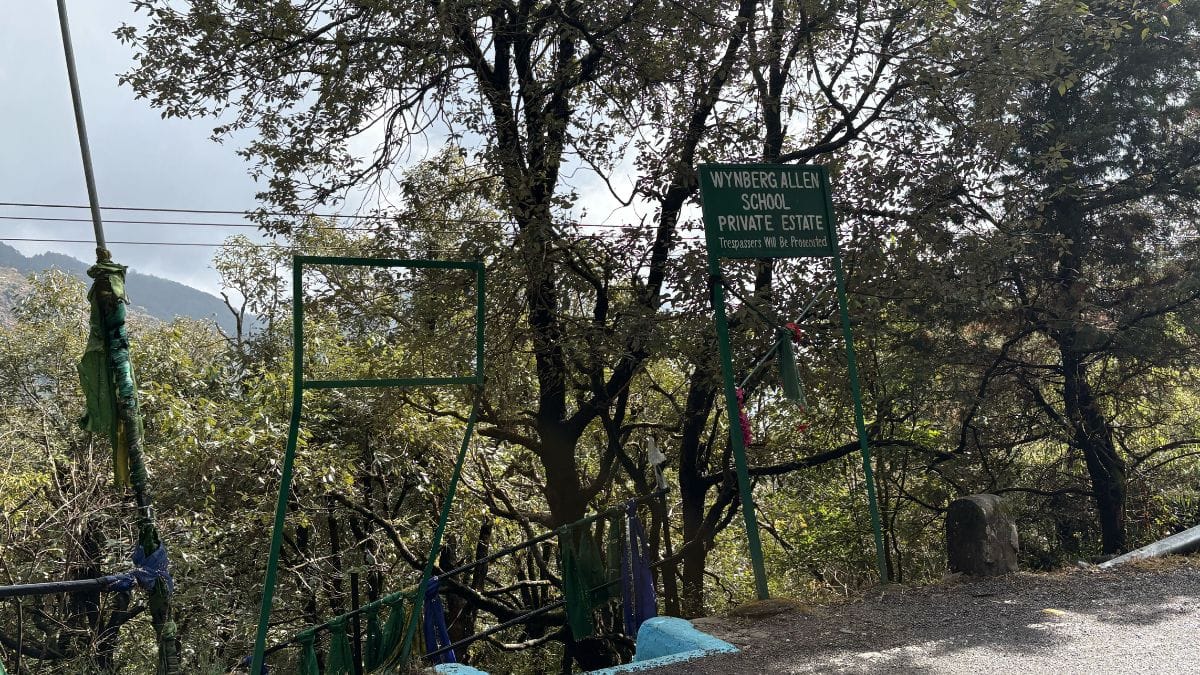
The shrine is built on land owned by Wynberg-Allen School. The group trespassed onto the premises, vandalised the structure while chanting “Jai Shree Ram”, and filmed the whole thing heroically.
These videos were later circulated widely on social media, showing the scale and intent of the attack.
Hindu Raksha Dal chief Pinky Chaudhary claimed responsibility, saying that his Uttarakhand unit had “sent Bulleh Shah back to Pakistan”. Similar celebratory posts surfaced across Facebook, Instagram, Reddit, and X.
Political reactions followed.
“BJP leaders pose in mosques abroad and roll out red carpets for Middle Eastern sheikhs. But back home, they watch with glee the shrine of Sufi poet Baba Bulleh Shah being vandalised. This hypocrisy is not accidental but deliberate,” said Mehbooba Mufti, leader of the Jammu and Kashmir People’s Democratic Party.
But back in Mussoorie, residents, members of the Baba Bulleh Shah Committee, and local political leaders are questioning why the police have been unable to arrest the perpetrators yet. How much influence do these vandalisers have? The residents expressed concern that in a democratic country, such acts of vandalism can occur with apparent impunity, raising troubling questions about accountability, law enforcement, and the protection of cultural and religious heritage.
“People no longer hide. They openly challenge authority,” said Aslam Khan, 54, secretary of the Mussoorie branch of the Communist Party. “Activities like this have been happening in Uttarakhand for years, especially in Dehradun. But Mussoorie has never seen anything like this. Mussoorie was once our ‘guldasta’—our haven.”
Historical records
“We have no documentary proof of when or how this shrine identity emerged.”
Akram Khan, a 30-year-old resident of Mussoorie, was in Dehradun when he heard the news, and it took him three hours to reach home. By the time he arrived, the damage had already been done. Police were on the scene, along with members of the Bulleh Shah Committee and the caretaker. Although Khan did not visit the shrine regularly, he understood its importance to people of all faiths and felt compelled to stand with them. He stayed at the site until 4 p.m.
Walking through the lanes near Wynberg-Allen School, established in 1888, Khan was now engulfed in a deep sense of guilt. “When the threat came, no Muslim or Hindu came forward to protest—even I did not,” he said.
He later filed a case under Bharatiya Nyaya Sanhita (BNS) sections 196 and 298, but “no arrests have been made by police yet.”
The land has always been owned by the school. The shrine itself was constructed later, and for decades, people of all faiths have visited it.
“Every year, an Urs—religious fair—has been held here for the last 45–50 years, attracting devotees from across Uttarakhand,” Khan said.
Whether Bulleh Shah actually visited the site remains uncertain to many, but local people have developed their own theories.
“It’s possible he came here, and people built the mazaar then,” Khan said.
The school, however, provides a more documented history. According to the bursar, Ian Deepak Chauhan, the mazaar is around 70 years old, not 100. In the 1940s, this area was known as Wayside Estate, part of a notified forest and jungle. The school owns about 240 acres, mostly forest.
Chauhan recounted historical records. An Afghan ruler, Amir Dost Mohammad, was imprisoned in the region, and two of his Muslim servants died in the 1840s. The then landowner, Alfred Powell, permitted their burial on this land—the only graves with documentary proof. At the time, the area also had a boys’ school and a girls’ school, both dating back to 1888.
Over time, encroachments began. Additional mazaars appeared, and the site gradually became associated with Bulleh Shah. “We have no documentary proof of when or how this shrine identity emerged,” Chauhan said. “As a school, we do not know when Bulleh Shah’s name became linked to this place.”
To protect their property, the school installed fencing at the last grave point in the 1990s, preventing further burials. But they continued to allow the annual Urs, but strictly as a one-day observance, not an expanding religious site.
Chauhan emphasised that devotees of all faiths—Muslims, Hindus, Sikhs, Christians—visit the shrine, especially on Thursdays.
“As a school, we do not want graves or shrines to become part of a political process,” he said. “Ideally, the land should be used for classrooms or playgrounds, not disputed religious structures. Now, with fresh threats of demolition, any decision to relocate or remove the shrine will be institutional, not emotional.”
Under devotees’ care
“When the mazaar is repaired, we will continue serving the shrine, as we always have.”
The path to the shrine is lined with blue-painted stairs, with green clothes tied along the way. At the bottom, there is a small area where two mazaars are located, and just a few steps away, five to six graves.
Every Thursday, the caretaker would visit from 9 am to 6 pm; the rest of the time, the shrine remains closed. In the mornings, he would light diyas and clean the place.
The caretaker works in the private sector in Mussoorie. His family has been looking after the shrine for 30–35 years. Before him, his father was on the committee and took care of it. Over the years, the family built connections through the shrine, as people from across the country would also visit.
On the day of the attack, he received a call that the shrine was being destroyed. It had snowed on Friday, and heavy traffic on Saturday prevented him from reaching the site immediately. He recorded videos of the damage and shared them on WhatsApp groups.
“It hurts to see this after all these years of dedication. But when the mazaar is repaired, we will continue serving the shrine, as we always have,” he said.
Before the incident, local Right-wing groups, including the Vishwa Hindu Parishad (VHP) and Bajrang Dal, filed complaints claiming the shrine was illegal. An official inquiry by the forest department was made, which concluded—just days before the attack—that the shrine stood legally on private school land, not government or forest property.
The Baba Bulleh Shah Committee is headed by BJP leader Rajat Aggarwal, who described the incident as a deliberate attempt to disturb Mussoorie’s communal harmony.
“Originally, the shrine in Mussoorie was established by followers of Baba Bulleh Shah. Devotees who had faith in him built a small shrine here more than a century ago, as a place to worship and pay their respects. Over time, as his following grew, people from Punjab and other regions began visiting regularly, bringing offerings and contributing to the shrine’s expansion,” said Aggarwal.
Gradually, walls were built, and additional structures were added in memory of the saint. Aggarwal added that the school never objected to its maintenance or to the devotees’ activities, provided no permanent construction was undertaken.
The devotees have maintained the shrine themselves—painting it, taking care of it, and managing donations—while relying on the school for basic utilities like electricity and water. The school cooperated with the devotees’ needs.
On 25 January, Mussoorie police registered an FIR naming three accused—Hariom, Shivayun, and Shraddha—along with 25–30 unidentified persons. Charges were filed under BNS Section 196(1)(b) (acts affecting communal harmony) and Section 298 (defiling a place of worship).
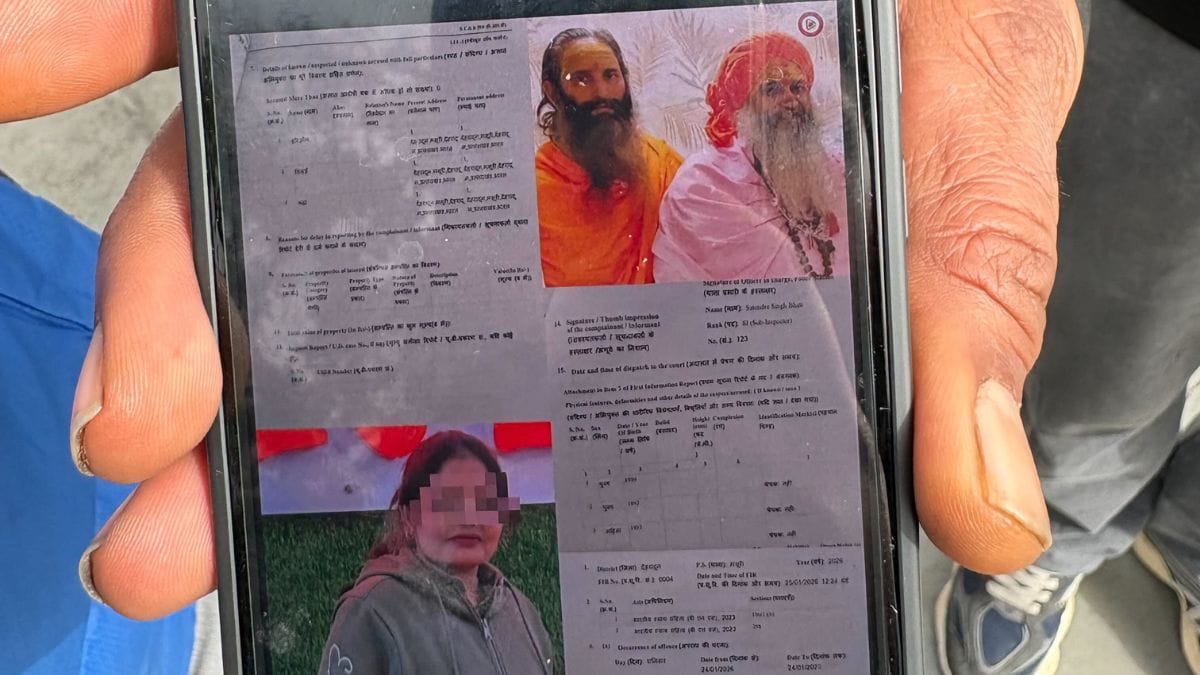
However, the offences are bailable.
SDM Rahul Anand said that while the perpetrators did not completely destroy the site, some damage was done. Since the incident, he said that police have been stationed at the shrine to prevent further incidents.
But when ThePrint visited the site, there were no police officers.
“Preliminary inquiries suggest that the perpetrators were members of the Hindu Raksha Dal. While it is unclear who exactly orchestrated the act, the intention appears to be to disrupt the communal harmony in Mussoorie. Most visitors to the shrine are Hindus, and even the committee managing the site is led by a Hindu,” said Anand.
As of now, the investigation is ongoing. Police say more suspects are being identified through video evidence.
Also read: Shahjahanpur inter-caste couple who jumped — ‘All the talk now is about us being Brahmin-Dalit’
Outsiders seeking publicity
“They may have sworn to divide and destroy. We have sworn to protect the country.”
Akram Khan expressed deep anger and disappointment over the state of Mussoorie. “Now, someone can openly issue threats, vandalise property, desecrate religious texts, challenge the police—and still walk free. They are the ones acting like terrorists,” he said. “It gives the impression that law and order have completely broken down.”
According to him, this is not a Hindu-versus-Muslim issue. “Ninety-nine per cent of local Hindus support peace. Even local BJP and Congress members agree this should be handled legally. The tension is being stoked by outsiders seeking publicity, not by the locals,” he said, referring to Lalit Sharma, who is originally from Uttar Pradesh.
Lalit Sharma admitted that members of his group vandalised the shrine, calling it an encroachment in “Devbhoomi” and justified the desecration as a response to ignored complaints.
In the area, Sharma is known for seeking media attention and has repeatedly made headlines for controversial actions. In April 2025, he faced an FIR in Dehradun for making inflammatory speeches threatening Kashmiri Muslim students, urging them to leave the state or face violence from his group. Earlier that month, he led members of his outfit in an attempt to evict a Muslim street vendor from a footpath and harassed bystanders who intervened in the vendor’s defence.
Aslam Khan pointed out that the real problem is inaction. When no action is taken, people feel emboldened. Even a small incident, if ignored, can escalate into something much larger–sparking fire, unrest, and fear.
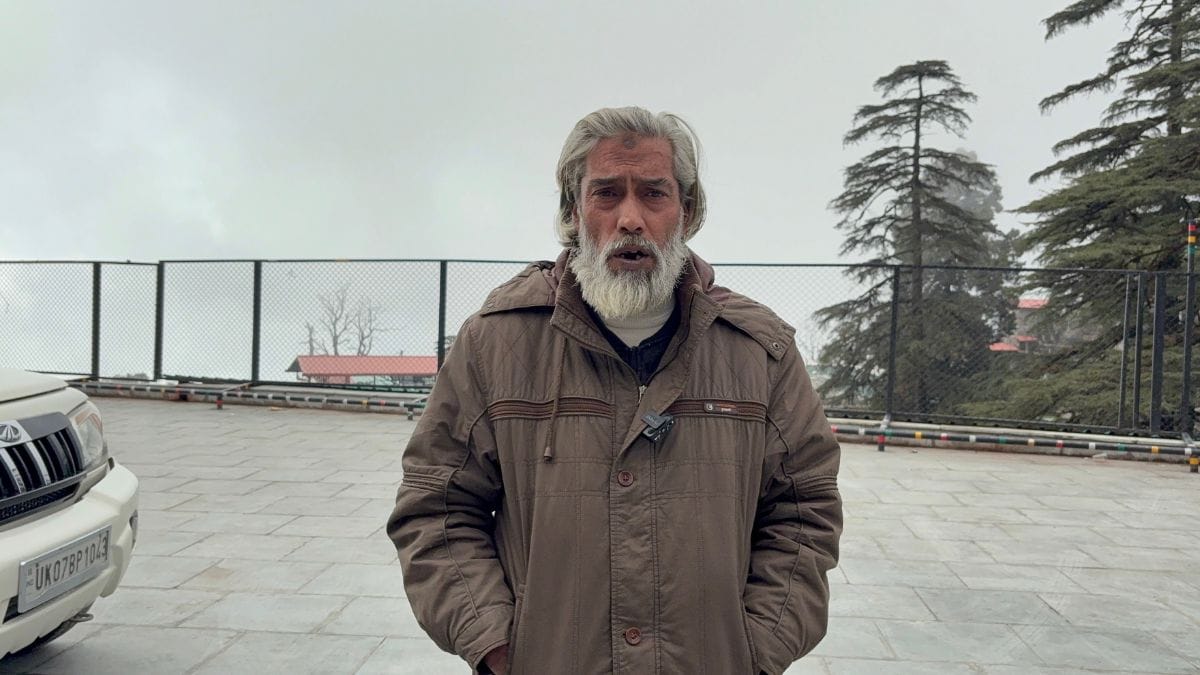
“But we cannot become like them,” he said. “We cannot abandon our values. They may have sworn to divide and destroy. We have sworn to protect the country. We fear no one—no goons, no mobs. Only Allah.”
Over a cup of chai at the historic Delhi Sweet Shop in Mussoorie, Khan and his friend Devi Godiyal, another Communist Party member, recalled a different chapter in the town’s history. The Uttarakhand movement of 1994.
“Back then, there was no Hindu, no Muslim, no BJP, no Congress,” Aslam Khan said. “We were one people, fighting together for a state. Muslims, Hindus, Sikhs—everyone stood united. That unity built Uttarakhand. Today, the very people who once fought for this country are being questioned. That is what hurts the most,” he said, shaking his head disheartenedly.
(Edited by Ratan Priya)