





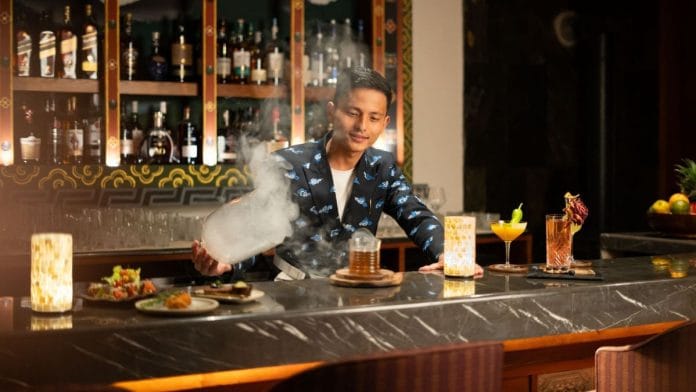



Paro: As Bhutan witnesses a rapid surge in Indian tourists, the Taj Group of hotels has made a comeback in the small Himalayan nation after almost three years. This time, however, the Taj Paro Resort & Spa offers beyond luxury and fine dining—it features a small hotel bar that strives to imbibe the taste of Bhutan in every sip.
Manned by 28-year-old Sajan Gishing, a Bhutanese self-taught bartender, who has one aim: “To share Bhutan through his craft.”
“A bartender is not only someone who mixes drinks but someone who creates experiences and shares stories. For me, bartending became a way to represent Bhutanese warmth and hospitality to guests from around the world. Every drink I serve is a reflection of where I come from and the pride I feel in sharing Bhutanese culture,” Sajan said.
Alcohol holds a deeply rooted, significant place in Bhutanese culture, serving as a gesture of hospitality, respect, and celebration in social and religious contexts.
The bar menu of Taj Paro is inspired by Himalayan botanicals, mountain herbs, and local ingredients, celebrating Bhutan’s natural abundance. The goal, as is clear through the menu, is to blend modern sophistication with Bhutanese soul, “offering guests a place to unwind, reflect, and connect after a day in the mountains.”
Sajan said that while he was not trained before joining the Taj, he was inspired by the idea that drinks, much like food, carry a sense of place.
“Bhutan has such a rich culture and strong traditions, and I realised that bartending could be a way to present Bhutan in a modern and refined way. Using local ingredients, traditional flavours, and Bhutanese inspiration allows me to create drinks that feel meaningful and authentic,” said the young Bhutanese bartender as he hopes to make his mark on the country’s alcohol and hospitality industry.
Although advertising for bars and alcohol is strictly banned in the country, the hotel hopes to emerge as the premier bar for tourists, residents, and dignitaries.
“The idea behind Paro Lounge & Bar was to create a warm contemporary refuge that mirrors the spirit of Paro itself—rooted in heritage yet open to the world,” said Ayush Sharma, the food and beverage manager at Taj Paro.
The taste of Bhutan
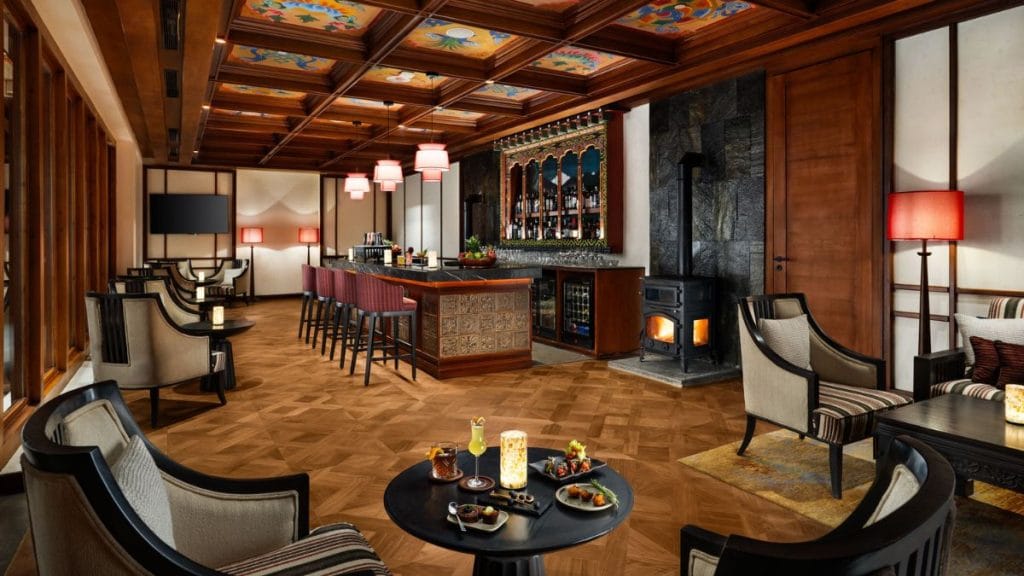
Tucked away in the lush green valleys of Paro and overlooking the Tiger’s Nest monastery, the Bhutanese-style wood-panelled walls and soft warmth of the bar lure in the weary traveller as well as the thrill-seeker hoping to try something new. These signature drinks from the bar are a must-try speciality, curated with a keen attention to detail.
Masala Whisky
The carefully and ornating curated Masala Whisky is a twist on the classic old-fashioned cocktail. Created with cinnamon-infused whisky, a spice trail made in-house, orange bitters and apple wood smoke.
The drink is presented in a wooden case with a mirrored interior, adding a sense of suspense and panache to the smoky cocktail.
Zii Dawa
The hotel’s welcome drink is served in a wine glass or a phob, a traditional Bhutanese hand-carved wooden cup. The lively purple liquid is the perfect refresher and pairs well with the country’s national dish, Ema datshi—a spicy stew made from hot chilli peppers and cheese. The blueberry mocktail aims to capture “Bhutan’s harmony of nature, wellness, and warmth.”
Paro Valley Elixir
The bar’s signature cocktail, the Paro Valley Elixir, was designed to pay homage to the city of Paro, made with mountain-foraged herbs, citrus hints, and a subtle infusion of local honey. The drink captures the freshness of the valley breeze and the serenity of the surrounding peaks.
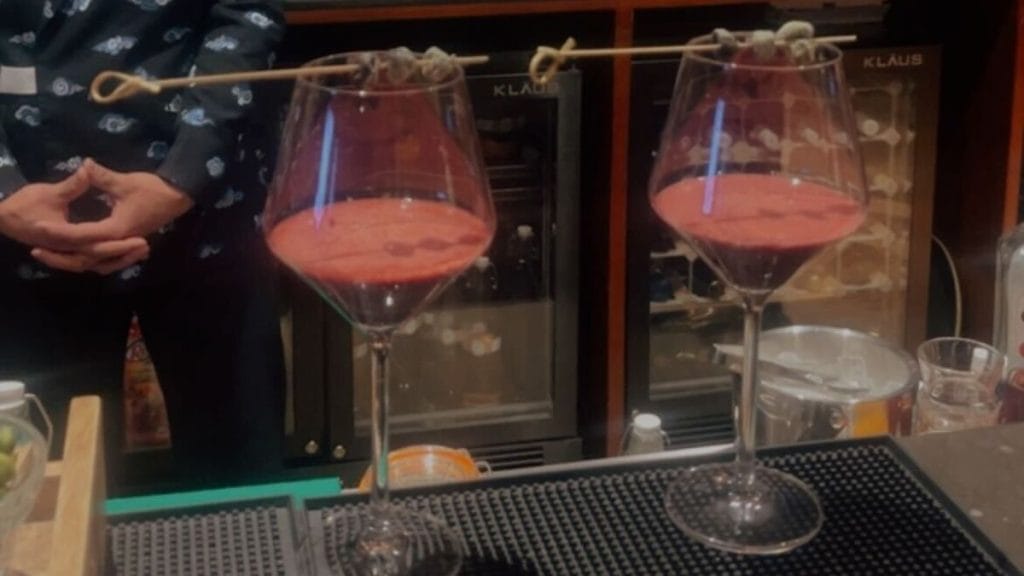
“Through this cocktail, we want to convey a sense of arrival—that moment when a traveller first inhales the crisp mountain air and feels instantly grounded. It symbolises the balance of heritage and modernity that defines Paro: familiar flavours elevated through thoughtful craft,” Sharma said.
Drukpa Ara
Even the traditional Ara, a type of fermented rice wine, is given a twist. The Drukpa Ara, made with tequila, guava liquor, mountain ema salt, and topped with ara, is served with a slice of buckwheat.
The notorious Bhutanese Sichuan pepper, known locally as “thingey”, also features heavily in the bar menu. Once a medicinal herb, the bar transforms it into a refreshing and spicy concoction. An item that Sajan encourages one to try and experience the numbing effects of the herb.
Sharma described the intent behind these treasures as “curated rather than broadcast.”
“These rare, limited‑edition spirits — some no longer in production and others exceptionally scarce — are treated as part of the resort’s storytelling and connoisseurship culture, not as items for mass promotion,” he said, adding that the purpose of these drinks is to take the guest on a meaningful, intimate and discovery-led experience.
“An elevated tasting journey, not a transactional bar item,” he said.
Also read: What happens to silk at the edge of space? Artists just found out
‘It’s for guests who seek something extraordinary’
These experiences, however, are reserved for the select few.
“We want guests who appreciate the art, age, rarity, and provenance of these bottles to experience them in the right setting. This ensures the spirit is not merely consumed but truly understood and enjoyed,” Sharma said.
Many of these bottles are worth thousands, if not lakhs, and are collected based on their taste, refinement, and significance to Bhutanese culture. However, as liquor advertisements are banned in the country, many of these pricey bottles are known only to a small select group.
“Maintaining a degree of exclusivity is important. These bottles are usually irreplaceable and represent a certain era, craft, or distillery legacy. So, while they are not hidden, they are not promoted broadly either. We prefer to reserve them for discerning guests who seek something extraordinary, turning a single pour into a memory rather than a menu item,” Sharma said, explaining the hotel’s stance on promoting these labels.
The bar menu, however, doesn’t stop at promoting Bhutanese culture through its drinks but also through its food. By serving a carefully selected appetiser, Sharma said, the taste and the experience are elevated.
While certain drinks are served with a slice of soft, gooey buckwheat, others are encouraged to try signature dishes, such as the rainbow trout, procured locally by licensed fishermen. Other dishes include ema datsi, kewa datsi, and shamu datsi, among others.
Also read: Largest Christian monastery in Egypt. What this discovery means
‘Bartending became a personal form of expression’
Sajan was born to a farming couple in the country’s “mindfulness city” of Gelephu, a major border town in southern Bhutan. Sajan recalls that from a young age, he was drawn to the idea of human connection, a concept that later led him to the hospitality industry.
“My hospitality journey began with a quiet curiosity about service and human connection. I never viewed bartending as just a profession; to me, it represented care, creativity, and the ability to make people feel valued. That belief is what first drew me toward the bar,” he said.
Not the spirits or the taste but the alchemy and human bond to it drew Sajan’s curiosity. For him, his concoctions are not just drinks but a form of expression.
“Bartending soon became more than mixing drinks—it became my personal form of expression. Being naturally reserved, I learned through observation and discipline: watching seniors, understanding techniques, studying flavours, and paying close attention to guest preferences. I became deeply passionate about the finer details of beverages and the standards of service that define true hospitality,” Sajan said.
Since joining the Indian Hotels Company Limited (IHCL) SeleQtions in Paro, Sajan, under Sharma’s care, has perfected his craft, with the two working in tandem to create the bar menu.
He hopes to become the Beverage Manager at the hotel after five years. “My story began in a quiet village with humble roots, but my ambition is clear,” Sajan added.
Sajan shared that while creating new drinks, whether alcoholic or non-alcoholic, he often looks toward Bhutanese culture for inspiration, from the ingredients, traditional flavours in different parts of the country, their spirituality, or even the natural beauty of the land. He added that he often mixes local honey, herbs, spices, butter tea influences, and seasonal fruits into his drinks to provide an extra kick.
“Bhutanese culture is deeply connected to nature, and I try to reflect that harmony in my cocktails by creating drinks that feel balanced, elegant, and meaningful,” Sajan said.
(Edited by Saptak Datta)