





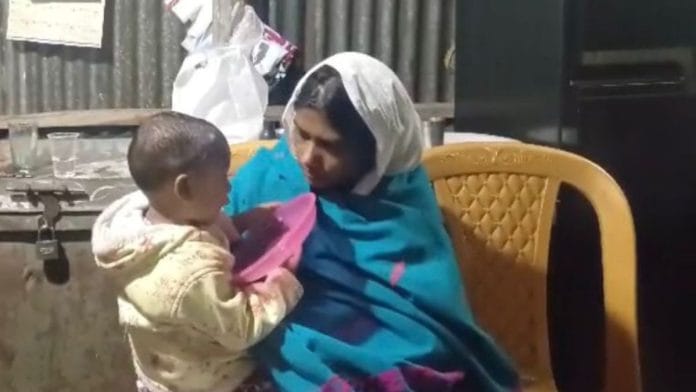



Kolkata: Thirteen days after 27-year-old Dipu Chandra Das, a garment factory worker in Mymensingh, Bangladesh, was lynched, his two-year-old daughter is still frantically looking for her father, unable to understand or comprehend the loss.
“She is still very young. Even though she cannot fully understand what has happened, she keeps calling out ‘Baba, Baba,’ searching for her father,” 21-year-old Meghna Robi Das, Dipu’s wife, told ThePrint.
The family’s last conversation took place almost a week before the murder.
“He spoke normally, and there was nothing unusual,” Meghna said. “The importance of a father in a daughter’s life is beyond words. For Dipu, his daughter was not just his greatest love, but the heart of his dreams and hopes for the future.”
Dipu dreamed of providing a proper education for his daughter and bringing her up to be an aware and good human being, she said. “A father’s love, care, and protection mean everything in a daughter’s life. Sadly, she will never have that love again.”
Dipu Das was killed amid a widening spiral of political violence in Bangladesh following the ouster of former prime minister Sheikh Hasina on 5 August 2024. What began as student-led protests against her government escalated into weeks of unrest that left nearly 1,400 people dead, destabilising law and order across the country. Since then, Bangladesh has seen a string of mob attacks, targeted killings and vigilante violence, including the assassination of youth leader Sharif Osman Hadi, a prominent face of the July uprising.
The turbulence has coincided with a surge in attacks on religious minorities, particularly Hindus, amid an atmosphere of political flux and weak accountability. Another Hindu man and factory worker in Mymensingh – 40-year-old Bajendra Biswas – was lynched on Wednesday, a day after former prime minister Begum Khaleda Zia died. Her death and the recent return of her son Tarique Rahman to Bangladesh after 17 years has further altered the political landscape ahead of February’s general elections, with the Bangladesh Nationalist Party gaining ground and the Jamaat-e-Islami consolidating a broader Islamist alliance — developments rights groups warn are unfolding alongside growing insecurity for minorities on the ground.
On 18 December, Dipu was attacked by a mob, beaten to death, and later his body was hanged from a tree and set ablaze. He had been accused of insulting Islam, but investigators later rubbished any blasphemy claim.
“We want our daughter to grow up knowing that her father was educated, capable, and hardworking — a man who spoke out against injustice and lived by his principles, never bowing to wrongdoing or compromise. We want her to know what exactly happened to her father,” Meghna said.
‘We saw the news on TV’
While Dipu was being dragged and brutally beaten, his family in Bhaluka Upazila, around 140 km from capital Dhaka, was completely unaware of the incident. Surrounded by four tin sheets, his family never had the time to ponder about Dipu’s whereabouts. Instead, they were fighting their own battle of survival.
Dipu’s father Robilal Chandra Das, 49, and a cobbler, worked long hours to support a family of five. Dipu’s mother Shefali Rani Das, manages the household. Robilal’s 12-14-hour workdays gets him only Rs 300-400 per day. With this, and Dipu’s salary combined, the family used to scrape together enough to meet daily expenses.
On the day Dipu was lynched, a friend of his had informed Robilal that he was in “some trouble” but didn’t specify the problem.
“Later, he called again to tell us Dipu was no longer alive. It was only by watching the news on television that we came to know the horrifying details of the incident,” Robilal said, adding that after the incident, neither the police nor any authorities contacted them.
Hindus in Bangladesh are living in perpetual fear and anxiety, he said.
“There is no safety for Hindus in this country. In every way possible, violence and oppression are being inflicted on us. This is a reality that both the government and society must acknowledge,” he said.
No slogans, hushed voices
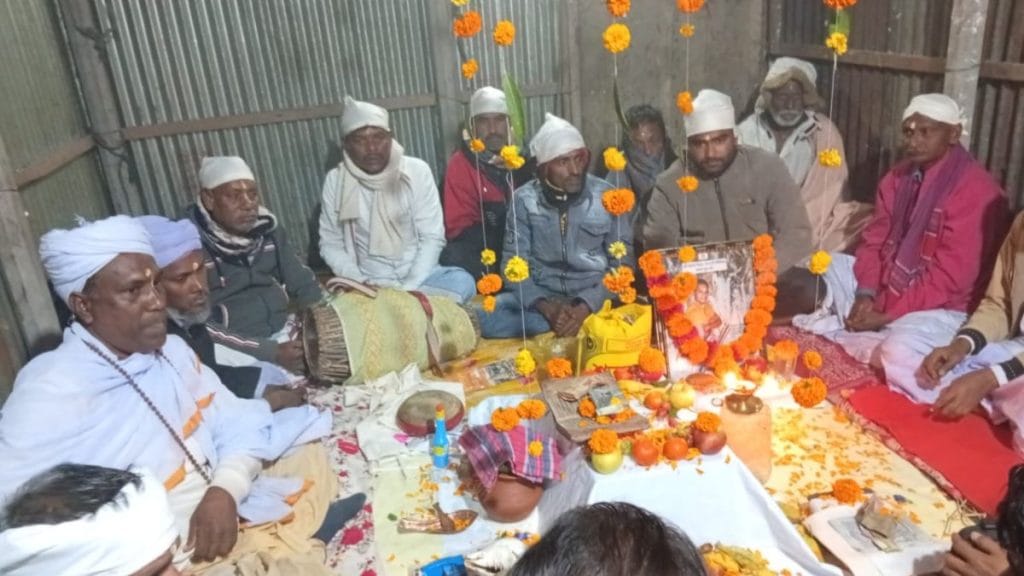
On Monday – 11 days after the incident – Dipu’s family completed his last rites. A pall of grief and fear has dawned upon the area. As the rituals were performed, Dipu’s neighbours and relatives spoke in hushed voices; no one raised slogans or made speeches. For the family, the long wait to carry out the last rites only added to the pain.
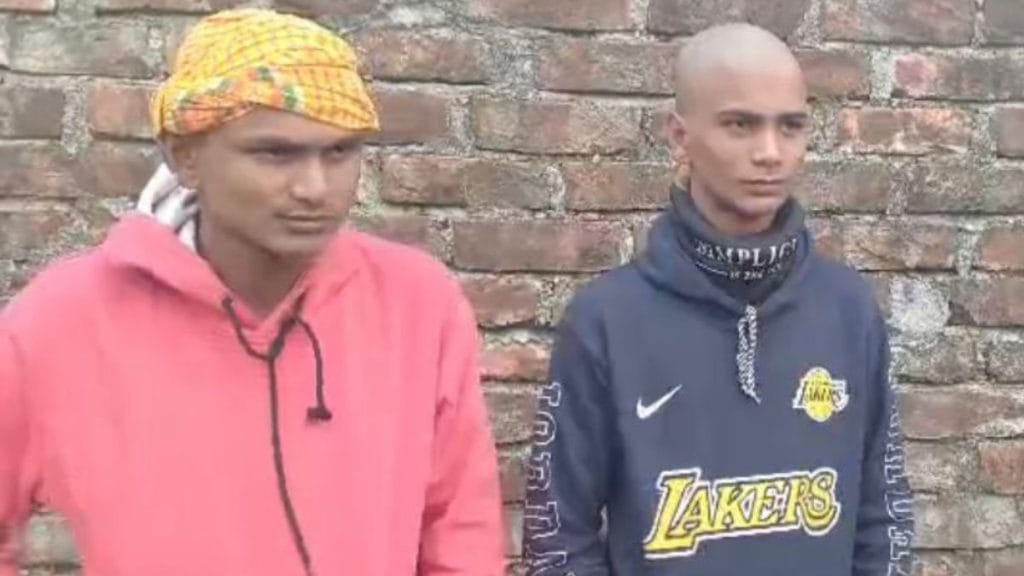
“To us, Dipu was like a banyan tree, steady and sheltering. Like a father, he always watched over us, guided us, and gave us the courage to go on,” Opu Chandra Das, Dipu’s brother, who helps in Robilal’s daily work, said. “He never spoke about any fear or concern about his own safety. However, we have heard that he spoke up for workers’ rights and protested against injustice.”
Since the incident, various agencies including the police, Bangladesh’s Detective Branch, CID, and Rapid Action Battalion (RAB) have been visiting Dipu’s family, creating a constant sense of pressure among them, he alleged, “All of us were gripped by fear and uncertainty, and that fear still lingers. However, neighbours have been offering us comfort, giving us strength, and assuring us of their support.”
Also Read: Bangladesh is worshipping Islamists as heroes. Jamaat is having the last laugh
‘Details not discussed’
Bangladesh’s RAB alleged that a factory floor manager handed Dipu over to an enraged mob, instead of alerting police. Till now, the police have arrested 12 persons in connection with the lynching of Dipu. A Mymensingh court granted a three-day remand for the accused.
The family has claimed that they are not fully satisfied with the police investigation, and the law enforcement agencies, as well as the government, must handle this case with greater seriousness and responsibility. To them, real justice means ensuring the maximum punishment for everyone directly or indirectly involved in this killing.
“The details of the investigation are not discussed with us in any detail. We do not properly know what is happening and what is not. So far, only 12 people have been arrested, even though hundreds were involved in killing our son. The government should have brought many more accused under the law,” Dipu’s mother Shefali said, adding that with each passing day, the seriousness of the incident seems to be fading.
A spate of violence
Religious minorities in Bangladesh, especially Hindus, are living with a deep sense of insecurity, particularly during recent times of political unrest. Over the decades, their numbers have steadily declined — from nearly one-third of the population around the time of Partition in 1947 to less than eight per cent today.
Reports from human rights groups and local communities highlight repeated attacks on Hindu homes, temples, and businesses, often triggered during elections, protests, or government transitions.
“The situation in Bangladesh has reached a critical and alarming juncture, with a systematic and coordinated campaign targeting the Hindu community through acts of violence, destruction, and terror. This genocide, characterised by the deliberate annihilation of Hindu religious and cultural sites, as well as the targeted killings and displacement of individuals, poses an existential threat to the Hindu population in Bangladesh,” a study by the Centre for Integrated and Holistic Studies noted.
Many say the police are slow to respond, and perpetrators often go unpunished, leaving families fearful and anxious. Despite promises from authorities to protect minorities, these assurances often fail to reach the people on the ground.
Sushanto Adhikary, an advocate at the Judge Court Dhaka and a minorities rights activist in Bangladesh, says the rise of violence against Hindus alarmingly increased after Hasina’s ouster.
“Temples, idols, and religious structures were destroyed in 27 districts, many were injured, and goods from banks and workplaces were looted, further illustrating the scale of persecution and ongoing impunity,” Adhikary told ThePrint.
In July this year, a Hindu teenager was falsely accused of insulting Islam in Aldadpur Betgari Union, Gangachara Upazila, Adhikary alleged.
“Large crowds, amplified through loudspeakers, targeted Hindu families. Homes and shops were vandalised, looted, and goods stolen. Many fled to shelters in fear. Although local police and the army eventually brought the situation under control, fear lingered for months,” he said.
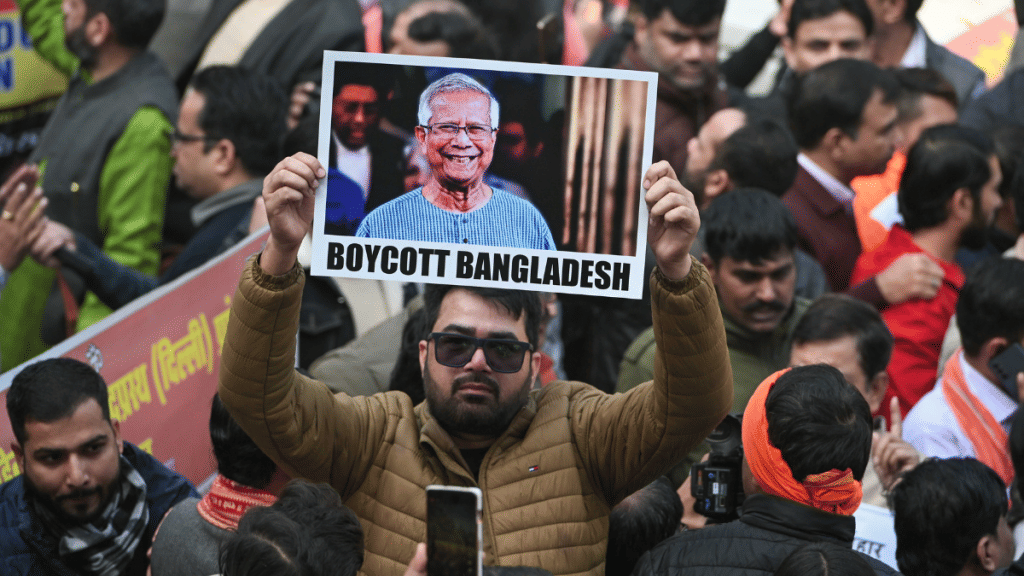
Last week, India voiced concern over the “unremitting hostility” against minorities in the country including Hindus, Christians, and Buddhists. The Ministry of External Affairs also condemned the recent spate of killings, including Dipu’s.
“We expect that the perpetrators of the crime would be brought to justice,” MEA spokesperson Randhir Jaiswal said on Friday.
Waiting for justice
For Dipu’s family, justice remains uncertain. For his daughter, the absence of a father has already become permanent.
“I am emotionally shattered,” Meghna said. “My young daughter has lost her father—she is too young to understand what has happened”.
(Edited by Stela Dey)