





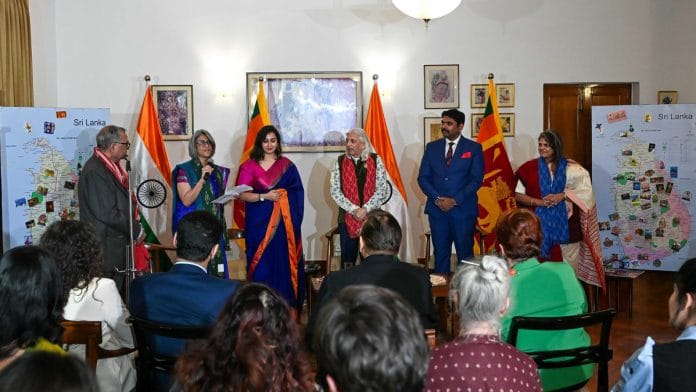



New Delhi: In Around the World in Magnets–Sri Lanka, the island nation’s history and culture unfold through the small souvenir magnets that travellers carry home. Collected by Anthony Vipin Das during his travels across Sri Lanka, and developed into a book with co-author Vidushi Duggal, the magnets become windows into the country’s layered heritage.
Ranging from dancers to deities, tuk-tuks to turtles, the 100 magnets form a loose map of Sri Lanka’s stories. The book, launched on 2 December at the High Commission of Sri Lanka in Delhi, is part of a larger series. For the authors, people were as important as places, from hotel chefs cooking with ingredients “as fresh as the river flowing outside,” to residents sharing stories passed down through generations.
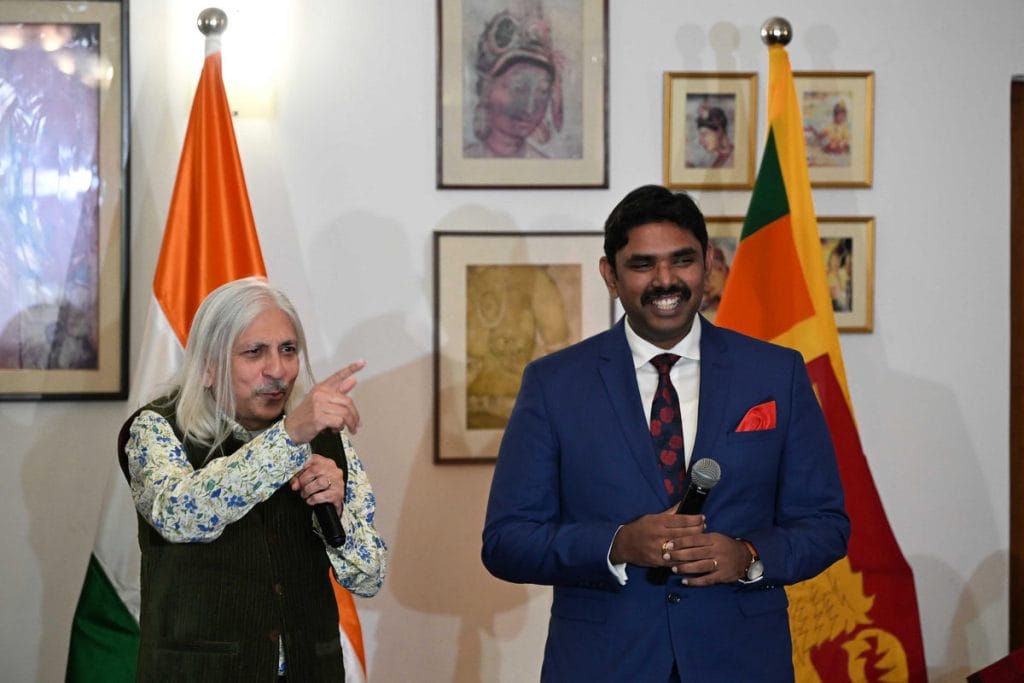
Also at the event were Santosh Jha, High Commissioner of India to Sri Lanka, and historian Mahalakshmi Ramakrishnan, who spoke about the deep, personal connections that draw Indians to Sri Lanka. Mahishini Colonne, High Commissioner of Sri Lanka to India, was also present.
Moderated by Sanjoy Roy, managing director of Teamwork Arts, the evening celebrated the island nation through the lenses of travel, food, and history. Through their personal anecdotes, culinary discoveries, temple stories, and chance encounters, the speakers showed how travel reveals both the familiar and the extraordinary.
“From the ancient sites of Anuradhapura, Sigiriya, Dambulla, and Polonnaruwa to colonial plantations, forts, and bustling ports, each magnet offers a glimpse into Sri Lanka’s textured past,” said Ramakrishnan, professor at the Centre for Historical Studies, Jawaharlal Nehru University. “The serene hills and beaches, depicted on these magnets, are especially compelling, making one long for the beauty of Sri Lanka even from afar.”
Also Read: An IIT Madras professor has written a book about girlhood and heartbreaks in 1910s
Culture, cuisine, and continuity
The authors’ journeys took them through lesser-known corners of Sri Lanka, offering narratives that went far beyond postcards and popular tourist attractions. From the UNESCO-listed Pink Quartz Mountain to sites linked to the Buddha’s tooth relic, each encounter brought out a fresh facet of the country.
On the Buddha’s tooth relic, a symbol of spiritual authority, Das said a king’s right to rule was tied to possessing it. At Yapahuwa, the relic was kept at the top of a nearly vertical staircase, making it hard for anyone to steal it.
Along the southern coast, the authors were captivated by the fishing villages of Galle and Mirissa. Here, they witnessed centuries-old methods of stilt fishing still practiced by local fishermen, balancing on narrow wooden poles above the waves.
Sri Lanka’s culinary traditions also came alive through their explorations. From egg hoppers to kottu and fiery ‘devil dishes’, the nation’s cuisine tells its own stories.
“Every time I travel outside of India, it takes me a week to start missing spices. But in Sri Lanka, I know all I have to do is go and tell them, ‘Please give me something devil’. And they devil everything—from vegetables to seafood to meat,” Duggal said.
One afternoon in Kandy, Das and Duggal attended a local festival where drummers and dancers performed traditional Kandyan dances. Each movement and rhythm carried its own history, connecting present-day performers to legends of kings, warriors, and spiritual devotion.
In Anuradhapura, monks recounted the histories of ancient stupas and the lore surrounding sacred relics.
Also Read: Aban Raza’s painting turns Delhi art gallery into a classroom on RTI, democracy
A magnetic attraction
High Commissioner Jha also spoke about his visits to Sri Lanka, where each trip was more than a tour. Listening to personal stories deepened his understanding of the country, as did reconnecting with old acquaintances in Chennai with Sri Lankan roots.
For the authors, their love for Sri Lanka and the joy of travel led to the book— the second in a series, after an earlier volume on destinations around the world. They come from very different backgrounds.
Duggal, a fashion designer by training, has for the past seven years devoted herself to writing, with travelogues becoming her true passion.
She first met Das, a doctor, as a patient at his eye clinic, and when she later visited his home, she saw a wall full of magnets. Soon, the idea of turning his collection into a book began to take shape.
“I’ve been travelling for quite some time now, and while people collect mini souvenirs, I ended up collecting magnets. I have about 700 of them back home. I did not want that story to stay in my home and with me,” said Das.
“We built the idea of sharing memories and stories through cultural archetypes, because every magnet carries a creative logic for how a region is depicted.”
(Edited by Asavari Singh)