





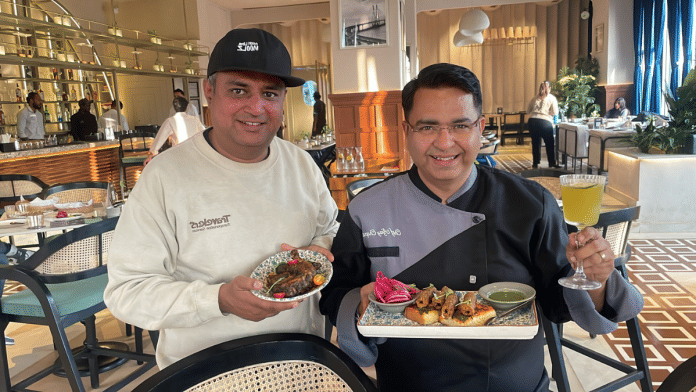



Gurugram: Chef Ajay Chopra has been living in Mumbai for the past 15 years, and every trip back to Delhi would come with the same question from friends and family, “What have you brought from Bombay?”
That long-running question has finally found its answer in SoBombae, which he opened at Magnum Global Park in Gurugram’s Sector 58. While the restaurant had already been welcoming walk-in diners, its official launch took place on 18 December. Chopra’s vision was to bring a slice of Mumbai to the Delhi NCR, but SoBombae is without the cliché. It goes well beyond the usual vada pav, misal pav, and pav bhaji. There’s far more on the menu than meets the eye.
“This is not fusion or reinvention. It’s preservation. It’s like an archive of the city’s ‘untouched’ cuisine,” Chopra told ThePrint, as he moved from the kitchen to the dining area, ensuring a seamless service.
Chopra and his team curated the 40-dish menu from seven distinct cuisines popular in Mumbai, including Koli, Anglo-Indian, Bohri Muslim, Catholic, Malwani, Gujarati, and South Indian coastal.
Much like Delhi, Mumbai is a cultural melting pot; its food reflects its diversity. The city was originally scattered into seven islands that came together to become one hungry and powerful metropolis. Each island carried a different community, a different story and a different kitchen. Together, they built the identity of Bombay.
The city’s cuisine spans everything from humble vada pav to seafood-forward and coconut-rich dishes, Mangalorean influences, and spice levels that range from gentle to fiery. The widely popular Bombay chaat is the result of Chinese whispers of flavours that trace back to what’s cooked in Uttar Pradesh. Mumbai has a large vegetarian base, influenced by Maharashtrian staples and a large Gujarati community.
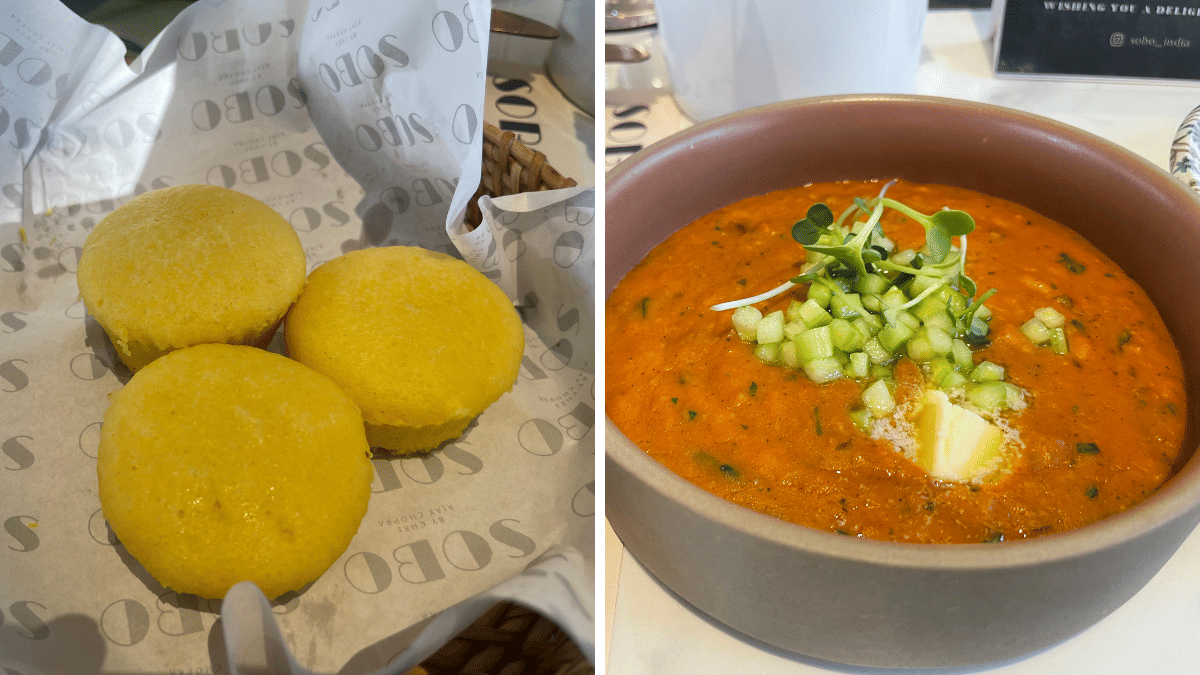
“SoBombae is my tribute to that legacy,” Chef Chopra said.“If momos from Darjeeling, chole bhature and kulche from Punjab, nihari from Lucknow, aloo tikki from the lanes of Uttar Pradesh can come together to make ‘Delhi ka khana’, then why not Bombay?”
He assures that the classics are also on the menu, just slightly reinterpreted. For example, the dabeli has been fried and is served as a croquette. The suranache kaap (a Maharashtrian and Konkan dish made from elephant foot yam marinated with spices, coated in semolina and shallow-fried until golden and crunchy) has also made its way to SoBombae’s menu, dressed as ‘Yum Yum fries.’ At SoBombae, a meal for two easily sits at Rs 4,000.
“At least 70 per cent of the food is served in its authentic way, 30 per cent of the dishes we have experimented with, giving our own twist to it,” Chopra said.
But Chef Chopra’s vision of bringing Bombay to Delhi NCR doesn’t stop with this menu. He is also planning a two-hour daily spectacle from 4 to 6 pm, when SoBombae will serve classic vada pav alongside cutting chai.
Set to a soundtrack of iconic Bollywood numbers, like Prabhu Deva’s ‘Premika Ne Pyaar Se’, the experience is designed to immerse guests in hyperlocal culture.
“From 4 to 6 pm, SoBombae will transport you straight to the streets of Mumbai,” he said.
Pomfret to chicken cafreal
Pomfret has been dressed up in Delhi in multiple ways. From the Bangla Canvas in CR Park for classic fish fry to South Indian places like Arisii for Polichettu (pomfret in banana leaf), and high-end options like Bukhara (tandoori pomfret) or seafood specialists like Sanadige. But SoBombae’s Bharlela Pomfret is made in the classic Gomantak style and raw fried.
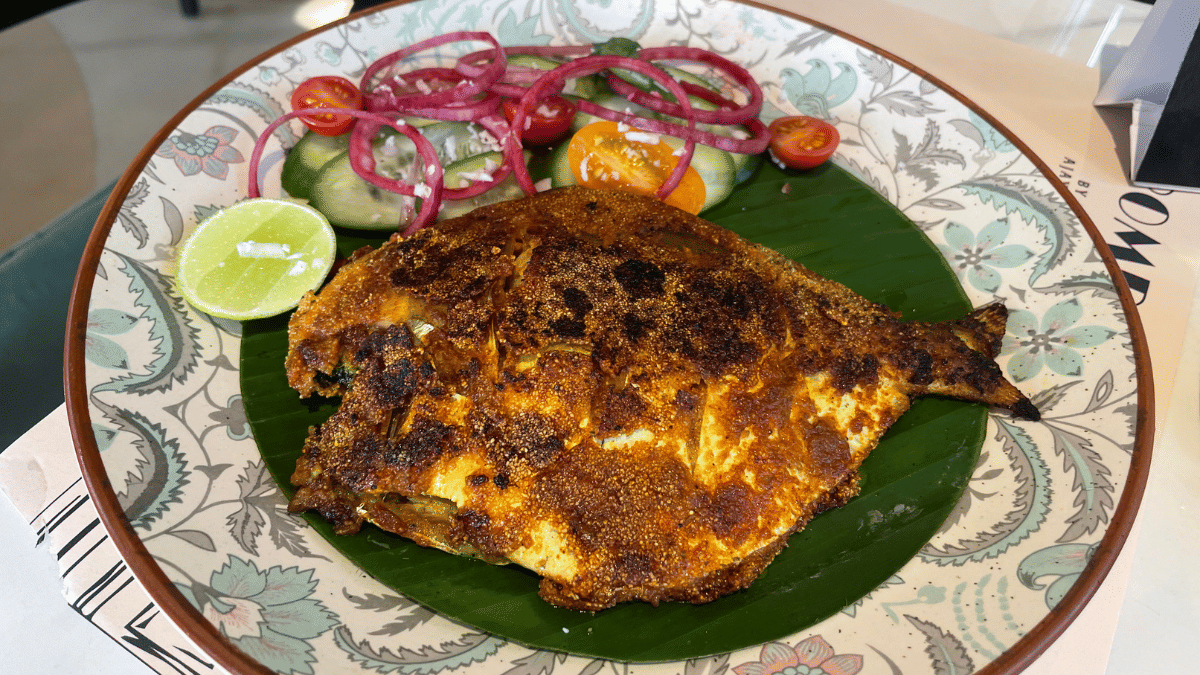
“Delhi’s idea of fish? Rub it red, shove it in a tandoor and call it a day. Basic. Bombay doesn’t do basic. We stuff pomfret with prawns, and rawa fry it golden. This isn’t tandoori drama, this is coastal swagger,” the menu read.
Chopra’s chicken cafreal, a popular Goan dish but with a Bombay twist, is made with chicken pieces marinated and cooked in a vibrant green paste of fresh herbs and coastal spices. At SoBombae, this chicken dish is served on a bed of recheado baby potatoes, a typical South Indian preparation, and some slices of cherry tomatoes.
“I don’t over-garnish. There is no creative torture. Let the food shine,” he said.
Chef Rajesh Moolchandani, who heads the SoBombae kitchen, admits that the team had a little too much fun with the menu.
After all, there is a Taai Green Curry, Dongri Gully Paneer Tawa Takatak, Dal Aunty, Maushi Goreng, and Dilli Ki Daal Makhni Best Hai Bhaisahab on the menu.
“The idea was to make a menu which should interact with the audience and make their experience a little bit more fun,” Chef Moolchandani said.
He added that it’s the unmistakable Bombay touch, the kind a maushi (aunt) brings to home cooking that truly elevates the dishes.
“Bombay fafda is better than Gujarat’s. Bombay aloo tikki beats Delhi’s. Even Bombay’s neer dosa can take on the South,” Moolchandani said, stressing that this local spin doesn’t dilute or distort the original flavours.
“It adds a fresh dimension, and that’s when the dishes simply become Bombay food,” he added.
Also Read: Mexican, Korean, Thai biryani—Ranveer Brar shares the secret of doing fusion right
‘Sweet side of the city’
The restaurant’s menu showcases not just the savoury side but also the ‘sweet’ side of the city.
In neighbourhoods such as Kurla, Grant Road, and Masjid Bunder, Burhanpur mawa jalebi is a familiar sight, sold by numerous sweet shops and street vendors.
“Its presence reflects Mumbai’s long history as a city shaped by migration. Traders and families who arrived from Burhanpur (Madhya Pradesh) brought with them this distinctive version of jalebi, richer, heavier, and made with mawa,” Moolchandani said.
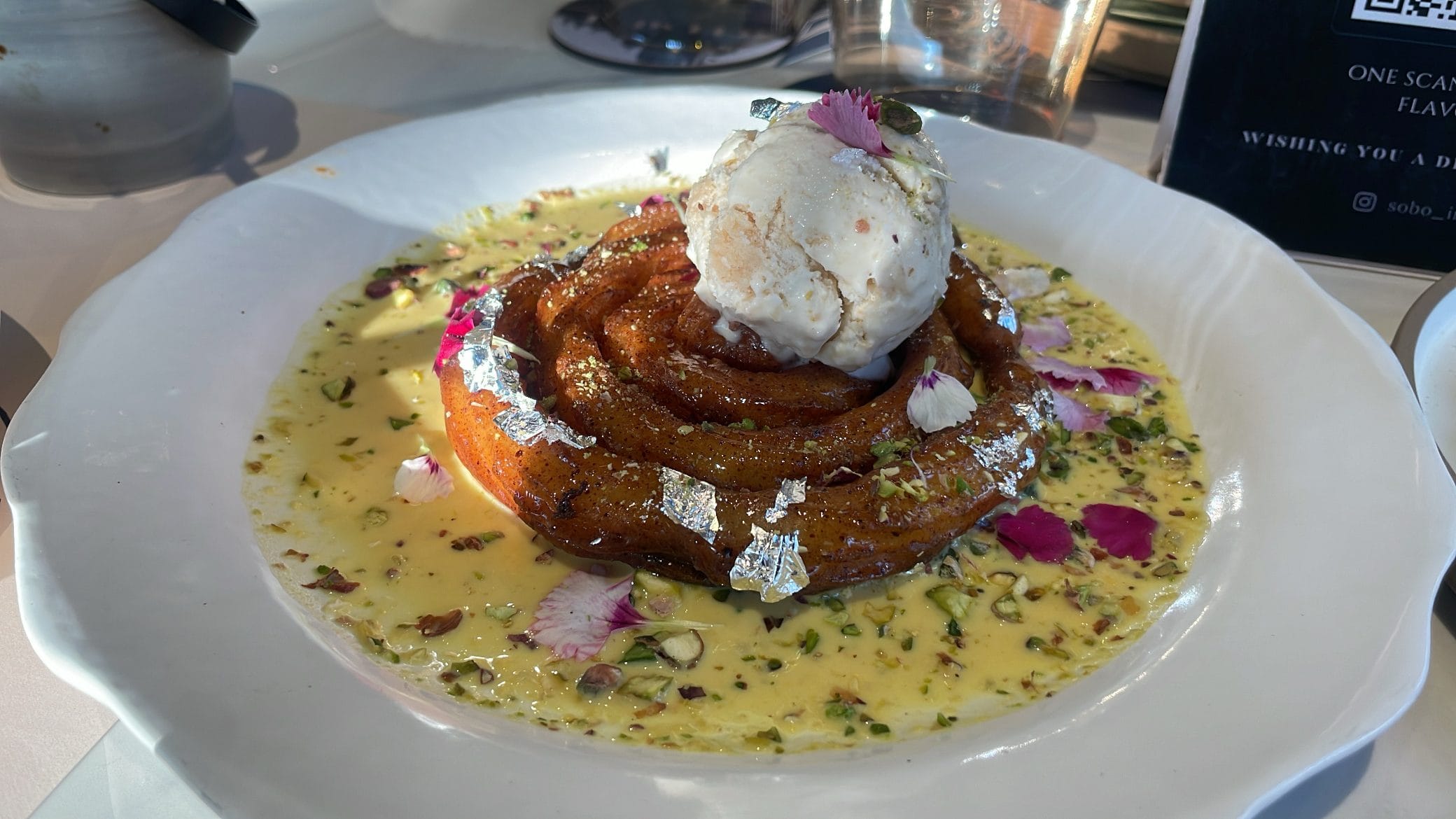
The story of the sweet mirrors Mumbai itself, where migrant knowledge became local tradition, and where original sources coexist with countless adaptations.
This Burhanpuri delicacy has made its way to the menu as well. Here, the Mawa Jalebi is served with rabdi and custard apple ice cream.
There is also the legendary sweet from Surat, the Sagla Bagla, the flaky pastry at SoBombae, is reinterpreted as a mille feuille with a rabri mawa cremeaux, hazelnut praline crumble and raspberry coulis.
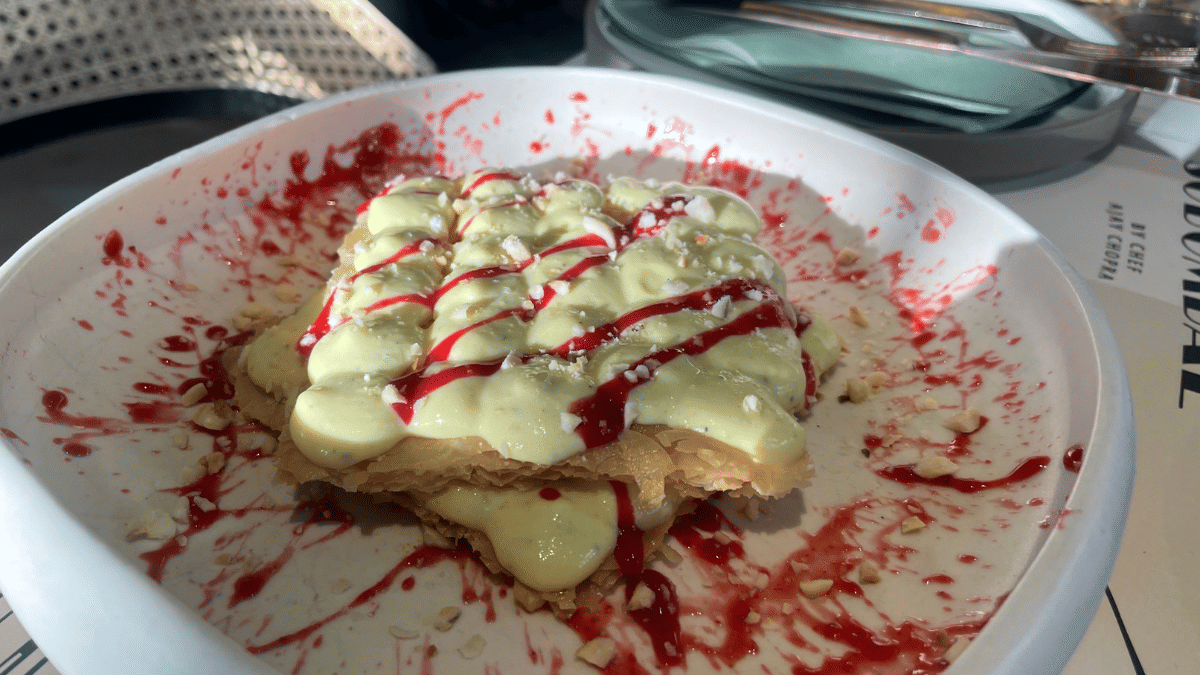
“The Sagla Bagla is again very popular among Mumbaikars because of the Guju community,” she said.
Also Read: Chef Kunal Kapur brings Saudi flavours to India. ‘It’s a lot like Bihari cuisine’
Pure nostalgia
When actor Poonam Shetty entered the very suave building of SoBombae, she was expecting the overpriced pastas, pizzas, olive bruschetta, elegant sliders, and more.
“I thought it was just another fancy restaurant,” said Shetty, who was born and brought up in Mumbai before she shifted to Delhi after getting married.
The menu took her by surprise. It was pure nostalgia.
“The Konkan Kaju Kari on the menu is a delight because I remember relishing it at my best friend’s house, who was also my neighbour. Her mother made the best kaju kari. Of course, the taste at SoBombae is different, but just to see that dish on the menu in Delhi NCR was enough,” she said.
(Edited by Insha Jalil Waziri)