





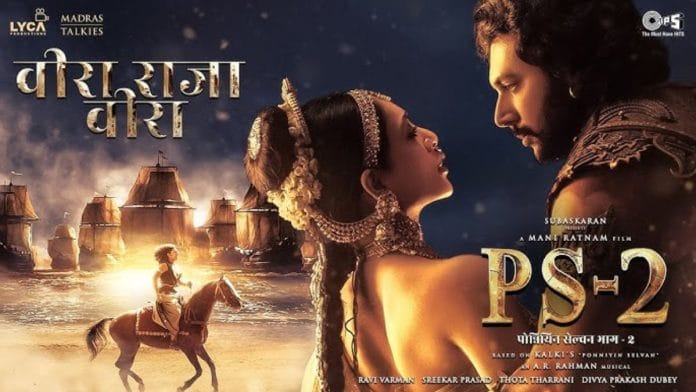



New Delhi: Hearing the high-profile musical dispute involving composer AR Rahman and the family of the Junior Dagar Brothers, the Supreme Court has stressed that India’s classical traditions deserve recognition. The court suggested that the Dagar musicians be acknowledged.
The case concerns the song ‘Veer Raja Veera’ from the movie Ponniyin Selvan II (2023) and whether it draws from a classical Dhrupad composition called ‘Shiva Stuti’.
The court was hearing a plea by Dhrupad singer Ustad Faiyaz Wasifuddin Dagar, challenging the Delhi High Court order that had set aside the injunction order against Rahman.
The bench has now adjourned the matter to 20 February 2026, to address key issues like authorship, proof, fixation through 1978 recordings, and presumptions under Section 55(2) of the Copyright Act.
The three-year-old copyright battle sits at the crossroads of modern film music and the ancient Dhrupad tradition.
With blockbuster profits and global audiences at stake, the case raises fundamental questions: When does inspiration cross into appropriation? And how should composers be credited for works rooted in oral traditions?
“Wasif is one of the simplest souls. He is only devoted to his music — he does not seek anything else from the world. Dhrupad has always been a path of dedication and spiritual commitment, not profit. There has never been greed for money in Dhrupad, and there isn’t any even today,” said Rashmi Malik, Chairperson of the SPIC MACAY Foundation.
What it means for the music industry
As the copyright battle over ‘Veera Raja Veera’ unfolds in the Supreme Court, the mood in India’s classical music circles is tense but watchful.
Musician and publisher S. Anand said that the matter is sub-judice. However, he indicated that the issue goes far beyond a routine legal dispute, reflecting deeper concerns about how classical music traditions are treated in the modern commercial landscape.
He said that in Hindustani classical music, most singers are also composers. They usually do not register copyrights or write formal notations. Their music is passed down orally from guru to disciple and performed freely within the classical concert circuit.
“They also don’t object when other fellow musicians and students perform it within the concert circuits,” Anand said. “But this does not mean it’s open season for a commercial film music director to take whatever fancies him.”
For the Dagar family, the Shiva Stuti composition isn’t just another devotional piece. It is legacy, identity, and lineage. Beyond technical copyright claims, this case is about stewardship of a centuries-old tradition.
“I can only hope the highest court shows wisdom along with a concern for ethics here,” said Anand. The outcome, he said, will resonate far beyond one film song. “It’s going to be a landmark judgment in terms of what this means for the larger classical music fraternity, and what it means to assume that all that’s not formally registered as property or copyright is in the commons.”
Inside the courtroom, the debate has already taken a philosophical turn.
During the hearing, Chief Justice Surya Kant underscored the role of tradition in shaping modern music. Referring to the Dagar lineage, he said, “The predecessors of the defendant were a part of the Dagarwani tradition. The originality of the tune is undisputed.”
Also read: Kashmir to Maharashtra—what led to the decline of Indian civilisation?
All about acknowledgement
Dagar and his legal team have chosen not to comment on the dispute, noting that the matter is still before the court. Until then, they prefer to stay silent.
The controversy, however, has sparked strong reactions. Several Carnatic and Hindustani musicians have voiced support for Dagar, highlighting the broader questions the case raises about respect, credit, and the protection of traditional compositions.
Carnatic vocalist Sudha Raghuraman has also performed inspired compositions, “but we always make sure to give proper acknowledgement that it is inspired.”
Rashmi Malik said that the composition used by Rahman in his film originates from a piece created decades ago by Wasifuddin Dagar’s father and uncle. In classical music circles, she noted, it is regarded as a treasured family heirloom.
While filmmakers often draw inspiration from multiple sources, Malik stressed that the main issue here is the lack of acknowledgement. She added that such treatment would rarely, if ever, be applied to an established film lyricist or composer.
During earlier proceedings, when the Delhi High Court ordered a deposit of Rs 2 crore, the Dagar family was accused of acting out of greed. Malik called that claim “deeply unfair.”
She added that the Supreme Court case is not about financial gain, but about restoring recognition and dignity. “He’s only asking for acknowledgement.”
At the same time, she highlighted the scale of the commercial success surrounding both the film and the composer’s concerts.
“You can’t just take somebody’s inheritance and use it, and you know, just get going,” she said.
Shiva Stuti is not an anonymous traditional piece floating in the public domain, Malik said. Its origin can be traced within the Dagar family, with performance and broadcast records available for verification. Unlike the corporate music industry, classical compositions are usually preserved and protected within families rather than through managers or legal departments.
“I truly hope the Supreme Court hears the case fairly and honestly. The hearing is next Friday, and I pray it is handled justly,” she said.
(Edited by Ratan Priya)