





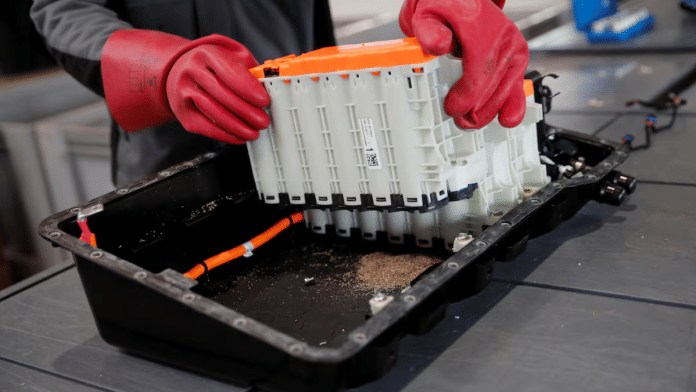



New Delhi: India’s electronic waste and used lithium-ion battery problem is set to grow sharply over the next decade, with current collection and recycling systems far behind the pace of consumption, according to a NITI Aayog report released last week.
The report, titled ‘Advancing Circular Economy of Waste Electronic and Electrical Equipment (E-waste) and Lithium-Ion Batteries in India’, says India generated around 6.19 million metric tonnes (MMT) of e-waste in 2024. With e-waste growing at nearly 17 percent annually, the figure is projected to reach 14 MMT by 2030.
“About 16.9 percent annual growth in E-waste generation reflects the rapid adoption of digital technologies and shorter product life cycles. Computer equipment accounts for the largest share of the E-waste stream (65 percent), followed by large appliances and medical equipment (15 percent), telecom equipment (12 percent), and consumer electronics (8 percent),” the report states.
At the same time, India’s demand for lithium-ion batteries—used in smartphones, electric vehicles, and energy storage systems—is expected to rise at an even faster pace of 26 percent annually to grow from 16 GWh in 2023 to 248 GWh by 2035.
This surge in consumption will translate into a steep rise in waste. End-of-life lithium-ion battery availability is expected to increase from 19 kilo tonnes (kT) in 2023 to 233 kT by 2035, growing at an annual rate of 26 percent, the report says.
It further underlines that India is the third largest e-waste producer with a 7 percent global share, but currently recycles only about 10 percent of it, far below the global average of 22 percent, and significantly behind the European Union and the United States, where recycling rates exceed 55 percent.
The informal sector handles nearly 62 percent of India’s electronic waste and employs half a million people who often use unsafe and unscientific methods to extract waste. In contrast, the formal system remains thinly spread, with just 2,808 authorised collection centres serving a population of over 1.4 billion.
“Currently, majority of E-waste and end-of-life Lithium-ion Batteries are collected, processed, and recycled through the informal sector or remain in storage with consumers and bulk users, due to inadequate formal coverage,” the report states.
Niti Aayog emphasizes that advancing the circular economy framework for electronic waste and lithium-ion battery scrap should be a national priority given its strategic importance.
“Collection inefficiencies, low consumer awareness, and inadequate financing further exacerbate systemic challenges, which risk resource leakages and environmental hazards, and undermine India’s long-term energy security by deepening its dependence on critical mineral imports,” the report said.
What NITI Aayog proposes
To address the challenges, Aayog calls for policy interventions, encouraging private sector participation and driving consumer awareness.
Niti Aayog recommends formalizing the informal sector. It calls for a single-window registration system for recyclers and the state government to facilitate the registration process. It also suggests a one-time waiver of liability and registration fees to informal units.
“Establish cluster-based Common Facility Centres for E-waste and Lithium-ion Battery that provide training and safe facilities for informal workers under Micro and Small Enterprises Cluster Development Programme,” the report states.
Another major recommendation relates to expanding Extended Producer Responsibility (EPR) coverage under India’s e-waste rules. At present, EPR obligations focus largely on metals such as gold, copper, iron, and aluminium. The report argues that this narrow scope discourages investment in recovering other valuable and critical materials embedded in electronic waste.
Beyond regulation, the report stresses the need to build domestic recycling capacity and support demand for recycled materials. It recommends setting purity standards for recycled battery materials and offering incentives under existing manufacturing schemes to encourage the use of domestically recycled inputs.
“Additional incentives may be provided to manufacturers under the Production Linked Incentive scheme for Advanced Chemistry Cells to promote the uptake of recycled materials,” the report states.
Finally, the report calls for expanding collection infrastructure and consumer awareness. Government–backed public–private partnerships, mandatory disposal information on product packaging, and targeted awareness campaigns are among the measures suggested to increase formal collection volume.
“Provide targeted advertisements in newspapers and digital media containing information and contact details (Phone number, QR Code, Hyperlinks) for formal E-waste collection platforms,” the report said.
(Edited by Varnika Dhawan)
Also Read: End-of-life vehicles are a ticking time-bomb in India, load can double to 50 mn in 5 yrs—NITI Aayog