








New Delhi: As India scrambles to diversify crude supplies away from West Asia, around 7-8 million barrels of Venezuelan crude are expected to arrive over the next month, according to market analysts.
“Around 1 million barrels of Venezuelan crude are expected to come this month or early next month, while around 6-7 million barrels would come in April,” Nikhil Dubey, senior research analyst of refining and modelling at Kpler, told ThePrint.
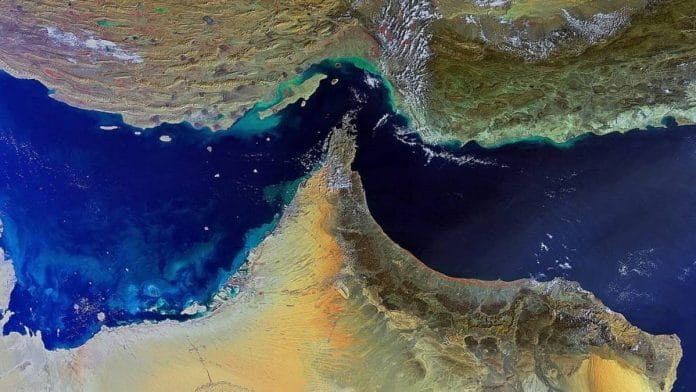
The incoming cargoes coincide with a critical moment. The ongoing conflict between US-Israel and Iran has led to the closure of the Strait of Hormuz, through which nearly half of India’s crude supplies transit.
However, it must be noted that the new shipments were likely booked before the conflict began on 28 February this year.
While the exact buyers remain unclear, ThePrint reported in February that Reliance Industries, Indian Oil Corporation and Hindustan Petroleum Corporation purchased 2 million barrels each of Venezuelan oil from trading firm Trafigura for their refineries.
Kpler data shows that India’s last Venezuelan shipment arrived in May 2025, largely imported by Reliance Industries, which had been buying an average of 2 million barrels per month between January and May that year.
India was a regular processor of Venezuelan crude between 2017 and 2019, before US sanctions led to a sharp decline in imports.
Though Venezuelan oil offers some relief amid disrupted West Asian supplies, its limited production capacity—estimated at 900,000 to 1 million barrels per day—means it cannot replace larger suppliers like Russia or Gulf producers in India’s crude basket.
Iranian oil back in play
A separate development could further ease supply pressures. A 30-day waiver on Iranian crude stranded at sea, announced by US Treasury Secretary Scott Bessent, has opened a narrow window for potential purchases.
“Today, the Department of the Treasury is issuing a narrowly tailored, short-term authorisation permitting the sale of Iranian oil currently stranded at sea,” Bessent said in a statement on X Saturday.
According to Kpler, a substantial volume is already available.
“Iranian crude availability remains elevated, with an estimated ~170 million barrels on water, including floating storage and cargoes in transit,” Sumit Ritolia, lead analyst for refining and modelling at Kpler, told ThePrint.
“While part of these volumes remains committed, a portion remains unsold, representing potential incremental supply. Indian refiners retain the ability to re-integrate these barrels with minimal operational adjustments, supported by prior processing experience and established trading setups.”
Historically, India has been a major buyer of Iranian crude, importing both Light and Heavy grades due to refinery compatibility and favourable terms.
“Following sanctions tightening in 2018, imports ceased from May 2019, with volumes replaced by Middle Eastern, US and other grades. At peak, Iranian crude accounted for ~11.5 percent of India’s total imports,” Ritolia said.
However, he cautioned that a return of Iranian oil would depend on multiple factors.
“Return of Iranian oil back into India’s crude basket would be determined by various commercial and geopolitical factors, including pricing structure, availability of payment mechanism, insurance and logistics viability,” Ritolia said.
“If these conditions align, a ramp-up in Indian imports of Iranian crude could be significant, similar to the rapid increase observed in Russian crude intake following the easing of Western sanctions.”
(Edited by Nida Fatima Siddiqui)
Also Read: Trump has big plans for Venezuela’s oil. Are they realistic?