





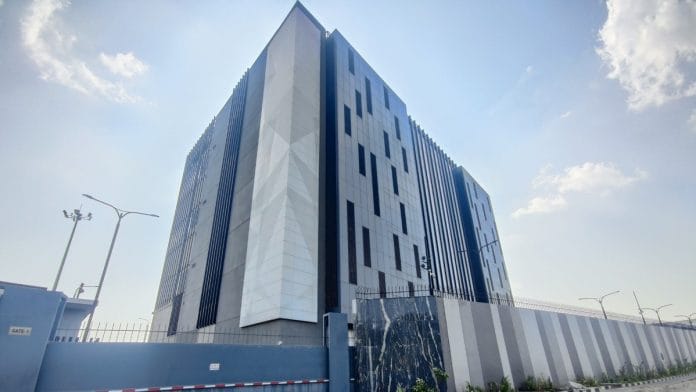



Hyderabad: State governments with a high concentration of data centres have been told to ensure these have adequate power supply so that a sudden surge in demand does not cause statewide disruptions.
The Central Electricity Authority (CEA) that advises the government on all policy matters concerning electricity generation, transmission, and distribution has cautioned state governments to make sure data centres (which sometimes see a sudden demand surge), are properly supplied at all times.
Officials in Andhra Pradesh, Telangana, and Tamil Nadu told ThePrint that the communique from the CEA directed the states to “enhance resource adequacy” by forecasting demand of data centres, planning generation capacity, strengthening transmission and distribution networks, and creating adequate resources to meet their projected electricity needs.
The CEA’s communique to the state governments was part of the National Generation Adequacy Plan (2026-27 to 2035-36) that the policy body released in March 2026 to assess the adequacy of the power system in meeting national electricity demand for consumers and industries. A copy of this report is with ThePrint.
“We have been asked to plan for a surge in demand, plan for contingency, and prepare for a possible outage even as Andhra is a power adequate state providing industrial and consumer power for 23 hours and 40 minutes daily,” said Pridhvitej Immadi, Chairman and Managing Director, Andhra Pradesh Eastern Power Distribution Company Limited (APEPDCL).
The CEA’s concerns come amid India’s rapidly expanding data centre sector. According to a CBRE report, India’s operational data centre capacity as of early 2026 is approximately 950 MW to 1,500 MW, driven by rapid expansion and a 103 per cent year-on-year growth in 2025. With the data centres powering one of the world’s busiest digital ecosystems, fueled by high mobile data usage and rapid cloud growth, their energy consumption is expected to scale exponentially.
Globally, the size of a data centre is measured by the quantum of energy it consumes to stay operational.
Key requirements of a data centre include high-density power, reliable water supply for cooling, robust fiber connectivity, and specialised infrastructure, such as 6-metre floor-to-floor height and heavy load-bearing capacities.
Sridhar Seshadri, Director, Global Foresight and Innovation, at Global Forum for Sustainable Development pegs India’s data centre economy a notch higher. “India’s data centre capacity has crossed 1,700 MW, with Andhra Pradesh alone committing 1 GW+. Without architectural discipline, this growth can translate directly into grid stress at scale. Cooling already consumes about 40 per cent of DC energy. The real question is not expansion, it is efficiency by design,” he said.
With Andhra Pradesh, Tamil Nadu, Telangana, and Maharashtra driving the data centre economy in India, data centres are considered the emerging energy loads. Adani-Google, the Asia Pacific region’s largest data centre is coming up at Visakhapatnam in Andhra Pradesh; other domestic and multinational firms that have pledged to augment India’s AI capabilities in the neighbouring states include Microsoft, Amazon, Reliance, Industries, Larsen and Toubro, and the AM Group.
Finance minister Nirmala Sitharaman’s announcement of a tax holiday till 2047 to boost global cloud and AI data centre investments in India could only lead to more investments in the country. A PIB release issued by the Ministry of IT & Electronics on 1 February this year noted that investments of around $70 billion are already underway in India, with additional announcements of investments of around $ 90 billion expected.
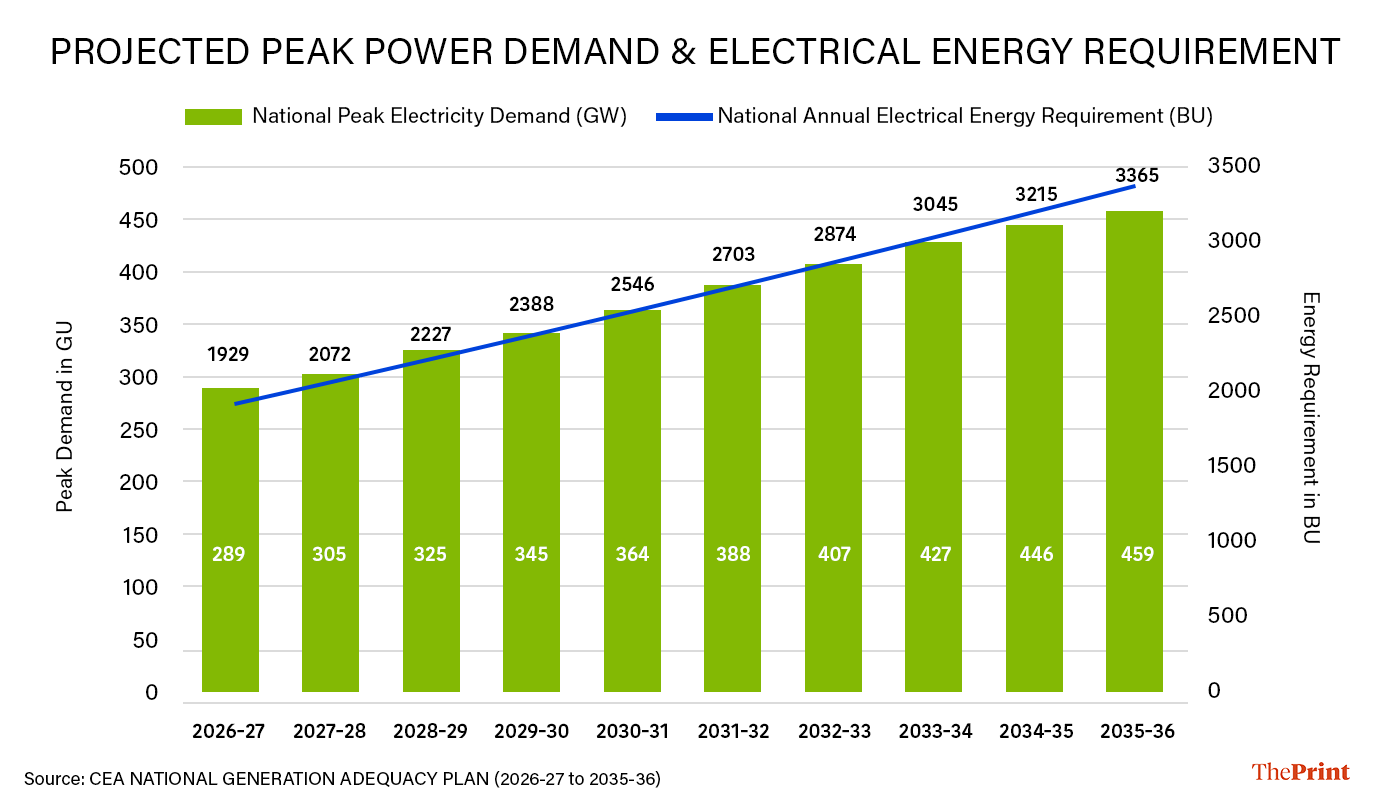
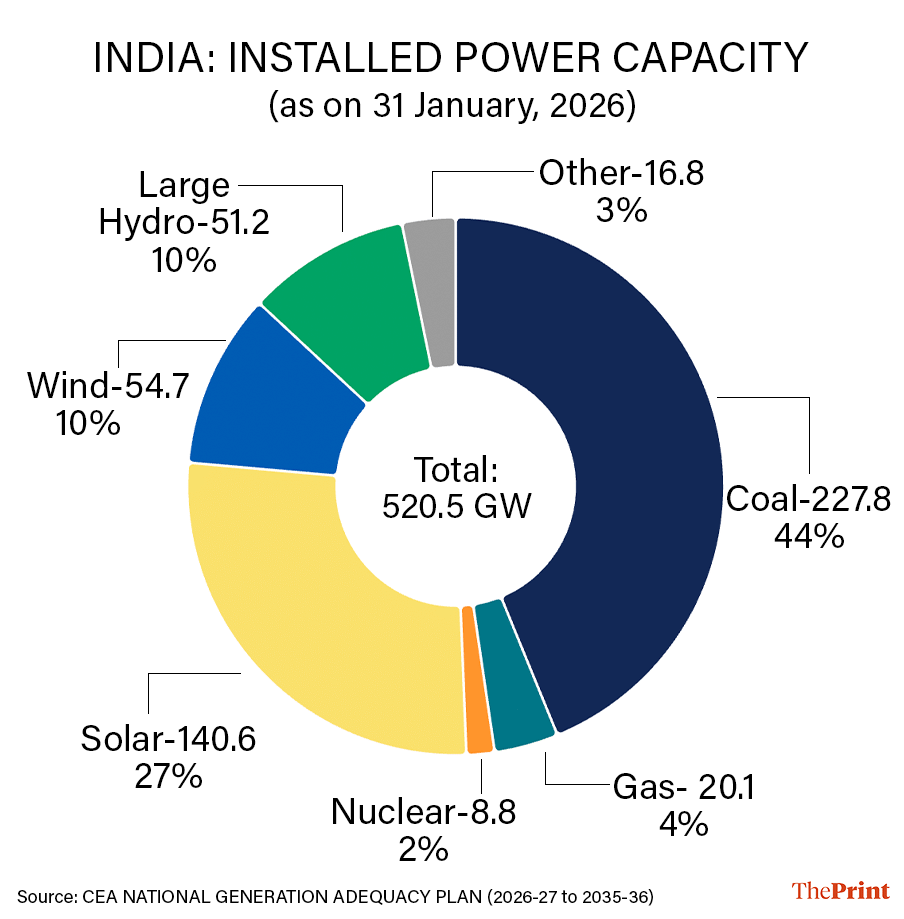
It is in accordance with this projection that the revised demand projections as per the CEA note suggest that India’s installed generation capacity required in 2035-36 has been assessed as 1,121 GW. As of 31 January 2026, the installed generation capacity in India stands at 520.5 GW. Data centres alone are expected to guzzle more than 13.6 GW power by 2032 and 16.4 GW by 2040, according to the CEA report.
State governments that have already received a significant chunk of investments are preparing cautiously.
Jitesh Patil, CMD of TSSPDCL told ThePrint that data centres now require an upgradation of power capacity. “Data centres suck power suddenly. A sudden surge can lead to half a gigawatt of power consumed and if we do not plan the transmission and distribution lines well, it could destabilise the grid because of the sudden voltage fluctuation causing tripping. We need power transmission lines of 132 KV capacity and above for data centres and so our transmission lines have to be augmented,” Patil said.
The Telangana state energy department is already in talks with the Ministry of Power and the CEA to ensure the state’s discoms work on adequate generation of power for domestic, commercial, and industrial power requirements. “The CEA and the ministry have asked us to look out for places in the state with good power transmission infrastructure and enough water resources,” he added.
To cater to the industry’s demand reliably, the Andhra government, on its part, through the Andhra Pradesh Electricity Regulatory Commission (APERC) has issued draft regulations and amendments—particularly regarding Resource Adequacy (2026), Green Energy Open Access (2024–2025), and Battery Energy Storage Systems (2025)—that directly impact the power sourcing, costs, and operational flexibility for high-consumption, critical infrastructure like data centres.
“AP and the country are well positioned to meet the challenges of data centres. We have dedicated power lines to meet the base load requirements and we are confident of meeting AP’s ambitious 5 GW plan by 2030. As chairman of the AP Confederation of Indian Industries, I can say that India’s energy security is a priority and we are not going to miss this wave of data centres for want of power,” said Murali Krishna Gannamani, CMD of Fluentgrid. The Vizag-based firm is involved in the digital transformation and infrastructure setup associated with the Google data centre.
(Edited by Viny Mishra)