





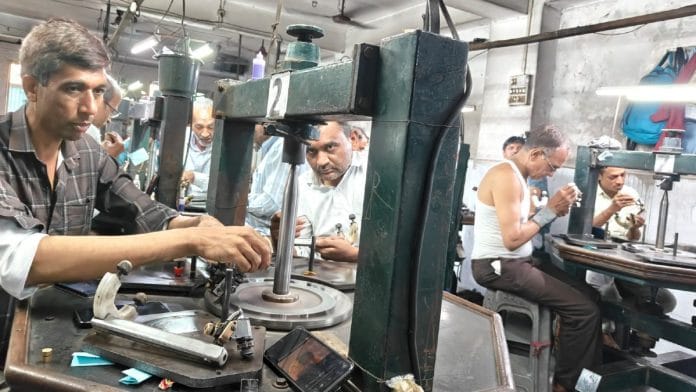



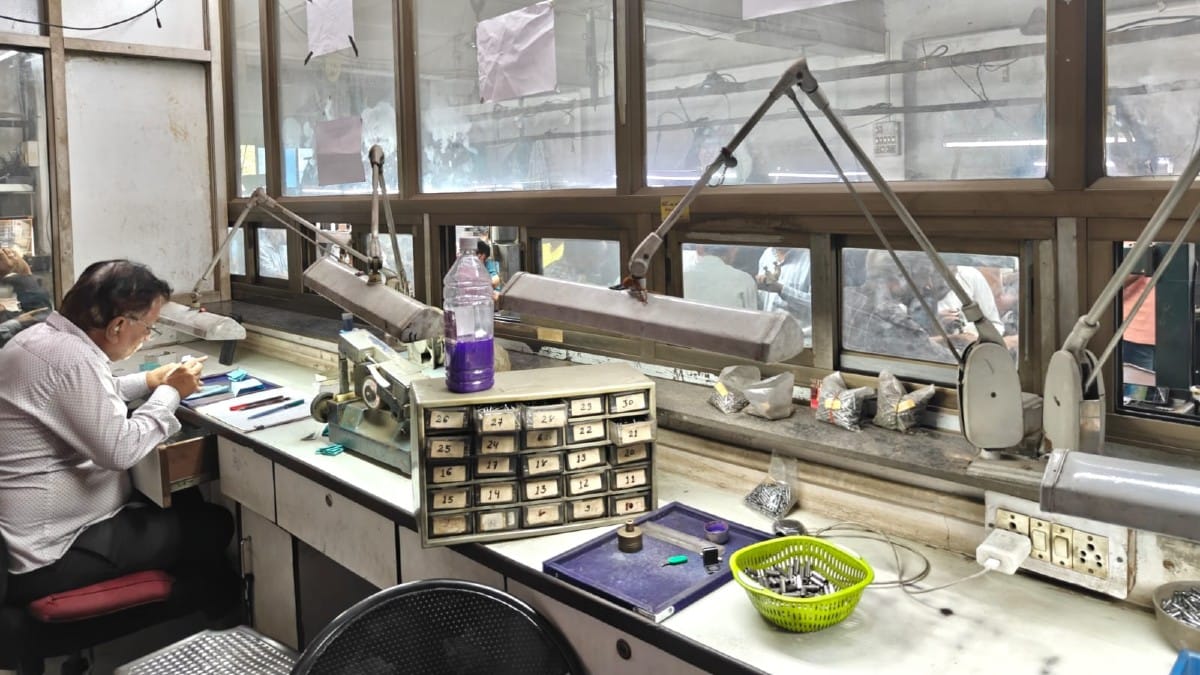
Surat: A quiet unease hangs over the relatively smaller diamond workshops in Surat, India’s Diamond City. Work continues, but beneath it simmers a growing anxiety. Demand is weakening, and livelihoods are at stake. As the war involving Iran, Israel and the US disrupts shipments and supply chains linked to the diamond industry, workers’ shifts have been cut from 12 hours to just 4 or 5 hours, sharply reducing incomes.
“There is barely any work, and no material to work with,” said Ram Yadav, a 34-year-old worker from Prayagraj, whose family has been in Surat for several years. “Every day we worry about what tomorrow will bring. I used to earn Rs 30,000 a month; now I make just Rs 13,000. I have two school-going children…I don’t know how I will manage their future.”
This, however, is in sharp contrast to the situation faced by many bigger players.
Manoj Jha, an industry expert, summarised it thus: “Smaller units in Surat are naturally more vulnerable during slowdowns because they operate with tighter working capital and shorter order visibility. Larger, more organised players, with diversified sourcing and stronger balance sheets, are able to continue operations without significant disruption.”
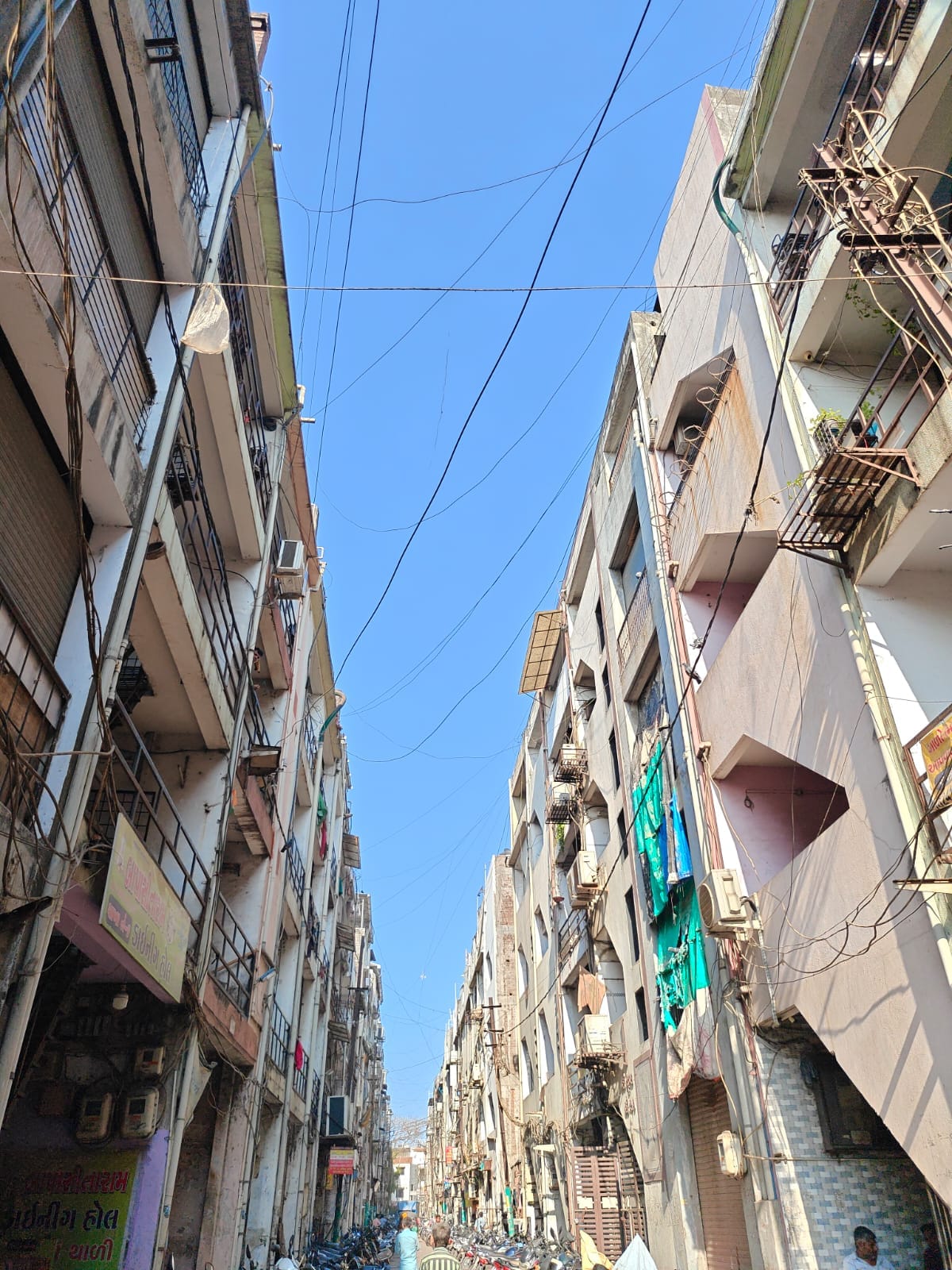
Smaller units which usually rely on larger players within Surat for rough diamonds find themselves in a precarious situation as the latter are no longer selling raw material due to supply chain disruptions and their inability to participate in Dubai auctions.
“We don’t have the financial capacity to withstand so many crises; many of our labourers have already found different avenues for employment because our profession is so unstable. We can’t guarantee salaries any more,” said the owner of a diamond polishing unit in Surat’s Kapodra area. “If within 4-5 days we don’t get raw materials we will have to pull the shutters down. We have already told our labourers. Our hands are tied.”
Industry data suggests that India’s gems and jewellery sector contributes around 7 percent to GDP and creates direct employment for 40-50 lakh people. Diamond merchants and workers in Surat said the industry has gone through one upheaval after another since the pandemic. Repeated disruptions, the latest being the war in West Asia—a key hub for the global diamond trade—is pushing them to seek alternative employment.
But most of them have had little to no access to formal education, leaving them with limited options for other avenues of employment. Twenty-six-year-old Yogesh Kotwal, who works in the machine department of a smaller diamond unit, said, “Most of our machines have shut down. We don’t have much to do. This is not the first time we’ve been idle. I am hoping some other industry opens up which pays well and can employ me.”
The Diamond Workers’ Union in Surat has repeatedly raised concerns about the plight of workers. Bhavesh Tank, vice president of the union which claims to represent more than nine lakh workers, said that “more than 80 workers have died by suicide in the last two years due to rising living costs and repeated disruptions in the diamond industry”.
“Workers have not been able to earn a decent living since the last few years, many have lost their jobs,” Tank said.
Also Read: Inadequate infra, global slowdown, rivalry & politics — Surat Diamond Bourse has rocky start
COVID-19, sanctions on Russian diamonds & Iran war
India processes over 90 percent of the world’s rough diamonds—nine in every ten diamonds sold globally are cut and polished in Surat, according to Gem and Jewellery Export Promotion Council (GJEPC) data. Stakeholders said the industry is particularly sensitive to global economic uncertainty, as diamonds are luxury items and demand for non-essential goods is often the first to decline when consumers cut back on spending.
The COVID-19 pandemic in 2020 was the first crisis of some magnitude to hit the diamond industry in Surat. It disrupted global jewellery demand and supply chains forcing temporary shutdowns of diamond mines, trading hubs and polishing units across the city.
The gems and jewellery sector was among the worst hit during the pandemic as its exports saw a record decline of 98 percent in April 2020 owing to the lockdown.
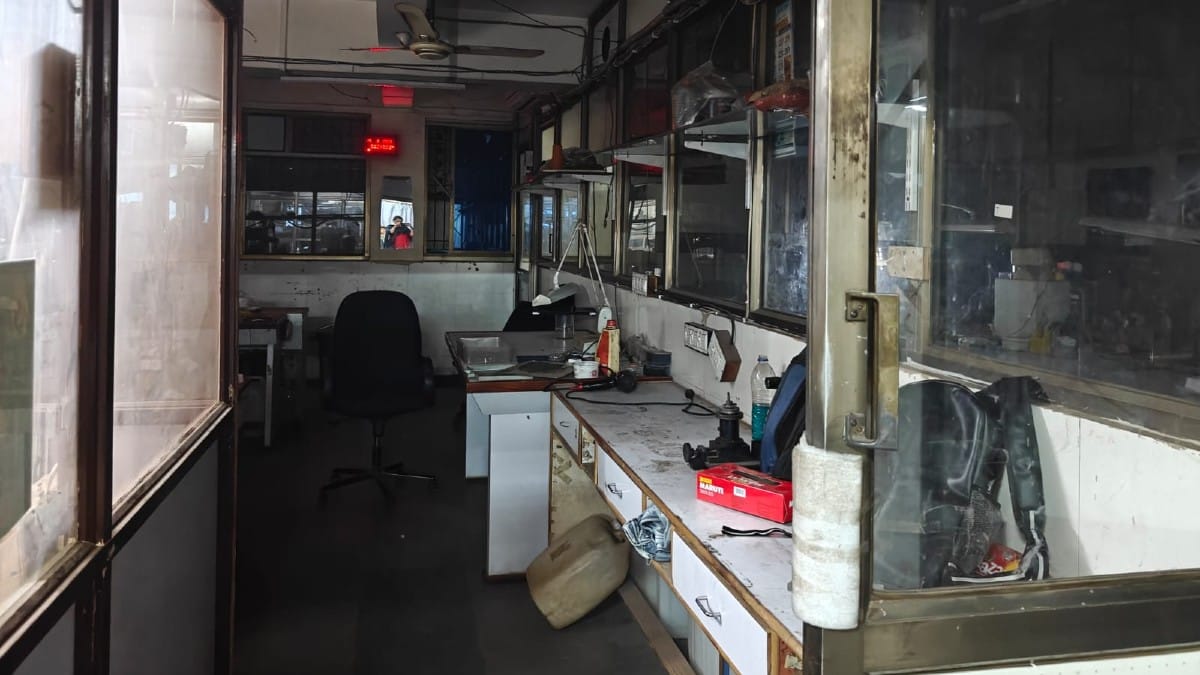
This was followed by the Russia-Ukraine war which triggered several sanctions on Russian diamonds—a key source of rough stones for the global industry. In 2023 the G7 countries banned Russian diamonds and later extended the ban to include diamonds mined in Russia even if they were cut or polished in other countries such as India.
Then, in April 2025, steep tariffs of up to 50 percent imposed by US President Donald Trump made Indian diamonds more expensive and harder to sell. Industry sources said that the ban on Russian diamonds led to losses of more than 30 percent year-on-year.
Across the city of Surat, diamond merchants emphasised that the industry has been caught in a cycle of crises, leaving little room for recovery.
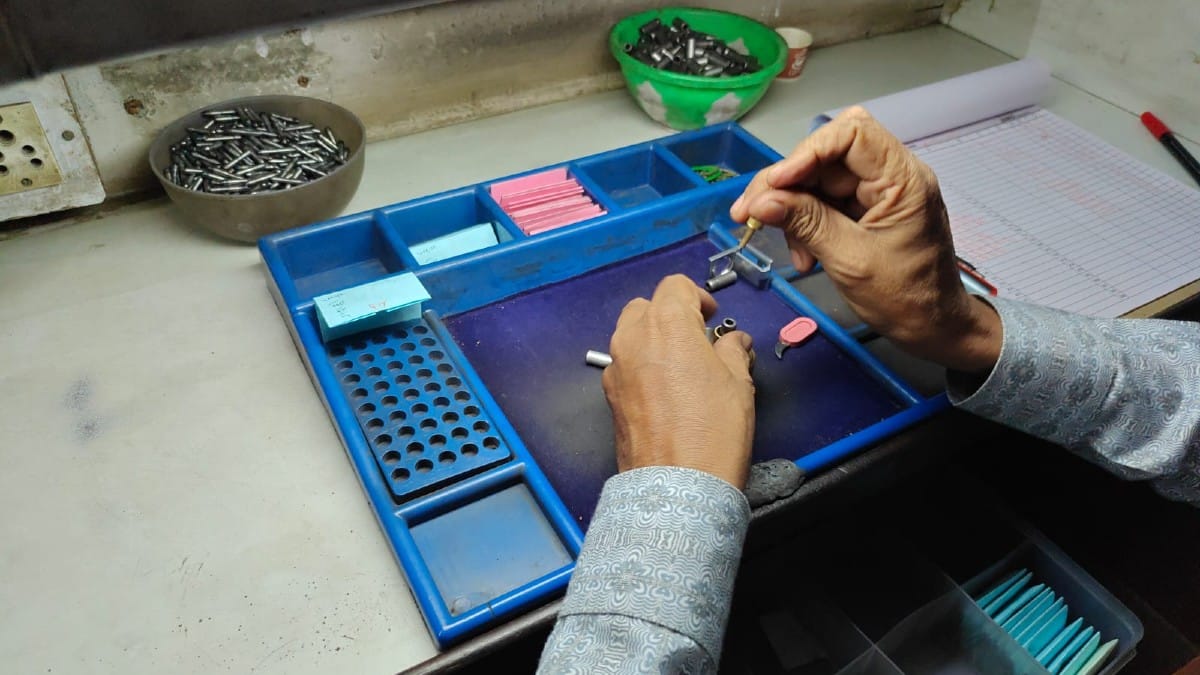
Ramesh Parmar, owner of a small diamond unit, said, “We have been trying to get back on our feet for the past five years. The entire world came to a standstill during Covid, and then we were hit by the ban on Russian diamonds, which form a significant part of our market.
“We could have recovered after tariffs imposed by Donald Trump were eased, but now there is another war—and we don’t know when it will end.”
Two sides of the diamond
While smaller diamond workshops grapple with a quiet downturn, larger firms in Surat appear insulated from the current crisis. The divide between those who can weather the storm and those barely surviving is stark.
Jagdish P. Khunt, president of the Surat Diamond Association, an industry body representing thousands of diamond manufacturers and merchants in the city, said the war in Iran has not affected them yet. “We have stock for the next three months. But if the war goes on for longer, there may be a slight cause of concern,” he told ThePrint.
Khunt added that most association members found a way around the disruptions. “Be it the tariffs or the Russian crisis, we have always found a way and survived through it all.”
Jayantibhai N. Savalia, chairperson of the Gujarat chapter of the Gem and Jewellery Export Promotion Council (GJEPC), too, maintained that there is no immediate crisis for the diamond industry in Surat.
“There is no loss for the diamond industry as of now. The effects of such conflicts are usually seen over time. It will be a slight cause of concern if this goes on for the next three months; but we hope to find a solution, every crisis creates opportunities for us,” he said.
Summarising this contrast between smaller and bigger players in the diamond industry, Manoj Jha said while bigger players have the financial backing to diversify and absorb shocks, smaller units are bearing the brunt. For them, the challenges are immediate—reduced export orders, rising input costs, and limited access to credit.
“Setting up even a basic CVD (Chemical Vapor Deposition) lab costs crores. You need specialised machines and trained manpower, which small units simply can’t afford. It also requires scale and uninterrupted power supply,” said a diamond merchant in Surat, requesting anonymity.
Industry players also said the shift towards lab grown diamonds has provided larger firms with a buffer against supply disruptions, as production is not dependent on imported rough stones. But the profit margins for lab grown diamonds is much lower.
Also Read: At least 3 lakh Surat diamond workers sent on ‘vacation’, but reality isn’t as sparkly as it sounds
Lab grown diamonds
The market for lab grown diamonds is rapidly gaining ground globally, valued at around $30 billion and expected to grow at over 13 percent annually, according to industry estimates. They are typically 60-80 percent cheaper than natural diamonds and are nearly impossible to distinguish with the naked eye, even for experienced manufacturers.
With a growing number of units shifting part of their operations to the segment in recent years, lab grown diamonds have also taken root in Surat.
Industry estimates suggest that 25-30 percent of diamond polishing units in the city now handle lab grown stones. “We have begun producing lab grown diamonds, which are seeing rising demand in India and overseas. They don’t depend on imports, we can continue to produce and sell them. Lab grown diamonds make up roughly 15-20 percent of India’s local jewellery market,” said Khunt of the Surat Diamond Association.
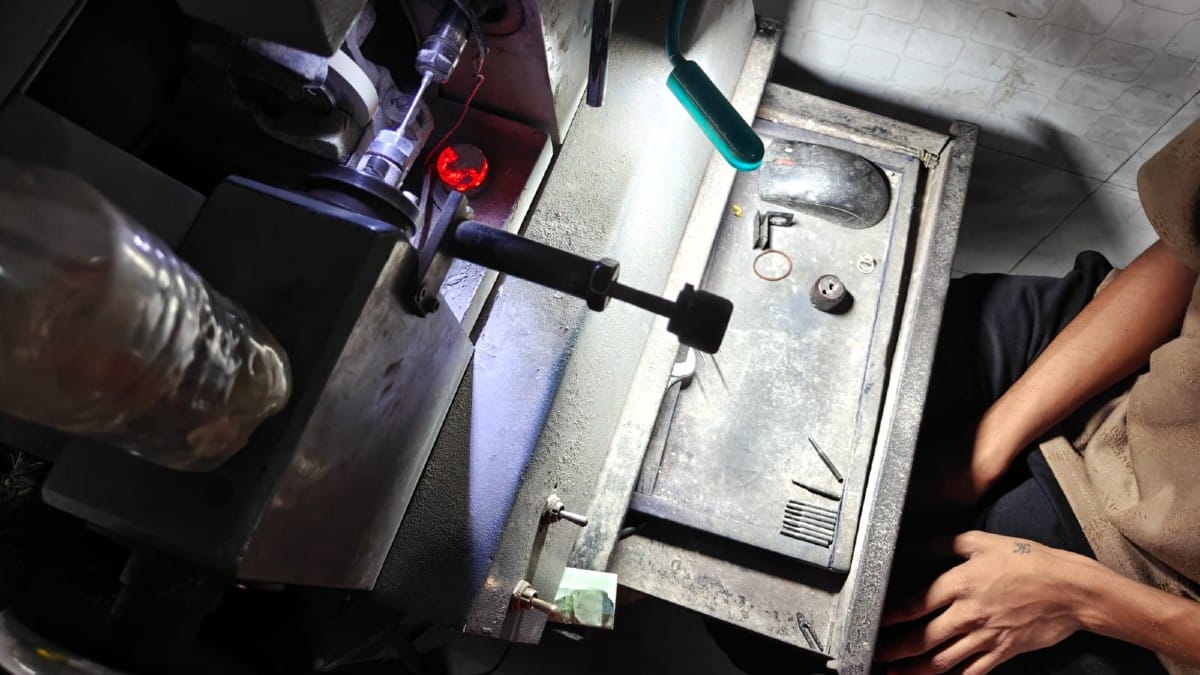
“Most people who couldn’t afford diamonds earlier buy lab grown ones now, we don’t make a lot of money selling them but it is enough to keep our labourers employed and our units running,” said another Surat-based diamond merchant who did not wish to be named.
While larger companies have been better able to diversify and find alternative revenue streams, small scale companies are struggling to shift to lab grown diamonds due to technical complexities involved and the large sum of monetary investment required.
The rise of lab grown diamonds has also, to some extent, squeezed the profits of the smaller companies. “Lab grown diamonds are not high on profits and we cannot compete with the big companies in production because we don’t have the big fancy units and necessary equipment” said the owner of a small-scale unit in Surat.
Shifting auctions: Dubai to Surat
The disruptions have forced smaller-scale players in the diamond industry to think out of box and experiment with new ideas.
For instance, two Dubai-based diamond trading firms are in discussions with India’s gems industry body to shift rough diamond auctions to Surat, as the Israel-US and Iran war chokes Gulf trade routes and brings shipments to and from the UAE to a near-standstill.
Koin International and Stargems Group have approached the Gem and Jewellery Export Promotion Council (GJEPC) in Surat to explore organising regular competitive bidding events for uncut stones in the city, sources familiar with the development said.
Surat merchants, who have traditionally flown to Dubai to bid for rough stone parcels and bring them back for cutting and polishing, have largely stopped making those trips—a combination of disrupted trade routes and shaken confidence in Gulf-bound air travel. “The companies want to conduct auctions here regularly, not just exhibitions, possibly every two weeks or once a month,” Ashish Borda, a GJEPC member, said.
Dubai has emerged as one of the world’s most important hubs for the diamond trade, serving as a key link between diamond producers and processing centres. Miners from across the world—particularly Russia, Botswana, Angola and South Africa, bring their rough diamonds to Dubai, where they are sold to merchants and manufacturers who then send them for cutting and polishing in processing hubs such as Surat.
In recent years, Dubai has also emerged as an important stopover for Russian diamonds after Western sanctions restricted their access to markets in Europe and the United States. Its zero-tax policy and business-friendly regulations have helped brandish its credentials.
But shifting the auctions to India won’t be straightforward. Firms getting rough diamonds face strict customs checks and a 0.25 percent Goods and Services Tax (GST). This levy applies more than once, covering the initial import for viewing and again on re-import after the auction.
Industry leaders told ThePrint that this multi-stage customs process is the single biggest deterrent. Few merchants would willingly absorb the cost and administrative burden of repeated levies unless the disruption to existing routes left them with no alternative.
Talking to ThePrint, Savalia of the GJEPC urged the government to simplify regulatory and trade procedures to facilitate diamond trading in India. “It’s high time the government makes things easier for merchants. Surat is already a manufacturing hub and has the potential to become a major trading hub as well,” he said.
India’s diamond exports have plunged to their lowest level in nearly two decades, with cut and polished diamond exports dropping from $22.05 billion in 2022–23 to $15.97 billion in 2023–24, and falling further to $13.3 billion in 2024–25, according to the GJEPC.
Meanwhile, in Surat’s diamond workshops, that quiet unease lingers. Survival has replaced growth as the central concern as an industry—once a symbol of global dominance—finds itself navigating back-to-back shocks.
(Edited by Amrtansh Arora)