





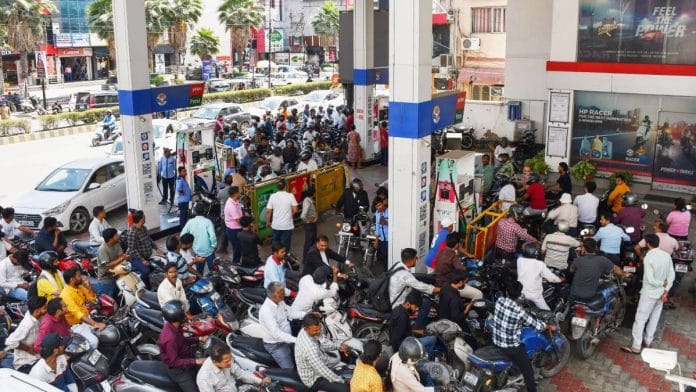



New Delhi: The Centre Friday moved to cushion consumers from rising fuel prices by cutting the central excise duty on petrol and diesel by Rs 10 per litre, even as global supply concerns and domestic price pressures intensify.
In a post on X, Finance Minister Nirmala Sitharaman announced the Rs 10 per litre reduction in central excise duty on petrol and diesel for domestic consumption, citing the ongoing West Asia crisis.
She said the decision aims to protect consumers from a surge in fuel prices, adding that Prime Minister Narendra Modi has consistently sought to shield citizens from volatility in essential goods.
She also said export duties have been imposed: Rs 21.5 per litre on diesel and Rs 29.5 per litre on aviation turbine fuel (ATF), to ensure adequate domestic availability, noting that Parliament has been notified.
In view of the West Asia crisis, the central excise duty on petrol and diesel for domestic consumption has been reduced by ₹10 per litre each. This will provide protection to consumers from rise in prices. Hon. PM @narendramodi has always ensured that citizens are protected from…
— Nirmala Sitharaman (@nsitharaman) March 27, 2026
Petroleum Minister Hardeep Singh Puri, in a separate post, highlighted the sharp surge in international crude prices—from about $70 per barrel to nearly $122 per barrel over the past month—which has driven fuel price up globally. He noted that petrol and diesel prices have risen by 30% to 50% across several regions, including South-East Asia, North America, Europe and Africa.
International crude prices have gone through the roof in the last 1 month from around 70 dollars/barrel to around 122 dollars/barrel. Consequently, petrol and diesel prices for consumers have gone up all over the world. Prices have increased by around 30%-50% in South East Asian…
— Hardeep Singh Puri (@HardeepSPuri) March 27, 2026
Puri said the government faced a choice between passing on the steep increase to consumers or absorbing the shock through its own finances. He said the Centre opted to take a revenue hit to cushion citizens, adding that oil companies have been incurring significant losses—estimated at about Rs 24 per litre on petrol and Rs 30 per litre on diesel—amid elevated global prices.
The government’s move comes after a price hike made by Nayara Energy, the country’s largest private fuel retailer, which raised petrol prices by Rs 5 per litre and diesel by Rs 3 per litre. The company, which operates close to 7,000 fuel stations, passed on part of the increase in input costs to consumers Thursday, PTI reported.
Fuel retailers in India have been under pressure as domestic pump prices remained largely unchanged despite a steep rise in global crude, which has surged by more than 50% since late February amid escalating geopolitical disruptions linked to the Strait of Hormuz—a critical energy corridor that handles one fifth of global oil flows and around 50% of India’s crude oil imports.
Against this backdrop, the excise duty cut, coupled with export curbs, is aimed at stabilising domestic fuel prices and ensuring adequate supply in the face of heightened global uncertainty.
(Edited by Nida Fatima Siddiqui)