





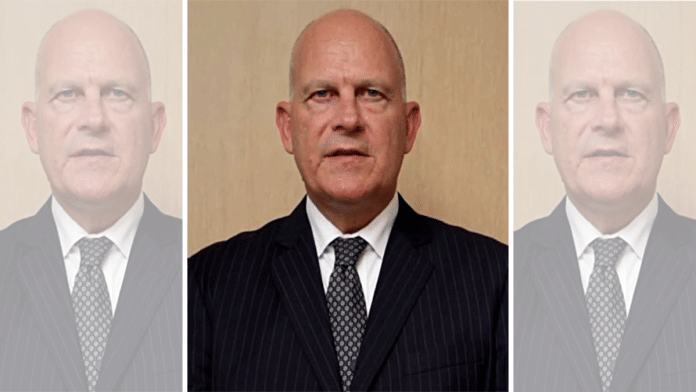



New Delhi: Air India announced the resignation of its Chief Executive Officer Campbell Wilson, who will remain till a successor is found by the Board of Directors.
Appointed CEO and Managing Director in May 2022, the New Zealand-born Wilson’s contract was to expire in June 2027.
“Mr. Wilson had conveyed his intention to step down in 2026 to Air India Chairman N. Chandrasekaran in 2024 and, since then, has been working to ensure the organization and leadership team is on a stable footing for the transition. He will remain in the role until his successor is announced and in place,” Air India said in a release Tuesday.
Wilson informed employees of his resignation through an official memo on Tuesday afternoon amid persistent losses and increased regulatory oversight following the AI 171 crash, ThePrint has learnt.
Sources say the Tata Group had begun scouting for a new CEO earlier this year, with the Board in talks with potential candidates as frustration grew over rising losses, operational failures, increased oversight, and the reputational damage following the Air India crash
The development comes days after Air India’s biggest rival IndiGo, hired aviation industry veteran Willie Walsh as its next CEO replacing Peter Elbers.
The sources suggest that the Board is considering a major revamp for the leadership roles at the Air India group.
According to government data and industry estimates, Air India’s losses have widened from around Rs 4,400 crore in FY24 to over Rs 9,500 crore in FY25, with projections of about Rs 15,000 crore this year, losses are further expected to rise.
He had been associated with Singapore Airlines, and was also the managing and founding CEO of low cost carrier Scoot.
The New Zealand-born CEO launched Vihaan.AI—Air India’s five year transformation roadmap—in 2022. The plan focussed on rebuilding the airline by ordering more aircraft, improving reliability and striving to increase market share to at least 30 percent in the domestic market.
Wilson had then described Vihaan.AI as the beginning of a major transformation, focused on rebuilding Air India into a world-class airline with global standards and a strong Indian identity. Industry experts, however, say the project saw ‘limited success’.
The Indian aviation sector has been going through a turbulent phase, with the Iran conflict and the Pakistan airspace closures adding to operational challenges. These closures have increased flying time and costs, while geopolitical tensions have pushed up fuel prices and disrupted routes. At the same time, operational and safety lapses at Air India have drawn heightened scrutiny.
(Edited by Tony Rai)
Also Read: 2nd incident in 10 days: Air India A350 turns back mid-air due to ‘excessive noise’