





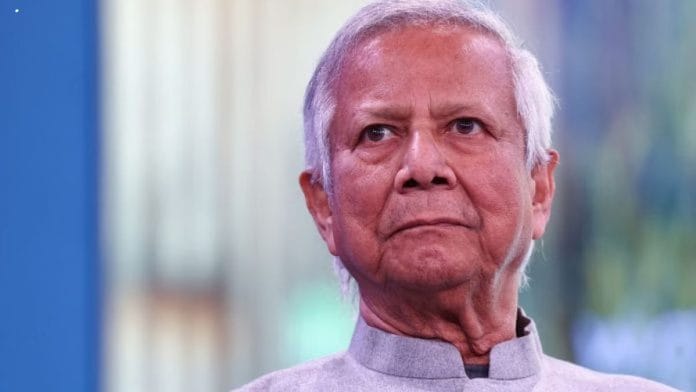



Dhaka: Muhammad Yunus, chief adviser to the now-dissolved interim government in Bangladesh, formally resumed duties at the Yunus Centre Sunday. The Nobel-winning economist who spent the past 18 months leading Bangladesh’s interim government resumed his role and convened meetings with the think tank’s managing director and advisers.
Later, he exchanged views with representatives of several rural organisations, including Grameen Bank. His reappearance at the centre marked both a symbolic and practical shift, as he reorients himself toward social business initiatives after being at the helm of the country’s affairs during a particularly turbulent political chapter.
According to sources familiar with the matter, Yunus intends to remain in Bangladesh for the time being and will formally resume activities at the Yunus Centre beginning next week.
His immediate focus will be advancing his “Three Zero” initiative—a framework calling for zero poverty, zero unemployment and zero net carbon emissions—which he has promoted globally as a blueprint for a more equitable and sustainable economy.
The former chief adviser had moved into a state residence during his tenure as head of the interim government and plans to return at the end of the month to his private home in Gulshan, an upscale neighborhood in Dhaka, once minor renovation work is completed.
In the third week of March, Yunus is expected to travel to Japan at the invitation of the Sasakawa Peace Foundation for a five-day program of lectures, meetings and discussions on potential collaborations.
Meanwhile, discussions about whether Yunus will receive the presidential post began after PM Tarique Rahman’s swearing-in. Most analysts ThePrint spoke to denied that Yunus might be nominated as President by the BNP.
“He was never offered the position and does not want to go back to administrative matters at all,” a person within BNP familiar with the matter told ThePrint.
Bangladesh’s presidency, long a largely ceremonial office, has suddenly become a position of intrigue. The current president, Mohammed Shahabuddin, whose term runs until 2028, has publicly expressed a desire to step down, saying in an earlier December interview that he felt sidelined during Yunus’s 18-month tenure as interim chief adviser.
BNP loyalists Khandaker Mosharraf Hossain and Abdul Moin Khan are some whose names have circulated in Dhaka’s political circles. But the passage of the July Charter, approved in a referendum after the 2024 uprising that toppled the Awami League government, has complicated the calculus.
The charter proposes expanding presidential authority, including greater discretion in key appointments to oversight and regulatory bodies. Analysts argue that these changes could transform what has historically been a ceremonial role into a potentially assertive counterweight to the prime minister.
(Edited by Amrtansh Arora)
Also Read: Bangladesh lost on all fronts under Yunus. A herculean task awaits the new PM