








New Delhi: The Iranian economy was already in a shambles and the country’s war with the US, which has entered the sixth week, has pushed it to the brink of collapse with the local currency Rial touching 1.58 million to a US dollar.
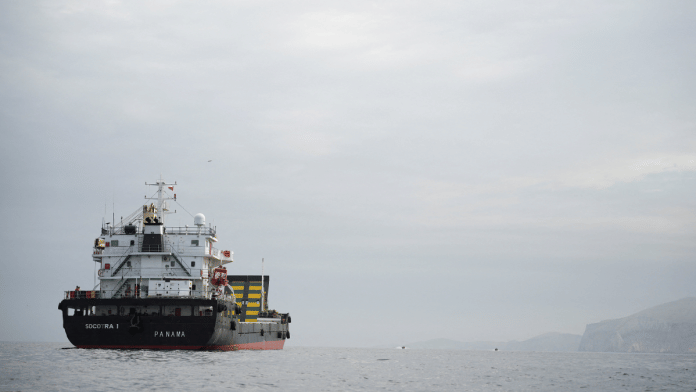
US President Donald Trump seeks to squeeze it further by imposing a naval blockade starting Monday on ships sailing from Iranian ports through the Strait of Hormuz.
This not only potentially curtails the outward flow of Iranian oil, impacting the ability to raise funds for Islamic Revolutionary Guard Corps from (IRGC), but also affects every import.
The state of its economy indicates why the Iranian government pushed for sanctions relief as part of its 10-point proposal for peace ahead of the Islamabad talks over the weekend with the US. While the talks failed, sanctions relief remains Tehran’s priority.
High inflation and the collapse of the Iranian Rial led to massive protests across the country last year starting from December.
The Iranian Rial swiftly devalued last year after the 12-day conflict with the US and Israel. It fell to around 136,000 to a US dollar in December 2025 from around 81,750 to a dollar at the start of the year, according to currency tracking website Bonbast.com.
While the Iranian government took all measures, including those involving violence to put down the protests, fears over its economy remains a larger threat to the regime, despite its declaration of a strategic victory over the US and Israel, following the agreement for a two-week ceasefire last week.
The Rial is trading at around 1.58 million to a US dollar, indicating an almost tenfold depreciation over the last six months, according to Bonbast.
Amidst the war, Tehran last month introduced its largest ever denomination—a 10 million Rial currency note—which is equivalent to around $7, as prices continue to rise across the country for basic needs.
Annual inflation was around 50 per cent just before the start of war, while food prices have increased by around 6 per cent due to the war, according to central bank data cited by The Economist.
The damage to Iran’s economy is much greater as the US and Israel have targeted its factories, parts of its critical infrastructure, leaving any rapid recovery of the economy challenging. The Iranian economy shrank last year, with at least six out of 10 people believed to be out of work, according to The Economist.
Also, the Internet blackout across Iran over the last month has further impacted the service sector, which accounts for the employment of roughly half of the country’s workforce. Another sign of a struggling economy is the split between the IRGC and the civilian economy.
The IRGC continues to maintain a business empire across Iran, while being the key part of the administration’s defence.
The war allowed Iran relief in the export of oil, at least that which was already stranded at sea, which is reported to have aided the IRGC in gaining much necessary funds.
The IRGC processed around half of the country’s oil export while also earning money from tolls charged to ships seeking to cross the Strait of Hormuz in the last month, reports Fortune. Tehran’s oil revenues were worth roughly $30 billion in 2025.
A US naval blockade on Iranian ports could negatively affect the IRGC’s ability to raise revenue, which would further strain an economy already isolated due to international sanctions. Under President Trump, the US has reinstituted its “maximum pressure” campaign on the Iranian economy, with a stricter sanctions regime, further affecting the country’s economy.
Also Read: Islamabad talks conclude on a cliffhanger. Iran says Vance-led delegation ‘failed to gain our trust’
The state of Iranian economy
While Tehran has looked emboldened by the ceasefire and its ability to close the Strait of Hormuz, effectively blocking one-fifth of global energy supplies, the Iranian government is still looking at solving its own economic problems.
There remains a threat of further street protests across the country, despite the IRGC effectively repressing the demonstrations that posed a threat to the administration earlier this year. The country remains on the brink of economic collapse, according to Reuters.
A former official told Reuters, that the state of the economy could spur another round of street protests, which “haunted” every decision made by the current government. The official further said that without sanctions relief and the release of frozen funds, the Iranian government could fail to pay its State employees, let alone rebuild the country.
An Iranian official further told Reuters, that the country “will face a disaster” if sanctions are not waived. The Iranian government has further not disclosed economic data since the war began. In some cases, Iranians have said that prices for essentials have grown by around 40 per cent in the last month, reported Reuters.
Any US naval blockade could further impact the IRGC, adding a layer of pressure on the government. The IRGC has been able to maintain its funding through oil sales, manufacturing and illicit sales, according to The Economist.
The British magazine further highlighted that given the shortage of cash, the IRGC has been paid in oil by the government, which the Guards process and have been able to supply to China to evade international sanctions.
By imposing a blockade on Iranian ships from the Strait of Hormuz, President Trump is aiming at the IRGC’s finances, which could further weaken its ability to safeguard the administration.
(Edited by Ajeet Tiwari)
Also Read: After Trump’s Hormuz blockade order, CENTCOM clarifies it will implement blockade of Iran ports