








New Delhi: India Friday slammed Pakistan’s Army Chief Asim Munir for telling Pakistani Shias to ‘go to Iran’ if they “love Iran”, terming the comments as a “systemic victimisation of minorities including the Shia minority in that country”.
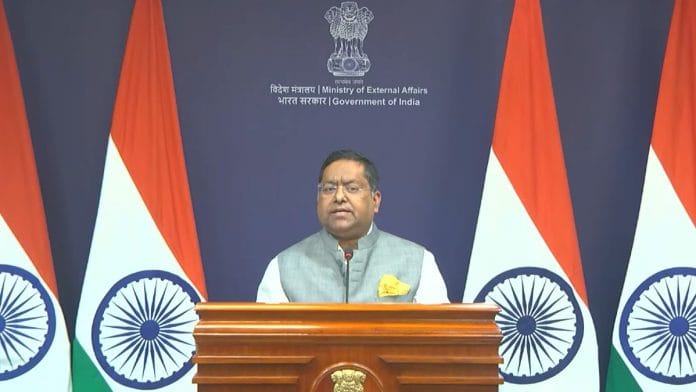
“We have seen reports on the issue. Such comments are not isolated incidents but are part of Pakistan’s systemic victimization of minorities, including the Shia minority in that country. The shrinking numbers of minorities in Pakistan reflect the decades of fear, marginalization, oppression and neglect that they have had to endure at the hands of the Pakistani state,” Randhir Jaiswal, the spokesperson for the Ministry of External Affairs said at a regular press briefing.
“The abysmal record of Pakistan when it comes to protection of human rights of minorities is also well documented,” he added.
Last week, Munir in a meeting with Shia clerics had made the aforementioned comments, which was widely criticised by the community within Pakistan. Islamabad has sought to reposition itself across the region, aligning closely with the Sunni-majority Saudi Arabia in recent months.
The comments were made at an Iftar gathering in Rawalpindi last Thursday. Munir’s comments were perceived by the Shia community as a means to appropriate blame to the minority community after parts of Pakistan witnessed violence following the killing of Iran’s Supreme Leader Ayatollah Ali Khamenei on 28 February in a combined US-Israel air strike.
The conflict in West Asia is now entering its fourth week, with Islamabad playing a role in conveying messages between the US and Iran as Washington looks to a potential exit ramp from the ongoing war.
Shia leaders within Pakistan were quick to call Munir’s comments out for being offensive. The framing was considered as problematic by the Shia clerics, as Munir was blaming the community for the unrest in Gilgit-Baltistan, as reported by ThePrint.
At least 15 percent of Pakistan is made up of members from the community, making it the second largest home for Shias after Iran. Protests following the killing of Khamenei spiralled. In Karachi, US marines opened fire on protesters after they stormed the American consulate in the city.
Pakistan’s Deputy Prime Minister and Foreign Minister Ishaq Dar Thursday was quick to assert that Islamabad is not playing the role of a mediator between the US and Iran, but conveying messages between the two governments. The distinction is important, given fears that any failed mediation effort could further hurt the sentiments of the Shias in Pakistan.
Protests were put down with some degree of violence by the state across Pakistan. Protesters in Islamabad were tear-gassed by the police forces as they were marching towards its diplomatic enclave. In Skardu, a United Nations building was set on fire too by protesters.
Shias have faced different forms of persecution within Pakistan, despite Muhammad Ali Jinnah, the founding father of the country coming from the community. In 2025, Pakistan signed a mutual defence agreement with Saudi Arabia, marking a significant upgrade in ties between the two countries. In Saudi as well, reports indicate that the community faces numerous challenges. Despite Munir’s comments, the Pakistani government has come out and criticised the attacks on Iran, while also condemning Tehran for its retaliation against the rest of the Gulf countries.
(Edited by Amrtansh Arora)