





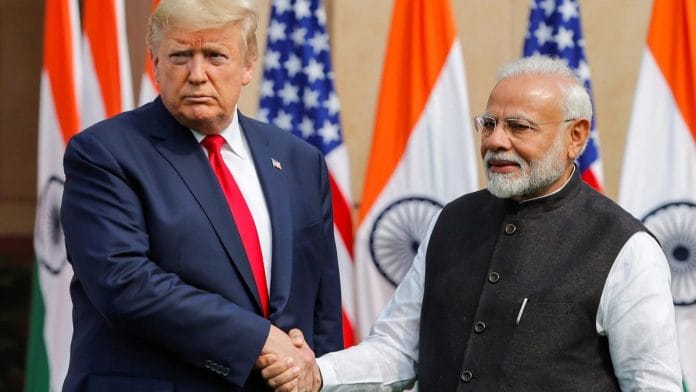



The US-India trade deal is many things, but a respectful accord between two major economies it is not. It tracks closer to an IMF bailout, only instead of receiving aid for reform, India will pay $500 billion to rehabilitate itself in America’s strategic orbit.
While rivals Thailand, Malaysia, Indonesia, and Vietnam secured settled agreements, the text that greeted Indians Saturday made it clear: This is the framework to an “interim” pact. Indian exporters are getting a discount on the 50% duty they have faced since August — half of which was punishment for allegedly financing Vladimir Putin’s war in Ukraine via purchases of Russian oil.
But what follows is not a pardon. It is parole.
In a separate order, US President Donald Trump announced a committee, led by Commerce Secretary Howard Lutnick, to monitor whether India “directly or indirectly” imports Russian oil. Based on the panel’s advice, the US could snap back the 25% punitive duty. “Our trade deal has nothing to do with oil,” Indian Commerce Minister Piyush Goyal said in a TV interview, adding that the geopolitical issue falls outside his remit.
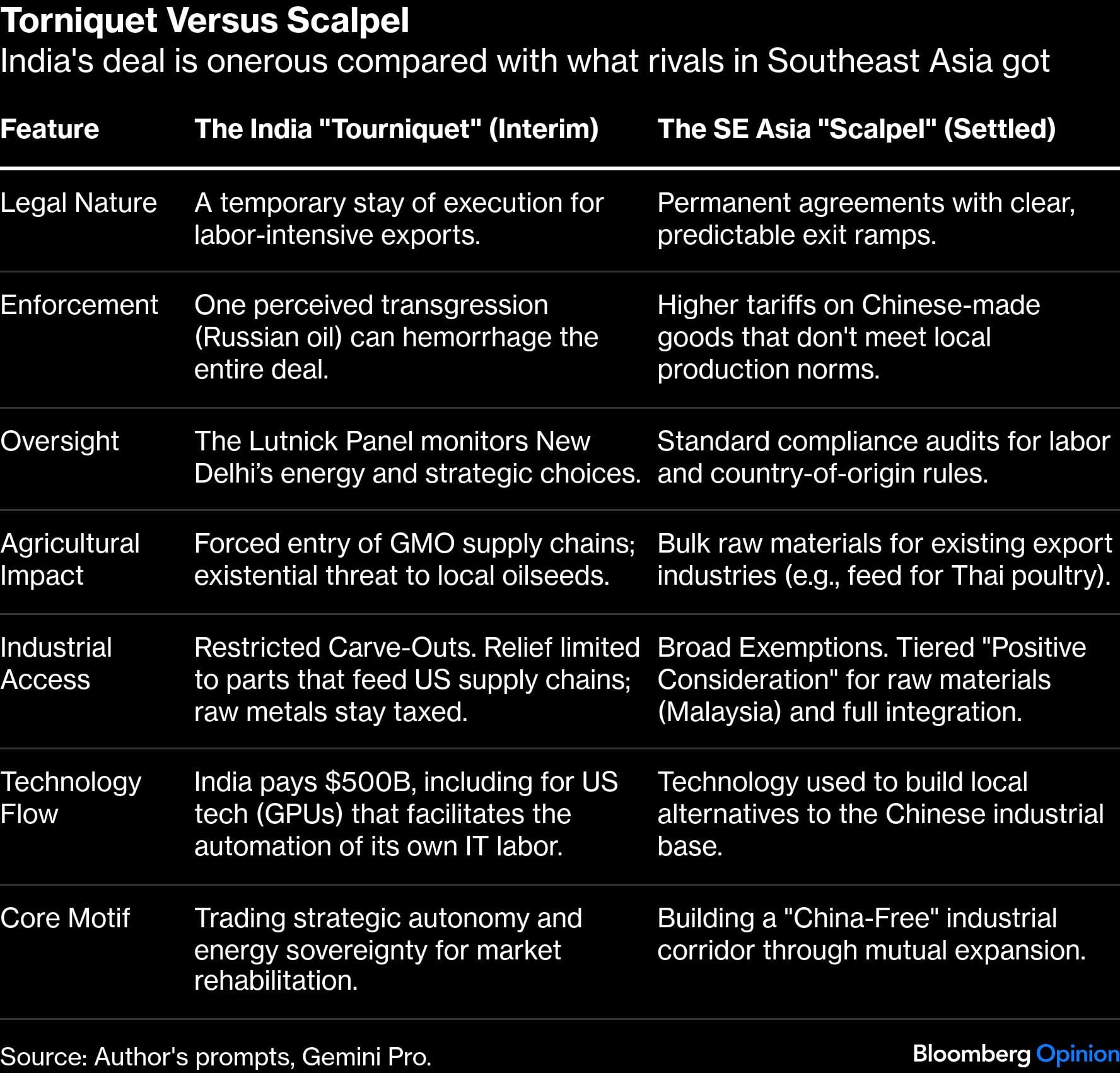
But Trump’s maneuver is very much about trade. He now controls the tourniquet keeping labor-intensive Indian exports from bleeding out — and he can tighten or loosen it at any time. This differs from the “scalpel” approach used in Southeast Asia. There, if a Vietnamese consignment is suspected of laundering Chinese goods, it is marked out for higher tariffs. The specific supplier could be blacklisted. In India, a perceived transgression might cause the entire deal to hemorrhage.
This anxiety will spike compliance costs that Prime Minister Narendra Modi should have anticipated. US giants like Walmart Inc. and Target Corp. might require factories in Tirupur, a textile hub in Tamil Nadu, to sign affidavits disavowing use of “indirect Russian energy.” (How will the manufacturers even know?) Exporters will demand “snapback clauses” in contracts to protect against sudden tariff spikes, lest buyers sue them for nonadherence to pre-agreed prices. Shipments to India’s largest overseas market will grow again under the newly reduced 18% tariff, but they may encounter tremendous operational uncertainty.
To an older generation, the accord mirrors the 1991 rescue by the International Monetary Fund following a balance-of-payment crisis. That capitulation was cathartic, forcing India to dismantle a Soviet-style planned, socialist economy and embrace global trade and capital. Today’s bargain restores market access by asking India to repudiate strategic autonomy. While the IMF is a multilateral body, accepting Trump’s oversight is a surrender of energy sovereignty to a single foreign power.
The political price is high. India has agreed to open crucial parts of its $580 billion agricultural sector immediately. The US has gained export access for animal feeds derived from genetically modified corn. This is unfair to Indian farmers who aren’t allowed to grow transgenic food because of environmental and biosafety concerns. Nevertheless, GM soy oil has long been allowed. Now that the interim deal has promised concessional duties, it might enter India in even larger quantities. That could stifle any revival of indigenous substitutes like mustard or groundnut already weighed down by imports of Indonesian and Malaysian palm oil.
The US sees the accord as a clear win, with Agriculture Secretary Brooke Rollins saying that it would lift prices and pump cash into rural America. The triumphalism is making farmers’ groups in India nervous. They have vowed strikes against this “total surrender,” fearing that the influx of US commodities will ultimately destroy the so-called minimum support price system that serves as their safety net. Farmers in north India are a politically powerful lobby group, with a history of successful anti-government agitation.
Finally, the $500 billion price tag. India has committed to spend this over five years on US military hardware, energy, and tech products. Chalk up at least a fifth of the expenditure to chips and servers for AI data centers. But the tokens that emerge from that spending will hardly be a substitute for the coming decline of software code-writing — and the disappearance of the many jobs it supports.
How will India fund a near-doubling of imports from America, flipping a trade surplus into a deficit? The joint statement promises little new access — only a restoration of what was lost to punitive taxes, plus some concessions on aircraft parts and auto components.
Even the vital pharmaceutical sector remains in limbo, with the US refusing to close its national security investigation into generic drugs. The “pharmacy of the world” has been promised a negotiated outcome, but for that to happen the rest of agreement may have to work to Trump’s satisfaction. As long as uncertainty persists, the Indian tycoons who control this trade would rather put up their next factory in the US than India, effectively hollowing out the domestic manufacturing base to satisfy the White House.
The stock market will welcome the interim deal, even if onerous conditions delay or derail a final version. At least in the short term, India will dodge widespread industrial closures in sectors like textiles and jewelry, and New Delhi won’t have to boost fiscal spending to deal with job losses. The government’s bloated borrowing plan for the coming fiscal year, a source of concern for markets, won’t spiral out of control.
But what about the long-term impact? The 1991 reforms boosted labor productivity, though that impulse is now a spent force, and youth unemployment is approaching alarming levels. One enduring benefit would be an alignment of India’s burdonsome quality standards with the US. Overall, though, it is doubtful if the pain inflicted by Trump’s one-sided deal will set India up for a rekindling of animal spirits.
Disclaimer: This report is auto generated from the Reuters news service. ThePrint holds no responsibility for its content.