





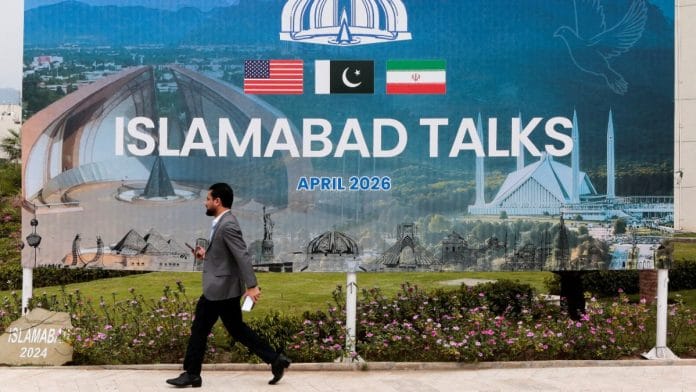



New Delhi: After more than 21 hours of intensive negotiations, which marked the first direct high-level engagement between Washington and Tehran since 1979, both the American and Iranian delegations departed Islamabad Saturday without a deal.
The talks had aimed to secure a permanent ceasefire to end the ongoing conflict which began with US-Israeli strikes inside Iran on 28 February.
Moments before boarding Air Force Two, Vance told reporters in Palkistan that the US had made clear their “red lines” and Iran “chose not to accept the terms”.
“The bad news is that we’ve not reached an agreement, and I think that’s bad news for Iran much more than it’s bad news for the United States of America. So we go back to the United States having not come to an agreement,” said Vance, who led the delegation comprising US President Donald Trump’s son-in-law Jared Kushner and Washington’s special envoy to the Middle East Steve Witkoff.
Vance added, “We’ve made very clear what our red lines are, what things we’re willing to accommodate them on, and what things we’re not willing to accommodate them on, and we’ve made that as clear as we possibly could, and they have chosen not to accept our terms.”
He outlined the core disagreement in the negotiations, adding that Washington sought a long-term commitment from Tehran that it would not pursue a nuclear programme.
“The nuclear programme, such as it is, the enrichment facilities that they’ve had before, they’ve been destroyed. But the simple question is do we see a fundamental commitment of will for the Iranians not to develop a nuclear weapon, not just now, not just two years from now, but for the long term. We haven’t seen that yet. We hope that we will,” he said.
Iran, according to a report by The Wall Street Journal, has held on to its stockpile of nearly 1,000 pounds of near weapons-grade uranium.
In a five-part post on X, the Speaker of Iran’s Parliament M.B. Ghalibaf said the Iranian side “raised forward-looking initiatives, but the opposing side ultimately failed to gain the trust of the Iranian delegation in this round of negotiations”.
He added, “America has understood our logic and principles, and now it’s time for it to decide whether it can earn our trust or not?”
۵/ ایران یک پیکر است با ۹۰ میلیون جان، از تمام ملت قهرمان ایران که با توصیهٔ مقام معظم رهبری و با حضور در خیابان پشتیبان فرزندان خود بودند و دعای خیر را بدرقهٔ راه ما کردند سپاسگزارم و به همکارانم در این مذاکرات فشرده ۲۱ ساعته خداقوت میگویم.
زنده و پاینده باد ایران عزیز!
— محمدباقر قالیباف | MB Ghalibaf (@mb_ghalibaf) April 12, 2026
Earlier in the day, Tehran had indicated that there was still scope for further talks, with Esmaeil Baqaei, spokesperson for Iran’s foreign ministry, telling Iranian media “diplomacy never ends”.
“Well, there are several points we need to keep in mind. This round of talks came after forty-some days of imposed war, then a few days after the ceasefire. In an atmosphere filled with mistrust, suspicion and doubt,” he added. Earlier, Iran’s foreign ministry had cautioned that the success of the weekend talks in Islamabad hinged on Washington refraining from “excessive demands” and “unlawful requests”.
The negotiations revolved around a range of issues, including the Strait of Hormuz, Iran’s nuclear programme, war reparations, and sanctions. Control of the strait remained a major point of “serious disagreement,” according to Iran’s semi-official Tasnim news agency.
Earlier in the day, Iran’s foreign ministry spokesperson wrote on X, “Diplomacy for us is the continuation of the sacred jihad of the defenders of Iranian land. We have not forgotten and will not forget the experiences of America’s breaches of promise and malicious acts.”
دیپلماسی برای ما ادامه جهاد مقدس مدافعان ایران زمین است. تجربه بدعهدیها و بدسگالیهای آمریکا را فراموش نکرده و نمیکنیم. همانطور که جنایات شنیع ارتکابی آنها و رژیم صهیونیستی در جریان جنگهای تحمیلی دوم و سوم را نخواهیم بخشید.
امروز روز پر کار و طولانی برای هیات نمایندگی جمهوری…
— Esmaeil Baqaei (@IRIMFA_SPOX) April 12, 2026
Baqaei had told Iranian media that Tehran and Washington “reached an understanding on a number of issues,” though differences remained on “two to three important” matters, according to Tasnim news agency. The statement emphasised that conditions in the Strait of Hormuz “will not change until the United States agrees to a reasonable agreement”.
Meanwhile, Israeli Prime Minister Benjamin Netanyahu reaffirmed his country’s stance on Iran, declaring on X, “Israel under my leadership will continue to fight Iran’s terror regime and its proxies.” Israel did not participate in the Islamabad talks.
Israel under my leadership will continue to fight Iran’s terror regime and its proxies, unlike Erdogan who accommodates them and massacred his own Kurdish citizens.
— Benjamin Netanyahu – בנימין נתניהו (@netanyahu) April 11, 2026
Trump told reporters outside the White House that whether a deal was reached with Iran was immaterial to him. “Regardless of what happens, we win,” he said. “Whether we make a deal or not makes no difference to me.”
Vance also confirmed that the talks addressed broader issues beyond nuclear weapons, including frozen assets, though he said no breakthroughs were achieved. “But again, we just could not get to a situation where the Iranians were willing to accept our terms. I think that we were quite flexible. We were quite accommodating,” he said.
Adding, “The President told us you need to come here in good faith and make your best effort to get a deal. We did that, and unfortunately, we weren’t able to make any headway.”
He also said that members of the delegation spoke to Trump “a half-dozen times, a dozen times over the past 21 hours”.
“We obviously also talked to Admiral (Brad) Cooper, to Pete (Hegseth), to Marco (Rubio), to the entire national security team. We talked to Scott Bessent a number of times. So look, we were constantly in communication with the team because we were negotiating in good faith. And we leave here with a very simple proposal, a method of understanding, that is our final and best offer. We’ll see if the Iranians accept it,” said Vance.
The US military said Saturday afternoon that it had “begun setting conditions for clearing mines in the Strait of Hormuz,” noting that two Navy destroyers had transited the waterway. Iran’s joint military command, however, denied the claim.
Meanwhile, Pakistani officials including Deputy PM Ishaq Dar highlighted Islamabad’s mediatory role. Dar said the talks had been “intense and constructive” and emphasised the need for both sides to maintain a commitment to a ceasefire. “Pakistan has been and will continue to play its role to facilitate engagement and dialogue between the Islamic Republic of Iran and the United States of America in the days to come,” he said.
This is an updated version of the report
(Edited by Amrtansh Arora)
Also Read: Rubio ‘looks forward’ to India trip next month, says envoy Gor as Foreign Secy Misri wraps US visit