





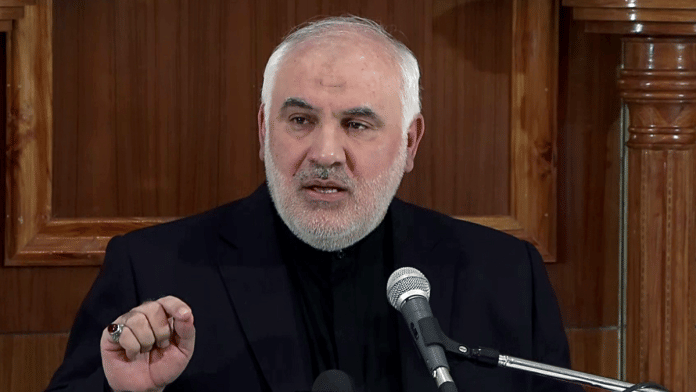



New Delhi: India and Iran share a “common fate” in the region, declared Iranian Ambassador Mohammad Fathali Monday, while clarifying that Tehran is keen to work with New Delhi on the issue of the Strait of Hormuz.
“We have good contact with the Indian government. You know that I believe that Iran and India have common interests. As an ambassador, I believe that India and Iran have a common fate in the region,” Fathali told a press briefing in the national capital.
When questioned about potential tolls for Indians ships transiting through the global waterway, the Iranian ambassador added that Tehran wants to “help the Indian government” on the issue while highlighting the multiple high-level exchanges between the two sides in the last month.
“We have a historical and cultural background with this country,” said Fathali. The Iranian envoy also highlighted that India is one of “five partners” named by Iranian Foreign Minister Seyed Abbas Araghchi as close friends.
The Iranian ambassador made it clear that the Strait of Hormuz is the “territorial waters” of the West Asian nation, and therefore they will declare a “mechanism” soon for allowing the transit of ships through the waterway.
The Strait has been effectively closed by Iran since its conflict began with the US and Israel. India has been able to negotiate safe passage for at least eight of its ships to transit the Strait of Hormuz. The global waterway accounts for a fifth of global energy supplies
The war has led to an energy crisis globally, with Indian stocks of liquefied natural gas and liquefied petroleum gas hit due to the closure of the Strait. Around 40 per cent of India’s LNG comes from Qatar.
However, a fragile ceasefire has been in place for almost a week between Iran, Israel and the US. Over the weekend negotiators from the US and Iran met in the Pakistani capital of Islamabad for peace talks, which failed.
“The continuing ceasefire depends on two sides…Our delegation attended the negotiations with experience and expertise. We believe that if they avoid unlawful demands and recognise our legitimate rights and interests, I think the negotiations would be successful,” said Fathali on the failed Islamabad talks.
#WATCH | Delhi: Dr Mohammad Fathali, Ambassador of the Islamic Republic of Iran to India, says, "Before the war, the Strait of Hormuz was open… They attacked us for 12 days, and after that, they accepted a ceasefire. And they announced that we were on the negotiation table.… pic.twitter.com/p3m97Lpm2b
— ANI (@ANI) April 13, 2026
When questioned whether there would be a second round of negotiations, the Iranian ambassador said that Tehran has “formally announced that if the US accepts our conditions, then we will have another round of negotiations.”
Fathali added that the US is now “aware” of Iran’s capacity and made a “miscalculation” due to its failure to strategically assess the situation before the war.
“You can see the experiences during the 40-day war. You have seen and heard that they are taking 2-3 days to finish everything (the war). But after 42 days of war, they sit at the negotiation table. I think that I should mention. We believe that they have suffered a strategic failure in assessing three key points — our leader, our people and our army. They know our capacity and our capability. They have miscalculated,” said Fathali.
The war has left 3,753 Iranians dead and over 30,000 people injured. Amongst those killed in US-Israel strikes, the Iranian ambassador said, were around 221 children below the age of 18.
Fathali highlighted that there has been a breach of trust by the US. After the 12-day conflict last year, Iran opened negotiations on all issues with the US. Despite the ongoing negotiations over Tehran’s nuclear plan, the US and Israel launched strikes on 28 February, the Iranian ambassador noted.
Despite the two-week ceasefire in the current conflict between Iran and the US and Israel, war continues in Lebanon. Israel and the US have maintained that Lebanon is not part of the two-week ceasefire. Direct talks between Israel and Lebanon are expected later this week.
(Edited by Ajeet Tiwari)
Also Read: India’s role in Chabahar uncertain, Iran hails critical port as ‘golden bridge’ of Delhi-Tehran ties