





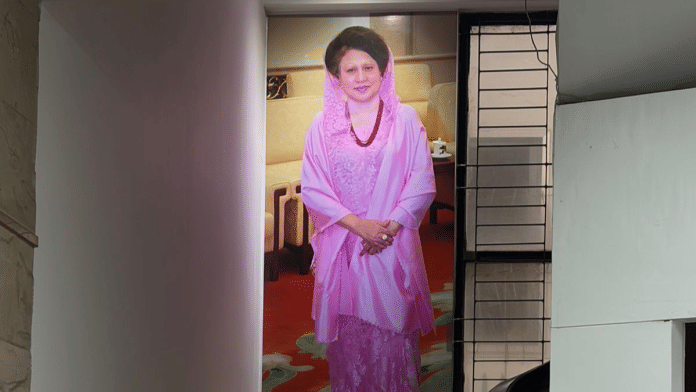



New Delhi: Asked by an Indian journalist in 2015 why she was seen as ‘anti-India’, former Bangladesh prime minister Khaleda Zia replied, “Why should I be anti-India?” She went on to say that there was a “concerted” effort by the Awami League to paint her “anti-India and anti-Hindu”.
Cut to January this year, India’s External Affairs Minister Dr. S Jaishankar travelled to Dhaka for Khaleda Zia’s funeral. He also met her eldest son, Tarique Rahman, now Bangladesh’s prime minister-designate.
Tarique led the Bangladesh Nationalist Party (BNP), founded by his father Ziaur Rahman, to a landslide victory in the just-concluded general election, the first in the country since the ouster of former prime minister Sheikh Hasina following a youth-led uprising.
With the BNP set to return to power in Dhaka, ThePrint traces how India-Bangladesh ties evolved under Ziaur Rahman and later Khaleda Zia.
Also Read: Ban to breakthrough—Jamaat ends political exile, redraws Bangladesh’s opposition landscape
Sheikh Mujib & Gen Ziaur Rahman
Three years after the assassination of Bangladesh’s founder, Sheikh Mujibur Rahman, General Ziaur Rahman, then the country’s president, floated the Bangladesh Nationalist Party (BNP) in 1978. After the general election held the very next year, in 1979, the party formed its first government.
But even before 1979, Gen Ziaur Rahman had challenged the Awami League’s emphasis on friendly ties with India.
Friction between him and Sheikh Mujibur Rahman spilled over in 1972 when Gen Ziaur Rahman termed the Indo-Bangladesh Treaty of Friendship, Cooperation, and Peace, which was signed that year, an “unequal” agreement that, according to him, compromised sovereignty.
Gen Ziaur Rahman also cornered Mujib on his concession on the Farakka Barrage water-sharing arrangement. He internationalised the issue by raising it in the United Nations General Assembly and Colombo’s 1976 Non-Aligned Movement (NAM) Summit.
The Farakka Barrage was commissioned in 1975 to divert water from the Ganga River into the Hooghly River to preserve the Kolkata Port. Water-sharing talks on the barrage were revisited multiple times during Khaleda Zia’s tenure. However, no conclusive resolution was achieved.
For Ziaur Rahman, State-mandated secularism was a mirror of India’s Constitution, which distanced Dhaka from its Islamic heritage. Pivoting away from Mujib’s approach, he brought Dhaka closer to Middle Eastern powers then closely aligned with Pakistan.
The era of Khaleda Zia
The BNP rule under Khaleda Zia, who was born in Jalpigudi in undivided India, spanned two terms—1991 to 1996 and 2001 to 2006. During this period, diplomatic friction between New Delhi and Dhaka sharpened due to the Awami League’s perceived closeness with India.
The BNP also reacted strongly to the 1992 Babri Masjid demolition, passing a resolution to condemn it.
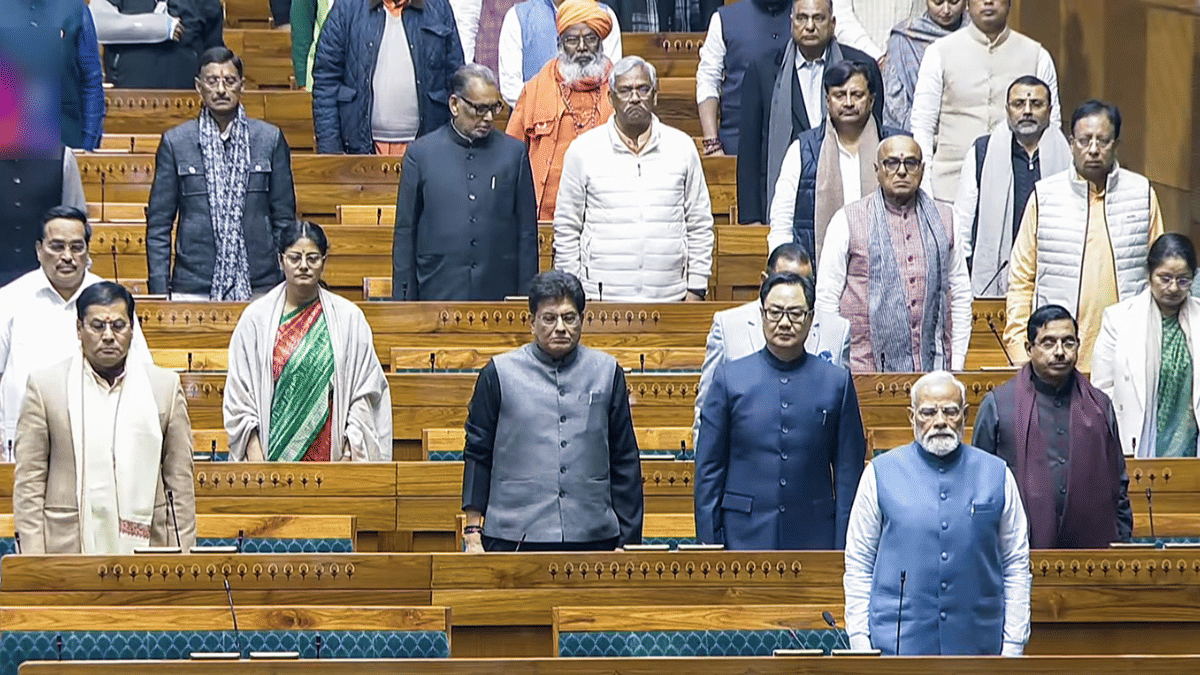
In 1999, Khaleda sparked a fresh controversy by claiming India was “interfering” in Bangladesh’s internal affairs. The MEA then responded cautiously, noting her BNP’s alliance with Jamaat-e-Islami raised legitimate security concerns about anti-India activities from Bangladeshi soil.
During the same time, Dhaka also rejected Indian transit proposals, including port access and a trilateral pipeline (also involving Myanmar), arguing they compromise national sovereignty.
It took a firm position on maritime boundary disputes while allowing safe havens for insurgents from India’s Northeast, including those linked to the United Liberation Front of Asom (ULFA) and National Socialist Council of Nagaland (NSCN).
The BNP also partnered with Jamaat-e-Islami, an Islamist political party, which favours closer ties with Islamabad.
I convey my warm congratulations to Mr. Tarique Rahman on leading BNP to a decisive victory in the Parliamentary elections in Bangladesh.
This victory shows the trust of the people of Bangladesh in your leadership.
India will continue to stand in support of a democratic,…
— Narendra Modi (@narendramodi) February 13, 2026
During the BNP rule, border tensions with India also spiked as the Border Security Force (BSF) took firm action to prevent cattle smuggling from Bangladesh, drawing protests from BNP leaders.
For BNP leaders, India’s role in the 1971 Liberation War could not justify what they believed was New Delhi’s continued influence over Dhaka’s choices. This stance has been intertwined with the BNP’s rivalry with the Awami League, which is considered close to India.
She pivoted towards China in 2002 to deepen the defence cooperation agreement. This also established Beijing as Bangladesh’s primary military supplier, a role which it retains today.
However, India remained Bangladesh’s largest trading partner. Today, bilateral trade is significantly skewed in Delhi’s favor, with exports of goods and services totaling approximately USD 11 billion, compared to imports of roughly USD 2 billion.
But in 2006, during the BNP’s rule, India had a trade surplus of over 1 billion USD, with the overall trade spanning around 2.5 billion USD.
After the BNP’s loss in 2006, the military-backed caretaker government (2007-2008) probed corruption charges against Tarique Rahman. He was sent to jail, and upon his release, he went into a self-imposed exile in London.
This was followed by the premiership of Sheikh Hasina. During her rule, New Delhi and Dhaka resolved longstanding land and maritime boundary issues, alongside achieving the 2022-23 agreements granting India transit access through Chittagong and Mongla ports.
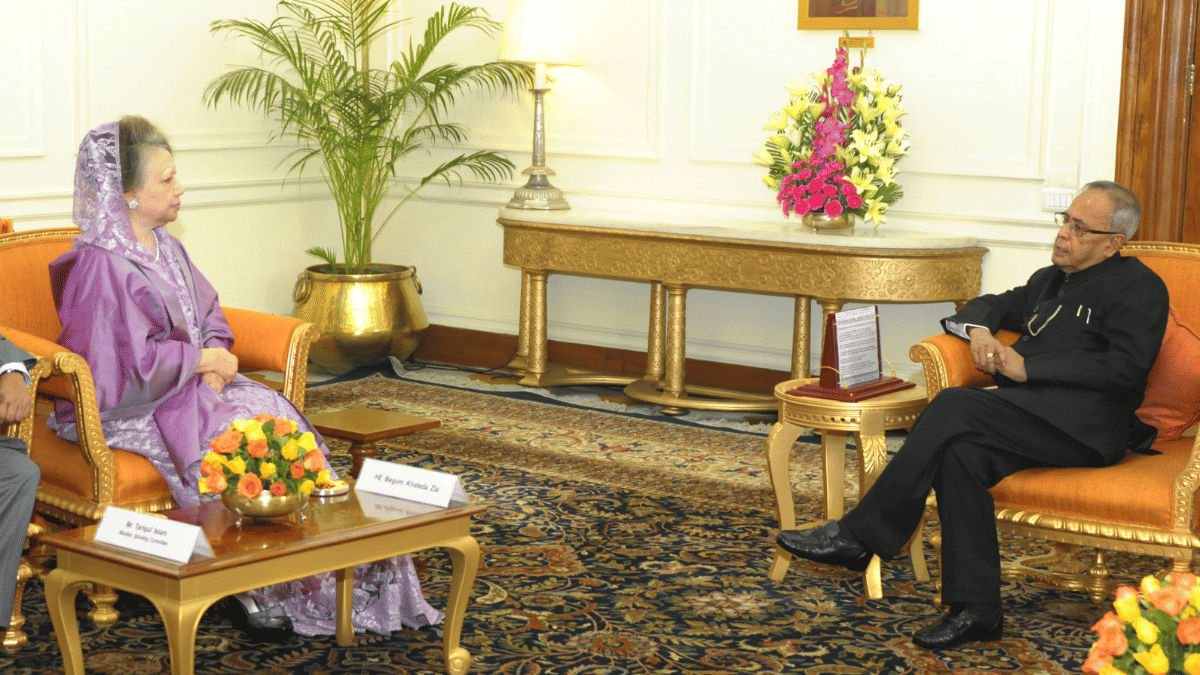
Khaleda Zia last visited India in October 2012, when she went to the Ajmer Sharif Dargah and met then president Pranab Mukherjee, though she had skipped meeting him earlier in Dhaka due to death threats from coalition partner Jamaat-e-Islami.
Tarique Rahman
The ouster of the Hasina government in 2024 positioned the BNP as the primary political force in Bangladesh for the first time in nearly two decades.
Rahman, the acting chairman of BNP, returned to the country in December 2025, after 17 years in exile, marking a visible change, as a massive crowd welcomed him in Dhaka.
During his homecoming speech at the Dhaka airport, he urged the crowd to maintain social unity over revenge, while appealing to patience and a vision centered on national priorities.
The BNP has emphasised in its election manifesto that while historical ties are honoured, they must align with the aspirations of Bangladesh—“Bangladesh First”.
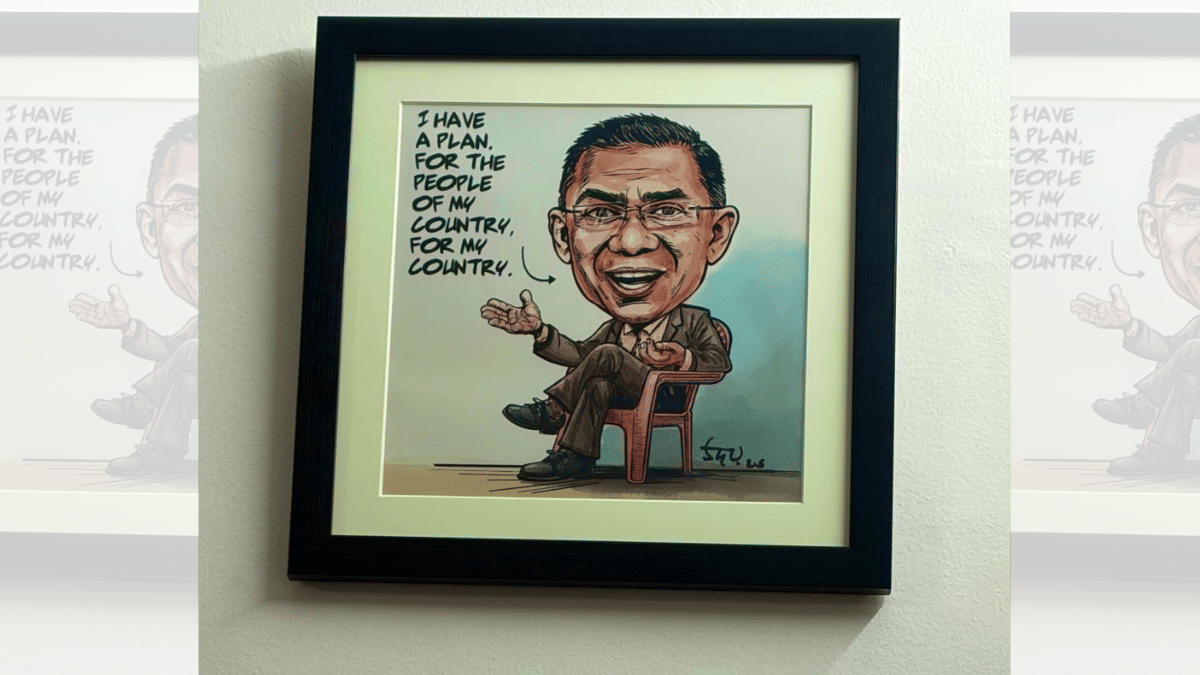
The relations between the BNP & New Delhi also saw new hopes when Rahman positively affirmed Prime Minister Modi’s well-wishes regarding Khaleda Zia’s health by posting on X.
After Rahman’s victory in the latest election, PM Narendra Modi was also one of the first world leaders to congratulate him on his victory.
“I convey my warm congratulations to Mr. Tarique Rahman on leading BNP to a decisive victory in the Parliamentary elections in Bangladesh. This victory shows the trust of the people of Bangladesh in your leadership. India will continue to stand in support of a democratic, progressive, and inclusive Bangladesh,” Modi posted on X.
Despite the warmth shown by India, core frictions remain as the BNP pursues outreach to Pakistan. Another issue that may emerge between India and Bangladesh is the impending expiry of the Ganges Water Sharing Treaty in December 2026.
(Edited by Ajeet Tiwari)
Also Read: Dear Narendrabhai, Bangladesh polls give India space to hit reset button