





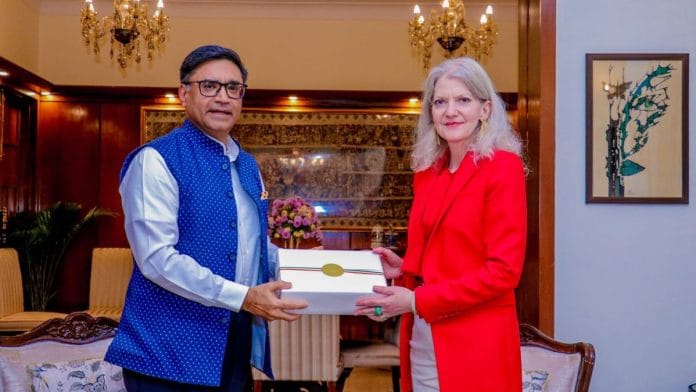



New Delhi: The United States aims to deepen cooperation in defence, energy, technology, space, trusted supply chains, and increase the value of US-India cooperation that fuels US innovation while supporting India’s rise as a global technology leader, the Under Secretary of State for Political Affairs Allison Hooker said in a meeting with Indian foreign secretary Vikram Misri in Delhi, Tuesday.
Hooker arrived in Delhi on 7 December, days after Russian President Vladimir Putin left India, and will be in New Delhi and Bangalore during her five-day visit.
According to a statement by the US Embassy, Tuesday’s meeting was an “opportunity to translate President Trump and Prime Minister Modi’s vision from their February meeting into concrete progress that enhances US security, jobs, and competitiveness, while supporting India’s long-term goals”.
Under Secretary Hooker expressed appreciation for Misri’s “continued partnership”, as both nations pursue “shared priorities”, which deliver “tangible benefits” for the Americans and “complement India’s national objectives”, the US Embassy further said.
On Wednesday, India and the US will restart discussions on a Bilateral Trade Agreement in Delhi, with a high-level team from the Office of the US Trade Representative, headed by the Office of the United States Trade Representative’s (USTR) Deputy Ambassador Rick Switzer.
The two sides will hold two days of negotiations, covering trade-related matters and seeking to push the long-pending trade deal closer to completion.
Hours before the meeting, President Donald Trump threatened to levy an additional five percent tariff on Indian rice, accusing India and Vietnam of dumping rice into the American market, driving down prices and harming American farmers.
“They shouldn’t be dumping… I heard that from others. You can’t do that,” Trump said.
The India-US negotiations had been strained after Washington, DC, imposed a punitive secondary tariff of 25 percent on top of the existing 25 percent basic tariff, doubling duties on Indian goods to 50 percent, citing India’s trade in Russian crude oil.
(Edited by Madhurita Goswami)
Also Read: Navy Chief calls for collective solutions to maritime challenges in ‘complex & dynamic’ Indo-Pacific