








New Delhi: The current open confrontation between the US, led by President Donald Trump, and Venezuela’s Nicolas Maduro have been a decade in the making. Trump Saturday claimed to have captured the Venezuelan strong-man, who has for almost 13 years shrugged off Western sanctions and a failing economy to retain power in Caracas.
The genesis of the crisis started almost three decades ago with the election of Hugo Chávez as the President of the South American country in 1998. Chávez, the self-ascribed Leftist leader of Venezuela, once compared US President George W. Bush to Hitler and called for the banning of the celebration of Halloween due to it being a “terror-game”.
Chávez was part of an era of leaders that were anti-American and painted the US’ policies as colonialism and a bogeyman in global politics. He was also a close partner of Cuba, the communist nation that has been a thorn in the side of the US since the 1960s. In 2000, Venezuela signed an agreement to provide Cuba with over 50,000 barrels of oil per day, while Fidel Castro, the then leader of Cuba, in 2007 provided Chávez with the necessary tools to remain in power.
The death of Chávez in 2013 led to the rise of his deputy Maduro, who assumed the presidency and has since won every Presidential election, including in 2013, 2018 and 2024. However, there have been question marks over the fairness of the last two polls.
For Trump, this is not the first time he has attempted to unseat Maduro from power. During his first tenure, the US administration recognised Juan Guaido as the Acting President of Venezuela in 2019 and considered Maduro’s presidency as illegitimate following the 2018 elections.
In 2024 after the elections in Venezuela, the US, led by President Joseph Biden, recognised the opposition candidate Edmundo Gonzalez as the “President-Elect” of the country, further flaming tensions between Washington and Caracas.
Trump, since his return to the presidency last year, has taken a number of actions to remove Maduro from power, including amassing a large US military presence in the Caribbean, according to media reports.
The US further seized oil tankers carrying crude from Venezuela–the lifeline of Maduro’s economy–and has been carrying out attacks against small Venezuelan vessels, alleging that they were smuggling drugs.
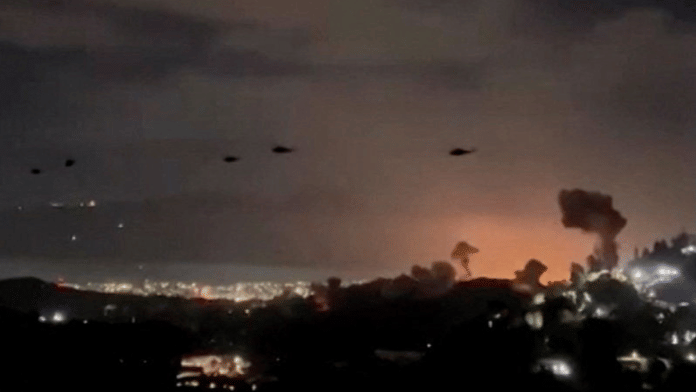
However, in the early hours of Saturday, US struck across Venezuela, with Trump claiming to have captured Maduro and his wife Cilia Flores and are currently moving them out of the country. Venezuela’s Vice President Delcy Rodríguez has confirmed that Maduro’s whereabouts are currently unknown and called on the US to produce proof of his life.
Also read: State of emergency in Venezuela as Trump claims to have ‘captured’ Maduro, wife after US airstrikes
Anti-Americanism to drug smuggling
Venezuela has one of the world’s largest oil reserves. Chávez’s rise to power in 1998, led to him leveraging the oil reserves to build what many have called a “petro-socialist” state. Chávez’s rise coincided with increasing crude oil prices that led to the Venezuelan administration reducing the extreme poverty rate in the country from 23.4 percent of the population to 8.5 percent in 2011.
The Venezuelan reliance on oil saw the share of crude oil as its exports rose from 71 percent in 1998 to nearly 98 percent in 2013 of its overall merchandise exports. But, the drop in global oil prices in 2014 led to a crash in Caracas’ economy.
Maduro’s attempt to manage the economy following Chávez’s death led to the government printing money, leading to a hyperinflation crisis that persists. Over eight million Venezuelans are believed to have fled the country as the economic crisis deepened.
At the same time, Maduro curtailed the domestic opposition, with a number of opposition candidates’ applications to stand against him in the 2018 presidential election rejected.
Throughout the economic crisis, Maduro continued to blame the US for the struggles of the country. The results of the 2018 elections were widely rejected, with Trump recognising Guaido as the acting leader of Venezuela.
The American President in his first term imposed a “maximum pressure” campaign against Venezuela, imposing sanctions on the country’s export of oil.
India had long imported oil from Venezuela, peaking in 2014-15 with the imports of 22,751 metric tonnes of crude from the South American nation. However, following the imposition of sanctions those imports have dwindled to zero, indicating the economic impact the American sanctions have had for Venezuelan oil exports.
Trump’s support for Guaido did not lead to regime change. In 2020, the US indicted Maduro and 14 others with charges of ‘Narco-Terrorism.’
“[Nicolas] Maduro Moros, Cabello Rondón, Carvajal Barrios, Alcalá Cordones, Marín Arango, and Hernández Solarte have each been charged with: (1) participating in a narco-terrorism conspiracy; (2) conspiring to import cocaine into the US; (3) using and carrying machine guns and destructive devices during and in relation to, and possessing machine guns and destructive devices in furtherance of, the narco-terrorism and cocaine-importation conspiracies; and (4) conspiring to use and carry machine guns and destructive devices during and in relation to, and to possess machine guns and destructive devices in furtherance of, the narco-terrorism and cocaine-importation conspiracies,” the US Department of Justice said in a statement in 2020.
Under Biden, the US offered sanctions relief to Venezuela in exchange for a free election in 2024. However, the polls were not considered free and the sanctions were snapped back into effect.
Trump’s return to power in 2025, saw the US enforce the “maximum pressure” campaign once again on Venezuela. The US President has alleged that Maduro leads the drug cartel ‘Cartel de los Soles’. However, the organisation may not exist as described, with the term referring to a moniker of Venezuelan soldiers who may have links to drug smuggling, The New York Times reported.
Despite US pressure, Venezuela was able to maintain some semblance of its economy through the support of China and Russia. Moscow has reacted with “concern” to the current situation
(Edited by Tony Rai)