





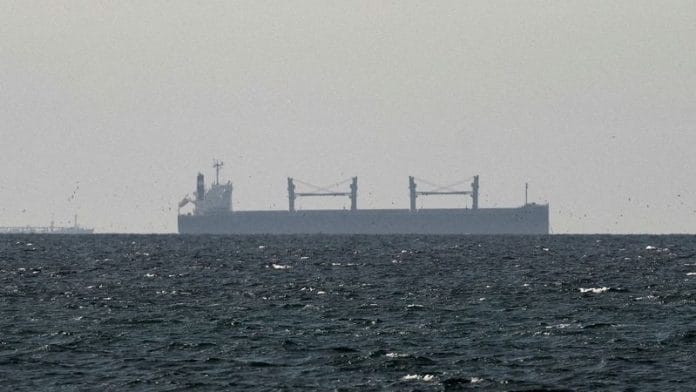



New Delhi: Two more Indian-flagged LPG carriers, Green Asha and Green Sanvi, safely crossed the Strait of Hormuz, bringing the total to eight, the government confirmed Monday, as global energy routes remain strained due to the war in West Asia.
The two ships are carrying 62,000 metric tonnes (MT) of liquified petroleum gas (LPG) and 51 seafarers. Green Sanvi, carrying 46,500 MT LPG, is expected to arrive on 7 April, and Green Asha, with 15,500 MT, is likely to reach shore on 9 April.
Over the past few weeks, six other Indian LPG vessels from the Gulf region—Shivalik, Nanda Devi, Pine Gas, Jag Vasant, BW Elm and BW Tyr—have reached Indian shores.
The movement of these vessels comes amid growing concerns over energy supplies.
India, the world’s second-largest LPG importer, is facing one of its worst energy crises in decades due to the strategic blockade of the Strait of Hormuz amid the war between Iran and the US-Israel.
India, before the war, relied on imports for 60 percent of its LPG needs—nearly 90 percent of those imports were sourced from the Gulf.
At an inter-ministerial briefing on the war in West Asia, Mukesh Mangal, Additional Secretary in the Ministry of Ports, Shipping and Waterways, said that 16 Indian-flagged vessels remained on the western side of the Strait of Hormuz, with 433 seafarers on board.
In a breakdown of the stranded vessels, Mangal said they include two LPG carriers, an LNG vessel, six crude oil tankers, three container ships, a chemical vessel, two bulk carriers, and a dredger.
On the domestic front, government officials reassured once again that supplies of essential commodities remained stable.
“The department is closely monitoring the West Asia crisis, including tracking commodity prices, ensuring adequate supply, and preventing hoarding and black marketing under the Essential Commodities Act,” said Anupam Mishra, Additional Secretary, Department of Consumer Affairs.
Highlighting that pulses’ production had been higher this year than last year, Mishra noted there was no unusual volatility in the prices of essential commodities.
Mishra provided an update on the stock. India currently maintains a buffer stock of 28 lakh metric tonnes of pulses. To ensure continued availability, imports of toor and urad (types of pulses) have been placed under the free category until 31 March 2027.
On food security, Joint Secretary C. Shikha from the Department of Food and Public Distribution confirmed that the country held food grain stocks far above the mandated norms.
“We have adequate buffer stock of both wheat and rice—three times the buffer stock norms…,” she said. “…For wheat, we have around 222 LMT [lakh metric tonnes]. For rice, we have around 380 LMT. So put together, around 602 LMT of food stocks are available with us. This is quite enough to take care of the PDS [public distribution system] requirement.”
She added that the availability of edible oils remained comfortable—despite global uncertainties—with imports continuing from Indonesia, Malaysia, Russia, Ukraine, Argentina and Brazil.
On the availability of sugar, Shikha said that domestic production remained adequate, with production for FY 2025-26 expected to meet demand.
As much as “15.80 lakh metric tonnes of sugar are permitted for exports with 3.73 lakh metric tonnes already exported to Sri Lanka, West Asia and Africa”, she added.
On the energy side—Joint Secretary in the Ministry of Petroleum and Natural Gas, Sujata Sharma, said—gas supply to fertiliser plants had been ramped up by 90 percent.
She added that LPG distribution had been scaled up significantly in recent weeks, with 18 crore households receiving cylinders over the past five weeks—an average of 50 lakh cylinders per day.
Now, Sharma said, domestic LPG production was 46,000–47,000 metric tonnes per day. This, she said, followed a 40 percent increase in production.
Sharma noted that after commercial LPG supply recovered to 70 percent of pre-crisis levels, nearly 79,900 tonnes of commercial LPG, equivalent to 42 lakh 19-kg cylinders, had been distributed over the last three weeks.
(Edited by Madhurita Goswami)