









Russia’s war on Ukraine has been dictated as much by events in the air as by territorial gains on the front line.
Both the Russian and Ukrainian militaries are leaning heavily on drones, but they’re also firing a variety of cruise and ballistic missiles, some of them relatively new and experimental.
Ukraine’s allies have held off from supplying it with their most advanced long-range weapons such as the US-made Tomahawk and German Taurus. So Kyiv has been innovating with missiles of its own that are now capable of reaching far into Russian territory.
Cruise missiles are a bit like pilotless aircraft, flying at a regular altitude and able to maneuver or change course. A ballistic missile is usually a faster, non-guided projectile that’s launched by a rocket engine and makes a high arc before descending steeply to its target.
Here’s a breakdown of the missiles used by each side in the ongoing conflict and what difference they’re making. Many of the technical details were provided by Bloomberg Intelligence defense analysts Wayne Sanders and Will Lee.
Ukraine:
Neptun
R-360 Neptun is a Ukrainian-made anti-ship cruise missile with a later variant for land attacks. Ukraine claims its range is 300 kilometers (186 miles) and it can be launched from ships, jets and land platforms. Kyiv used Neptun to attack Russian flagship missile cruiser Moskva in April 2022. The ship sank, becoming one of the most recognizable symbols of Ukrainian resistance since the Kremlin ordered the full-scale invasion in February 2022. Neptun, along with Ukrainian-made sea drones, has also damaged other Russian ships, forcing Moscow to withdraw its Black Sea fleet far enough to allow Ukraine to resume some commodity exports.
Palianytsia
This surface-launched weapon was unveiled by Zelenskiy over the summer of 2024. The weapon, a cross between a drone and a missile, has a reported range of up to 700 km, allowing it to strike airfields far inside Russian territory. Most of its technical details are secret.
Flamingo
Ukraine has said this recent addition to its arsenal has a range of 3,000 km, making it an alternative to the drones it employs for most long-range attacks on Russia. The fact that Palianytsia and Flamingo are developed and produced by Ukraine means the Kyiv government doesn’t need to request permission from the US Trump administration or another foreign government in order to fire them. Zelenskiy has described Flamingo, developed by Ukrainian drone manufacturer Fire Point, as one of his country’s most successful missiles, though few details of its use in combat have been made public.
ATACMS
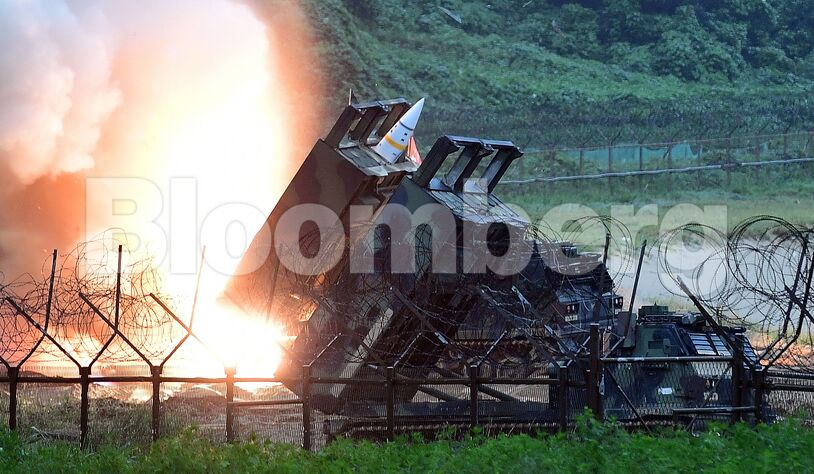
US-made Army Tactical Missile Systems, known as ATACMS, are supersonic guided surface-to-surface ballistic missiles that have a range of around 300 kilometers and can carry conventional or cluster munitions. The missiles, made by Lockheed Martin Corp., can be launched from the HIMARS platform, which the US supplies to Ukraine, and the MLRS M270 platform, sent by countries including the UK.
Former US President Joe Biden’s administration authorized Ukraine to use shorter-range ATACMS on targets inside Russian-occupied areas of Ukraine. The Kyiv government said those strikes had a major impact on the battlefield. Russia moved 90% of the aircraft it was using for glide bomb and missile attacks on Ukraine out of range for ATACMS, according to the Pentagon. Ukraine only has limited supplies of the missiles, which can cost more than $1 million each. There was some apprehension in Kyiv that Biden’s successor Donald Trump would withdraw US support for Ukraine’s use of ATACMS. However, Ukraine announced in November that it had launched the missile system against targets in Russia.
Storm Shadow
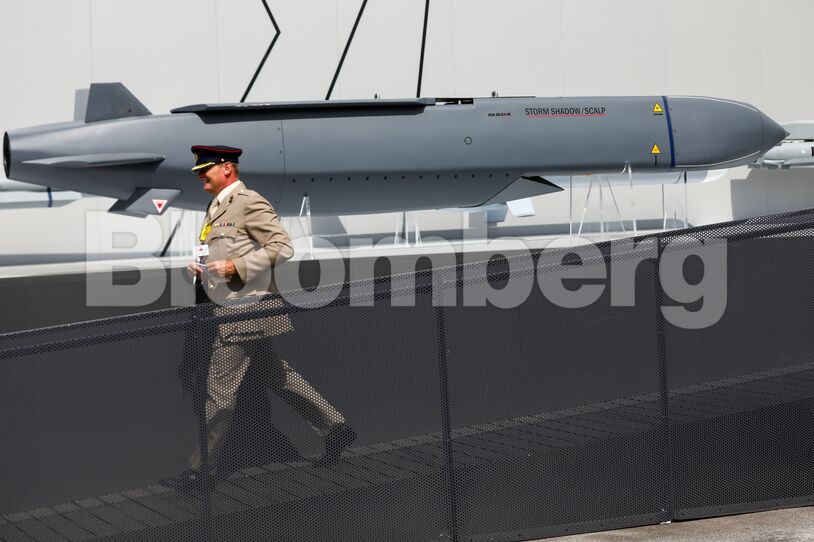
This cruise missile developed by the UK and France, where it’s known as SCALP, has a maximum range of around 250 kilometers. Usually launched from an aircraft, it flies low to avoid detection. Produced by multinational European arms maker MBDA, Storm Shadow is seen as having exceptional accuracy due to its advanced navigation system and is effective in penetrating hardened bunkers and ammunition stores. Each missile costs almost $1 million.
Russian officials said a critical bridge linking Crimea to the occupied part of Ukraine’s Kherson region was struck in June 2023 using Storm Shadow, a claim that was not addressed directly by Ukraine. Ukraine may also have used Storm Shadows to strike Russia’s Black Sea naval headquarters in occupied Crimea in September 2023.
Britain began allowing Ukraine to use Storm Shadow against targets inside Russia in November 2024. In the following days, Storm Shadow debris was found in Russia’s Kursk region to the northeast of Ukraine and Russian forces claimed to have intercepted two missiles over Yeysk, an Azov Sea port in Russia’s southern Krasnodar region, according to the Telegram channel Rybar, which has connections to the Russian army. The information couldn’t be independently verified.
Air-defense missiles
Ukraine relies heavily on Western air-defense systems such as the US Patriot and Hawk, Norway’s NASAMS, Iris-T — developed by a German-led European consortium — and the SAMP/T developed by France-based MBDA. The US Patriots have been highly effective, allowing Ukraine to shoot down Kinzhal and Zircon missiles, which Russia had claimed were impossible to intercept.
Ukraine is seeking more anti-missile systems such as THAAD and Aegis to help defend against longer-range Russian ballistic missiles such as Oreshnik, which struck the Ukrainian city of Dnipro in November 2024 and Lviv in January 2026.
In January 2025, the UK announced it was providing Ukraine with a new ground-based air defense system known as Gravehawk, as part of a wider £4.5 billion ($6 billion) military support package. Roughly the size of a shipping container, Gravehawk can launch missiles that were originally designed to be fired from an aircraft. This means it can use Ukraine’s existing supply of missiles.
Russia:
Oreshnik
The design of this intermediate-range missile is based on the technology used in Russia’s intercontinental ballistic missiles that are capable of carrying nuclear warheads. So the strikes on Dnipro and Lviv were interpreted as a warning to the West of Russia’s readiness to use some of the more powerful weapons in its arsenal. Oreshnik may have a range of 5,000 kilometers, putting most of Europe and the US West Coast within striking distance of Russian territory.
Kh-101
Russia has a wide arsenal of cruise missiles, denoted by the prefix “Kh,” that vary in speed and can be fired from strategic bombers flying hundreds of kilometers inside Russian territory. Ukraine regularly reports downing Kh-59/69 and Kh-101 missiles by the dozen during large-scale barrages.
Kinzhal
This new-generation air-launched ballistic missile, whose name means “Dagger,” can travel at as much as 10 times the speed of sound and is difficult to intercept. Russia used the weapon for the first time in combat in March 2022, just weeks after its invasion of Ukraine. It has continued to strike critical Ukrainian military and infrastructure targets with Kinzhal. Its manufacturer, Russian state holding company Rostec, said in 2023 it had begun to mass produce the weapon.
Iskander-M
This is a ground-based, short-range ballistic missile system with a range of 500 kilometers. Russia has used it frequently in deadly attacks on Ukraine, firing them from its own territory close to the border. Iskander launchers can carry two missiles on one vehicle.
Zircon
Zircon is the newest Russian hypersonic missile, with more modern capabilities such as maneuverability and a longer range than Kinzhal. Zircon is seen as Moscow’s weapon of choice for precise strikes on critical, long-range targets.
Tochka-U
An improved version of the Tochka ballistic missile which has a maximum range of 120 kilometers, this Soviet-era weapon is designed to strike tactical targets such as command centers, airfields and infrastructure. Both Russia and Ukraine have stockpiles of the missile, which is out of production, and have used it frequently in the conflict.
Glide bombs
Russia has used large numbers of these relatively cheap, air-launched weapons to attack frontline troops and urban areas, such as Kharkiv, causing major damage and heavy casualties. Their explosive component dates from the Soviet era and they’ve been retrofitted with wings and GPS systems to improve their range and accuracy.
BM Series
These missiles fill the gap between cheaper, massed unguided rockets and high-precision strikes. Russia’s military can fire large numbers of them simultaneously to saturate an area and destroy enemy air defenses.
Air-defense missiles
The mainstay of Russia’s air defense is the S-400 long-range mobile surface-to-air system. Designed to target missiles and aircraft, it entered service in 2007 but is still regarded as one of Russia’s most effective defensive assets. The more advanced S-500 that has been in Russia’s arsenal for three years has a longer range and can engage hypersonic missiles. Russia deploys these systems in overlapping arrays to ensure it can continue to detect incoming threats when one node is being attacked.